In southwest China's Guizhou Province, vibrant cultural festivals and immersive outdoor events are drawing tourists nationwide for leisure and entertainment.
In Dafang County of Bijie City, a folk music performance amid rolling terraced fields transformed Shexiang ancient town into a natural amphitheater, merging traditional melodies with breathtaking scenery.
"Shexiang ancient town is the first stop of our summer trip in Guizhou. We came here just in time to encounter the terraced field concert, which made our family feel that the trip is well worth it," said Zhang Wei, a tourist from southwest China's Sichuan Province.
In Baili Azalea Scenic Spot in Bijie, a grand bonfire carnival drew tens of thousands of tourists.
The area welcomes large numbers of visitors from across China each summer, and to keep them engaged, local authorities have developed diverse offerings -- from RV travel and hydrotherapy to mountain sports, folk‑custom night tours and community camping -- catering to personalized needs.
Since the start of the summer vacation, the scenic spot has received nearly 1.02 million tourists, with demand for leisure travel continuing to rise.
"Our enthusiasm will never wane. During the summer vacation season, we have activities every day and exciting events every week," said Luo Dan, director of Culture and Tourism Bureau in Baili Azalea Scenic Spot.
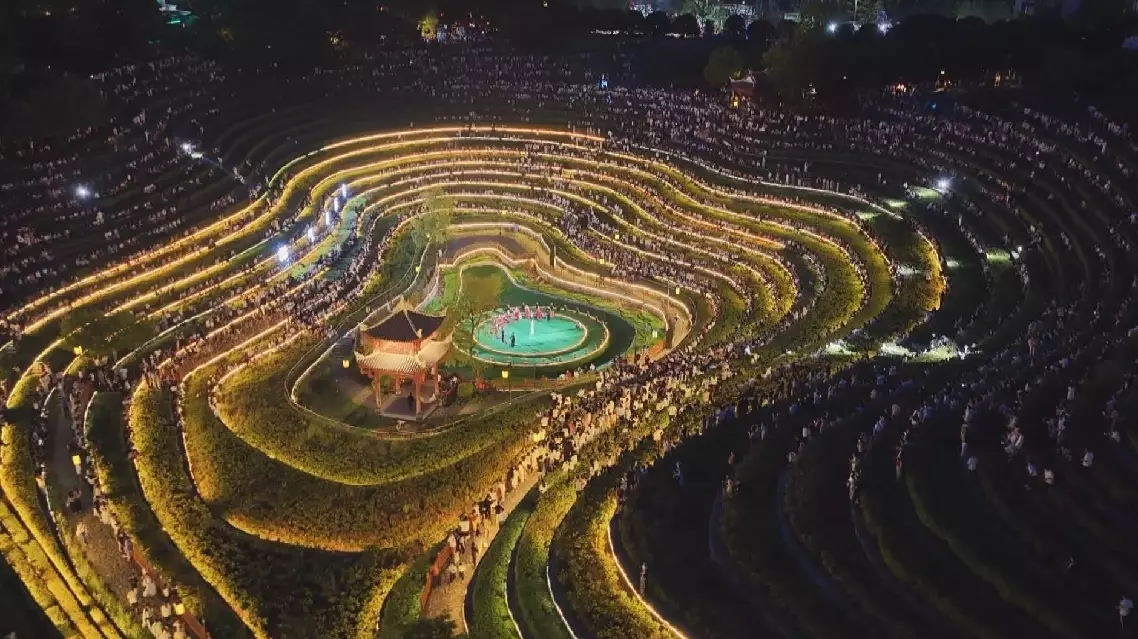
Vibrant cultural festivals, outdoor events boost tourism in southwest China
An expo highlighting China's efforts to deepen global digital trade cooperation concluded in Hangzhou, a tech hub in east China's Zhejiang Province, on Sunday with a series of new product launches and announcements.
Running from Sept. 23 to 27, the fifth Global Digital Trade Expo (GDTE) featured 226 debuts, including product launches, premieres and exhibitions, and attracted more than 50,000 participants from 163 countries and regions. The event highlighted the growing role of artificial intelligence in reshaping trade and China's push to expand global digital trade cooperation.
A total of 996 AI companies, nearly three times the number at the previous expo, attended the event and showcased more than 100 AI application scenarios.
"Through this expo, we have realized that China's AI sector is garnering more attention and recognition around the world, and Chinese solutions are empowering the development of digital trade worldwide. We are shifting from merely showcasing products and technologies toward fostering chains for product and technology cooperation, ultimately creating a growing digital trade ecosystem," said Li Yang, secretary-general of the GDTE organizing committee's secretariat.
The expo serves as a crucial bridge for international dialogue and mechanism building.
The China-Arab AI International Cooperation and AFDE First China-Arab Digital Dialogue, held during this year's expo, brought together more than 200 participants from China and abroad. Seven cooperation projects worth 255 million U.S. dollars were signed, covering areas including robotics and smart manufacturing.
This year's exhibition also featured a dialogue on BRICS special economic zones, focusing on practical cooperation. In 2025. The number of Chinese enterprises engaged in trade with other BRICS members exceeded 300,000 for the first time, up 8.8 percent year on year. The China Center for Cooperation on Special Economic Zones in BRICS Countries was also launched in Hangzhou last year.
In addition, the "Global Digital Trade Development Report 2026" was unveiled at the event, outlining the scale and structure of global digital trade, technological transformation and innovative practices, while also exploring future industry trends.
The global digital trade sector has demonstrated resilience amid multiple external pressures, with export value reaching 7.75 trillion U.S. dollars in 2025, a 7.1 percent year-on-year increase, according to the report.
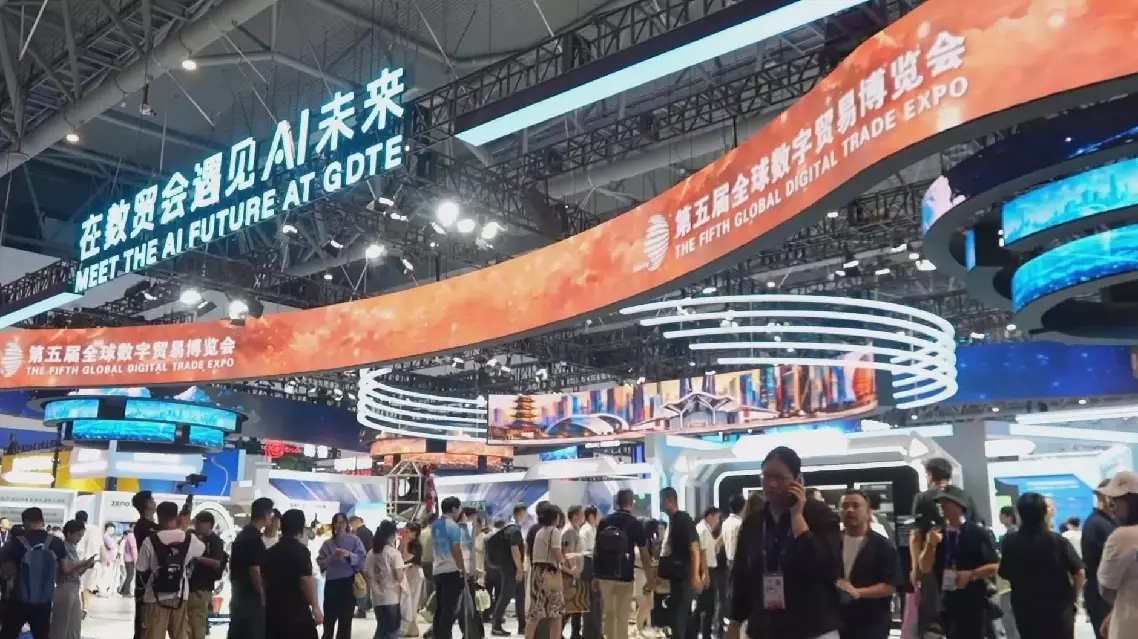
Fifth Global Digital Trade Expo concludes in Hangzhou