Skip to Content Facebook Feature Image

Summer tourism picks up across China as distinctive resources fuel county-level travel boom

China

China

China

Summer tourism picks up across China as distinctive resources fuel county-level travel boom

2026-08-09 19:43 Last Updated At:08-10 09:47

Counties and prefectures across China have been tapping into their distinctive cultural and tourism resources this summer to explore new models that integrate culture, tourism and sports to attract hordes of tourists.

Coinciding with the 10th anniversary of the completion and commissioning of China's Five-hundred-meter Aperture Spherical Radio Telescope (FAST), the world's largest single-dish radio telescope, the Qiannan Buyi and Miao Autonomous Prefecture in southwest China's Guizhou Province, has used the landmark as a focal point to organize distinctive cultural and tourism events, allowing visitors to experience China's technological prowess and regional cultural charm.

Meanwhile, members of the Buyi, Miao, Shui, and Yao ethnic groups, among others, paraded in traditional attire, singing and dancing as they showcased the rich ethnic traditions and the charm of intangible cultural heritage through a grand procession.

Leveraging the ecological advantages of the karst landscape and a forest coverage rate of 68 percent, the prefecture has launched a selection of premium summer themed itineraries, including eco-tourism, outdoor adventures, family-friendly experiences, and culinary tours, to attract tourists from around the world.

"So, coming here, I was very surprised that in the middle of the mountains, they have such a scientific exhibition hall connected to the telescope. There are so much going on here. It's such a good place for the kids to come and learn," said Adam, a British tourist.

The 22nd Chinese University Climbing Championship was held in Gaotang County of Liaocheng City in east China's Shandong Province this week, with more than 500 student athletes from 90 universities across the country participating.

Outside the competition grounds, a series of events including bonfire parties and open-air concerts took place one after another.

Gaotang is famed for Chinese painting and calligraphy. During the sports event, local organizers invited renowned masters of painting and calligraphy to the venue to create works on the spot, allowing visitors to experience the beauty of traditional culture during breaks from the competition.

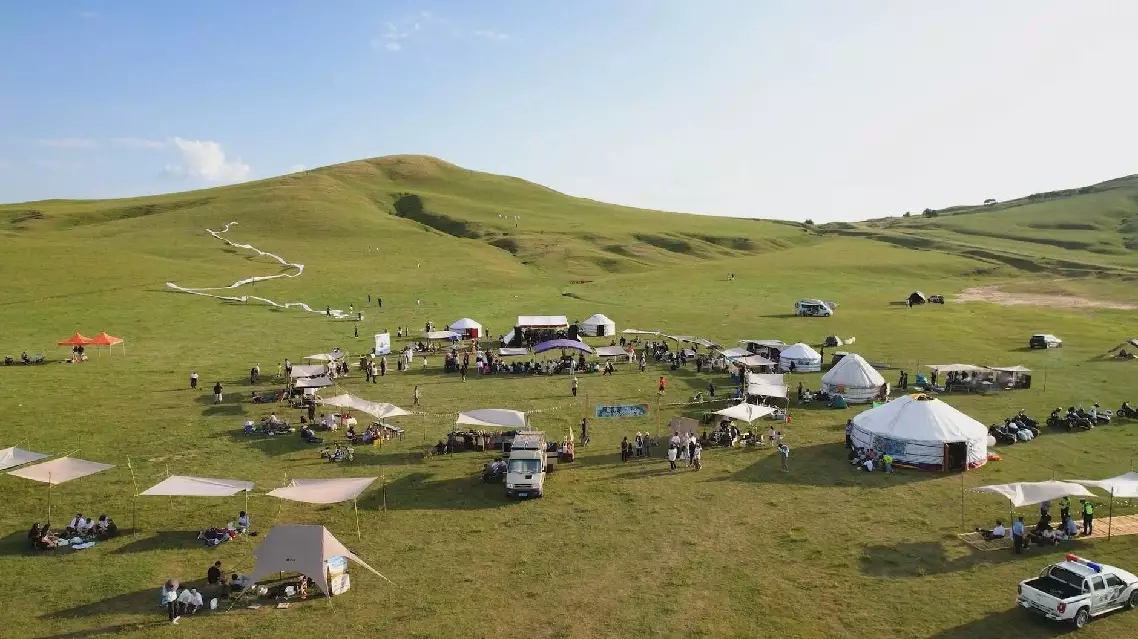
In Zhenglan Banner, north China's Inner Mongolia Autonomous Region, a series of art events are continuously energizing cultural tourism across the grassland pastoral areas.

The vast prairie has been transformed into an open-air gallery. A diverse array of contemporary art forms including sculptures, installations, performance art, and sound art have been brought deep into the heart of the pastoral region.
Summer tourism picks up across China as distinctive resources fuel county-level travel boom

Summer tourism picks up across China as distinctive resources fuel county-level travel boom

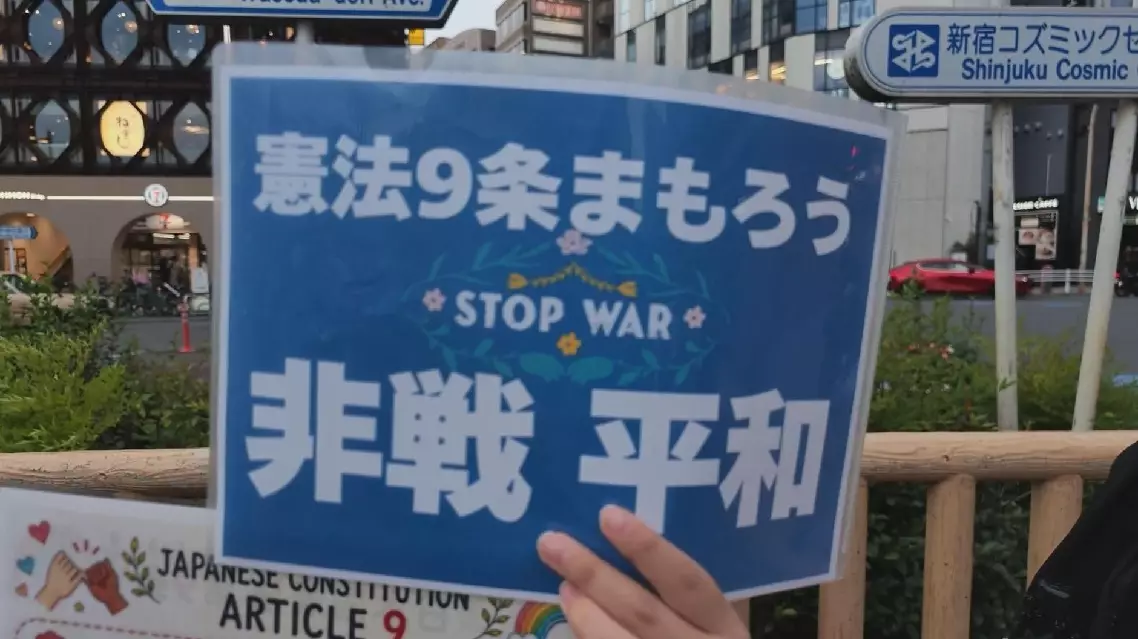
Rally participants gathered in the Japanese capital on Aug 9, which also marked the 81st anniversary of the Nagasaki atomic bombing, to voice strong opposition to the government's push to boost defense spending and revise the war-renouncing Article 9 of the national Constitution.

Holding anti-war placards, chanting anti-war slogans, protesters warned that remilitarizing the nation would betray its pacifist ideals and endanger future generations.

"Defense spending keeps increasing. Based on Article 9 of the Constitution, Japan pledged never to wage war again, yet it keeps strengthening its military. I find this extremely dangerous. They are also trying to revise Article 9. So I believe that for the sake of future young people and children, Article 9 must never be revised. Japan decided never to repeat the mistakes of waging a war after its defeat in WWII. I think we should continue to safeguard that commitment," said a rally participant.

For many in the crowd, the shadow of Hiroshima and Nagasaki remains a powerful moral compass as they believe that militarization offers no path forward for a nation that knows the devastation of war firsthand.

"Japan is the only country in the world to have suffered atomic bombings. Yet now Japan is going to deploy missiles. I believe Japan must never possess nuclear weapons," said another rally participant.

"I believe Japan has no future if it goes down the path of militarization. Nuclear weapons are absolutely bad for Japan," said a third woman, also a rally participant.

Beyond moral objections, some demonstrators said that Japan's economic vulnerabilities articulate that saber-rattling is a luxury the country cannot afford.

"I can't help but wonder what on earth a country with only a 36 percent food self-sufficiency rate would be fighting with. I have always been opposed to war, and I'm deeply dissatisfied with what the Takaichi administration is doing now," said another rally participant.

Other rally participants said that seeing revision of the Constitution could unleash unchecked military expansion, stripping away the very safeguards that have kept Japan at peace for eight decades.

"Article 9 of the Constitution is the key. If the nature of the Self-Defense Forces is elevated to a level beyond collective self-defense, which is explicitly written into the Constitution, it will allow the authority of the Self-Defense Forces to expand without limit. So no matter what, I want to prevent this from happening," said one more rally participant.

Japanese citizens rally against Takaichi's military expansion, constitutional revision

Japanese citizens rally against Takaichi's military expansion, constitutional revision

Recommended Articles