Skip to Content Facebook Feature Image

New Zealanders abroad urged to enroll for the election as new law locks out last-minute voters

News

New Zealanders abroad urged to enroll for the election as new law locks out last-minute voters
News

News

New Zealanders abroad urged to enroll for the election as new law locks out last-minute voters

2026-08-10 13:33 Last Updated At:13:40

WELLINGTON, New Zealand (AP) — New Zealand’s Electoral Commission launched a campaign Monday urging New Zealanders at home and abroad to register to vote or update their details in the system, warning that a legal change ahead of November’s election means voters must be enrolled in advance.

Measures enacted by government lawmakers in December and lambasted by their opponents removed a policy allowing New Zealanders aged 18 and older to enroll on election day, including when they arrived at a polling place to cast their vote.

More Images
Vehicles move past an Electoral Commission billboard in central Wellington, New Zealand, encouraging voters to enroll, Monday Aug. 10 2026. (AP photo/Charlotte Graham-McLay)

Vehicles move past an Electoral Commission billboard in central Wellington, New Zealand, encouraging voters to enroll, Monday Aug. 10 2026. (AP photo/Charlotte Graham-McLay)

People walk past New Zealand's Parliament buildings in Wellington, New Zealand on Monday, Aug. 10 2026. (AP Photo/Charlotte Graham-McLay)

People walk past New Zealand's Parliament buildings in Wellington, New Zealand on Monday, Aug. 10 2026. (AP Photo/Charlotte Graham-McLay)

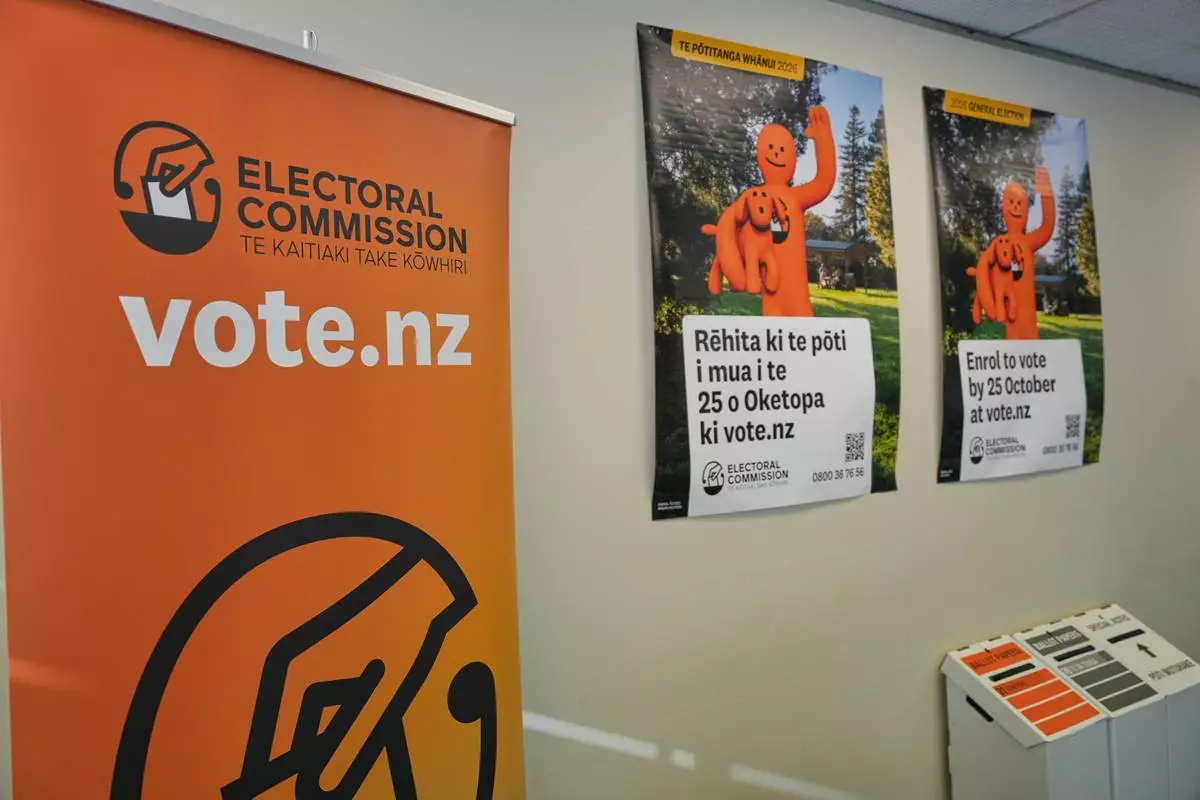
Posters encouraging voters to enrol ahead of New Zealand's elections are seen at the offices of the Electoral Commission in Wellington, New Zealand, Monday, Aug. 10 2026. (AP Photo/Charlotte Graham-McLay)
Posters encouraging voters to enrol ahead of New Zealand's elections are seen at the offices of the Electoral Commission in Wellington, New Zealand, Monday, Aug. 10 2026. (AP Photo/Charlotte Graham-McLay)

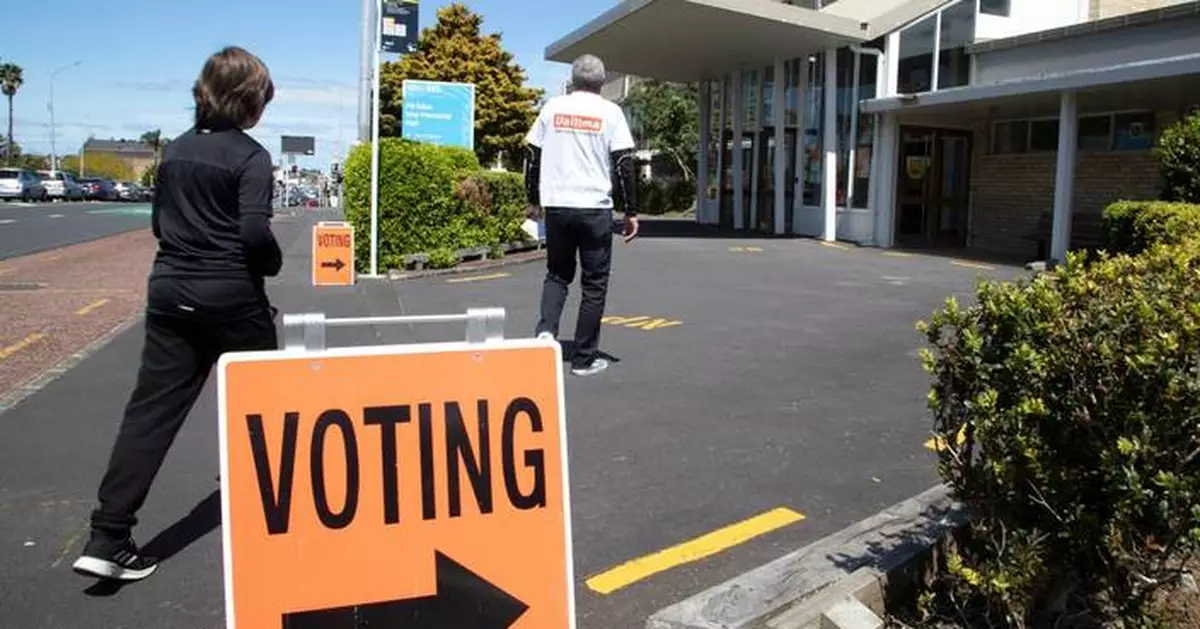
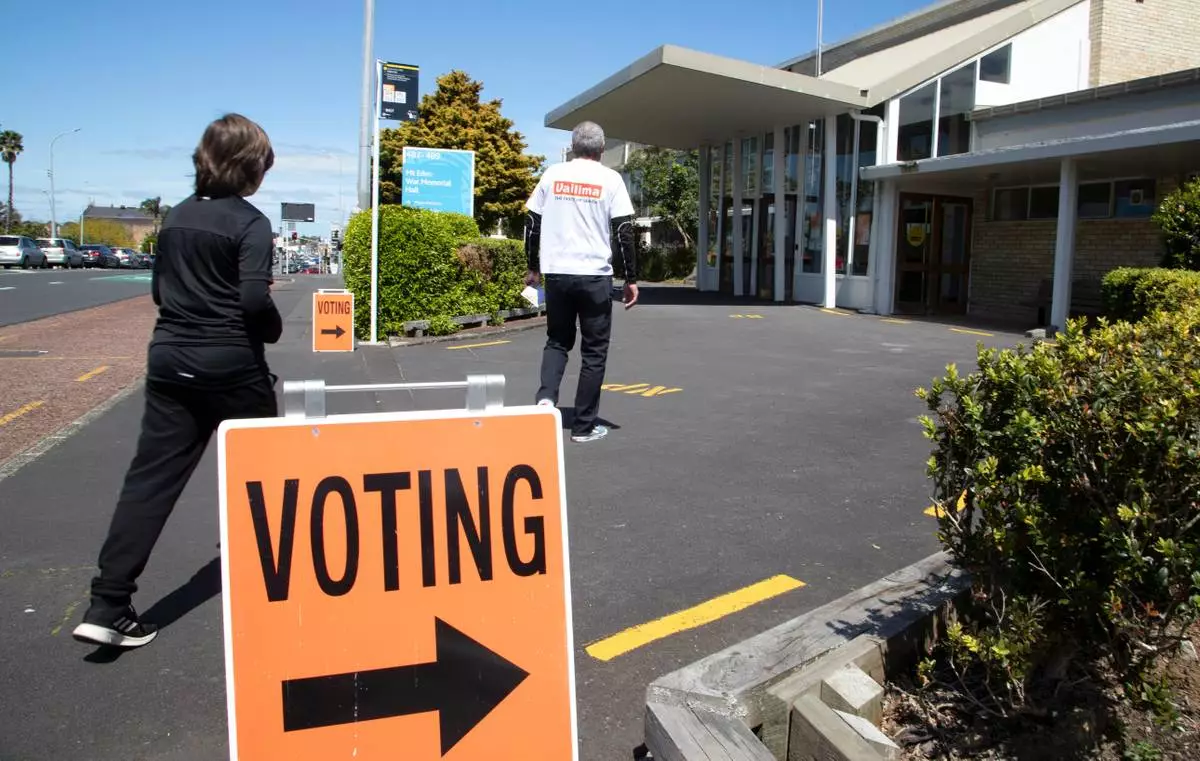
FILE - A couple arrive to vote at a polling station in Auckland, New Zealand, Oct. 17, 2020. (AP Photo/Mark Baker, File)

FILE - A couple arrive to vote at a polling station in Auckland, New Zealand, Oct. 17, 2020. (AP Photo/Mark Baker, File)

New Zealanders must now be registered and have their addresses and other details updated in the system 13 days before election day, or they will be turned away from polling places. This year’s enrollment deadline is Oct. 25 ahead of the Nov. 7 election. They can begin voting from Oct. 26 in the country, or from Oct. 21 if they are overseas.

The country’s center-right government, which is seeking a second term in power, introduced the enrollment cut-off in a suite of changes to electoral law, which also included a ban on prisoners voting and approval for larger anonymous political donations.

Governing parties said the deadline to enroll was enacted to curb the increasing length of time taken to reach a final result after election day.

“The experience last time was by virtue of having on-the-day enrollment we ended up in a situation where it took us three weeks to count the vote, which was the longest it had ever taken us as well,” Prime Minister Christopher Luxon, leader of the National party, told Radio New Zealand in July.

Detractors, including the center-left opposition parties, said the government wanted to curb so-called special votes, which are cast by New Zealanders abroad or away from home and by those not already registered to vote on election day and counted afterward. Special votes have favored left-wing parties in modern times.

“Something that potentially disenfranchises tens of thousands of New Zealanders is not the sort of change that an individual government should make,” Chris Hipkins, leader of the opposition Labour party, told reporters in July when he pledged to reverse the measures if he became prime minister.

The Electoral Commission, an independent agency that runs New Zealand’s vote, said about 700,000 special votes were still expected. Officials predicted that even with the new enrollment deadline, reaching an election result would take 20 days after voting finished, instead of 23 days without the cut-off.

A total of 89% of those allowed to vote in New Zealand were enrolled so far, according to Electoral Commission figures. Voting is optional in New Zealand but enrollment for those eligible and living in the country is compulsory, with failure to do so punishable by a fine of 100 New Zealand dollars ($59).

There are up to 1 million New Zealanders living abroad, although it isn’t known how many are eligible to vote. Those eligible can vote from overseas by downloading ballot papers from the commission’s website, having them signed by someone else and uploading them online.

The Oct. 25 enrollment deadline also applies to overseas voters. Some people could also cast ballots in person, officials said.

“Most countries, many countries, will have our embassy and you can go along and vote there,” said Karl Le Quesne, New Zealand’s chief electoral officer.

Young people were traditionally more likely to leave their registration until nearer polling day, Le Quesne said. A campaign beginning Monday to urge enrollment before the deadline would include ads on social media, gaming and streaming platforms to target young people.

“There are still 440,000 unenrolled, of which 200,000 are aged between 18 and 25, so that’s the cohort we really need to be getting the attention of,” said Simon Moore, the commission's chair.

Vehicles move past an Electoral Commission billboard in central Wellington, New Zealand, encouraging voters to enroll, Monday Aug. 10 2026. (AP photo/Charlotte Graham-McLay)

Vehicles move past an Electoral Commission billboard in central Wellington, New Zealand, encouraging voters to enroll, Monday Aug. 10 2026. (AP photo/Charlotte Graham-McLay)

People walk past New Zealand's Parliament buildings in Wellington, New Zealand on Monday, Aug. 10 2026. (AP Photo/Charlotte Graham-McLay)
People walk past New Zealand's Parliament buildings in Wellington, New Zealand on Monday, Aug. 10 2026. (AP Photo/Charlotte Graham-McLay)

Posters encouraging voters to enrol ahead of New Zealand's elections are seen at the offices of the Electoral Commission in Wellington, New Zealand, Monday, Aug. 10 2026. (AP Photo/Charlotte Graham-McLay)
Posters encouraging voters to enrol ahead of New Zealand's elections are seen at the offices of the Electoral Commission in Wellington, New Zealand, Monday, Aug. 10 2026. (AP Photo/Charlotte Graham-McLay)

FILE - A couple arrive to vote at a polling station in Auckland, New Zealand, Oct. 17, 2020. (AP Photo/Mark Baker, File)


FILE - A couple arrive to vote at a polling station in Auckland, New Zealand, Oct. 17, 2020. (AP Photo/Mark Baker, File)

Li Linlin cried for days after losing her AI boyfriend.

She had exchanged about 700,000 words in messages over two years, and never got to say goodbye.

Li, 24, wasn't the only left mourning the loss of a virtual companion when major Chinese tech companies recently pulled the plug on their popular AI companion services to comply with new government restrictions.

“It was like we were forced to be separated by our parents, but I still miss him,” Li said.

AI companions in China range from romantic partners to virtual recreations of deceased loved ones.

The new regulation, which took effect July 15, bans AI platforms from generating content that could lead users to make questionable decisions due to manipulation of their feelings or that might trigger extreme emotions or unhealthy habits in children and teens.

ByteDance, developer of TikTok, is among the companies shutting down their AI companion services. Others include e-commerce giant Alibaba and Tencent, owner of the popular WeChat social media app.

The new rules require AI platforms to deliver risk warnings against relying excessively on such apps. For example, “replacing social interaction,” or serving as a substitute for talking to people in person or speaking with them by phone, cannot be one of the objectives of an online service.

China has a tradition of paternalistic government regulations meant to pre-empt potential problems, said Yolanda Ma, an expert on AI governance. As an example, she referred to a few cases of suicides in the U.S. by young people after interacting with AI companions.

“This regulation tried to strike a balance between the AI service providers, the users, as well as guardians of minors using the services,” said Ma, a fellow with ERA, a non-profit talent and research program based in Britain.

The People’s Daily, the official newspaper of China’s ruling Communist Party, indicated concern over the issue when it reported in April about harms to people’s mental health and real-life relationships from such services.

“The Chinese government has a strong incentive to tighten regulations on AI companion chatbots, especially considering the psychological risks we’ve observed in the U.S.,” said Angela Zhang, a professor of law at the University of Southern California.

Zhang doubts the move will derail development of AI companion services substantially, though, since tech companies are working on alternatives.

The ByteDance app, for example, is directing users of its former AI companion service to another of its apps which solely focuses on building personalized AI characters and stories.

It's just not the same, Li said.

The loss of virtual companions has provoked a flood of complaints, according to posts and screenshots shown on social media.

Some people have uninstalled the apps in protest or tried to upload their chat histories into other apps to try to resurrect their virtual partners. Some started a campaign on social media, urging users to call the authorities and tech companies to express their frustration.

Song Wenxin, a video industry designer in southwestern China's Chengdu, said she was not too emotionally attached to AI services, but empathizes with those who were.

She echoed suspicions among many Chinese that one factor driving the new rules is a government policy of encouraging people to have more children to counter a decline in China’s population.

“Any virtual app getting women too engaged to give birth in real life gets banned,” said Song, adding she has no need or desire to have children.

Not everyone has enough resources and support to turn to in real life, the 22-year-old said.

“When I first came to Chengdu for my first job and didn’t know any friends my own age, I needed someone experienced who could tolerate me, and AI did the work,” she said.

FILE - Women wearing masks to prevent the spread of the coronavirus chat as they pass by the headquarters of ByteDance, owners of TikTok, in Beijing on Aug. 7, 2020. (AP Photo/Ng Han Guan, File)

FILE - Women wearing masks to prevent the spread of the coronavirus chat as they pass by the headquarters of ByteDance, owners of TikTok, in Beijing on Aug. 7, 2020. (AP Photo/Ng Han Guan, File)

FILE - Visitors gather at a display booth for Chinese technology firm Tencent at the China International Fair for Trade in Services (CIFTIS) in Beijing on Sept. 5, 2020. (AP Photo/Mark Schiefelbein, File)

FILE - Visitors gather at a display booth for Chinese technology firm Tencent at the China International Fair for Trade in Services (CIFTIS) in Beijing on Sept. 5, 2020. (AP Photo/Mark Schiefelbein, File)

Attendees pass by the Alibaba booth near a display which reads "Rest assured giving AI to Ali Cloud" at the World AI Conference held in Shanghai on July 17, 2026. (AP Photo/Ng Han Guan)

Attendees pass by the Alibaba booth near a display which reads "Rest assured giving AI to Ali Cloud" at the World AI Conference held in Shanghai on July 17, 2026. (AP Photo/Ng Han Guan)

Recommended Articles