The lingering effects of Typhoon Dolphin continue to pound coastal regions with strong winds and heavy rain on Monday, keeping authorities in east China's Zhejiang and Fujian provinces on high alert for secondary hazards.
Dolphin, the 13th typhoon of 2026, made landfall at Yuhuan City at around 17:30 on Sunday, then made its second landfall at Yueqing City in Zhejiang at around 18:40, according to China's National Meteorological Center.
The typhoon has weakened into t strong tropical cyclone by Sunday night.
However, its outer rainbands continue to lash surrounding areas with fierce gales and downpours.
Zhoushan, a coastal city in Zhejiang province, remains a Level II typhoon emergency response.
Along Zhoushan's most exposed stretches of coastline, authorities have sealed off access points to keep off people and vehicles. Seaside homestays have fortified their defenses with sandbags at doorways, secured outdoor fixtures, and drained swimming pools to reduce flooding risk. Power utility crews have stepped up patrols of electrical lines serving coastal accommodations.
In Zhoushan's Putuo District, a 30-meter-long, four-meter-wide iron roof has torn off a building by gales on Sunday, completely blocking the westbound lane and sidewalk of a major thoroughfare.
Traffic police and urban management teams responded immediately, cordoning off the area, evacuating nearby residents, cutting the large metal sheet into sections with power saws and clearing debris with heavy machinery, thus restoring traffic flow in order. The incident highlights ongoing threats such as falling objects, toppled trees, waterlogging and electric leakage during typhoon weather.
Further south in Fujian Province, the typhoon has also brought gusty winds and rainfall to multiple districts and counties in Ningde, prompting local preparations for flooding risks.
Xueqiao Village in Ningde's Qianqi Town is historically prone to inland waterlogging during typhoon rains. Tucked against hilly terrain, the low-lying village sees rapid runoff from upstream mountains converge there, and its adjacent industrial park, which is packed with factory buildings and production equipment, faces additional operational and safety risks if flooding occurs.
To prevent such threats, village workers opened floodgates ahead of the storm to boost the river's flood discharge capacity. Two water pumps, each capable of draining 1,500 cubic meters of water per hour, have been deployed with staff on duty around the clock to channel excess water directly to the sea via pipelines.
Ningde's meteorological authority has forecast continued rainfall across the city from Monday night through Tuesday, with heavy rain or rainstorms expected in northeastern counties. Local fire and emergency departments have mobilized rescue teams and stocked up on boats, satellite phones and other disaster-relief supplies, standing by to handle any potential emergencies.
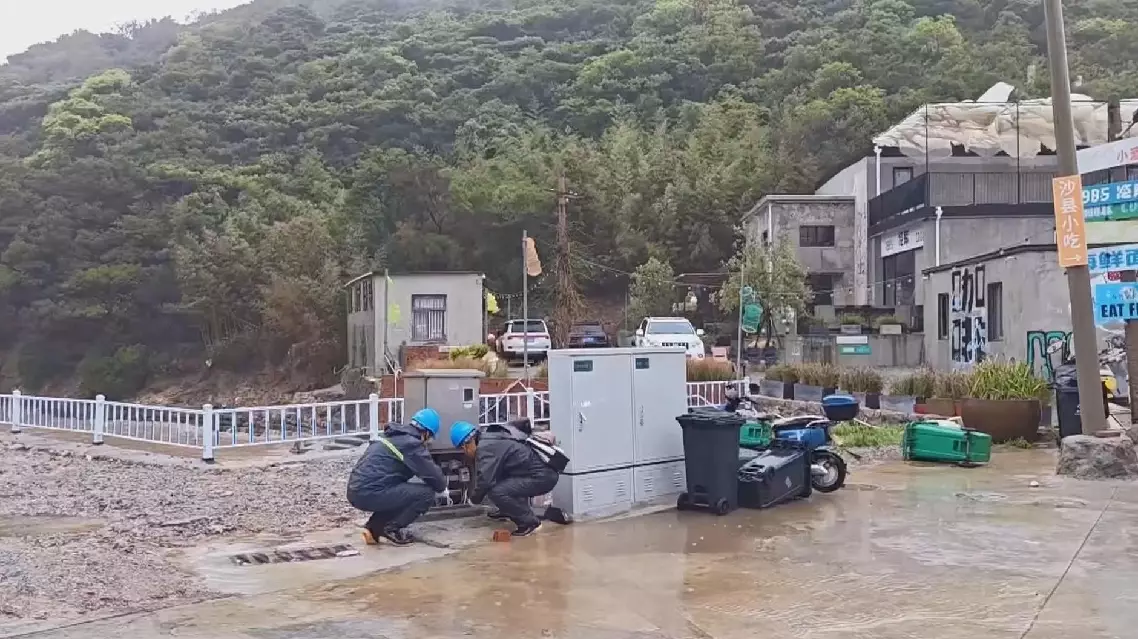
East China on high alert as Typhoon Dolphin brings intense storms
China's film industry is entering a new era of global reach, with an increasing number of productions ranging from commercial blockbusters to indie arthouse titles crossing borders and gaining worldwide recognition.
This week, regional-dialect film "Dear You" officially hit big screens in Thailand and Indonesia. Directed by Lan Hongchun, a Chaoshan-region filmmaker from southern China's Guangdong Province, the movie touched audiences with its sincere, heartfelt storyline.
"I feel very touched. I feel very proud. I feel very proud of my grandparents. My grandparents are from Fujian," said Vincent, an Indonesian-Chinese viewer.
The film centers on "qiaopi", a unique form of correspondence that combined letters and remittances sent home by earlier generations of overseas Chinese in the 19th and 20th centuries.
Set against the distinct backdrop of Teochew Chinese culture, the narrative highlights the historic diaspora experience, capturing universal themes of displacement, nostalgia, and memories passed down through generations.
The story reached audiences in Indonesia with the help of local film distribution company PT. Prima Cinema Multimedia.
"PT. Prima decided to introduce 'Dear You' to Indonesia because we saw its huge market potential in China and several Asian markets. So when we saw the movie, we felt that it could have a positive impact," said Sasha, marketing manager of the company.
According to statistics from the National Film Administration, as of July 25, the overseas box office of the low-budget film has exceeded 80 million yuan (about 11.8 million U.S. dollars).
The global popularity of "Dear You" is not an isolated case. Chinese films have seen accelerated global expansion this year.
A Chinese animated film "All Wishes Come True," inspired by the legend of the Eight Immortals, will arrive in cinemas in Australia, New Zealand and Papua New Guinea on August 13. It will then open in the United States, Canada, the United Kingdom, Ireland and the Netherlands the following day.
Industry experts noted that beyond traditional overseas markets such as North America, Chinese films have expanded into emerging markets in Africa and Eastern Europe in the first half of this year.
"In the first half of 2026, more than 20 Chinese films have been released overseas, representing growth compared to 2025. Films like 'Blades of the Guardians: Wind Rises in the Desert,' and 'Silent Awakening' debuted in over 200 theaters in North America, representing a remarkably high scale for individual Chinese film overseas releases," said Weng Yang, an associate professor at Beijing Film Academy.
Chinese films have also undergone a systematic upgrade in their overseas outreach pathways since the beginning of this year, with Chinese film and television institutions beginning to establish independent overseas distribution channels and networks.
"IP operation is no longer limited to one-time copyright sales of individual works. Instead, most new productions are planned with a global vision from the initial creative stage. This model greatly boosts the development of serial film works and realizes the sustainable release of long-term value," explained Huai Wei, Deputy Manager of China Film Co-production Corporation.

Chinese films reach new audiences worldwide