Skip to Content Facebook Feature Image

A blocked Iranian flight to Yemen set off Houthis' latest spiral with Saudi Arabia

News

A blocked Iranian flight to Yemen set off Houthis' latest spiral with Saudi Arabia
News

News

A blocked Iranian flight to Yemen set off Houthis' latest spiral with Saudi Arabia

2026-08-10 18:23 Last Updated At:18:41

CAIRO (AP) — A volley of fire between the Iranian-backed Houthis and Saudi Arabia has threatened to upend a 2022 truce in Yemen and open another front in the already expanding war in the Middle East after the collapse of the ceasefire deal between the U.S. and Iran.

“Yemen today faces a greater risk of renewed large-scale conflict than at any point since the U.N.-brokered truce of April 2022, ” U.N. envoy Hans Grundberg warned.

The escalation, he said, risks “jeopardizing the gains of the 2022 truce ... while also drawing the country into a broader regional confrontation, with devastating consequences for its people.”

Grundberg said he has engaged in intensive talks with Yemeni parties and regional governments to avert further escalation.

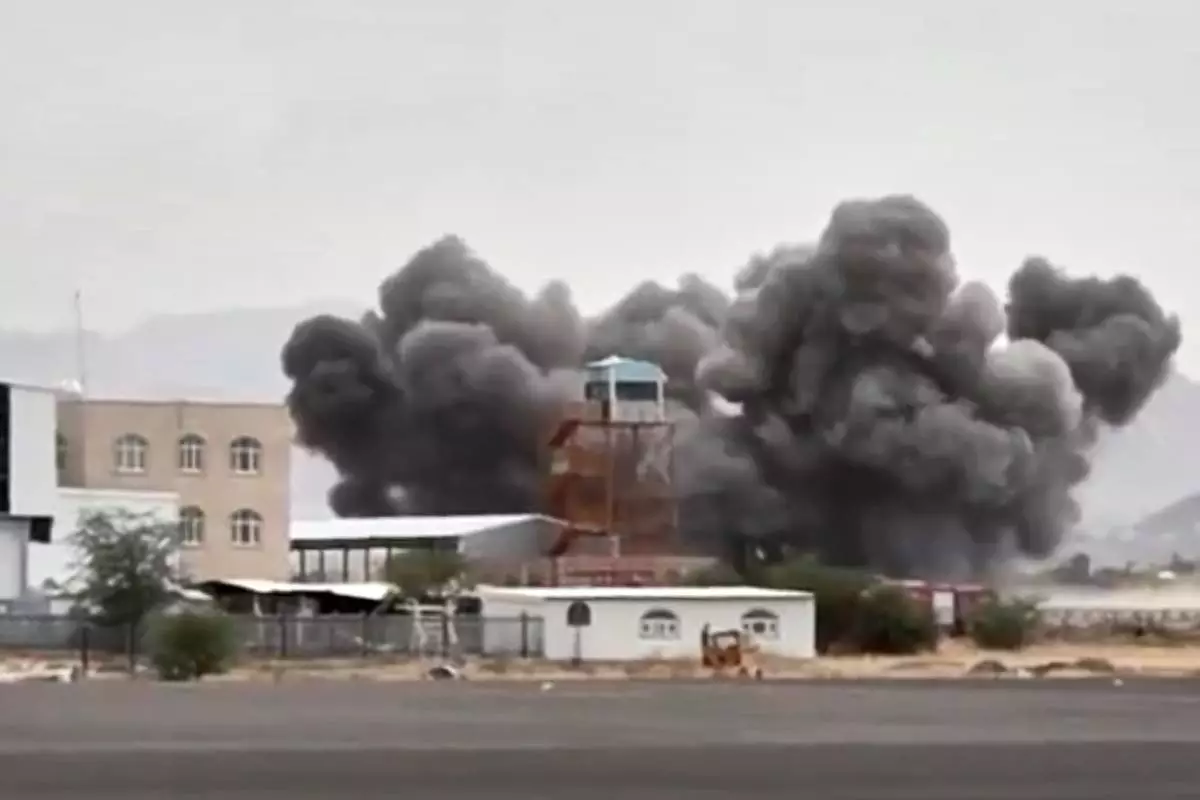
The tit-for-tat attacks started July 13 with a Saudi airstrike that hit the runway of the airport in Yemen’s capital, Sanaa, preventing the landing of an Iranian flight carrying a high-ranking Houthi delegation.

Flying a flight without prior permission from the Saudi-led coalition — a decade-long, war-related requirement — was an attempt by the Houthis to establish a new reality on the ground, challenging the coalition’s control over Yemeni airspace.

The rebels, apparently emboldened by the fallout of the U.S.-Israeli war against Iran, sought to gain political and economic concessions from Saudi Arabia, and insisted on lifting the Saudi blockade on territories they control in Yemen.

They turned down an offer by the Saudi-backed internationally recognized government in Yemen to facilitate the Houthi delegation’s travel to Sanaa on a non-Iranian airline, said government and Houthi officials who spoke on condition of anonymity to discuss the talks.

The Houthis proceeded with the flight operated by Iranian-privately owned, U.S.-sanctioned Mahan Air, forcing the Saudi-led strike that disabled the Sanaa airport.

The Saudi-led coalition eventually allowed the flight to land in the Houthi-controlled city of Hodeida, as part of Omani-led effort to avert an escalation, said a Gulf official, who demanded anonymity to discuss the matter.

Yasmeen al-Eryani, an analyst at the Sana’a Center for Strategic Studies, argued that the Mahan Air flight saga is part of Iran’s escalation of the war.

“By activating the Yemeni front, Tehran reiterates the strategic value of that pressure lever and signals that attacks on Iran can produce costs elsewhere, particularly for Saudi Arabia and the Gulf,” she said.

Following the Sanaa airport strike, the Houthis attacked the Abha airport in southwestern Saudi Arabia and announced a blockade on Saudi shipping in the Red Sea. They attacked Saudi vessels as well as oil facilities inside the kingdom, adding further disruption to the global economy.

The Saudi-led coalition responded with strikes on Hodeida and Kamaran, Yemen’s largest island in the Red Sea. It has also reinforced Yemeni troops along the front lines in Yemen to launch a ground offensive on Houthis, the Yemeni officials said.

Anticipating a ground offensive, the rebels launched dozens of missiles and drones on military camps in central and southern Yemen, which killed dozens of troops and civilians. They also attacked the Red Sea city of Mokha, severely damaging the city’s crucial port, which remains under the control of the internationally recognized government.

In recent years, the Houthis have faced growing internal challenges stemmed from deteriorating living conditions in their territories.

“A prolonged situation of ‘no war, no peace’ has raised public expectations for tangible economic and living improvements, generating growing internal pressure on the group,” Salah Ali Salah, a Yemeni researcher, said.

They sought to turn the blame on Saudi Arabia for its air and naval blockade on their territories and framed the escalation as an extension of the Yemen war, rather than a new front in the Iran war, he said.

The blockade was part of the war efforts by the Saudi-led coalition that entered the conflict in March 2015, six months after the Houthis descended from their northern stronghold and took control of Sanaa, forcing the government to flee to the south then to Saudi Arabia.

The war has turned Yemen to one of the world’s worst humanitarian crises, and people living in the Houthi-held territories are the most hungry.

The conflict eventually deteriorated into a stalemate and the warring parties reached a truce in April 2022 that ended major fighting across the country and stopped Houthi missile and drone attacks on Saudi Arabia and the United Arab Emirates, which quit the coalition over a year ago.

The Omani back-channel talks focused on averting the collapse of the 2022 truce, but have yet to produce a compromise.

Ahmed Nagi, a senior Yemen analyst at the International Crisis Group, said the escalation reflected a broader shift in Houthi priorities, from attempting to extract confidence-building measures, such as payment of salaries to civil servants in Houthi-controlled areas, to clearly casting the conflict as being about Yemen’s sovereignty over its airspace, ports and territorial waters.

“By taking direct action to reassert this view, the Houthis have raised the political stakes and made future compromise considerably more difficult,” he said.
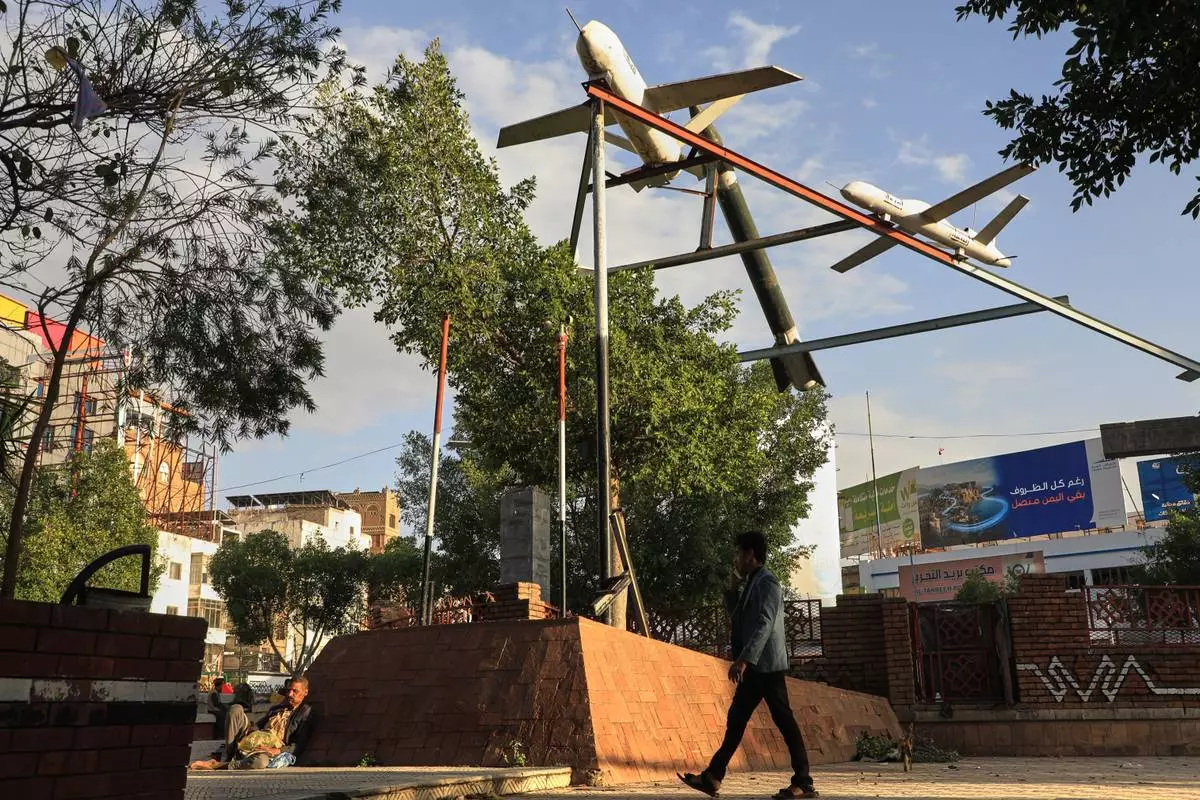
FILE - A Yemeni man walks past a monument featuring mock rockets in Sanaa, Yemen, July 28, 2026. (AP Photo/Osamah Abdulrahman, File)
FILE - A Yemeni man walks past a monument featuring mock rockets in Sanaa, Yemen, July 28, 2026. (AP Photo/Osamah Abdulrahman, File)

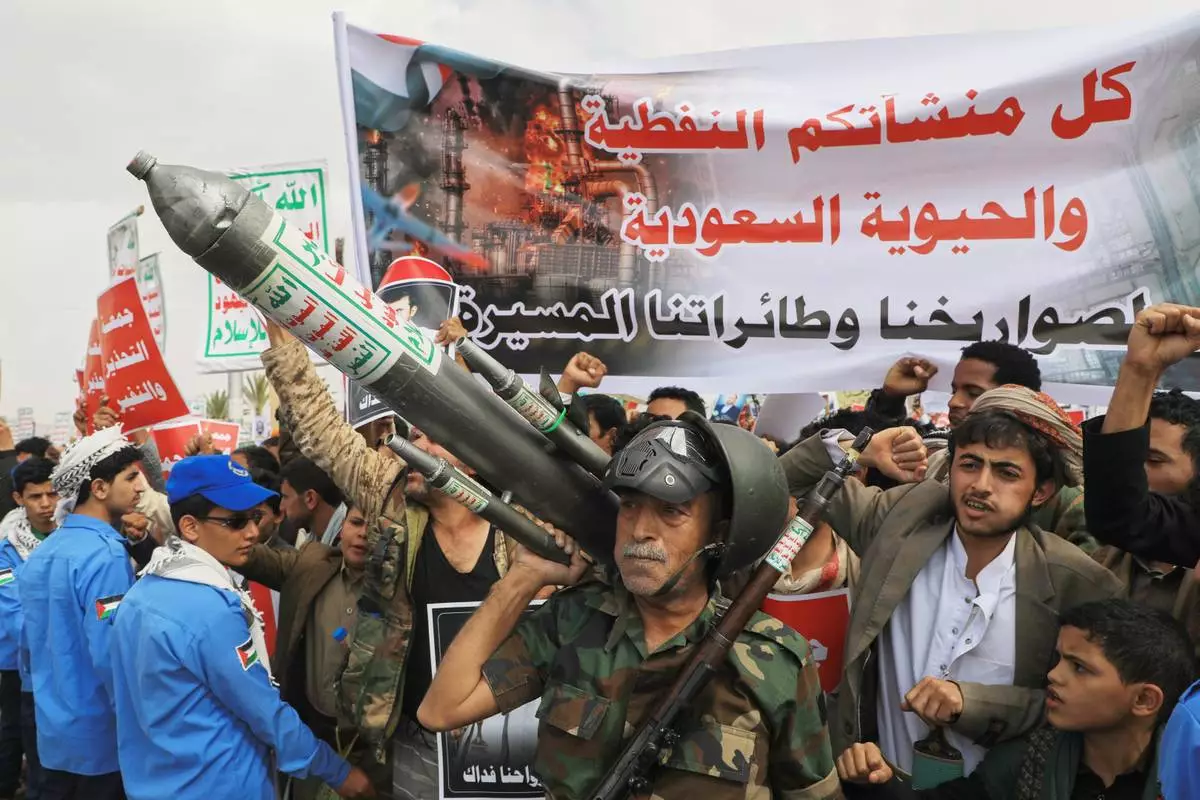
FILE - Houthi supporters hold a rally in Sanaa, Yemen, July 17, 2026, against the Saudi-led coalition. Banner in Arabic reads, "All Saudi oil facilities are targets to our missiles and drones." (AP Photo/Osamah Abdulrahman, File)
FILE - Houthi supporters hold a rally in Sanaa, Yemen, July 17, 2026, against the Saudi-led coalition. Banner in Arabic reads, "All Saudi oil facilities are targets to our missiles and drones." (AP Photo/Osamah Abdulrahman, File)

FILE - This image taken from video broadcast by Al-Masirah TV, a Houthi-controlled news channel, shows an explosion at the Sanaa International Airport compound during what the Iranian-backed Houthi rebels in Yemen said were several Saudi airstrikes in Sanaa, Yemen, July 13, 2026. (Al-Masirah TV via AP, File)


FILE - This image taken from video broadcast by Al-Masirah TV, a Houthi-controlled news channel, shows an explosion at the Sanaa International Airport compound during what the Iranian-backed Houthi rebels in Yemen said were several Saudi airstrikes in Sanaa, Yemen, July 13, 2026. (Al-Masirah TV via AP, File)
PARIS (AP) — France is bracing for its fifth heat wave alert of the season, adding to an intense stretch of hot weather that has repeatedly sent temperatures soaring across the country since May.

National weather agency Météo-France is warning about temperatures approaching 40 C (104 F) from Tuesday onward in southeastern France.

Across Europe, the extreme heat began in May and has contributed to major wildfires, prolonged drought and new national temperature records, as well as thousands of projected heat-related deaths.

Globally, so far this is the third-hottest year, behind 2024 and 2025, climate statistics show. But 2026 still has time to catch up. Thanks to the one-two punch of accelerated human-caused global warming and a supersized El Niño — a periodic warming of parts of the Pacific that leads to temperature variations around the globe — there’s an increasing chance that by the end of the year, 2026 could become the hottest year on record, scientists said.

Last month saw the highest average sea surface temperature ever recorded for July across the extrapolar oceans, or the oceans free of seasonal sea ice, according to the European climate agency Copernicus.

That was partially fueled by developing El Niño conditions in the equatorial Pacific, the service said. The new average record for July is 20.96 degrees Celsius (69.73 degrees Fahrenheit), which beat the 2023 record of 20.89 C (69.60 F).

But last month’s average surface air temperature globally was 16.90 C (62.42 F), making it only the joint second warmest July on record, tied with July 2024, Copernicus reported.

In Western Europe, meanwhile, the average temperature record for the June-July period hit 21.62 C (70.92 F), Copernicus said, toppling the 2022 record.

“Persistent high-pressure systems trapped heat over western Europe, the extreme temperatures also amplified widespread drought. As soils dry out, they lose their ability to provide natural cooling, allowing heat to build more readily,” said Samantha Burgess, strategic lead for climate at the European Centre for Medium-Range Weather Forecasts.

“This is a clear example of how climate change is intensifying heat extremes, with heat and drought increasingly reinforcing one another.”

In France alone, heat wave alerts were issued for the first time on record in May, when more than half the country recorded new monthly temperature highs. The heat intensified in June, a period during which at least 5,700 more deaths than usual were recorded, according to France’s public health agency.

Météo-France said June 23 was the hottest day ever recorded in the country. Temperatures climbed as high as 44.3 C (111.7 F) in the southwest.

Two other heat wave episodes were recorded in July, amplifying a historic wildfire in southwestern France that forced 220,000 people to flee their homes in one of the continent’s biggest evacuation efforts since World War II.

In the U.K., an amber heat health alert for most of England will be in place from Tuesday as temperatures are forecast to climb to 36 C (96.8 F) later this week.

Temperatures were slightly cooler on Monday but the country readied for its fifth heat wave in an exceptionally hot and dry summer, with half of England and all of Wales plunged into drought.

The heat alert warns that significant impacts on health services, including a rise in deaths among older and vulnerable people, are likely.

Two record-breaking heat waves in May and June led to more than 2,800 excess deaths linked to extreme temperatures.

Dazio reported from Berlin. Sylvia Hui in London contributed to this report.

People walk over a stone dam, that is normally covered by water, towards the "Maeuseturm" (mice tower) in the middle of the river Rhine in Bingen, Germany Monday, Aug. 10, 2026. (AP Photo/Michael Probst)

People walk over a stone dam, that is normally covered by water, towards the "Maeuseturm" (mice tower) in the middle of the river Rhine in Bingen, Germany Monday, Aug. 10, 2026. (AP Photo/Michael Probst)

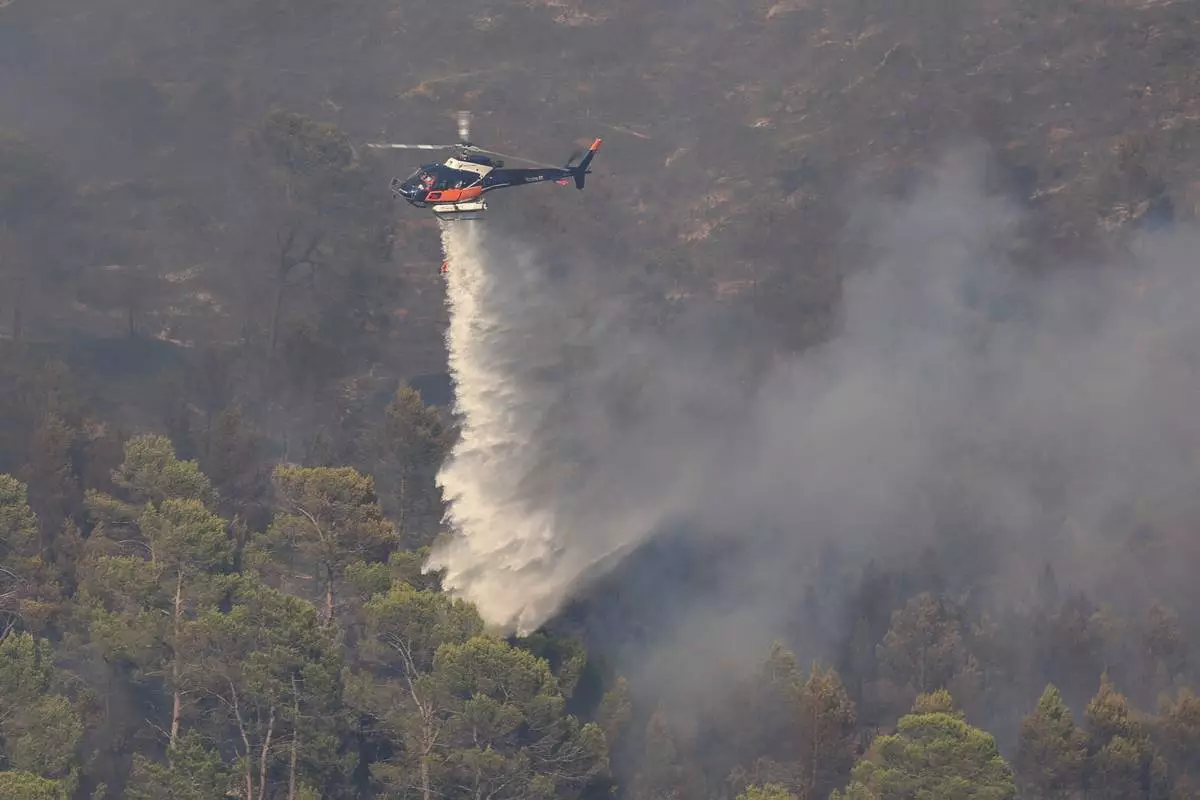
A firefighting helicopter releases water over a wildfire near Correns, southeastern France, Saturday, Aug. 1, 2026. (Clement Mahoudeau/Pool Photo via AP)

A firefighting helicopter releases water over a wildfire near Correns, southeastern France, Saturday, Aug. 1, 2026. (Clement Mahoudeau/Pool Photo via AP)

A pharmacy display shows a temperature of 42 degrees Celsius in Paris during a heat wave, Wednesday, July 29, 2026. (AP Photo/Aurelien Morissard).

A pharmacy display shows a temperature of 42 degrees Celsius in Paris during a heat wave, Wednesday, July 29, 2026. (AP Photo/Aurelien Morissard).

Vehicles cross the Rhine bridge on the A48 highway with a view of the low water levels on the Rhine, near Bendorf, Germany, Sunday, Aug. 9, 2026, (Thomas Frey/dpa via AP)

Vehicles cross the Rhine bridge on the A48 highway with a view of the low water levels on the Rhine, near Bendorf, Germany, Sunday, Aug. 9, 2026, (Thomas Frey/dpa via AP)

A man walks on dried grass in a park, amid drought conditions in London, in London, Sunday, Aug. 9, 2026. (AP Photo/Kirsty Wigglesworth)

A man walks on dried grass in a park, amid drought conditions in London, in London, Sunday, Aug. 9, 2026. (AP Photo/Kirsty Wigglesworth)

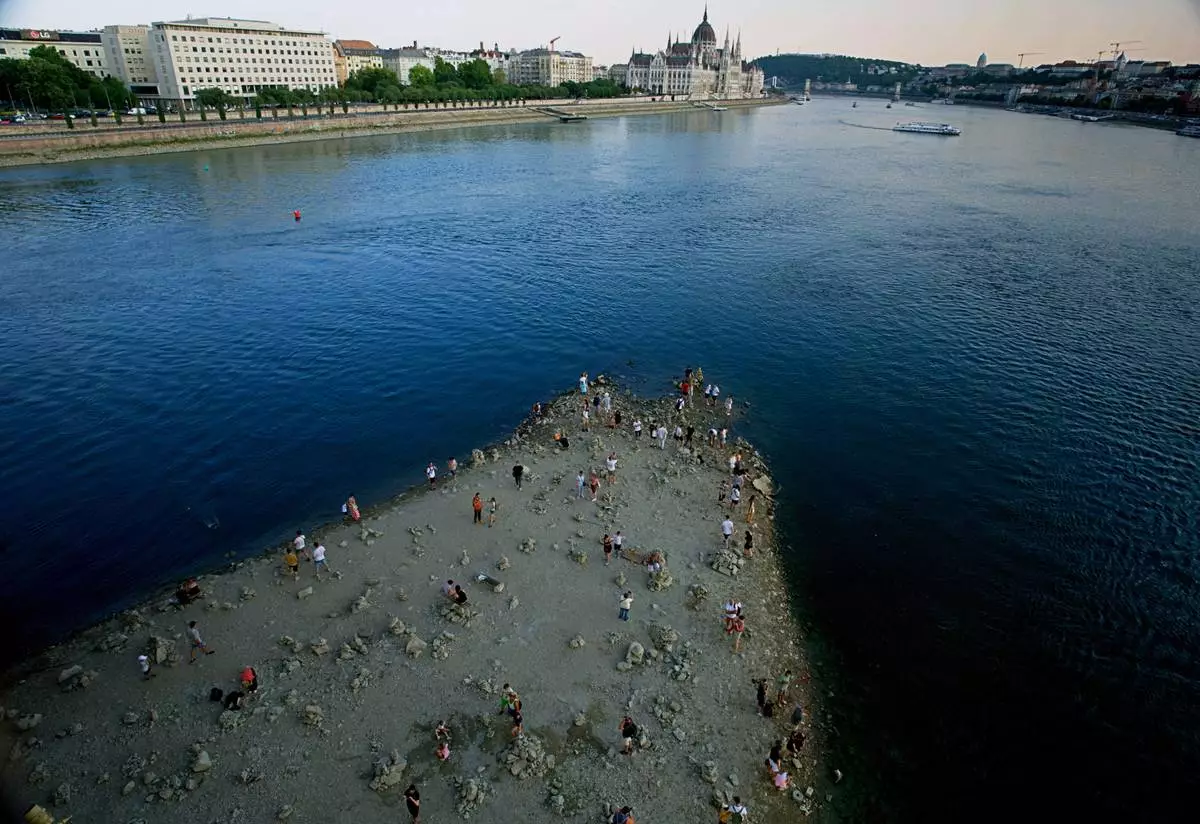
People walk on a sandbar underneath the Danube's Margareth Bridge in downtown Budapest, Hungary, Wednesday Aug. 5, 2026, as the river, which runs through 10 European countries, has receded never-before-seen low water levels. (AP Photo/Bela Szandelszky)

People walk on a sandbar underneath the Danube's Margareth Bridge in downtown Budapest, Hungary, Wednesday Aug. 5, 2026, as the river, which runs through 10 European countries, has receded never-before-seen low water levels. (AP Photo/Bela Szandelszky)

Recommended Articles