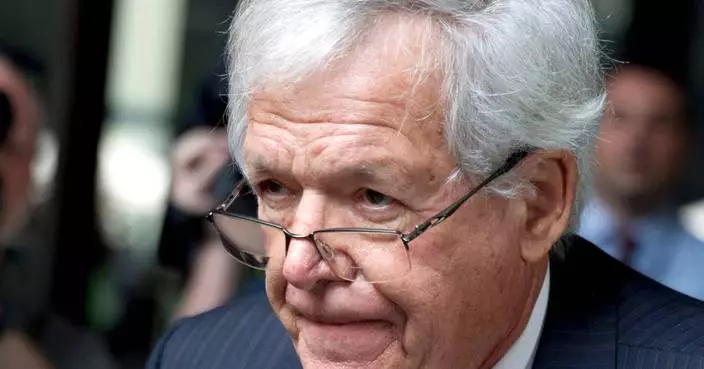
UEFA, CONCACAF and the AFC believe that FIFA president Gianni Infantino's recent plan to sell an interest in the World Cup was a “fundamental breach of trust” with the institutions world soccer's governing body serves.
In an “open letter to the football family” revealed on Monday, UEFA, CONCACAF and the AFC also said that “when trust is broken through deception, when an individual places himself above the collective that entrusted him with authority, that duty has been abandoned.”
UEFA runs soccer in Europe, CONCACAF does the same for North, Central America and the Caribbean, while the AFC governs the sport in Asia.
The letter was co-signed by UEFA president Aleksander Čeferin, AFC president Salman Bin Ibrahim Al-Khalifa, CONCACAF president Victor Montagliani and three general secretaries.
“Football is the world’s greatest shared passion. It belongs to no individual and no institution. It belongs to the players, the fans, the clubs, the member associations and every institution entrusted with safeguarding its future,” the open letter said. “It is in that spirit, as confederations representing its members, that we speak collectively today.”
Infantino is facing a revolt after his failed plan to sell stakes in the World Cup to private equity investors.
“It is not the conduct of a custodian of the game, but of one who believes the game is answerable to him,” the letter said. “These are not the qualities football deserves in its leadership. That is why we have taken this stance: not lightly and not alone, but together, and out of duty to the game we serve.”
UEFA previously issued a threat to boycott the World Cup and other FIFA competitions despite the governing body abandoning and apologizing for its failed plan.
Norway’s soccer federation called for Infantino to step down, while the English Football Association has also withdrawn its support for Infantino’s re-election next March.
“Football’s strength has always been its unity. We call for that unity to be honoured now,” the letter said. “For leadership that serves football, not seeks to command it.”
Last Wednesday, FIFA said it had apologized for errors made over the failed plan but that senior staff at a crisis meeting in Morocco “reaffirmed their full support” for his presidency.
However, the nature of the meeting was also met with criticism.
“FIFA’s own letter also confirms that only one elected official was present at the leadership meeting in Morocco,” the open letter said. “No FIFA Council members or Member Associations were invited to participate. Only the management committee, composed of FIFA-employed senior staff, was present.”
FIFA was also urged to go further than just acknowledging mistakes were made.
“It treats this as a failure of communication, when what football witnessed was a failure of judgment,” the letter said. “There remains no recognition that attempting to sell an interest in the FIFA World Cup was a profound failure of judgment — not just a procedural misstep, but a fundamental breach of trust with the very institutions FIFA exists to serve.”
In a statement Saturday, FIFA defended Infantino against what it called a “concerted and ongoing effort” to undermine his leadership of the organization.
That statement followed a report by British newspaper The Daily Telegraph raising questions about an exit package paid by UEFA to a female staffer who worked with Infantino when he was general secretary of European soccer's ruling body.
UEFA confirmed that a “departure payment” was made to the employee and said it was “in line” with regulations at the time.
Infantino worked at UEFA for 16 years before being elected FIFA president.
AP soccer: https://apnews.com/hub/soccer
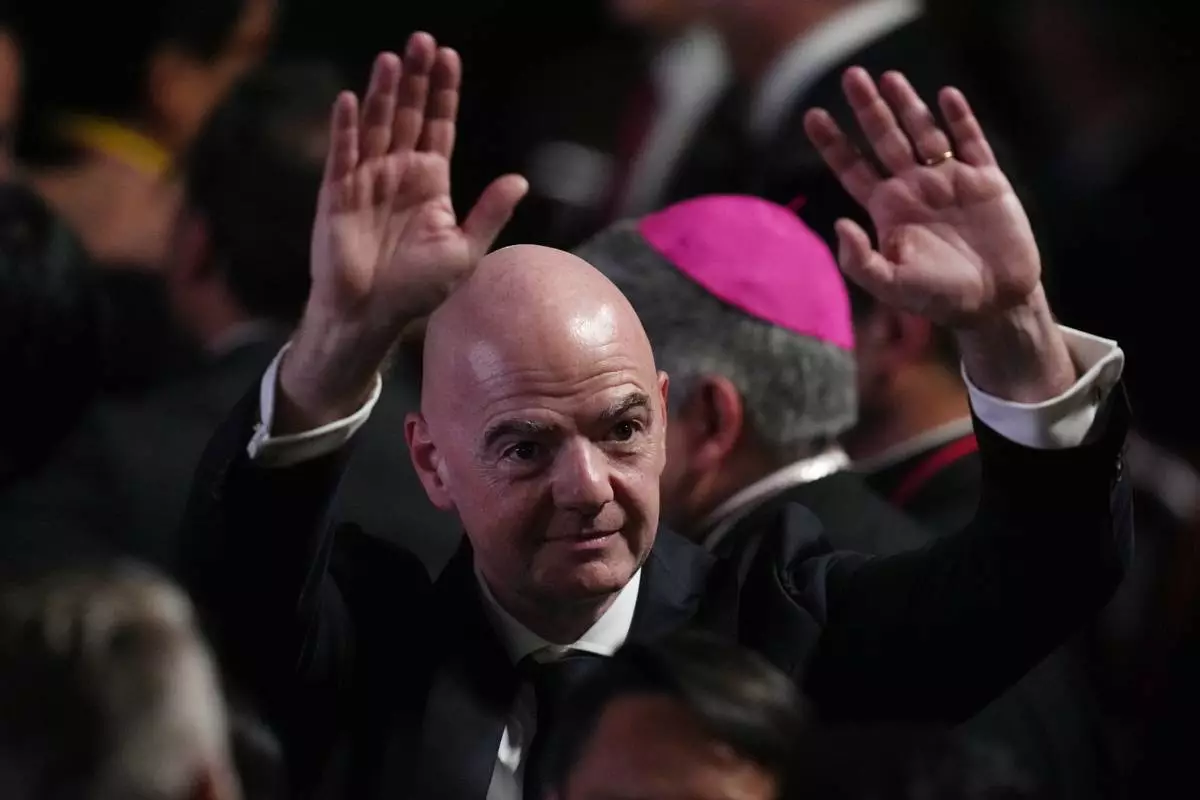
FIFA President Gianni Infantino arrives for the inauguration of President Abelardo de la Espriella in Cali, Colombia, Friday, Aug. 7, 2026. (AP Photo/Matias Delacroix)
ADEN, Yemen (AP) — Forces of Yemen’s internationally recognized government began a major offensive Monday against the Iranian-backed Houthi rebels on the country's Red Sea coast, under an intensified air campaign by the Saudi-led coalition.
The offensive came just after the rebels said they had captured more territory in the southwestern part of Yemen, taking a key town in a blow to the Saudi-backed forces as they advanced toward a strategic provincial capital in the region.
The Saudi-led coalition spokesman, Maj. Gen. Turki al-Malki, said 100 fighter jets were providing support to the forces of Yemen’s internationally recognized government fighting against the Houthis. He said the coalition has secured “air protection” of the strategic Bab el-Mandeb Strait and destroyed hundreds of Houthi targets as part of the ongoing campaign.
The campaign and its details could not be immediately independently verified.
Secretary of State Marco Rubio told reporters that it was expected that the Saudi-backed government in Yemen would hit back at the rebels to reclaim territory. Asked if the Saudi-led coalition coordinated the action with the United States, Rubio said that Saudi Arabia and the U.S. have a defense agreement but wouldn’t offer more details.
He said the Yemeni government was ousted from some of its territory by a Houthi campaign and the Saudis have come under attack, and “they have a right to defend themselves."
The U.S. has provided support to Saudi Arabia in its ongoing campaign against the Houthis, according to a regional official and a U.S. official. This U.S. support included intelligence sharing, target identification and planning for the offensive, said the officials who spoke on condition of anonymity because they weren’t authorized to speak to reporters.
The U.S. had supported the Saudi-led coalition fighting the Houthis early in the Yemen war, before quitting the coalition in recent years.
The Houthi rebels seized the town of Turbah on Sunday, shortly before the internationally recognized government announced a major military operation against them.
The escalation between Saudi Arabia and the Houthis has revived Yemen’s civil war after a four-year ceasefire.
Turbah sits on a main road linking the provincial capital of Taiz with the port city of Aden, which serves as an interim seat of Yemen's government. Over the years, the town was a major post for the government forces defending Taiz against the Houthis.
Earlier, the Houthis seized several villages and areas on Taiz's outskirts in a series of advances, paving the way for the rebels to encircle Taiz, Yemen’s third-largest city.
The Houthis made a swift push on the country's western coast on the Red Sea in early September. They captured the strategic city of Mokha and several Red Sea islands, gains that enabled them to control the Yemeni side of the Bab el-Mandeb Strait, a crucial chokepoint through which 12% of global trade transits.
In its announcement Sunday, the Saudi-backed government said it was mobilizing troops across government-held areas.
Rashad al-Alimi, head of the ruling Presidential Leadership Council, said in a televised speech that the operations were aiming at “recovering the remaining territories” controlled by the Houthis. He called on the international community to provide support to his government.
Hours after al-Alimi’s declaration, a Saudi military spokesperson, Maj. Gen. Turki al-Malki, vowed “full operational support” to the Yemeni government forces, until the Houthis are “eliminated.”
Al-Malki also stressed Saudi Arabia’s right to take all necessary measures to deter the rebels who continued to fire missiles and drones at the kingdom as part of the nearly three-month escalation that revived Yemen’s civil war.
On Monday, factions allied with the Saudi-backed coalition fighting the Houthis said they launched offensives against the rebels on the eastern flank of the coastal areas that the Houthis had seized in their latest advances.
They attacked Houthi positions in the town of Dhubab, on the coast of the Bab el-Mandeb strait, said Col. Majed al-Nazili, spokesman for the Saudi-backed forces.
The Giants Brigades, a government-allied group, said it began a “decisive military operation against the Houthi militias,” also in the Bab el-Mandeb area.
Al-Alimi said in a post on X on Monday that the operation — dubbed “Yemen Dawn” — has started with the aim of “restoring state institutions, liberating" Sanaa, Yemen’s rebel-controlled capital, and ending "the Houthi terrorist militia coup.”
Al-Nazili said government forces were carrying out a “strategic offensive” on Sanaa. The Houthi media office reported multiple airstrikes by the Saudi coalition on their territories, including Sanaa.
The latest flare-up began in mid-July, when the Houthis accused Saudi Arabia of bombing the airport in Sanaa to prevent the landing of an unauthorized Iranian flight. The rebels responded with missile and drone attacks against Saudi Arabia and the Yemeni government forces in the country.
They also announced a blockade on Saudi shipping in the Red Sea and attacked several Saudi-linked vessels.
Then in September, they intensified their campaign, storming down the Red Sea coast in their biggest land grab in years.
The rebels' taking of Turbah “will likely severely constrain Yemeni government-aligned forces’ ability to reinforce and resupply front-line positions” across Taiz province and the provincial capital of Taiz, according to the Institute for the Study of War, a Washington-based think tank.
“Disrupting resupply has military value, of course, but controlling all the roads in and out of areas to the north of Turbah also prevents government forces from retreating out of the city,” the think tank wrote in a Sunday analysis.
Yemen’s civil war began in 2014 when the Houthis descended from their northern stronghold, capturing Sanaa and forcing the government to flee into exile in Saudi Arabia. The war created one of the world’s worst humanitarian disasters and killed more than 150,000 people.
The latest bout of violence has killed at least 959 people and wounded over 4,200 others, according to the World Health Organization. The flare-up forced about 174,097 people to flee their homes inside Yemen, according to the U.N. migration agency. More than 3,000 others fled across the waters into Djibouti, the agency reported.
Last week, Yemen’s health ministry — part of the internationally recognized government — warned about the conflict’s impact on health facilities and medical staff across Taiz province. The ministry said in a statement on Friday that health facilities in coastal, western and southern areas of the province have closed or are barely partially functioning.
Magdy reported from Cairo. Associated Press writer Matthew Lee contributed to this report.

A tea seller pours milk from a can as he prepares tea at a market in Houthi-controlled Sanaa, Yemen, Monday, Sept. 28, 2026. (AP Photo/Osamah Abdulrahman)
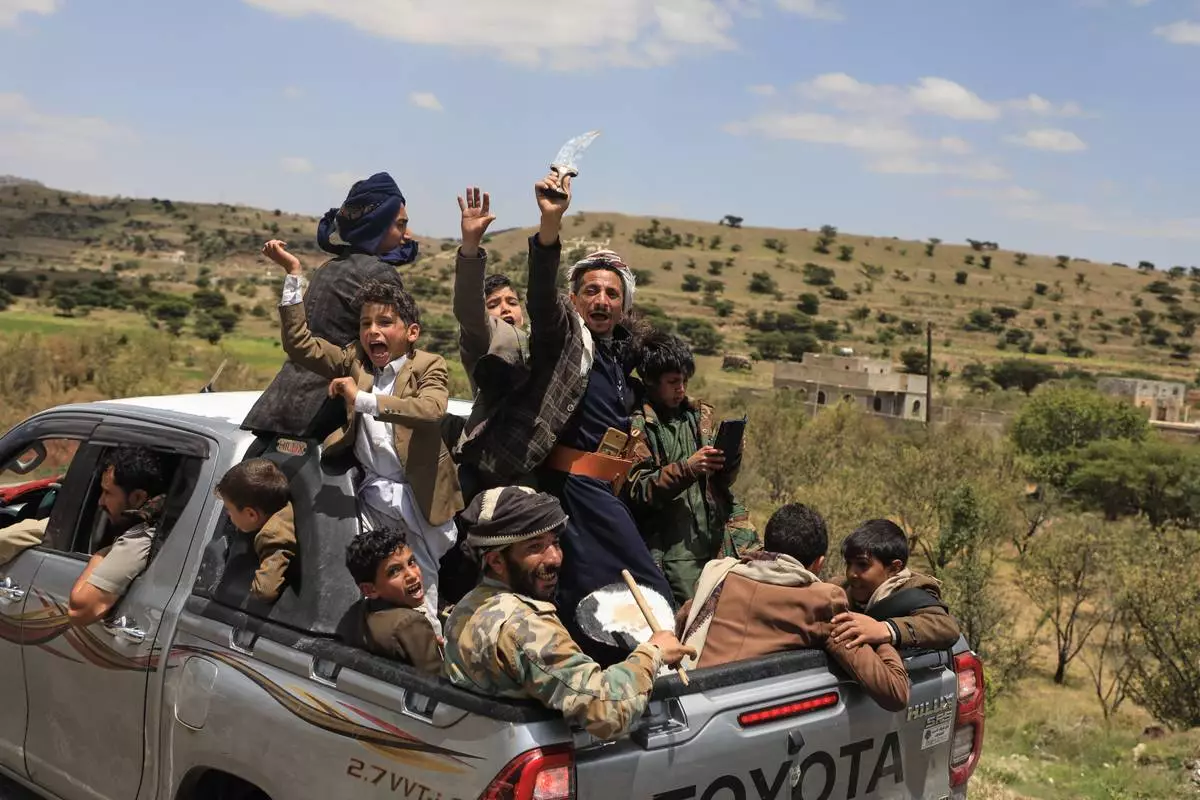
Yemeni civilians celebrate while riding in the back of a pickup truck in the Bani Matar district, Yemen, Saturday, Sept. 12, 2026, as they follow a convoy carrying Houthi prisoners freed in Mokha on its way to Sanaa following the Houthi takeover of the southern Red Sea port city. (AP Photo/STR)
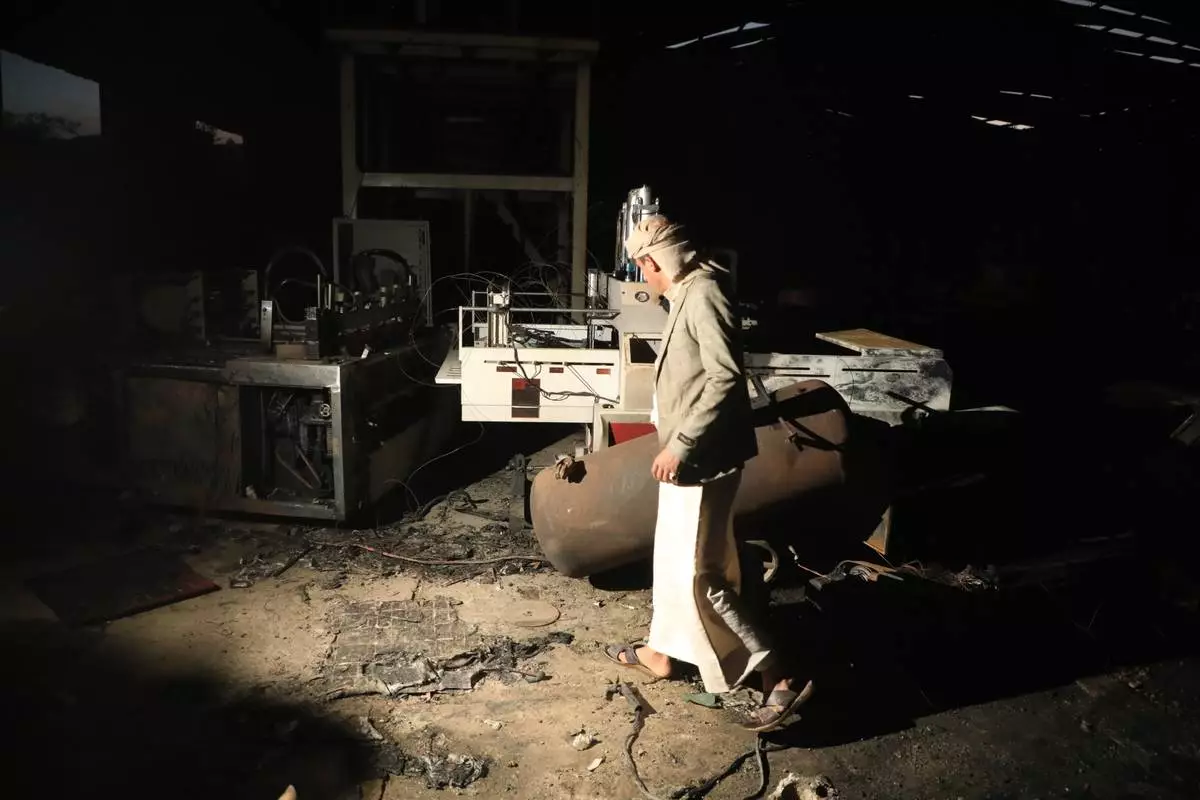
A man walks inside a damaged sponge factory in Sanaa, Yemen, Sunday, Oct. 4, 2026. (AP Photo/Osamah Abdulrahman)