Skip to Content Facebook Feature Image

Appeals court grants Trump request to halt order restoring Venezuelan TPS

News

Appeals court grants Trump request to halt order restoring Venezuelan TPS
News

News

Appeals court grants Trump request to halt order restoring Venezuelan TPS

2026-11-19 23:34 Last Updated At:23:40

A federal appeals court has agreed to keep deportation protections frozen for hundreds of thousands of Venezuelan migrants, shortly after the Trump administration filed an emergency appeal to the Supreme Court.

The order handed down late Wednesday means the administration remains free to detain and deport Venezuelans who had previously been granted temporary protected status. Federal attorneys have said some 1,800 are in detention, and about 330 are subject to deportation proceedings.

The Supreme Court previously intervened to allow the administration to temporarily end the program for Venezuelans.

Congress created the TPS program in 1990 to protect migrants from deportation to countries experiencing natural disasters or civil unrest. The designation is granted in periods of up to 18 months.

The Trump administration argues that TPS is a temporary program and that Venezuela no longer meets the requirements for its renewal.

During President Donald Trump’s second term, the Department of Homeland Security has terminated TPS for more than 1 million people from 13 countries, including Venezuela, Haiti, Honduras, Nicaragua, Afghanistan and Syria.

However, in a shift in policy in recent months, the administration has maintained protections for nearly 200,000 Salvadorans and more than 100,000 people from Ukraine and Sudan.

TPS was first granted to Venezuelans in March 2021, under Democratic President Joe Biden. The designation was expanded in September 2023 to cover additional beneficiaries. About 600,000 Venezuelans have received TPS protections.

The Trump administration's move to end protections for Venezuelans was challenged in court, and a California-based judge ruled it unlawful. The Supreme Court twice intervened with temporary emergency orders, and later sent the case back to an appeals court after upholding the end of TPS for Haitians in a different case.

The U.S. 9th Circuit Court of Appeals had yet to rule when the administration returned to the Supreme Court on Wednesday, arguing that a temporary pause would soon expire and allow the restoration of deportation protections. Hours later, the appeals court extended its temporary freeze on protections until seven days after it hands down a full ruling.

After the Trump administration terminated TPS for Venezuelans last year, their work authorizations also became invalid. Thousands faced deportation proceedings, detention and removal. Many others chose to leave the country voluntarily.

It remains unclear how many Venezuelans who previously held TPS are still living in the United States.
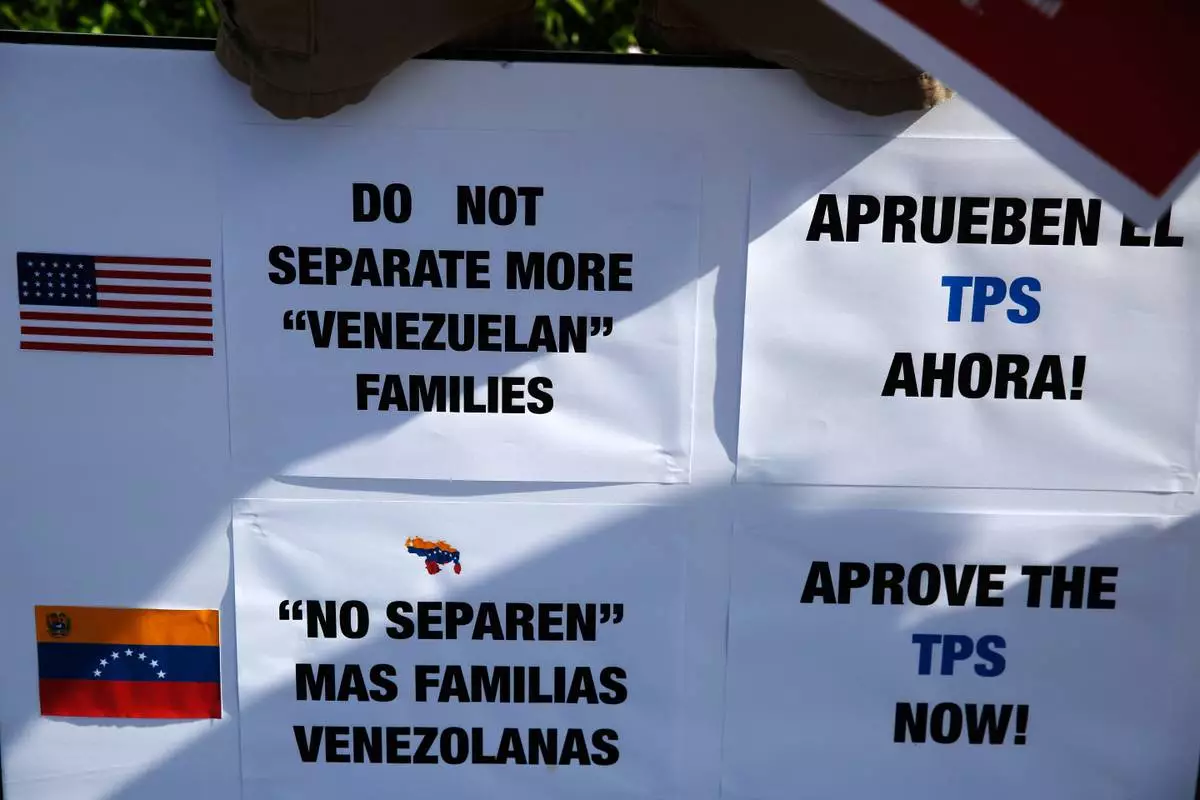
FILE - A sign is seen saying "do not separate more Venezuelan families" and "approve the TPS now" in protest against the Immigration and Customs Enforcement agents detaining Venezuelans, Dec. 10, 2019, in Doral, Fla. (AP Photo/Brynn Anderson, File)
FILE - A sign is seen saying "do not separate more Venezuelan families" and "approve the TPS now" in protest against the Immigration and Customs Enforcement agents detaining Venezuelans, Dec. 10, 2019, in Doral, Fla. (AP Photo/Brynn Anderson, File)

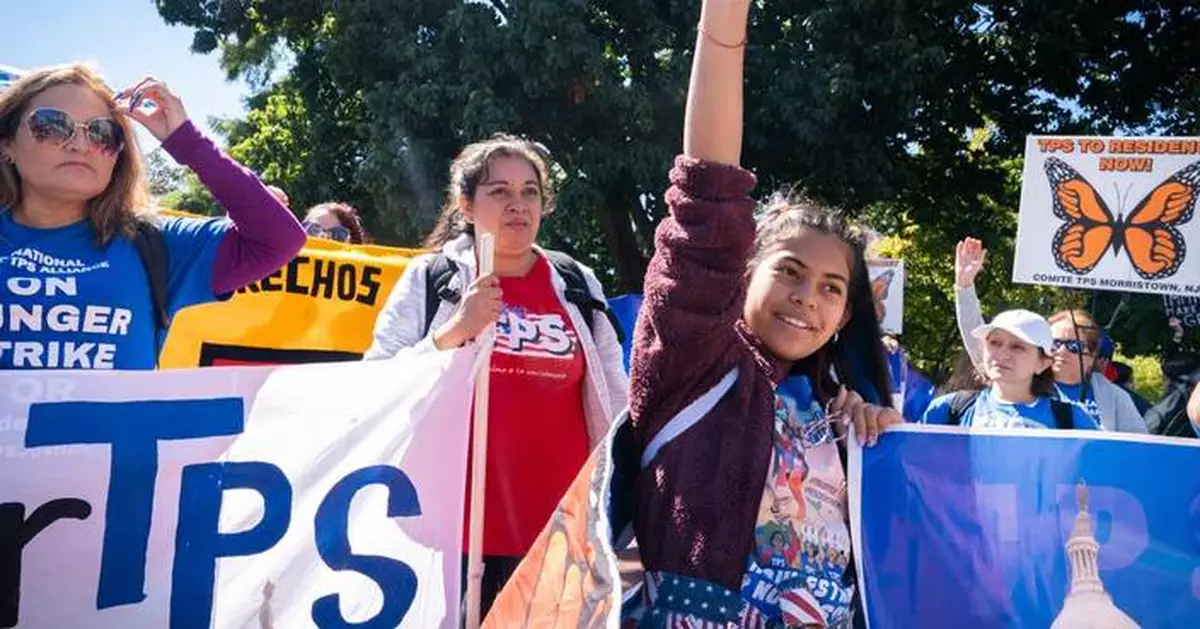
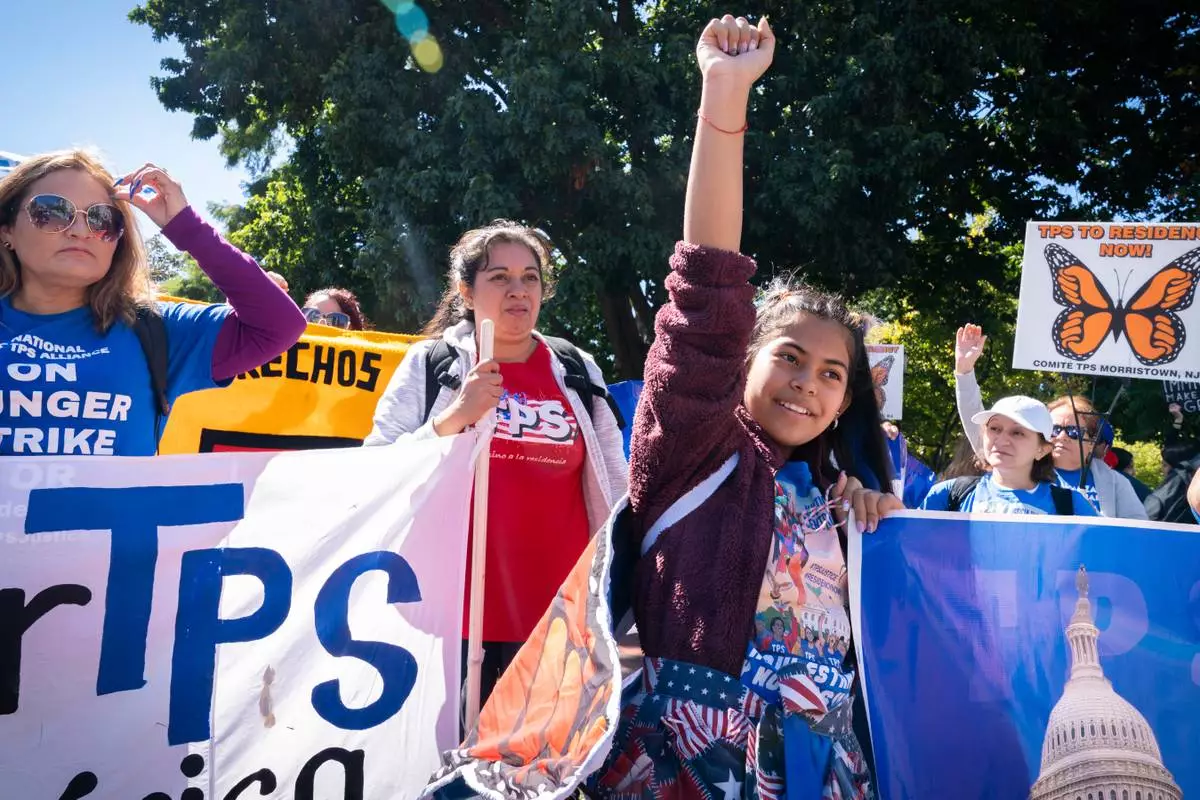
FILE - Marilyn Miranda, 12, of Washington, raises her hand during a protest for an extension of the Temporary Protected Status (TPS) program, Sept. 23, 2022, at Lafayette Park by the White House in Washington. (AP Photo/Jacquelyn Martin, File)

FILE - Marilyn Miranda, 12, of Washington, raises her hand during a protest for an extension of the Temporary Protected Status (TPS) program, Sept. 23, 2022, at Lafayette Park by the White House in Washington. (AP Photo/Jacquelyn Martin, File)
Anyone following Anthropic's plans to sell shares to the public starting Thursday is likely to come across terms that describe steps and components of an initial public offering. Here's a quick guide.

A company's first offering of stock to the public. It is the first time a company's value will be determined by a public market.

A formal offer to sell shares in the company. It also includes a business plan with details about the company's finances and operations. It is also known as an S-1, after the Securities and Exchange Commission form.

Companies list on a public exchange where the stock is traded. For example, Anthropic is listing on the Nasdaq and will trade under the symbol “ANT.” Apple trades as “AAPL” on the Nasdaq, and Macy’s trades as “M” on the New York Stock Exchange.

An underwriter is a bank or other financial institution that acts as the intermediary between the company and investors. They purchase the stock being issued by the company in the IPO and sell it to the public. There are often several underwriters involved to share the risk. The lead underwriters for the Anthropic IPO are Goldman Sachs and Morgan Stanley.

The name for the presentations given by company executives and underwriters to potential investors, typically institutional investors, before the company issues its shares.

This is a provision that allows underwriters of an IPO to sell more shares than initially planned. It is meant to meet unexpectedly high demand or to help stabilize the stock price.

This is an estimated range for the price of the shares the company is offering provided before the stock is publicly traded. Investors place bids within that range before the listing price is determined. Anthropic set a price range of $70 to $78 per share before announcing Wednesday the price would be $83 per share in the offering.

This describes the broader process undertaken by the company and underwriters to determine the listing price for the stock. It attempts to balance demand for the stock with the potential supply of shares. The process typically takes longer when an IPO has high interest from potential investors.

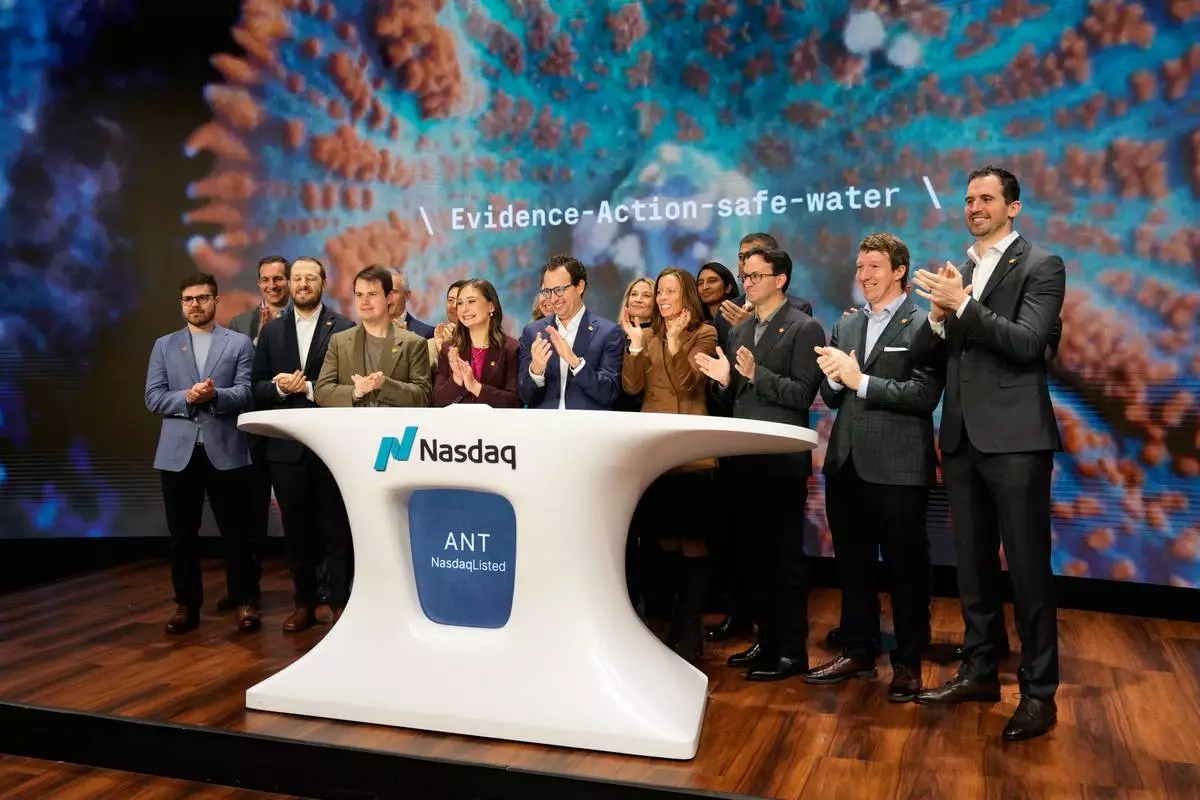
Dario Amodei, co-founder and CEO of Anthropic, center, celebrates with Daniela Amodei, co-founder and president, center left, Tom Brown, co-founder and chief compute officer, right, Jack Clark, co-founder and head of public benefit, second right, Jared Kaplan, co-founder and chief science officer, third right, Chris Olah, co-founder and interpretability research lead, third left, Sam McCandlish, co-founder and chief architect, second left, and other colleagues during the opening bell ceremony at Nasdaq MarketSite as part of the Anthropic IPO in New York, Thursday, Nov. 19, 2026. (AP Photo/Seth Wenig)

Dario Amodei, co-founder and CEO of Anthropic, center, celebrates with Daniela Amodei, co-founder and president, center left, Tom Brown, co-founder and chief compute officer, right, Jack Clark, co-founder and head of public benefit, second right, Jared Kaplan, co-founder and chief science officer, third right, Chris Olah, co-founder and interpretability research lead, third left, Sam McCandlish, co-founder and chief architect, second left, and other colleagues during the opening bell ceremony at Nasdaq MarketSite as part of the Anthropic IPO in New York, Thursday, Nov. 19, 2026. (AP Photo/Seth Wenig)

Recommended Articles