Skip to Content Facebook Feature Image

Bruker Announces Majority Investment in MIMETAS to Advance Human Physiology-Relevant Drug Discovery and Development

Business

Bruker Announces Majority Investment in MIMETAS to Advance Human Physiology-Relevant Drug Discovery and Development
Business

Business

Bruker Announces Majority Investment in MIMETAS to Advance Human Physiology-Relevant Drug Discovery and Development

2026-08-10 19:01 Last Updated At:19:20

LEIDEN, The Netherlands--(BUSINESS WIRE)--Aug 10, 2026--

Bruker Corporation (Nasdaq: BRKR) today announced a majority investment in MIMETAS B.V., a developer of organ-on-a-chip platforms and advanced human tissue and disease models for drug discovery and development. The investment expands Bruker’s post-genomic solutions for disease biology research, as well as for drug discovery and development into Microphysiological Systems (MPS), also referred to as New Approach Methodologies (NAMs), and based on human physiology-relevant model systems.

This press release features multimedia. View the full release here: https://www.businesswire.com/news/home/20260810455540/en/

MIMETAS develops scalable organ-on-a-chip platforms and human tissue models that allow researchers to study disease mechanisms and compound responses in perfused, biologically relevant systems. Its OrganoPlate ® platform combines a standard microtiter-plate format with membrane-free microfluidic tissue cultures, supporting imaging, automated handling and higher-throughput research and development workflows. Bruker plans to combine these capabilities with its technologies in proteomics, metabolomics, NMR, preclinical imaging and spatial biology.

“Human physiology-relevant tissue and disease models are becoming increasingly important for understanding disease biology and evaluating therapeutic candidates,” said Frank H. Laukien, President and CEO of Bruker Corporation. “The unique MIMETAS organ-on-a-chip platforms complement Bruker’s capabilities in multiomics, spatial biology and preclinical imaging. We believe that humanized Microphysiological Systems, or NAMs, have a bright future, and will be increasingly adopted in drug discovery, development and preclinical testing.”

The MIMETAS portfolio includes the OrganoPlate platform for organ-on-a-chip research, OrganoReady ® tissue and organoid products, supporting instruments and contract research services. The companies plan to develop integrated product and service workflows that connect these human model systems with Bruker technologies and services for molecular and cellular characterization.

A Senior Scientific Director at a global pharmaceutical company commented: “The OrganoReady Colon Organoid Model combined with the OrganoTEER® system has become fully integrated into our toxicity-testing workflow. The platform fits seamlessly into our routine screening and supports consistent, reproducible data generation.”

“Joining Bruker creates opportunities to scale our platforms and make advanced human tissue models available to more researchers worldwide,” said Paul Vulto and Jos Joore, co-founders and co-CEOs of MIMETAS. “By combining our OrganoPlate and OrganoReady solutions with Bruker’s molecular and cellular characterization technologies, we aim to offer more integrated workflows for disease research, compound evaluation and drug development.”

Bruker and MIMETAS serve pharmaceutical and biotechnology researchers with complementary technologies. The combination is expected to connect advanced human tissue models with molecular, cellular and spatial characterization, supporting evidence generation for disease research, drug-development decisions and AI foundation models.

Financial details of the transaction were not disclosed. MIMETAS will continue to operate under its established brand and management.

About Bruker Corporation – Leader of the Post-Genomic Era (Nasdaq: BRKR)
Bruker is enabling scientists and engineers to make breakthrough post-genomic discoveries and develop new applications that improve the quality of human life. Bruker’s high-performance scientific instruments and high-value analytical and diagnostic solutions enable scientists to explore life and materials at molecular, cellular, and microscopic levels. In close cooperation with our customers, Bruker is enabling innovation, improved productivity, and customer success in post-genomic life science molecular and cell biology research, in applied and biopharma applications, in microscopy, as well as in industrial and cleantech research, and semiconductor metrology in support of AI. Bruker offers differentiated, high-value life science and diagnostics systems and solutions in preclinical imaging, proteomics and multiomics, spatial and single-cell biology, structural and condensate biology, as well as in clinical microbiology and molecular diagnostics. For more information, please visit www.bruker.com.

About MIMETAS:
MIMETAS is a global leader in human organ-on-a-chip solutions for drug discovery and development. Through its proprietary OrganoPlate® platform, the company provides predictive human tissue and disease models that help pharmaceutical and biotechnology companies improve decision making across the R&D pipeline, from target validation and disease understanding to efficacy and safety assessment. By combining human-relevant biology, scalable laboratory workflows and deep application expertise, MIMETAS enables customers to generate actionable data that improves clinical translation, accelerates development timelines and supports the transition away from animal testing. The company's solutions are used by many of the world's leading life science organizations to address critical challenges in drug discovery, toxicology, and selection. With operations in North America, Europe and Asia, MIMETAS is committed to advancing human-centric research through innovative products, contract research services and New Approach Methodologies that deliver better science and better outcomes for patients.
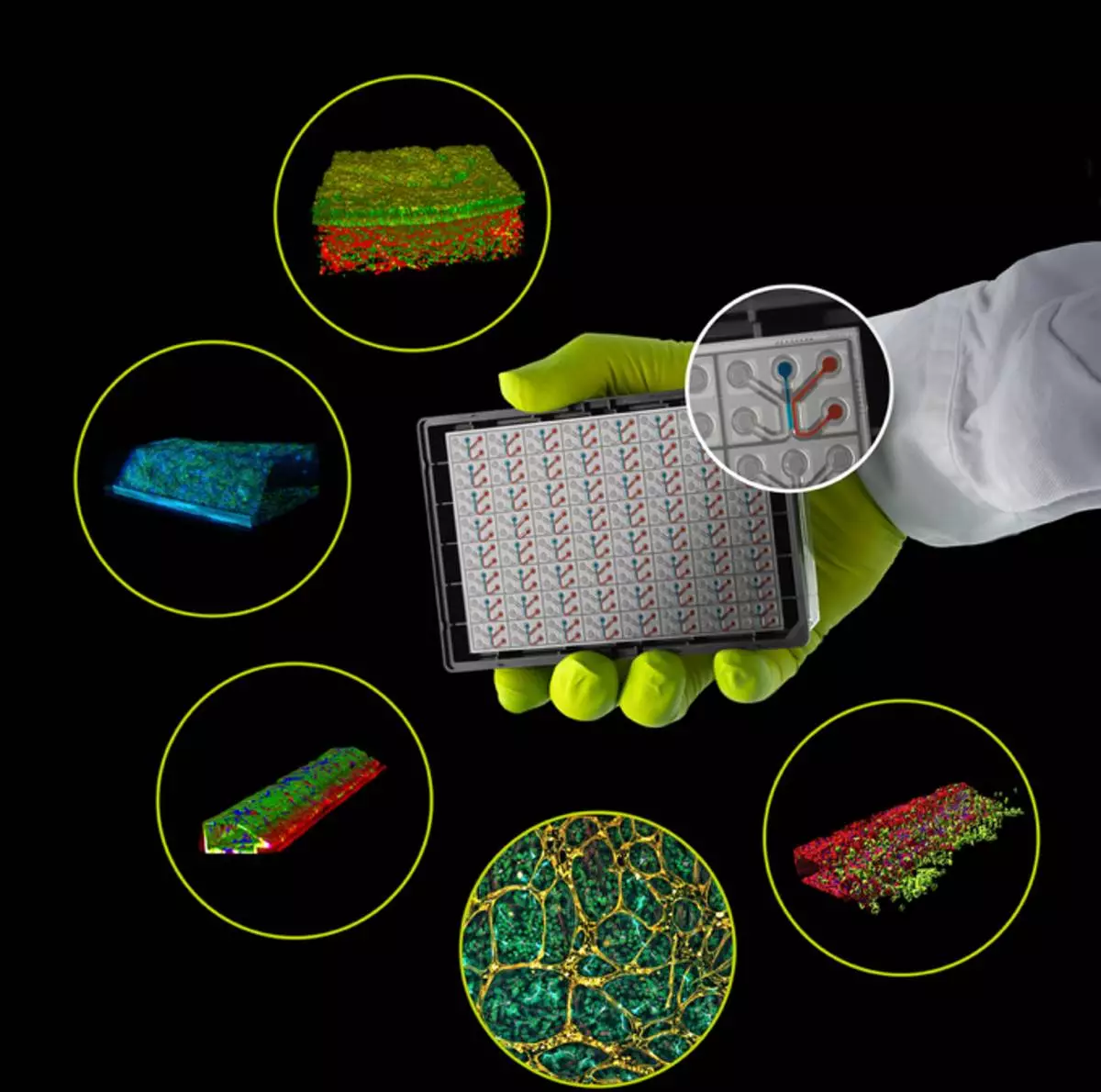
MIMETAS provides scalable organ-on-a-chip solutions for culturing and analyzing human-relevant tissues in a high-throughput plate format. The OrganoPlate® platform enables advanced disease modeling, drug testing, and safety assessment. Shown clockwise from the bottom right: immune cell migration from a blood vessel, a vascularized liver model, a gut tubule, a colon organoid-derived tubule, and a vascularized lung model

MIMETAS provides scalable organ-on-a-chip solutions for culturing and analyzing human-relevant tissues in a high-throughput plate format. The OrganoPlate® platform enables advanced disease modeling, drug testing, and safety assessment. Shown clockwise from the bottom right: immune cell migration from a blood vessel, a vascularized liver model, a gut tubule, a colon organoid-derived tubule, and a vascularized lung model

PARIS (AP) — The U.K. and France are bracing for the fifth heat wave of the season, adding to an intense stretch of hot weather that has repeatedly sent temperatures soaring across Europe since May.

National weather agency Météo-France is warning about temperatures approaching 40 C (104 F) from Tuesday onward in southeastern France. And in the U.K., an amber heat health alert for most of England will be in place beginning Tuesday as temperatures are forecast to climb to 36 C (96.8 F) later this week.

Across Europe, the extreme heat began in May and has contributed to major wildfires, prolonged drought and new national temperature records, as well as thousands of projected heat-related deaths.

Globally, so far this is the third-hottest year, behind 2024 and 2025, climate statistics show. But 2026 still has time to catch up. Thanks to the one-two punch of accelerated human-caused global warming and a supersized El Niño — a periodic warming of parts of the Pacific that leads to temperature variations around the globe — there’s an increasing chance that by the end of the year, 2026 could become the hottest year on record, scientists said.

Last month saw the highest average sea surface temperature ever recorded for July across the extrapolar oceans, or the oceans free of seasonal sea ice, according to the European climate agency Copernicus.

That was partially fueled by developing El Niño conditions in the equatorial Pacific, the service said. The new average record for July is 20.96 degrees Celsius (69.73 degrees Fahrenheit), which beat the 2023 record of 20.89 C (69.60 F).

But last month’s average surface air temperature globally was 16.90 C (62.42 F), making it only the joint second warmest July on record, tied with July 2024, Copernicus reported.

In Western Europe, meanwhile, the average temperature record for the June-July period hit 21.62 C (70.92 F), Copernicus said, toppling the 2022 record.

“Persistent high-pressure systems trapped heat over western Europe, the extreme temperatures also amplified widespread drought. As soils dry out, they lose their ability to provide natural cooling, allowing heat to build more readily,” said Samantha Burgess, strategic lead for climate at the European Centre for Medium-Range Weather Forecasts.

“This is a clear example of how climate change is intensifying heat extremes, with heat and drought increasingly reinforcing one another.”

In France alone, heat wave alerts were issued for the first time on record in May, when more than half the country recorded new monthly temperature highs. The heat intensified in June, a period during which at least 5,700 more deaths than usual were recorded, according to France’s public health agency.

Météo-France said June 23 was the hottest day ever recorded in the country. Temperatures climbed as high as 44.3 C (111.7 F) in the southwest.

Two other heat wave episodes were recorded in July, amplifying a historic wildfire in southwestern France that forced 220,000 people to flee their homes in one of the continent’s biggest evacuation efforts since World War II.

Temperatures were slightly cooler in the U.K. on Monday but the country readied for its fifth heat wave in an exceptionally hot and dry summer, with half of England and all of Wales plunged into drought.

The heat alert warns that significant impacts on health services, including a rise in deaths among older and vulnerable people, are likely.

Two record-breaking heat waves in May and June led to more than 2,800 excess deaths linked to extreme temperatures.

Dazio reported from Berlin. Sylvia Hui in London contributed to this report.

People walk over a stone dam, that is normally covered by water, towards the "Maeuseturm" (mice tower) in the middle of the river Rhine in Bingen, Germany Monday, Aug. 10, 2026. (AP Photo/Michael Probst)

People walk over a stone dam, that is normally covered by water, towards the "Maeuseturm" (mice tower) in the middle of the river Rhine in Bingen, Germany Monday, Aug. 10, 2026. (AP Photo/Michael Probst)

A firefighting helicopter releases water over a wildfire near Correns, southeastern France, Saturday, Aug. 1, 2026. (Clement Mahoudeau/Pool Photo via AP)

A firefighting helicopter releases water over a wildfire near Correns, southeastern France, Saturday, Aug. 1, 2026. (Clement Mahoudeau/Pool Photo via AP)

A pharmacy display shows a temperature of 42 degrees Celsius in Paris during a heat wave, Wednesday, July 29, 2026. (AP Photo/Aurelien Morissard).

A pharmacy display shows a temperature of 42 degrees Celsius in Paris during a heat wave, Wednesday, July 29, 2026. (AP Photo/Aurelien Morissard).

Vehicles cross the Rhine bridge on the A48 highway with a view of the low water levels on the Rhine, near Bendorf, Germany, Sunday, Aug. 9, 2026, (Thomas Frey/dpa via AP)

Vehicles cross the Rhine bridge on the A48 highway with a view of the low water levels on the Rhine, near Bendorf, Germany, Sunday, Aug. 9, 2026, (Thomas Frey/dpa via AP)

A man walks on dried grass in a park, amid drought conditions in London, in London, Sunday, Aug. 9, 2026. (AP Photo/Kirsty Wigglesworth)

A man walks on dried grass in a park, amid drought conditions in London, in London, Sunday, Aug. 9, 2026. (AP Photo/Kirsty Wigglesworth)

People walk on a sandbar underneath the Danube's Margareth Bridge in downtown Budapest, Hungary, Wednesday Aug. 5, 2026, as the river, which runs through 10 European countries, has receded never-before-seen low water levels. (AP Photo/Bela Szandelszky)

People walk on a sandbar underneath the Danube's Margareth Bridge in downtown Budapest, Hungary, Wednesday Aug. 5, 2026, as the river, which runs through 10 European countries, has receded never-before-seen low water levels. (AP Photo/Bela Szandelszky)

Recommended Articles