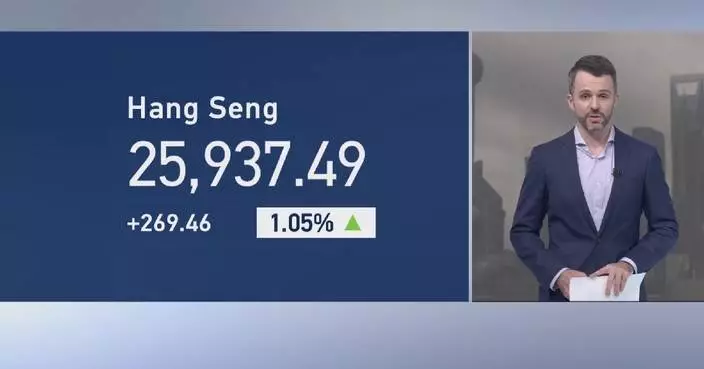
Chinese stock markets closed higher on Monday despite an intraday big tech selloff, with the benchmark Shanghai Composite Index up 0.67 percent and the Shenzhen Component Index closing 0.04 percent higher.
In a recap of the day, Timothy Pope, a market analyst for China Global Television Network (CGTN), said the Shanghai market remained positive all day, but the Shenzhen market, which has more listing tech companies, sustained heavy losses initially.
"Today we saw an early pull-back by investors from the AI infrastructure stock bets and optical module companies as well. And that initially really hurt the Shenzhen markets in particular, but the indexes recovered a lot of that ground by the end of the session - so the Shanghai Composite [Index] actually, which had remained positive all day, gained 0.7 percent, the Shenzhen Component [Index] closed flat and the ChiNext board slipped by 0.7 percent," he said.
Most stocks rose on Monday, with losses confined to a small group of shares with the markets seeing reinjection of money by the end of the trading session.
"At the lunchtime break the Shenzhen market was down more than one percent and the ChiNext around 2.2 percent, thanks to falling AI stocks. Now, this might strike you as a risk-off day, but it really wasn't. Around 3,400 out of the 5,000 mainland stocks were actually rising even at lunchtime, but the tech stocks which carry so much weight in Shenzhen were falling. Zhongji Innolight ended the day down by 6 percent, Eoptolink Technology, another optical module maker, was down by 5 percent, and yet another one, Suzhou TFC, was down 3.3 percent. Now, just those three companies together, they account for about a quarter of the weighting on the ChiNext board. So, essentially what this means is that funds and investors were selling off only a fairly narrow slice of the market today, and a chunk of that money came back by the end of the session," said Pope.
The analyst noted several factors that are set to impact investors' trading decisions throughout the rest of the week, including the initial public offering (IPO) subscription of a giant robotics company, fresh economic data, and a slew of earnings report releases.
"Let's talk about the week ahead because it's going to be an interesting one. Firstly, we have the Unitree Robotics IPO subscription opening today and it's going to run through till Wednesday or Thursday. It'll be interesting to see how that goes. Unitree's listing will be another test for the embodied AI sector and it's going to give investors something to directly trade in this space rather than picking names in the supply chain. We've also got credit data coming up this week and a host of interesting earnings reports including Foxconn Industrial Internet, China Mobile and SMIC (Semiconductor Manufacturing International Corporation), followed by Kweichow Moutai at the weekend," he said.
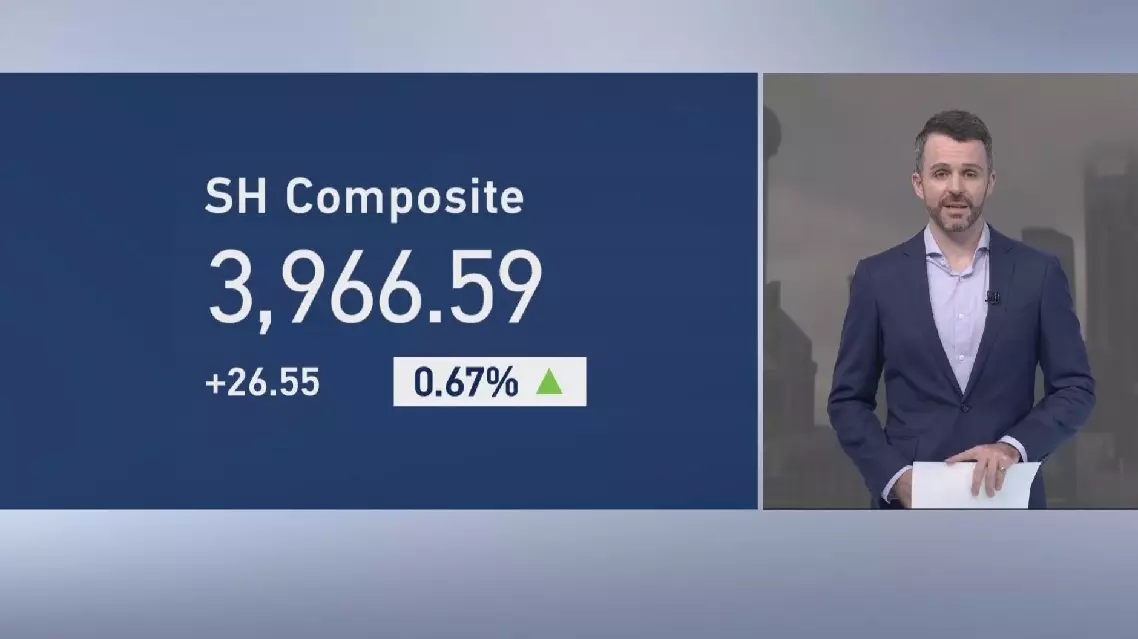
Chinese shares close higher Monday despite big tech selloff