TUCSON, Ariz. (AP) — Arizona running back Ismail Mahdi and linebacker Max Harris have rejoined the team following a court ruling granting Class of 2022 athletes an extra year of eligibility.
Arizona announced Monday the two players were beginning to integrate into the team's preseason activities.
Their return comes after U.S. District Judge Charlotte Sweeney in Colorado granted an extra year of eligibility to athletes who began college careers in the 2022-23 season and completed four seasons of eligibility. The judge later clarified that it does not apply to football players who signed pro contracts over the summer.
It comes after the NCAA approved its so-called five-for-five rule in June. That allowed Division I athletes to have five seasons of competition over a five-year period that begins with their full-time enrollment or the academic year following their 19th birthday, whichever occurs first.
The new eligibility rule was set to take effect for athletes enrolling in college for fall 2027 but led to lawsuits from athletes in the 2022 class seeking the fifth year.
The NCAA has indicated it will appeal the ruling.
Mahdi was Arizona's leading rusher last season, with 853 yards and four touchdowns. He also caught 17 passes for 119 yards and a touchdown.
Harris was an All-Big 12 honorable mention selection last season after finishing with 78 tackles, including 3 1/2 for loss.
AP college football: https://apnews.com/hub/ap-top-25-college-football-poll and https://apnews.com/hub/college-football

FILE - Arizona linebacker Max Harris (4) against BYU in the first half of an NCAA college football game, Saturday, Oct. 11, 2025, in Tucson, Ariz. (AP Photo/Rick Scuteri, File)

FILE - Arizona running back Ismail Mahdi (21) runs for a long gain in the second half of an NCAA college football game Saturday, Nov. 1, 2025, in Boulder, Colo. (AP Photo/David Zalubowski, File)
MOSCOW (AP) — Russia’s highest court on Monday ordered the only party opposing the Kremlin’s military action in Ukraine to be removed from the ballot in next month’s parliamentary election.
The Supreme Court annulled the registration of Yabloko — which is Russian for “apple” — after an appeal from a pro-Kremlin party. Last month, the Central Election Commission had initially allowed Yabloko on the ballot along with 10 other parties.
Once a leading liberal voice in parliament and often critical of the government, Yabloko later lost its bloc of seats as the Kremlin tightened its grip on Russian politics.
In recent years, Yabloko was the only registered opposition party that opposed sending troops into Ukraine.
Its campaign slogans included “For a ceasefire agreement, diplomacy and peace!” “Our goal is to prevent nuclear war!” and “For a Russia free from fear and political repressions!”
Many Russian opposition figures in exile had urged voters to back Yabloko, including Yulia Navalnaya, the widow of Kremlin critic Alexei Navalny, and politicians Ilya Yashin and Vladimir Kara-Murza.

Police block the area at the Russia's Supreme Court after a hearing on a lawsuit to bar the Yabloko party from the upcoming parliamentary elections, in Moscow, Monday, Aug. 10, 2026. (AP Photo/Pavel Bednyakov)

Judge Vyacheslav Kirillov pauses while reading the court decision during a hearing on a lawsuit to bar the Yabloko party from the upcoming parliamentary elections, at the Russia's Supreme Court, in Moscow, Monday, Aug. 10, 2026. (AP Photo/Pavel Bednyakov)
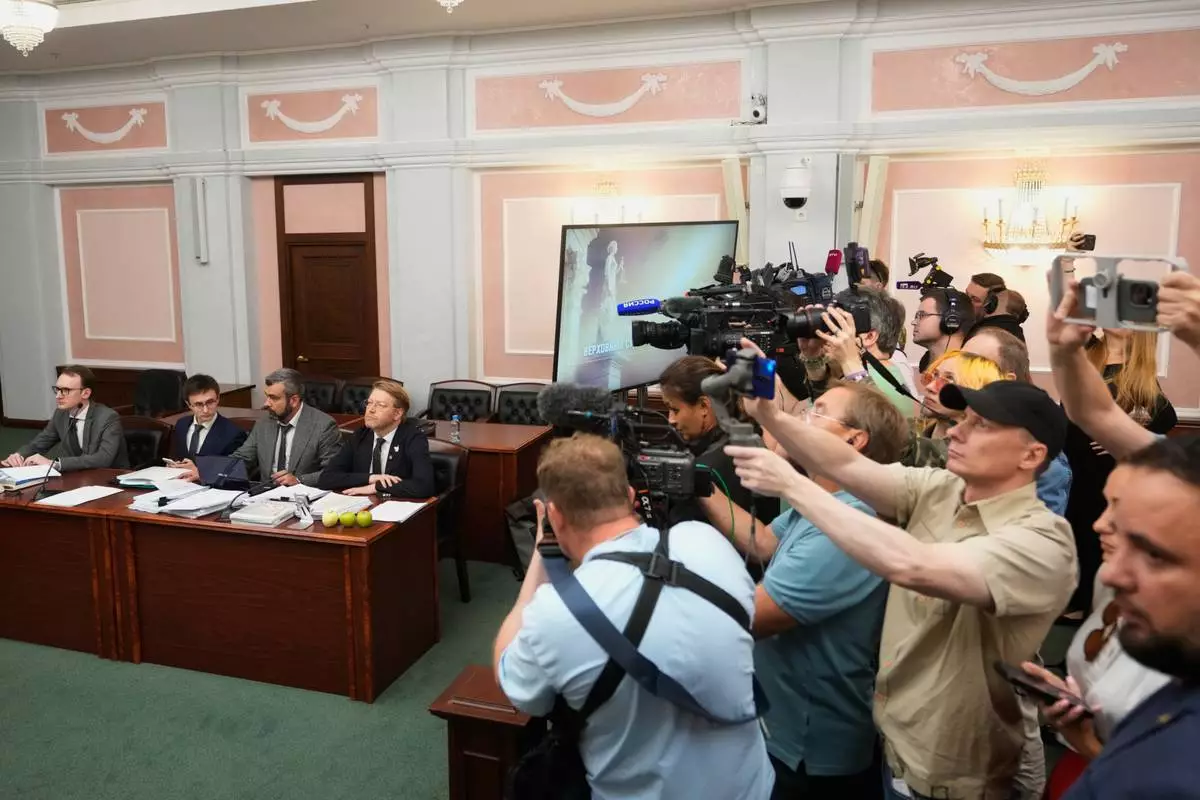
Yabloko party leader Nikolai Rybakov, right at the table, and his lawyers, left of him, attend a hearing on a lawsuit to bar the party from the upcoming parliamentary elections, at the Russia's Supreme Court, in Moscow, Monday, Aug. 10, 2026. (AP Photo/Pavel Bednyakov)
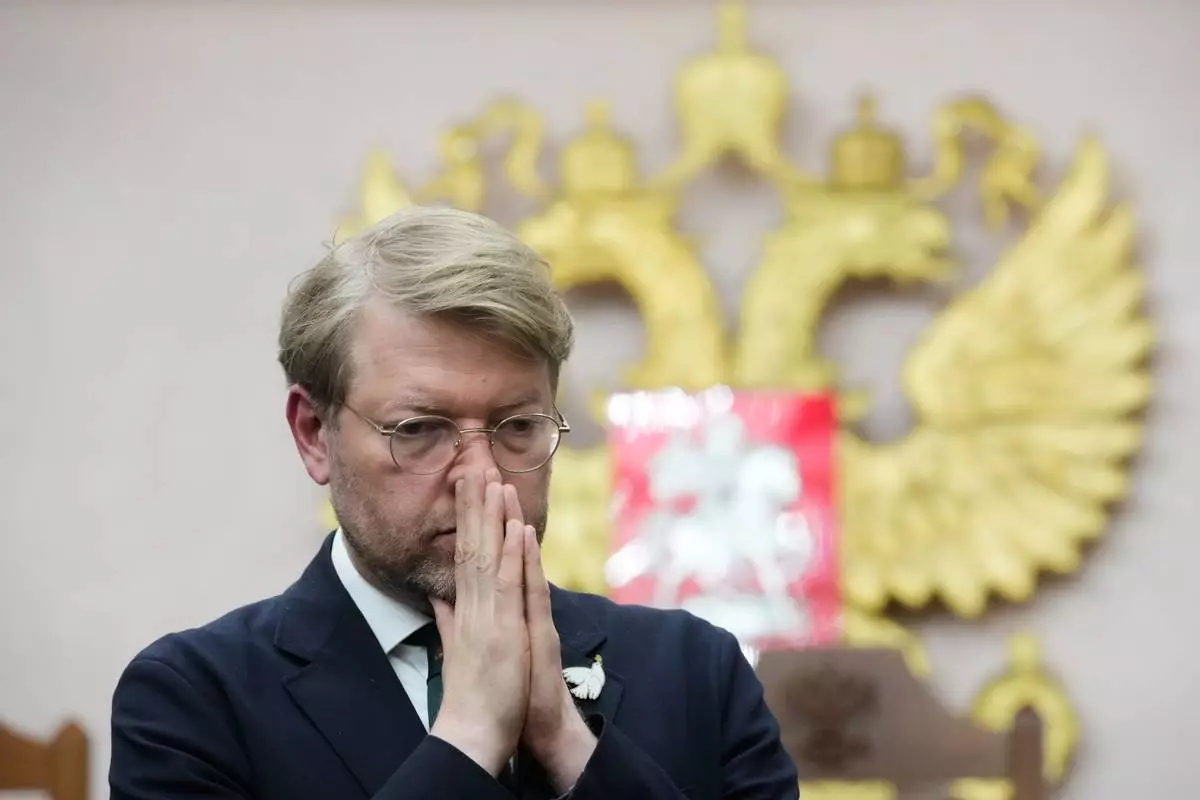
Yabloko party leader Nikolai Rybakov stands after a hearing on a lawsuit to bar the party from the upcoming parliamentary elections, at the Russia's Supreme Court, in Moscow, Monday, Aug. 10, 2026. (AP Photo/Pavel Bednyakov)