Speech by SCED at "Think Business, Think Hong Kong" Symposium in Kuala Lumpur
Following is the speech by the Secretary for Commerce and Economic Development, Mr Algernon Yau, at the "Think Business, Think Hong Kong" Symposium in Kuala Lumpur today (August 11):
Minister Loke Siew Fook (Minister of Transport, Malaysia), H.E. Ouyang Yujing (Chinese Ambassador to Malaysia, Mr Ouyang Yujing), Frederick (Chairman of the Hong Kong Trade Development Council (HKTDC), Professor Frederick Ma), distinguished guests, ladies and gentlemen,
Good morning. It is a great pleasure to join you here in Kuala Lumpur today for the HKTDC's flagship symposium – "Think Business, Think Hong Kong".
I would like to first thank the Malaysian government. With your support and facilitation, the Hong Kong Economic and Trade Office in Kuala Lumpur, the ETO, smoothly commenced operation last December. Malaysia has long been a valued and indispensable partner of Hong Kong within ASEAN (Association of Southeast Asian Nations). With our new government office in Kuala Lumpur, I firmly believe that our friendship and partnership will continue to flourish and strengthen. This afternoon, I will officiate at the opening of the ETO's long-term office in Menara IQ TRX.
The symposium today sits at a time of profound transformation in the global economy, which is characterised by geopolitical tensions, supply chain realignments and technological changes. Yet, in all these challenges, we also find opportunities. And with our core strengths, Hong Kong can be Malaysia's partner to navigate the increasingly complex external environment.
As one of the world's freest economies, the free-market principles have been the bedrock of our success. We firmly support the rules-based multilateral trading system. With our tariff-free regime, simple and low tax structure, and robust legal system founded on the rule of law and an independent judiciary, we provide a business environment that is stable, transparent and predictable. It is easy to do business with, and from Hong Kong.
Hong Kong's economy is riding on strong and sustained growth. In the second quarter of 2026, our real GDP expanded by 4.3 per cent year-on-year, building upon the solid 5.9 per cent growth in the first quarter. This bears out the resilience, dynamism and competitiveness of our economy.
Hong Kong's unique strength lies not only in our robust infrastructure or business-friendly policies, but also in our unmatched connectivity with the Chinese Mainland and the rest of the world. This empowers us to serve as your "super connector" and "super value-adder".
Through Hong Kong, businesses gain access to the vast Chinese Mainland market, particularly the Guangdong-Hong Kong-Macao Greater Bay Area, one of the most dynamic and economically integrated regions in the world. Hong Kong has a free trade deal with the Chinese Mainland, which is one of the most liberal of its kind, granting zero tariff treatment for Hong Kong products, and a range of preferential market access treatments for services providers in Hong Kong. Companies from all over the world, including those from Malaysia, can enjoy these benefits from the free trade deal, if they set up presence in Hong Kong.
For Malaysian companies, the Chinese Mainland is for no doubt a huge market not to be missed. Especially at times like this, everyone is talking about diversification. Apart from strengthening your operations in the local market, it is always good to tap the potentials from overseas markets, including the Chinese Mainland. Hong Kong has the knowhow and expertise to help Malaysian companies to navigate the Chinese Mainland markets. We have been doing it for a long time, and we are good at it.
The other way around, we are also supporting Chinese Mainland enterprises to go overseas via Hong Kong. We established the GoGlobal Task Force (Task Force on Supporting Mainland Enterprises in Going Global) last year to provide one-stop, customised support services to facilitate outbound direct investment into overseas markets, including Malaysia and beyond.
For Malaysia, our GoGlobal initiative will provide a platform of match-making – we bring to you what you need. If Malaysia wants high-value digital investment, we bring to you high-value digital investment. As simple as that. The Chinese Mainland enterprises will have a new market to work on; Malaysia will have the capital, new jobs and technology that come with these enterprises. We see new opportunities arising from such collaboration, which will translate into stronger bonding and mutual benefits. We see a win-win outcome for both countries.
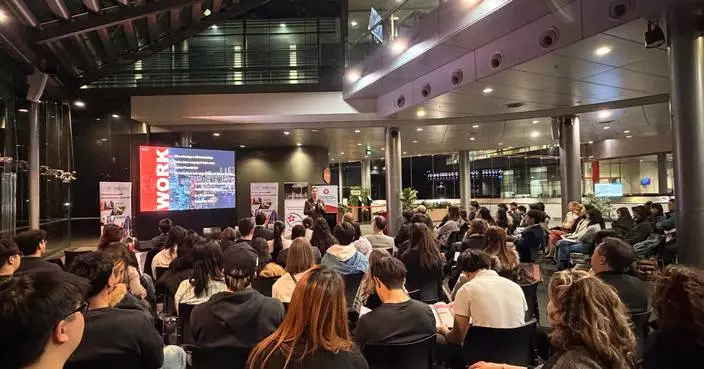
This time in Malaysia, I have brought with me a business delegation from Hong Kong and the Chinese Mainland. They come from a range of sectors such as finance, professional services, healthcare, automobile and innovation and technology. We are here to talk about business, and more importantly, to make new friends. The "Think Business, Think Hong Kong" Symposium is an excellent occasion to foster dialogue and collaboration.
Looking ahead, I see new and exciting opportunities for Hong Kong and Malaysia to collaborate. In innovation and technology, Hong Kong is actively advancing fintech, artificial intelligence, and the digital economy, supported by a vibrant ecosystem of start-ups, investors, and world-class research institutions. We see strong potential to partner with the growing innovation landscape in Malaysia, which is becoming a competitive, innovation-driven economy, through your New Industrial Master Plan 2030 and other strategic policies. Hong Kong is ready to be your partner in that journey.
In Islamic finance, Malaysia is a global leader, while Hong Kong, as an international financial centre, is well positioned to support the development of Islamic capital markets. Recent memoranda of understanding between the Securities and Futures Commission of Hong Kong and the Securities Commission Malaysia have opened up new avenues for co-operation, including cross-listing of Islamic bonds and the development of Islamic wealth management products.
For green and sustainable development, Hong Kong's growing green finance ecosystem can support sustainable infrastructure and energy transition projects in Malaysia and the region. The symposium today features dedicated discussions on sustainability and green innovation. This is an area where our businesses, innovators and policymakers can learn from each other and grow together, driving the transition to a low-carbon future.
The economic benefits flow two-way, in very real terms, between us. Our economic relationship speaks for itself. ASEAN has been our second-largest merchandise trading partner for the past 16 years. In 2025, our bilateral trade in goods grew an impressive 29 per cent, year on year, reaching US$214 billion. Malaysia stood as Hong Kong's third-largest trading partner among ASEAN member states. Our bilateral merchandise trade reached about US$34.8 billion, representing a year-on-year increase of 27.4 per cent. Notably, around eight per cent of the total merchandise trade between Malaysia and the Chinese Mainland was routed through Hong Kong. These figures underscore the depth and strength of our economic linkages and demonstrate the strategic relationship between Hong Kong and Malaysia.
ASEAN is rapidly emerging as a major force in the global economy and is projected to become the world's fourth-largest economy by 2030. Hong Kong is deeply committed to deepening our engagement with this dynamic region. Our vision goes far beyond trade and investment figures. We see a future in which Hong Kong and Malaysia are not just trading partners, but strategic partners: partners in innovation, partners in sustainability, and partners in shaping the economies of tomorrow.
Thank you, and I wish you all a very productive and inspiring symposium.

Source: AI-found images