Skip to Content Facebook Feature Image

Extreme heat is reshaping Italy's sparkling wine industry with early harvests and nighttime picking

ENT

Extreme heat is reshaping Italy's sparkling wine industry with early harvests and nighttime picking
ENT

ENT

Extreme heat is reshaping Italy's sparkling wine industry with early harvests and nighttime picking

2026-08-11 12:25 Last Updated At:12:40

CORTE FRANCA, Italy (AP) — Workers fan out before dawn to clip clusters of grapes destined to be transformed into Italy’s prized Franciacorta sparkling wine a full 10 days earlier than anticipated, as scorching temperatures brought the fruit to maturation earlier than ever.

Climate change is narrowing the window for harvesting wine grapes, forcing winemakers to make quick decisions when even a few days can mean the difference between a good vintage and a bad one.

More Images
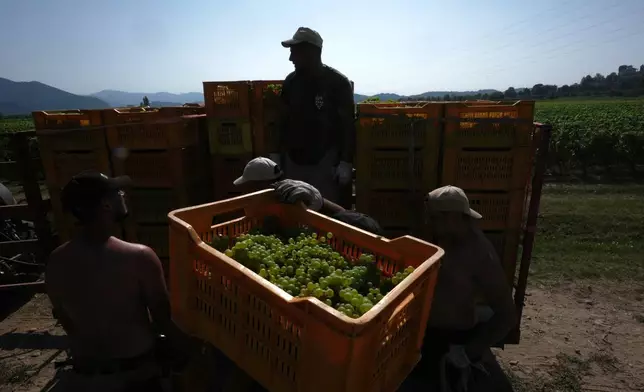
Workers unload crates of wine grapes on a tractor during the harvest in Corte Franca, northern Italy, Thursday, Aug. 6, 2026. (AP Photo/Antonio Calanni)
Workers unload crates of wine grapes on a tractor during the harvest in Corte Franca, northern Italy, Thursday, Aug. 6, 2026. (AP Photo/Antonio Calanni)
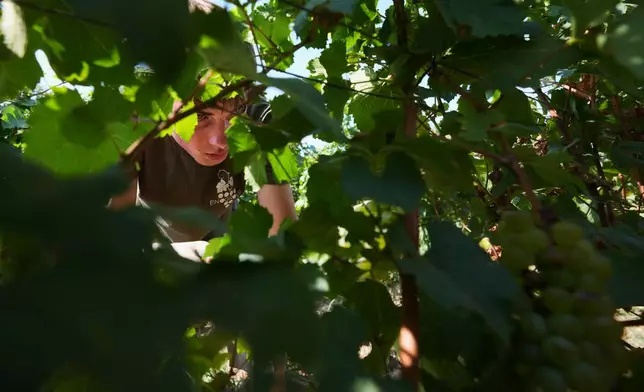
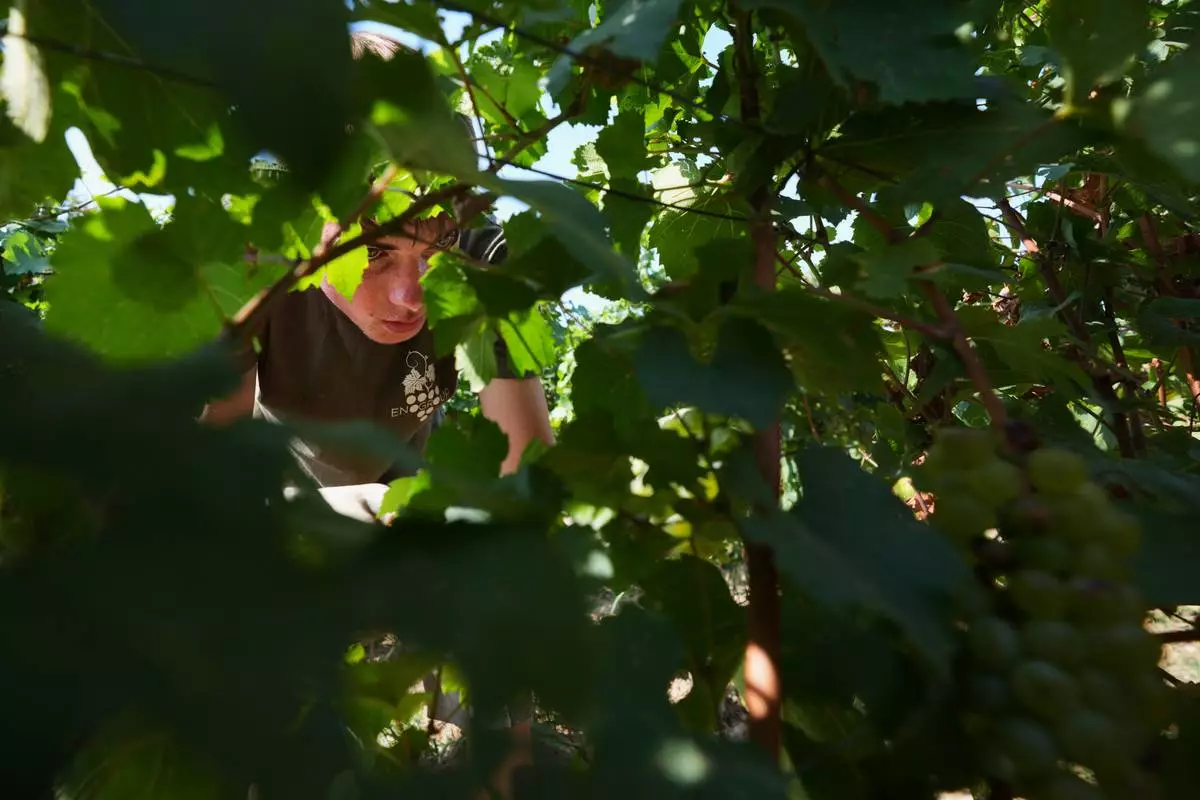
A hot worker picks wine grapes during the harvest in Corte Franca, northern Italy, Thursday, Aug. 6, 2026. (AP Photo/Antonio Calanni)
A hot worker picks wine grapes during the harvest in Corte Franca, northern Italy, Thursday, Aug. 6, 2026. (AP Photo/Antonio Calanni)
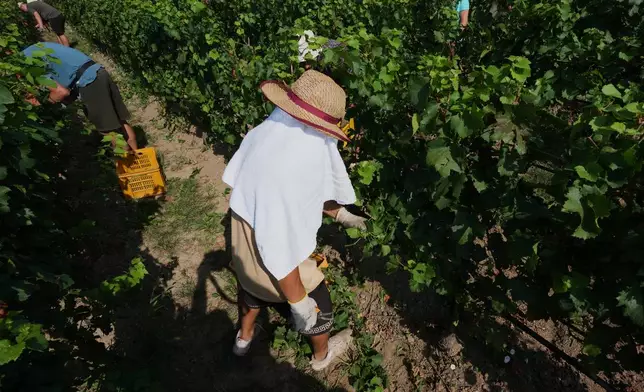
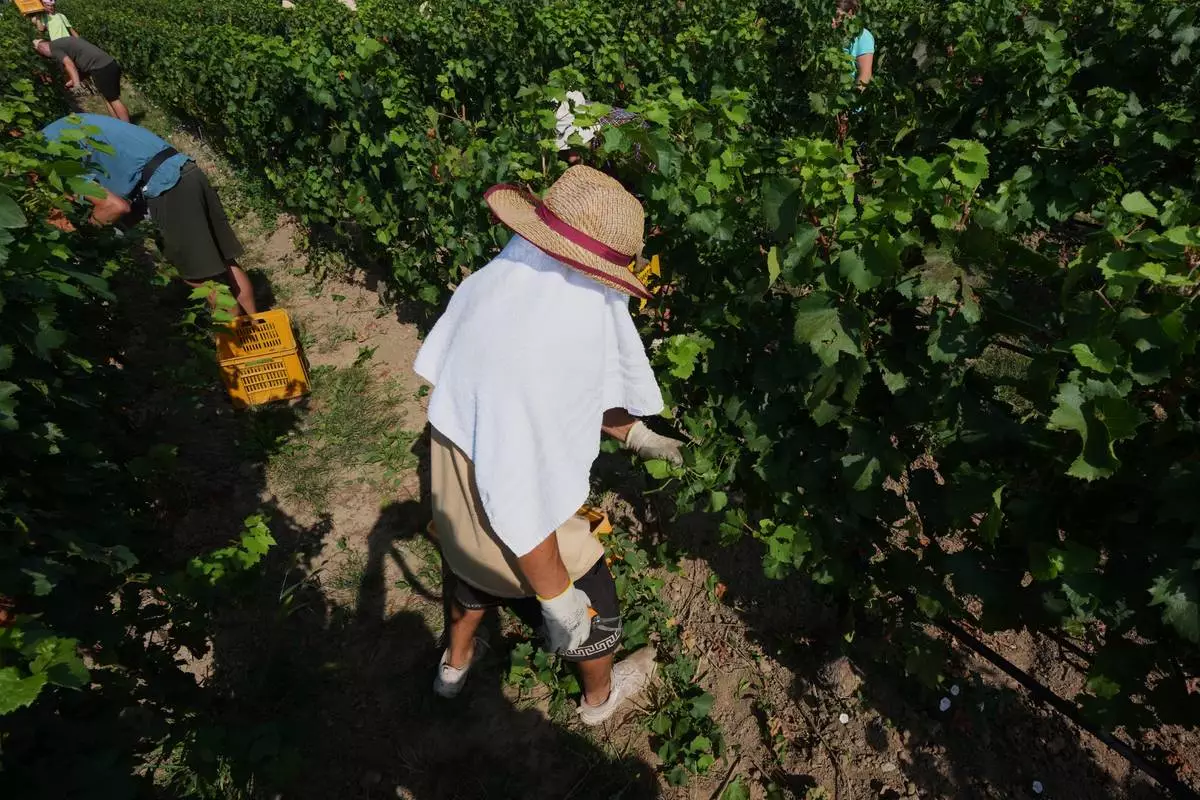
A worker picks wine grapes as he protects himself from the sun with a towel during the harvest in Corte Franca, northern Italy, Thursday, Aug. 6, 2026. (AP Photo/Antonio Calanni)

A worker picks wine grapes as he protects himself from the sun with a towel during the harvest in Corte Franca, northern Italy, Thursday, Aug. 6, 2026. (AP Photo/Antonio Calanni)

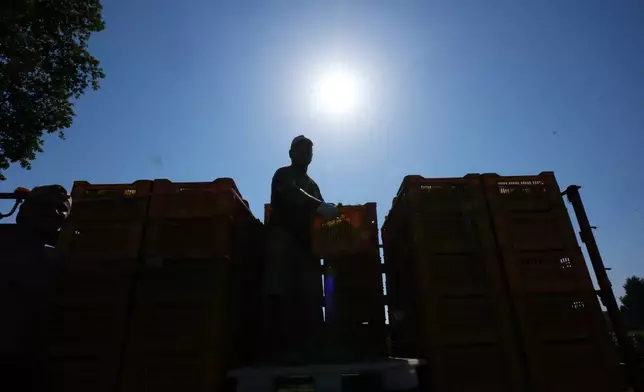
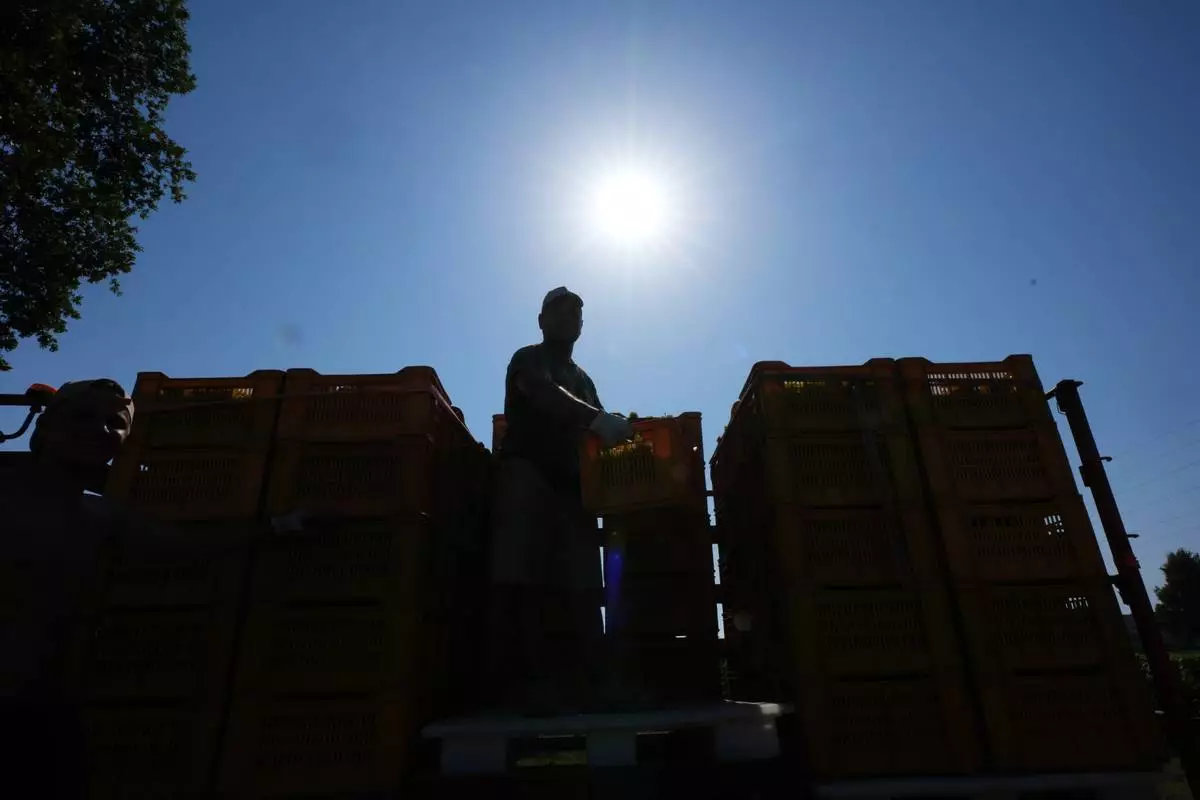
A worker unloads a crate of wine grapes on a tractor during the harvest in Corte Franca, northern Italy, Thursday, Aug. 6, 2026. (AP Photo/Antonio Calanni)

A worker unloads a crate of wine grapes on a tractor during the harvest in Corte Franca, northern Italy, Thursday, Aug. 6, 2026. (AP Photo/Antonio Calanni)

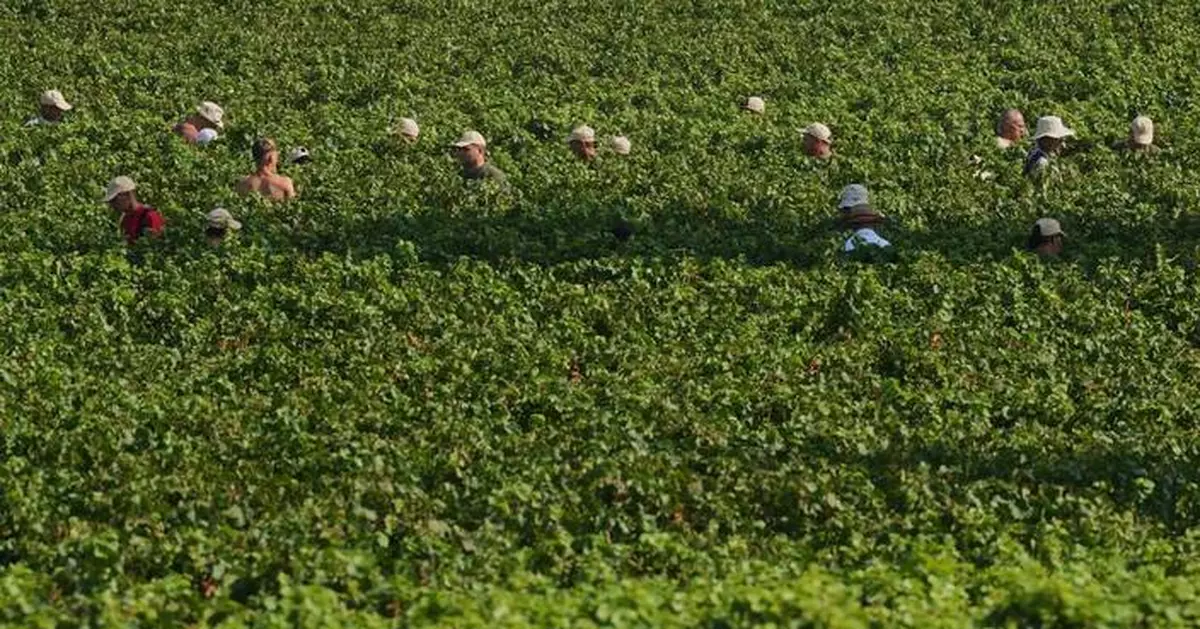
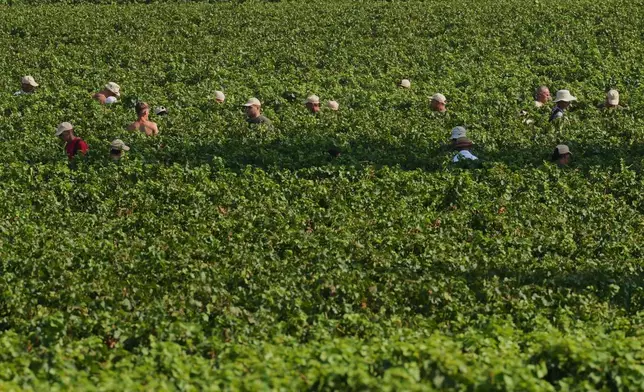
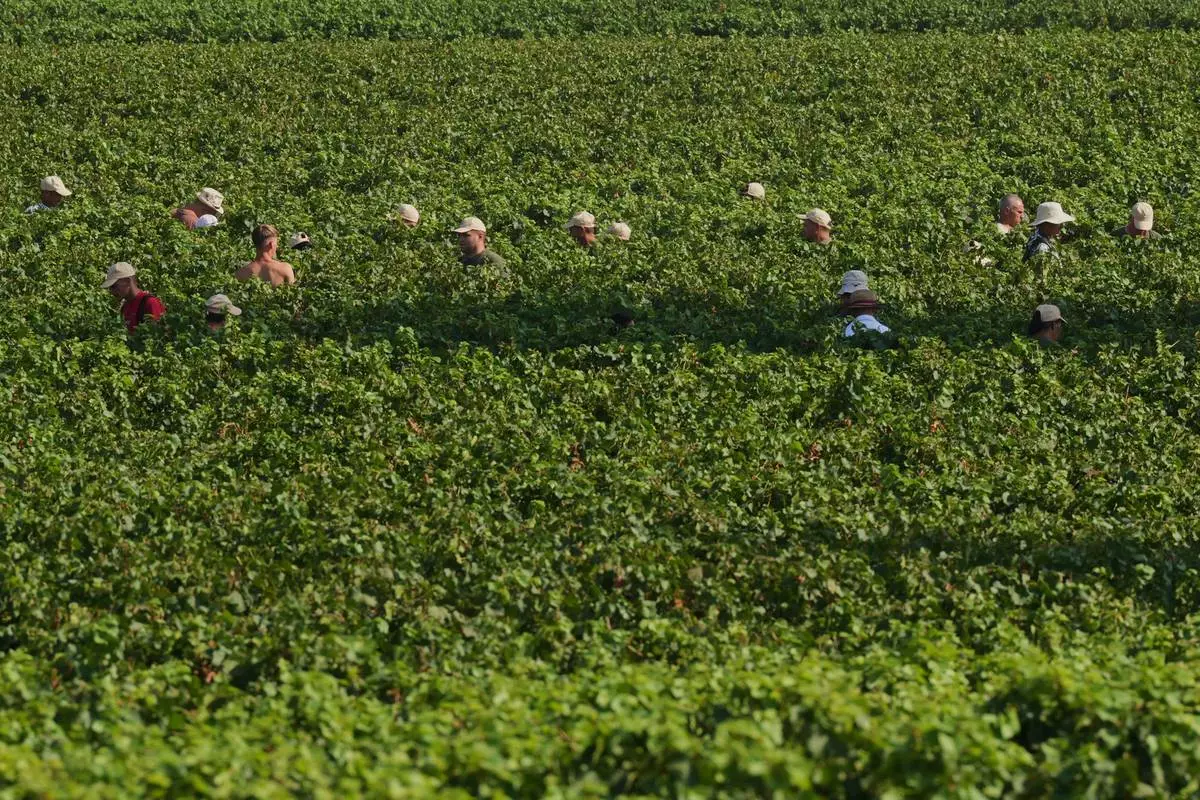
Workers pick wine grapes during the harvest in Corte Franca, northern Italy, Thursday, Aug. 6, 2026. (AP Photo/Antonio Calanni)

Workers pick wine grapes during the harvest in Corte Franca, northern Italy, Thursday, Aug. 6, 2026. (AP Photo/Antonio Calanni)

“These are delicate, frantic moments, and everything has to work perfectly,’’ said Berlucchi CEO Arturo Ziliani, whose father, Franco, in 1961 became the first winemaker in the hilly Franciacorta wine-producing region to begin making sparkling wines with the “classic” method famously employed by France’s Champagne makers.

“We did not expect such an early harvest or such an acceleration in ripening,” Ziliani said.

Weeks of temperatures reaching highs between 37 and 38 degrees Celsius (99 to 100 degrees Fahrenheit), combined with below-average rainfall, have pushed some winemakers in Franciacorta to record the earliest start on record — about 10 days earlier than last year and about a month earlier than three decades ago.

Berlucchi, the oldest producer of Franciacorta, which is made using the traditional method of secondary fermentation in the bottle, began harvesting Aug. 2 as part of an industrywide effort to preserve grape quality in the face of increasingly extreme weather.

Experts say several factors combined to push Franciacorta’s harvest so early this year. A relatively mild winter meant the vines produced buds earlier, while hailstorms damaged some of the yield, lightening the fruit and bringing it to earlier maturation.

Even in late July, Berlucchi was targeting an Aug. 10 harvest date, but it quickly became clear that Pinot Nero used for sparkling blends and rosé was ready to be picked, signaled by rapidly rising sugar levels. Within two days, workers were mustered and the presses were readied.

The midday heat has been so extreme that workers are forced by regional labor rules to stop between 12:30 p.m. and 4 p.m., but winemakers say it has been too hot for the afternoon shift. To gain time and bring grapes to the presses before they are overheated, Berlucchi last week started the harvest at 4 a.m., with workers picking under the blaze of floodlights.

“The grapes are perfectly healthy,” said Ferdinando Dell’aquila, an oenologist who is Berlucchi's technical director. “We just have to work as quickly as possible, harvest them and preserve their acidity.”

It is not just Franciacorta that is starting early. Sicily began the wine harvest for still wines in late July. Small parts of Tuscany also started picking, as well as most sparkling wine regions.

The calculation is most complex for the makers of Champagne-style sparkling wines, which require a delicate balance of much higher fixed acidity, much lower pH and lower sugars than for still reds and whites.

“Early-ripening varieties such as Chardonnay require great care, because a delay of just a couple of days can leave you with grapes unsuitable for sparkling wine. Sugar rises too quickly and acidity falls too quickly,'' said Attilio Scienza, a professor emeritus at the University of Milan.

High outdoor temperatures require the grapes to be cooled before being gently pressed in stainless steel machines to extract the highest quality free-run juice, a crucial step in sparkling wine production that cannot be rushed. Berlucchi operates up to 24 presses a day, often late into the night, to process the unusually early harvest.

Berlucchi remains Franciacorta’s largest producer, making about 4 million bottles annually, about 20% of the Franciacorta consortium’s total production of about 20 million bottles. About 90% are sold in Italy, with the remainder exported to markets including Germany, Switzerland, the United States and Japan.

“Climate change and the African weather systems settling over Europe are bringing extraordinary temperatures and forcing early picking, not only in Italy, but also in France and Germany,” said Paolo Castelletti, secretary general of the Italian Wine Union trade organization.

With earlier harvests becoming a trend, winemakers say they will have to begin monitoring the fields even earlier to make sure they don’t miss the best harvesting moment.

“A good oenologist can manage situations like this. I can say with confidence that wine quality is not compromised. It simply requires a different organization of work than in past years,” Castelletti said.
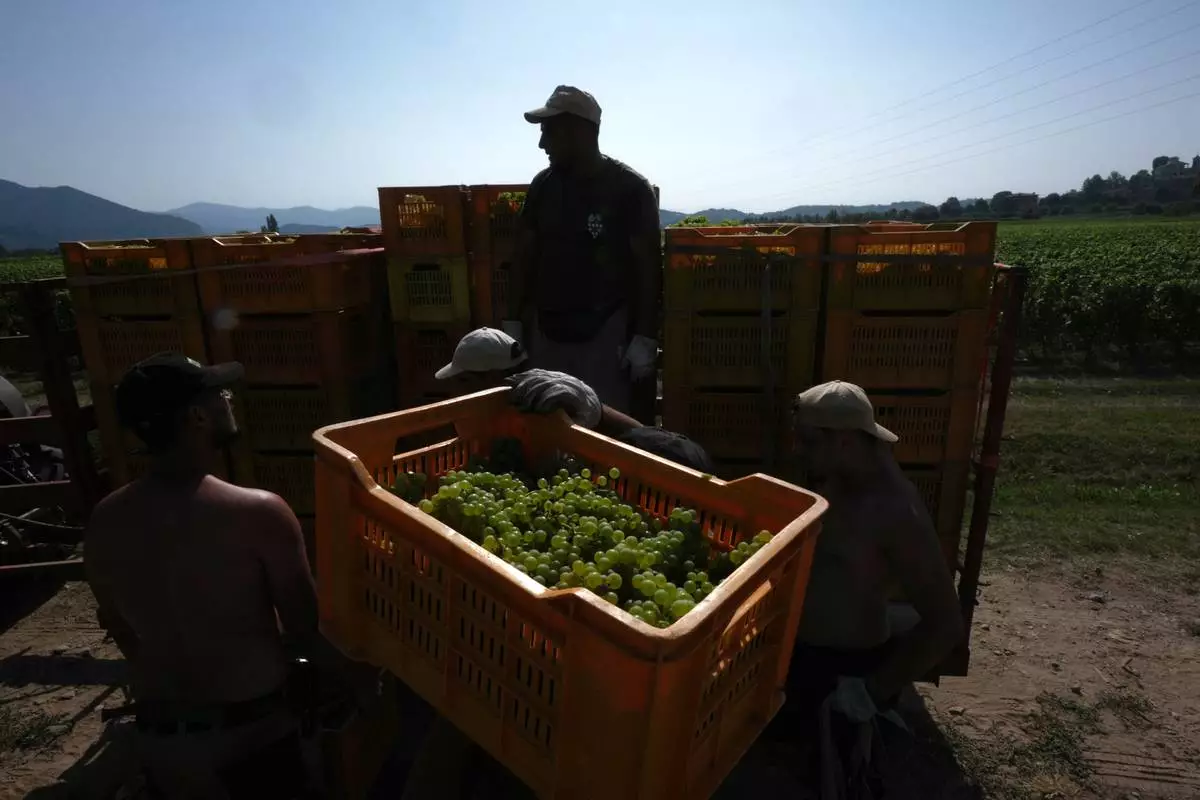
Workers unload crates of wine grapes on a tractor during the harvest in Corte Franca, northern Italy, Thursday, Aug. 6, 2026. (AP Photo/Antonio Calanni)
Workers unload crates of wine grapes on a tractor during the harvest in Corte Franca, northern Italy, Thursday, Aug. 6, 2026. (AP Photo/Antonio Calanni)
A hot worker picks wine grapes during the harvest in Corte Franca, northern Italy, Thursday, Aug. 6, 2026. (AP Photo/Antonio Calanni)
A hot worker picks wine grapes during the harvest in Corte Franca, northern Italy, Thursday, Aug. 6, 2026. (AP Photo/Antonio Calanni)
A worker picks wine grapes as he protects himself from the sun with a towel during the harvest in Corte Franca, northern Italy, Thursday, Aug. 6, 2026. (AP Photo/Antonio Calanni)

A worker picks wine grapes as he protects himself from the sun with a towel during the harvest in Corte Franca, northern Italy, Thursday, Aug. 6, 2026. (AP Photo/Antonio Calanni)
A worker unloads a crate of wine grapes on a tractor during the harvest in Corte Franca, northern Italy, Thursday, Aug. 6, 2026. (AP Photo/Antonio Calanni)
A worker unloads a crate of wine grapes on a tractor during the harvest in Corte Franca, northern Italy, Thursday, Aug. 6, 2026. (AP Photo/Antonio Calanni)
Workers pick wine grapes during the harvest in Corte Franca, northern Italy, Thursday, Aug. 6, 2026. (AP Photo/Antonio Calanni)

Workers pick wine grapes during the harvest in Corte Franca, northern Italy, Thursday, Aug. 6, 2026. (AP Photo/Antonio Calanni)

BOGOTA, Colombia (AP) — Search and rescue efforts were underway early Tuesday in dozens of cities and towns in western Colombia after a powerful earthquake struck the region, killing at least 111 people and leaving many trapped under the debris of damaged and destroyed buildings.

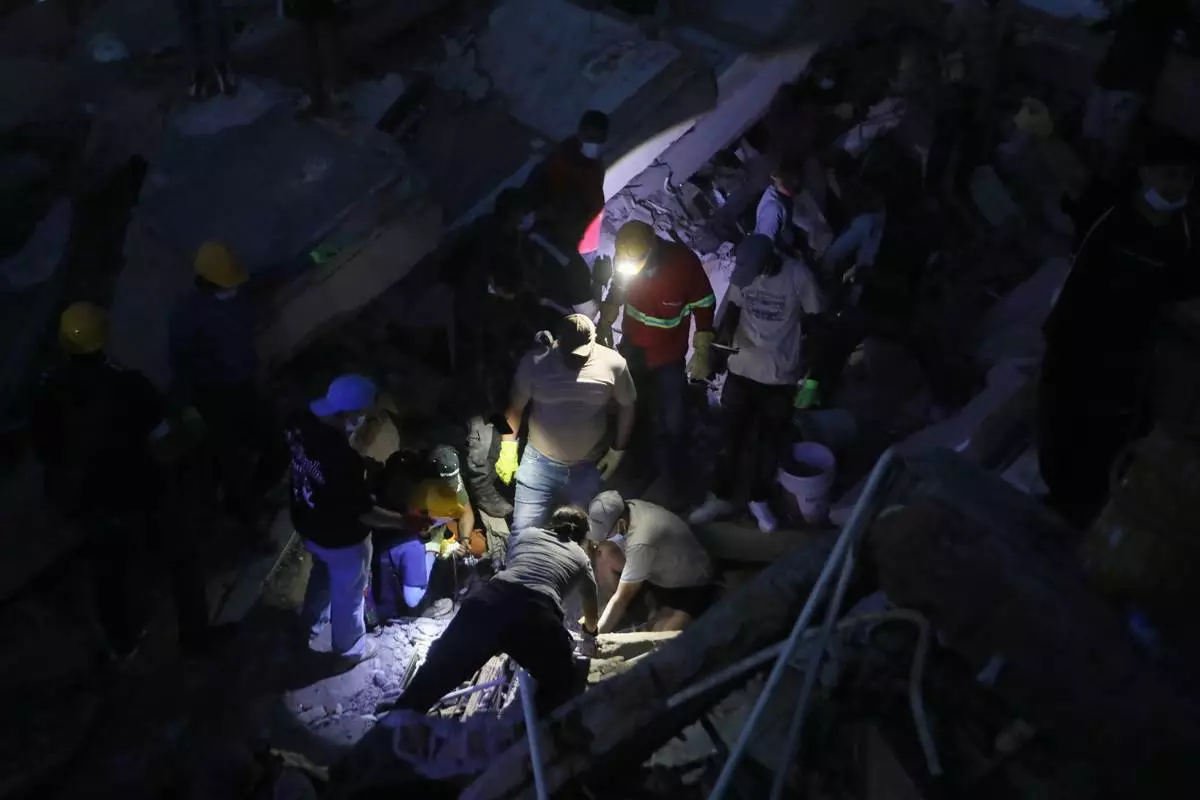
Monday's 7.4 magnitude earthquake rattled Cali, Quibdo, Pereira and numerous other cities and towns. Around 1,600 buildings were reported damaged or collapsed. Soldiers, rescue personnel and families picked through the rubble, removing and passing large pieces of concrete by hand down lines of volunteers.

President Abelardo de la Espriella said Monday afternoon at least 111 people had died.

Families posted information about missing loved ones on citizen-run websites. By Monday night, more than 2,700 people had been reported missing.

Dana Carolina Zamora posted an image of her missing 60-year-old uncle, Miguel Ángel Zamora, cradling his dog. The farmer was living in a rural area of El Cairo, not far from the epicenter of the quake in San Jose Del Palmar.

Local authorities said 80% of El Cairo, a town of about 7,000 people, was damaged. Zamora said she worried because her uncle lived in a traditional but fragile house made of sticks and mud.

“We are afraid. We hope that is not the case, that he is all right and that it is only a communication failure. But we haven’t heard anything from him,” Zamora said.

Choco, the region surrounding the quake's epicenter, is one of the poorest and most neglected regions of Colombia, often beset by warring armed groups. Much of Choco is accessible only by boat, through the jungle or by airplane. Little was known about the extent of the damage there.

De la Espriella traveled to Choco's capital, Quibdo, on Monday night to assess the damage and announced he had mobilized “the entire military and police apparatus” to respond, deploying engineers, rescue workers and search dogs. He announced rental subsidies for those whose homes were damaged while they undergo repairs.

“Choco will never again be the ‘land of the forgotten,'” he said.

The earthquake presents the first major test for de la Espriella, who was sworn in as Colombia's leader on Friday. De la Espriella is a divisive figure because of his pledge of an all-out crackdown on criminal groups.

The U.S. State Department announced it would provide $15.5 million for emergency shelter, food and other aid. Governments across Latin America also lined up to help.

The earthquake left many in the Andean nation unnerved after two back-to-back quakes devastated neighboring Venezuela in late June, destroying hundreds of buildings and killing more than 6,300 people.

Many Colombians were only beginning to grapple with the disaster's longer-term consequences.

Mónica Sánchez owns a small company that makes work uniforms. Her home city, Pereira, was one of the worst hit, and a wall inside the factory collapsed. Sánchez and her 12 workers were able to get outside just in time.

“It was shocking — the city fell down around us,” she said.

Janetsky reported from Mexico City.

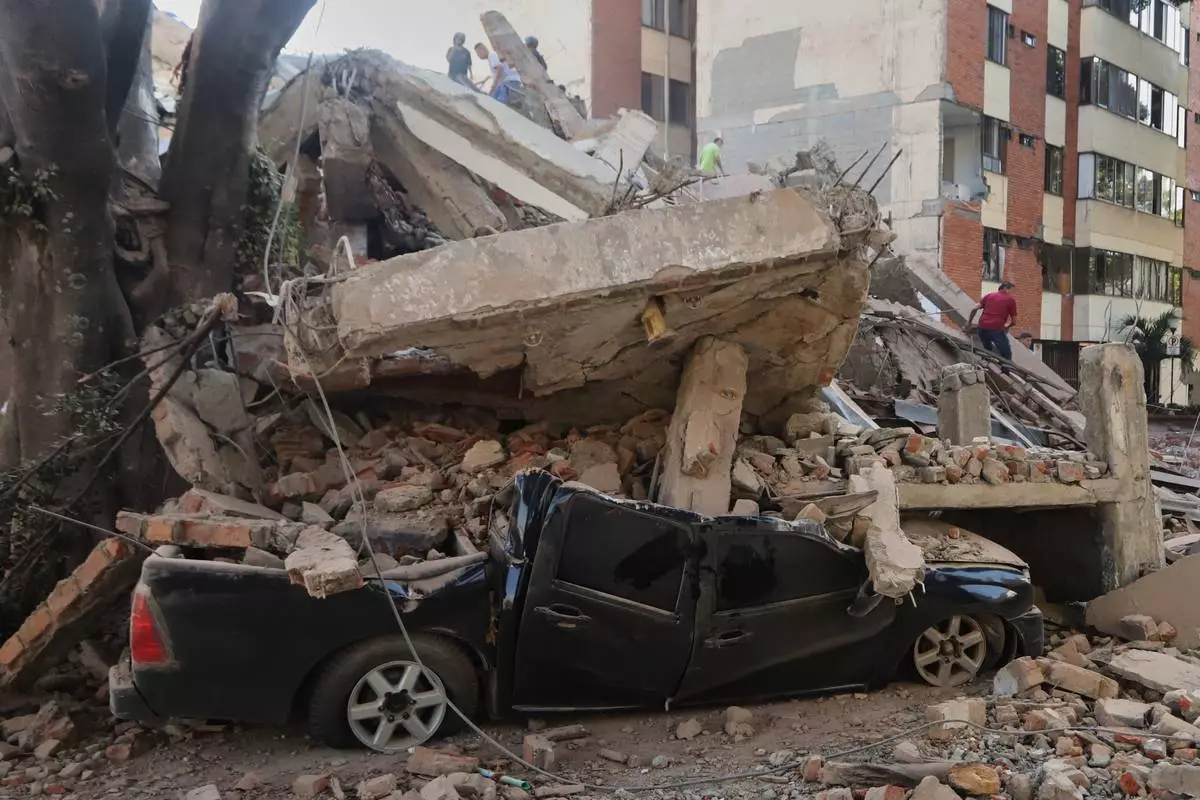
A vehicle is crushed by debris after an earthquake struck Cali, Colombia, Monday, Aug. 10, 2026. (AP Photo/Juan Diaz)

A vehicle is crushed by debris after an earthquake struck Cali, Colombia, Monday, Aug. 10, 2026. (AP Photo/Juan Diaz)

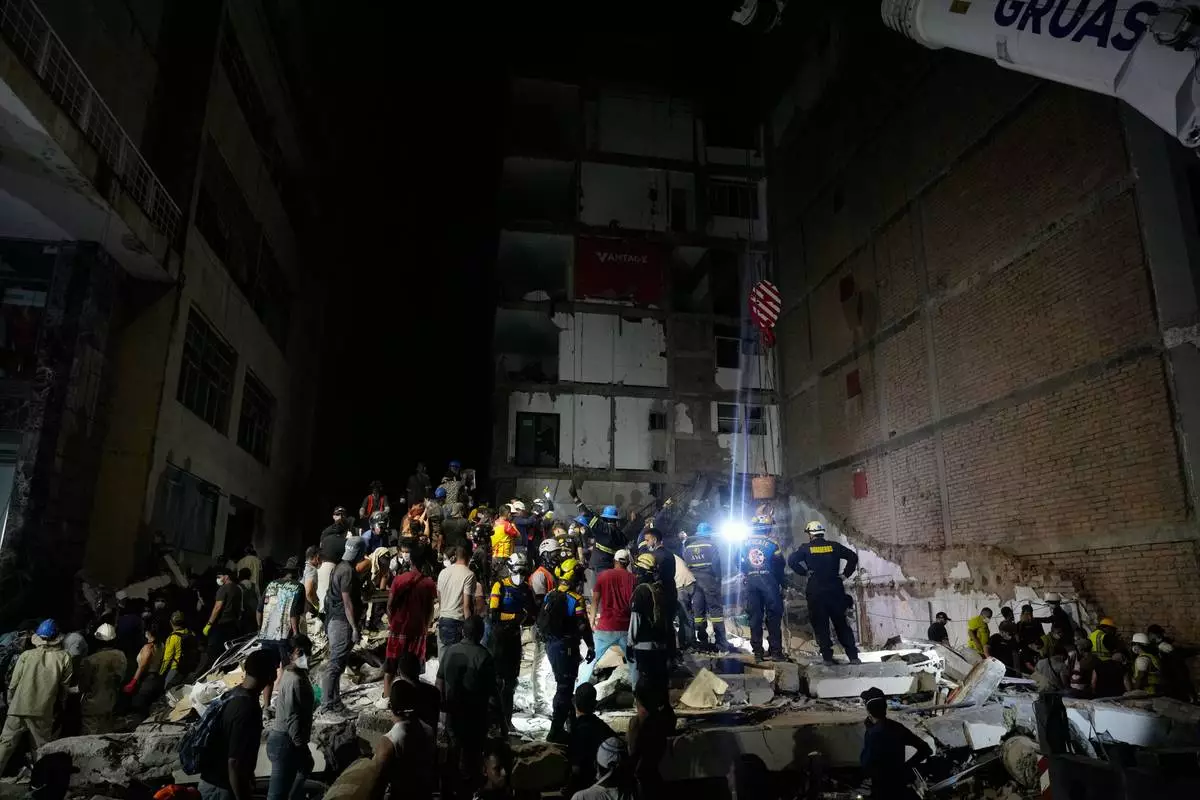
Rescue workers and residents search through the rubble after an earthquake struck Pereira, Colombia, Monday, Aug. 10, 2026. (AP Photo/Fernando Vergara)

Rescue workers and residents search through the rubble after an earthquake struck Pereira, Colombia, Monday, Aug. 10, 2026. (AP Photo/Fernando Vergara)

Rescue workers and residents search through the rubble after an earthquake struck Cali, Colombia, Monday, Aug. 10, 2026. (AP Photo/Santiago Saldarriaga)

Rescue workers and residents search through the rubble after an earthquake struck Cali, Colombia, Monday, Aug. 10, 2026. (AP Photo/Santiago Saldarriaga)

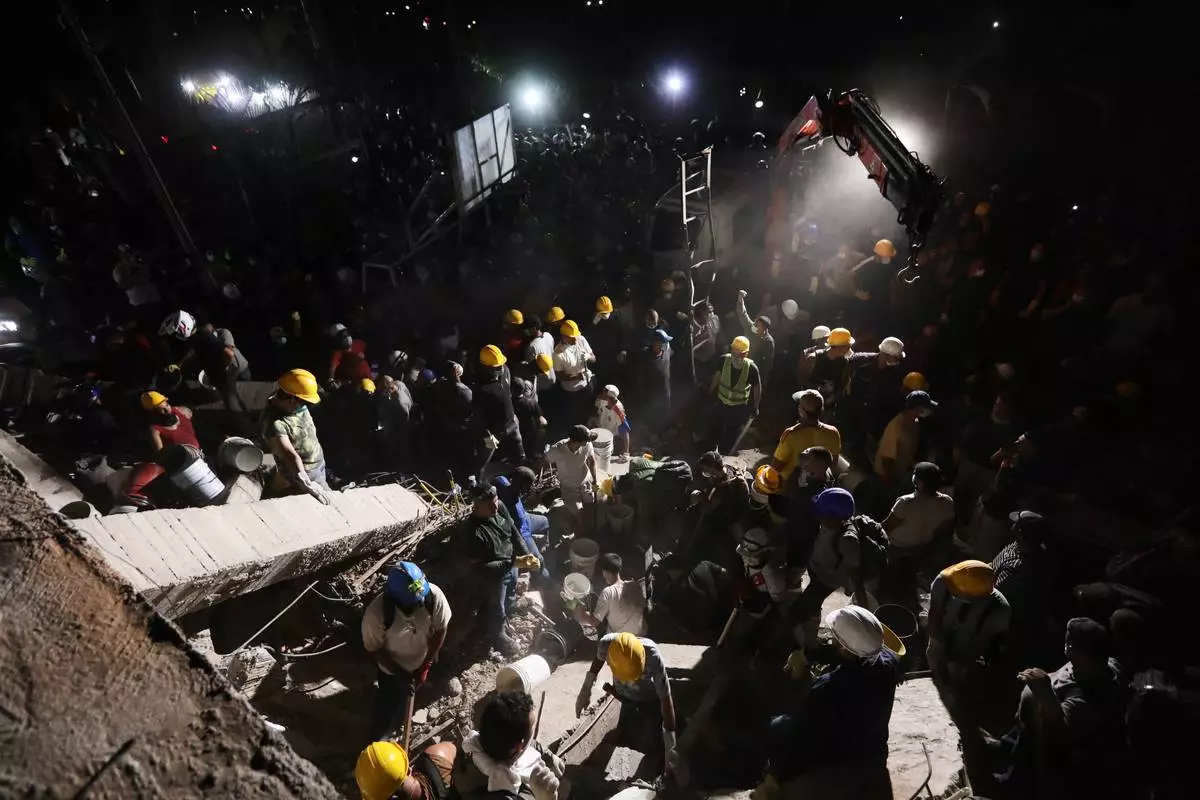
People search through the rubble after an earthquake struck Cali, Colombia, Monday, Aug. 10, 2026. (AP Photo/Santiago Saldarriaga)

People search through the rubble after an earthquake struck Cali, Colombia, Monday, Aug. 10, 2026. (AP Photo/Santiago Saldarriaga)

Recommended Articles