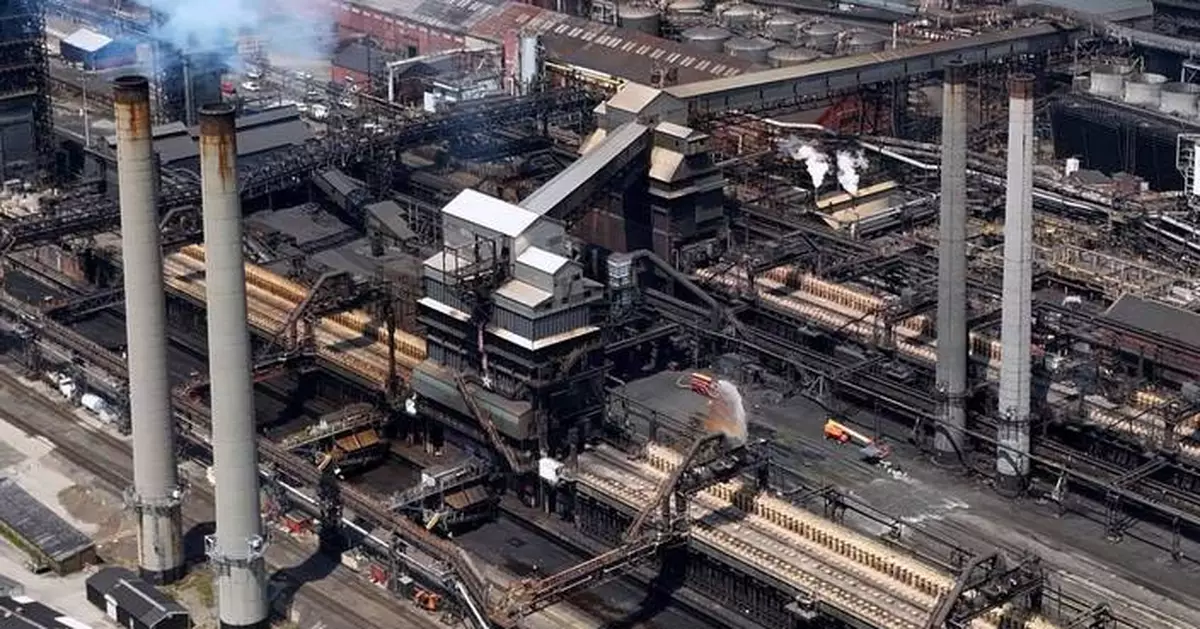
A federal safety agency recommended the development of written policies and procedures for flushing gas valves a year after a blast at a U.S. Steel plant near Pittsburgh killed two workers.
The U.S. Chemical Safety and Hazard Investigation Board issued a final report into the August 2025 blast at Clairton Coke Works, which also injured 11 others, including contractors.
U.S. Steel has said the explosion happened when workers were flushing a gas valve with pressurized water in preparation for routine planned maintenance at the sprawling riverside industrial facility, the largest of its kind in the Western Hemisphere. The valve ruptured under intense pressure and released combustible coke oven gas.
The Occupational Safety and Health Administration previously fined the company a total of $118,214 and issued 10 citations. OSHA had said that U.S. Steel’s written procedures, practices and training to safely maintain equipment and flush the gas valve were incomplete, outdated or inadequate.
The Chemical Safety Board report recommended that U.S. Steel develop a written procedure for washing valves with pressurized water in order to minimize the operation's hazards. It also recommended that an industrial cleaning contractor which used a pump truck to apply pressurized water to the valve develop written policies and procedures for cleaning piping systems containing flammable or toxic gas, and train its workers in such operations.
The Chemical Safety Board report found that when a valve would not close fully, U.S. Steel had a practice of injecting steam or high-pressure water into the cleanout port in an attempt to remove residue.
“U.S. Steel had no procedure for how to safely conduct this operation, but for at least three years before the incident, U.S. Steel employees had utilized pressurized water to clean valve seats on an ad hoc basis despite the lack of a formal procedure prescribing it,” according to the report's executive summary.
Chemical Safety Board member Sylvia Johnson said the blast "was the result of workers routinely performing a task incorrectly over a period of years until it ultimately led to a catastrophic explosion.”
The valve that failed was more than 70 years old and made from cast iron, which the report said is widely recognized as a brittle material. Numerous safety publications either ban or warn against using cast iron equipment in certain hazardous applications, including for flammable substances such as coke oven gas.
The report also said the two workers who died and two of the five seriously injured workers were located around buildings directly above the coke oven gas piping. If these buildings were located in a different area of the facility away from coke ovens, "this incident could have been far less severe,” said Drew Sahli, the Chemical Safety Board investigator in charge.
Before the blast, Clairton Coke Works had a history of accidents and explosions, and some current and former workers there say poor management and underinvestment have exacerbated air pollution and undermined workplace safety, Pittsburgh’s Public Source and The Associated Press have found.
The blast came on top of a string of other accidents at the Clairton plant over time, as well as a long history of legal battles between U.S. Steel and Allegheny County regulators, who regularly accuse the company of flouting environmental rules at the facility.
The report noted that a similar gas oven explosion occurred at the Clairton plant in July 2010, injuring 14 U.S. Steel employees and six contractors. The report criticized U.S. Steel for failing to conduct a subsequent facility siting evaluation after that incident.
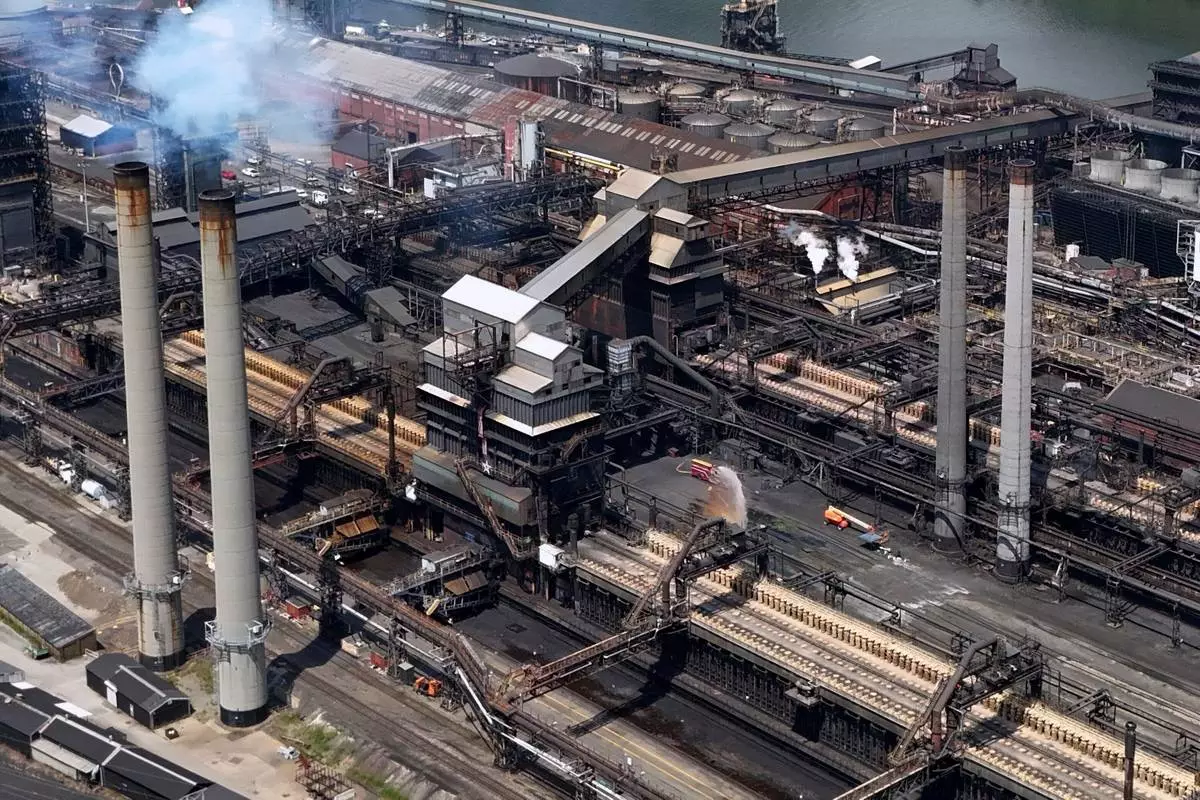
FILE - A portion of the Clairton Coke Works, a U.S. Steel plant, is seen Aug. 11, 2025 in Clairton, Pa. (AP Photo/Gene J. Puskar, File)
WENDOVER, Utah (AP) — The only person to break the sound barrier in a car earned another world record Tuesday in a show of force for hydrogen power.
British driver Andy Green reached 406.320 mph (653.908 kph) in a car powered by two hydrogen internal combustion engines with a combined 1,600 horsepower, setting the record for that vehicle category, according to the Fédération Internationale de l’Automobile, the international governing body of motor sports.
The 64-year-old retired Royal Air Force pilot rocketed across the crystalline crust at Utah’s famous Bonneville Salt Flats in a 32-foot (9.75-meter) car engineered by British construction equipment manufacturer JCB. The engines, adapted from those used in the company’s heavy machinery, mix pressurized hydrogen gas with air and ignite it to create bursts of power.
“It’s magic to be able to showcase this technology and to showcase how good the engineering is on the best racing surface in the world, Bonneville Salt Flats,” Green told The Associated Press after the run.
To be clear, Tuesday’s feat didn’t come close to approaching the overall land-speed record, which Green set with jet power in 1997. That year, he climbed into the Thrust SSC, a black needle sandwiched between two cartoonishly large jet engines, and hit 763.035 mph (1,227.985 kph), breaking the sound barrier and achieving a feat no one has come close to matching. His runs in Nevada’s Black Rock Desert produced sonic booms that shook the nearby town of Gerlach.
In 2006, Green also set the land-speed record for a diesel-powered car — 350.092 mph (563.4 kph) — at the Bonneville Salt Flats. He returned there Tuesday with the goal of beating that mark using hydrogen power, which he has called the “fuel of the future.”
In targeting his diesel speed, Green easily topped the previous hydrogen combustion world record of 185.5 mph (298.5 kph). He had a 10-mile (16-kilometer) straightaway to build speed. A few dozen JCB staff members and reporters watched from a distance through cameras and binoculars.
Green said the cockpit of the car he used on Tuesday was “probably a little hotter” than in the jet-powered vehicle from 1997, with temperatures routinely above 122 degrees Fahrenheit (50 degrees Celsius).
“But I have been training four months for that, both training in the gym and actually just getting used to it with hot baths,” he said.
A remnant of a prehistoric lake bed, the Bonneville Salt Flats are about 100 miles (160 kilometers) west of Salt Lake City and sit atop a shallow aquifer that cools the tires. The low-friction surface and dry desert air are conducive to speed and have beckoned drivers since the first race there in 1914.
“It looks like snow, and it behaves a bit like packed snow — it is surprisingly slippery,” Green said.
Green was no stranger to speed when he took his first racing job. He had been flying supersonic military jets when he spotted a 1994 British newspaper ad seeking a high-speed driver to break the sound barrier.
Green did not approach supersonic speeds on Tuesday, but JCB engineers hope his feat with hydrogen power will shake up the clean-energy industry.
The company's chairman has argued that hydrogen can better handle the demands of heavy industries than electric power.
Hydrogen is only as clean as its source, and the vast majority is currently produced from fossil fuels. JCB signed a deal to buy green hydrogen, which is created using renewable energy but makes up a tiny fraction of global hydrogen production.
The concept and development of such technology has been around for decades, but has had a resurgence over the past several years, said Greg Keoleian, a professor of sustainable systems at the University of Michigan and co-director of the school’s MI Hydrogen initiative.
Many major automakers have already developed hydrogen internal combustion engines or hydrogen fuel cell technology, but the higher cost of hydrogen production compared with gas and diesel is a barrier to wider usage, Keoleian said.
“It represents an important energy carrier for decarbonizing areas of the economy,” he said. “As far as its deployment, it’s influenced heavily by the cost.”
An emerging focus, he said, is extracting hydrogen from natural deposits instead of separating it from water, a prospect that could significantly reduce costs.
Associated Press reporter Dave Collins in Hartford, Connecticut, contributed reporting.
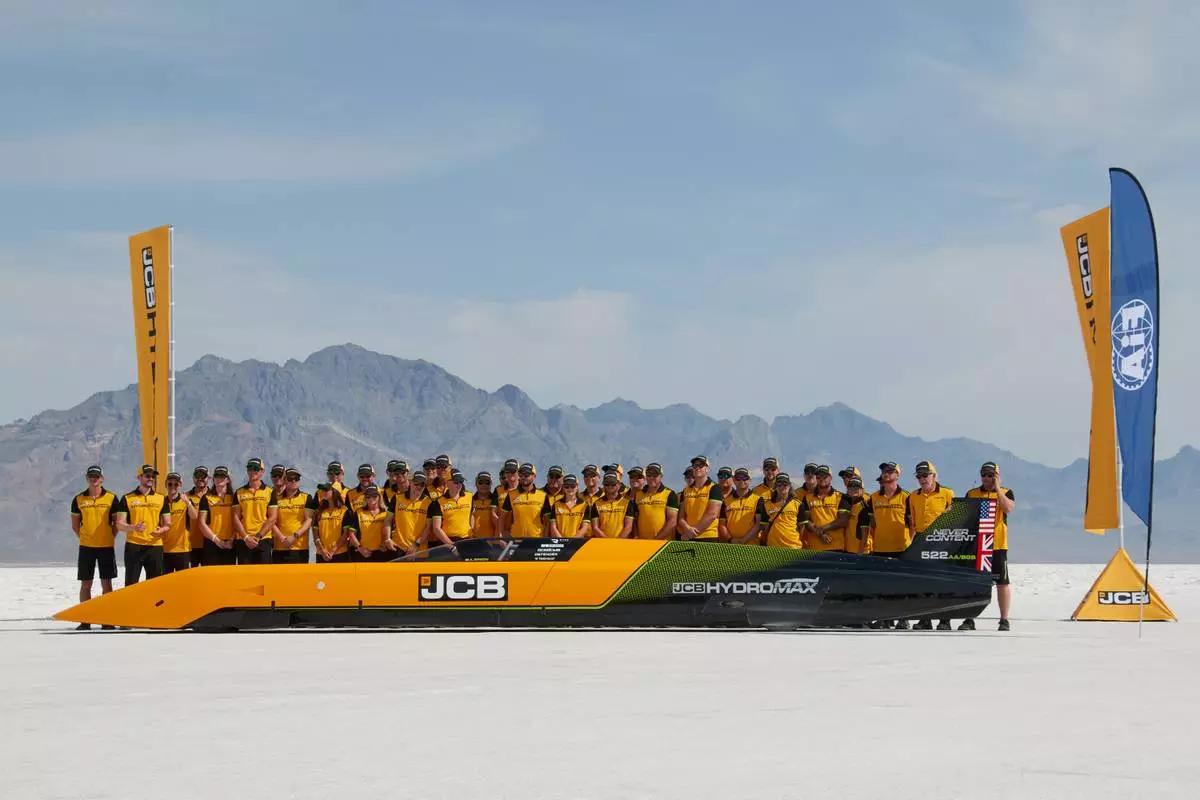
British driver Andy Green and the JCB engineering team pose with the car used to set a new land speed record for a hydrogen-powered vehicle, Tuesday, Aug. 11, 2026, at the Bonneville Salt Flats in Utah. (AP Photo/Hannah Schoenbaum)

British driver Andy Green speaks to reporters after setting a new land speed record for a hydrogen-powered vehicle, Tuesday, Aug. 11, 2026, at the Bonneville Salt Flats in Utah. (AP Photo/Hannah Schoenbaum)

British driver Andy Green, center, and the JCB engineering team celebrate setting a new land speed record for a hydrogen-powered vehicle at the Bonneville Salt Flats in Utah, Tuesday, Aug. 11, 2026. (AP Photo/Hannah Schoenbaum)
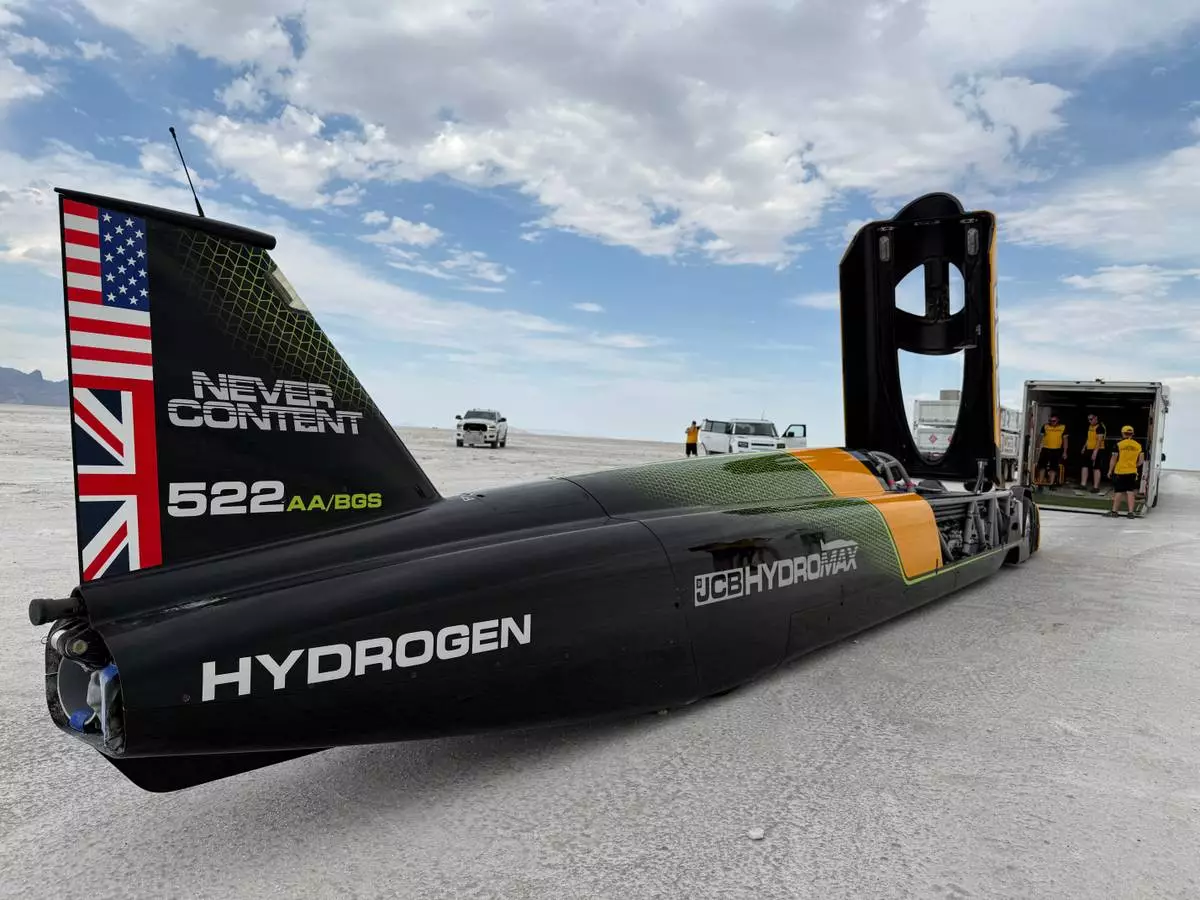
The JCB Hydromax sits on the Bonneville Salt Flats in Wendover, Utah, where Andy Green aims to drive it to a land speed record for cars powered by hydrogen internal combustion engines, Monday, Aug. 10, 2026. (AP Photo/Hannah Schoenbaum)

FILE - British driver Andy Green goes for a new unofficial world diesel powered land speed record of over 328 mph over two runs Tuesday, Aug. 22, 2006, on the Bonneville Salt Flats in Utah. (AP Photo/Douglas C. Pizac,File)
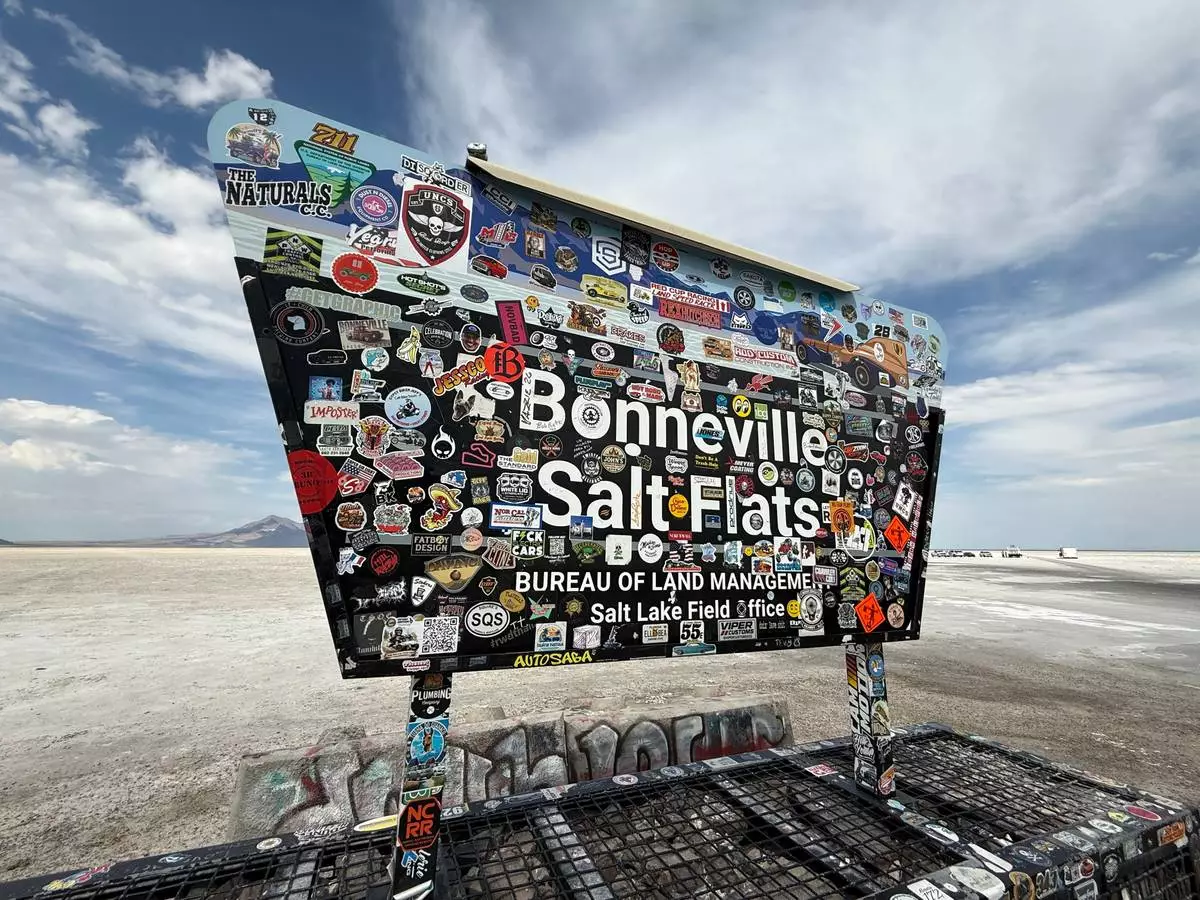
Racing stickers cover a sign for Utah’s Bonneville Salt Flats, home to a speedway where several land speed records have been set, Monday, Aug. 10, 2026. (AP Photo/Hannah Schoenbaum)
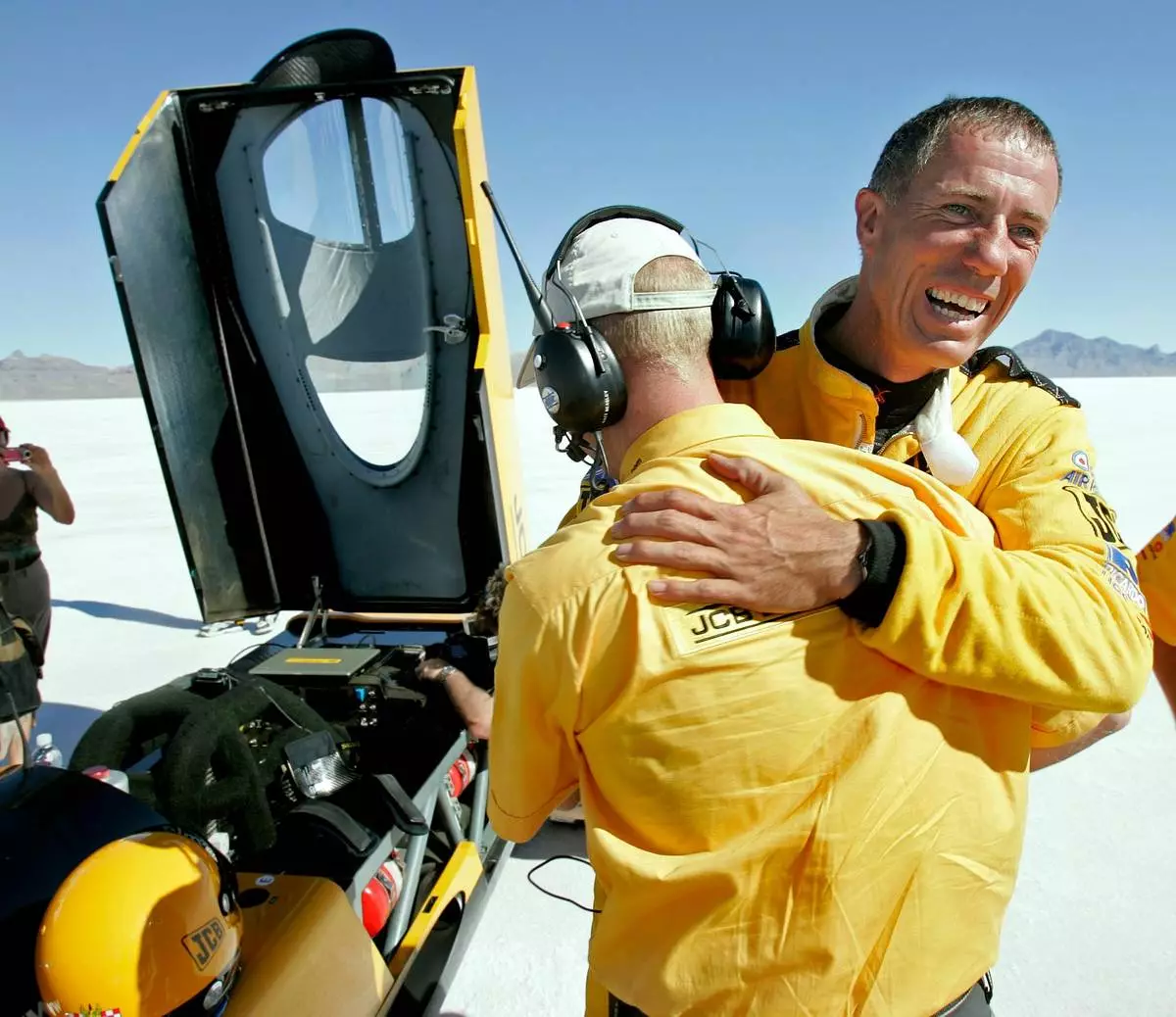
FILE - British driver Andy Green, right, is congratulated by a crew member after setting a new unofficial world diesel powered land speed record of over 328 mph over two runs on the Bonneville Salt Flats in Utah on Tuesday, Aug. 2006. (AP Photo/Douglas C. Pizac, File)

The JCB Hydromax sits on the Bonneville Salt Flats in Wendover, Utah, where Andy Green aims to drive it to a land speed record for cars powered by hydrogen internal combustion engines, Monday, Aug. 10, 2026. (AP Photo/Hannah Schoenbaum)