NEW YORK (AP) — Sir Rod Stewart will be unable to continue his “One Last Time” farewell tour following a coronary stent procedure and after postponing and canceling a few performances, a representative for the singer has confirmed.
Stewart canceled his Tuesday night performance at Rocket Arena in Cleveland shortly after postponing his Sunday concert in Cincinnati at Riverbend Music Center. The latter venue said at the time that it was due “to an unforeseen but minor medical procedure that required prompt attention.”
Stewart also canceled a few dates earlier this year, including two in Las Vegas and one in San Diego.
“Following further medical evaluation, Sir Rod Stewart has successfully undergone a routine coronary stent procedure. Doctors are pleased with his recovery, and Rod is doing very well and has returned to his normal daily activities,” a statement from his publicist read. “On the advice of his doctors, he will take the next four weeks to recuperate and regain full fitness before returning to the stage. Unfortunately, this means he will be unable to continue his current tour dates.”
It added that “information regarding affected performances will be communicated by the respective promoters and venues.”
Stewart, 81, was scheduled to appear through Sept. 3 in North America, including his six-night residency at The Colosseum at Caesars Palace in Las Vegas and a few dates in Mexico.
“I’m already feeling better and very much on the mend. I want to thank the doctors, nurses and everyone who has taken such wonderful care of me,” Stewart said in the statement. “I’m deeply disappointed to miss these shows and sorry to let my fans down, but I look forward to getting back on stage and having a good time with you all again soon.”
The Grammy Award-winning Stewart, whose signature rasp made him a rock ‘n’ roll legend, has sold millions of records across his career's many decades. Perhaps best known for hits like “Maggie May” and “Tonight’s the Night,” he has been inducted into the Rock & Roll Hall of Fame twice.
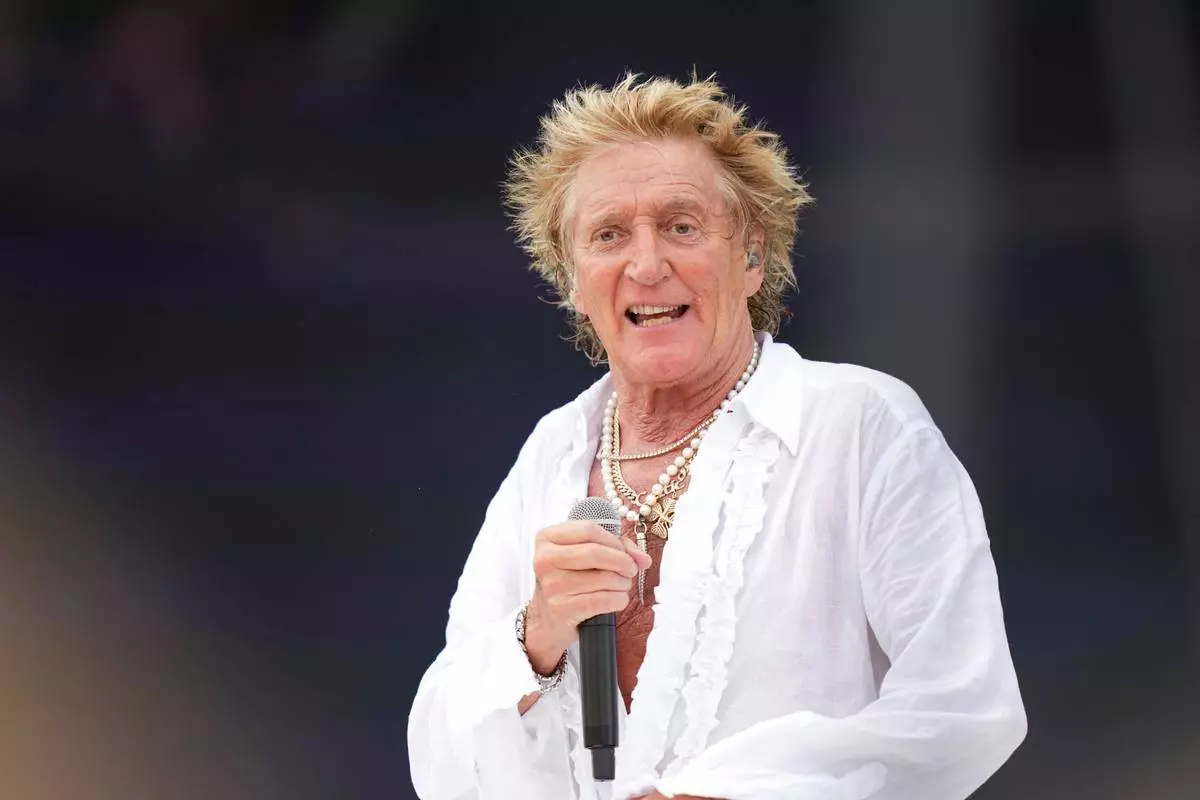
FILE - Rod Stewart performs during the Glastonbury Festival in Worthy Farm, Somerset, England, Sunday, June 29, 2025. (Scott A Garfitt/Invision/AP, File)
WENDOVER, Utah (AP) — The only person to break the sound barrier in a car earned another world record Tuesday in a show of force for hydrogen power.
British driver Andy Green reached 406.320 mph (653.908 kph) in a car powered by two hydrogen internal combustion engines with a combined 1,600 horsepower, setting the record for that vehicle category, according to the Fédération Internationale de l’Automobile, the international governing body of motor sports.
The 64-year-old retired Royal Air Force pilot rocketed across the crystalline crust at Utah’s famous Bonneville Salt Flats in a 32-foot (9.75-meter) car engineered by British construction equipment manufacturer JCB. The engines, adapted from those used in the company’s heavy machinery, mix pressurized hydrogen gas with air and ignite it to create bursts of power.
“It’s magic to be able to showcase this technology and to showcase how good the engineering is on the best racing surface in the world, Bonneville Salt Flats,” Green told The Associated Press after the run.
To be clear, Tuesday’s feat didn’t come close to approaching the overall land-speed record, which Green set with jet power in 1997. That year, he climbed into the Thrust SSC, a black needle sandwiched between two cartoonishly large jet engines, and hit 763.035 mph (1,227.985 kph), breaking the sound barrier and achieving a feat no one has come close to matching. His runs in Nevada’s Black Rock Desert produced sonic booms that shook the nearby town of Gerlach.
In 2006, Green also set the land-speed record for a diesel-powered car — 350.092 mph (563.4 kph) — at the Bonneville Salt Flats. He returned there Tuesday with the goal of beating that mark using hydrogen power, which he has called the “fuel of the future.”
In targeting his diesel speed, Green easily topped the previous hydrogen combustion world record of 185.5 mph (298.5 kph). He had a 10-mile (16-kilometer) straightaway to build speed. A few dozen JCB staff members and reporters watched from a distance through cameras and binoculars.
Green said the cockpit of the car he used on Tuesday was “probably a little hotter” than in the jet-powered vehicle from 1997, with temperatures routinely above 122 degrees Fahrenheit (50 degrees Celsius).
“But I have been training four months for that, both training in the gym and actually just getting used to it with hot baths,” he said.
A remnant of a prehistoric lake bed, the Bonneville Salt Flats are about 100 miles (160 kilometers) west of Salt Lake City and sit atop a shallow aquifer that cools the tires. The low-friction surface and dry desert air are conducive to speed and have beckoned drivers since the first race there in 1914.
“It looks like snow, and it behaves a bit like packed snow — it is surprisingly slippery,” Green said.
Green was no stranger to speed when he took his first racing job. He had been flying supersonic military jets when he spotted a 1994 British newspaper ad seeking a high-speed driver to break the sound barrier.
Green did not approach supersonic speeds on Tuesday, but JCB engineers hope his feat with hydrogen power will shake up the clean-energy industry.
The company's chairman has argued that hydrogen can better handle the demands of heavy industries than electric power.
Hydrogen is only as clean as its source, and the vast majority is currently produced from fossil fuels. JCB signed a deal to buy green hydrogen, which is created using renewable energy but makes up a tiny fraction of global hydrogen production.
The concept and development of such technology has been around for decades, but has had a resurgence over the past several years, said Greg Keoleian, a professor of sustainable systems at the University of Michigan and co-director of the school’s MI Hydrogen initiative.
Many major automakers have already developed hydrogen internal combustion engines or hydrogen fuel cell technology, but the higher cost of hydrogen production compared with gas and diesel is a barrier to wider usage, Keoleian said.
“It represents an important energy carrier for decarbonizing areas of the economy,” he said. “As far as its deployment, it’s influenced heavily by the cost.”
An emerging focus, he said, is extracting hydrogen from natural deposits instead of separating it from water, a prospect that could significantly reduce costs.
Associated Press reporter Dave Collins in Hartford, Connecticut, contributed reporting.
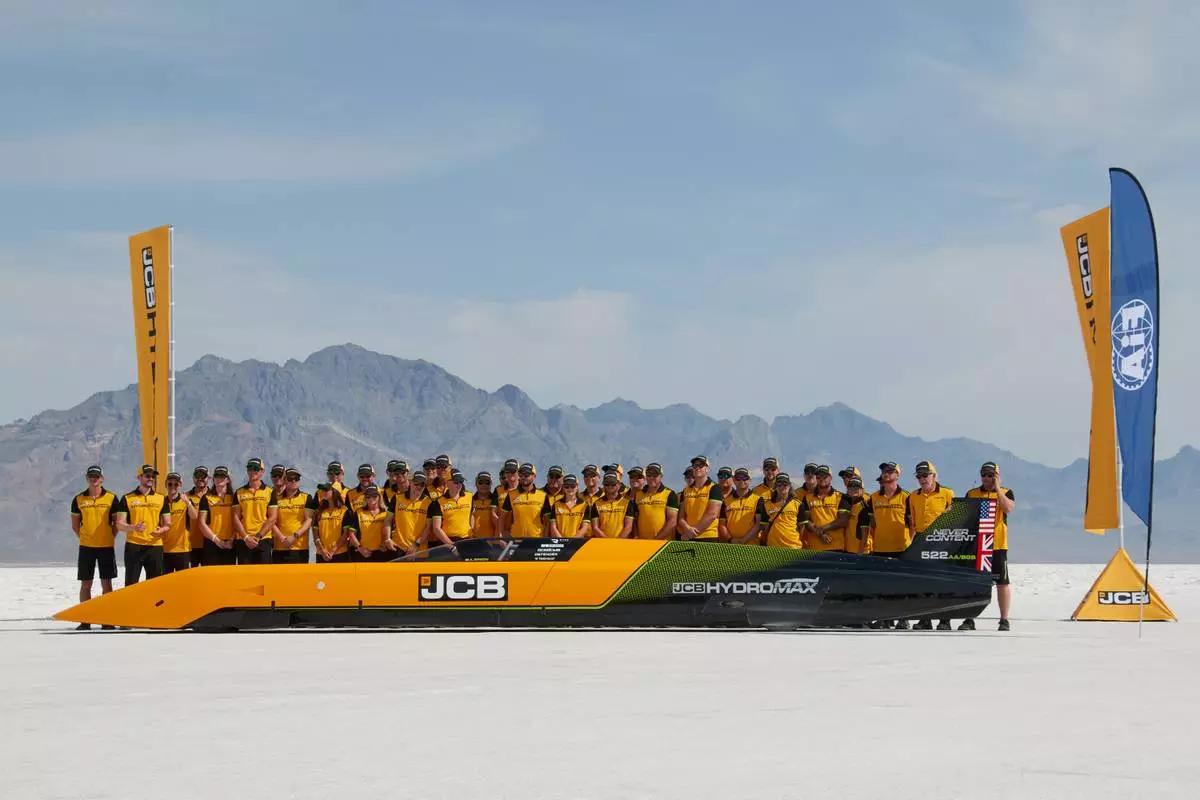
British driver Andy Green and the JCB engineering team pose with the car used to set a new land speed record for a hydrogen-powered vehicle, Tuesday, Aug. 11, 2026, at the Bonneville Salt Flats in Utah. (AP Photo/Hannah Schoenbaum)
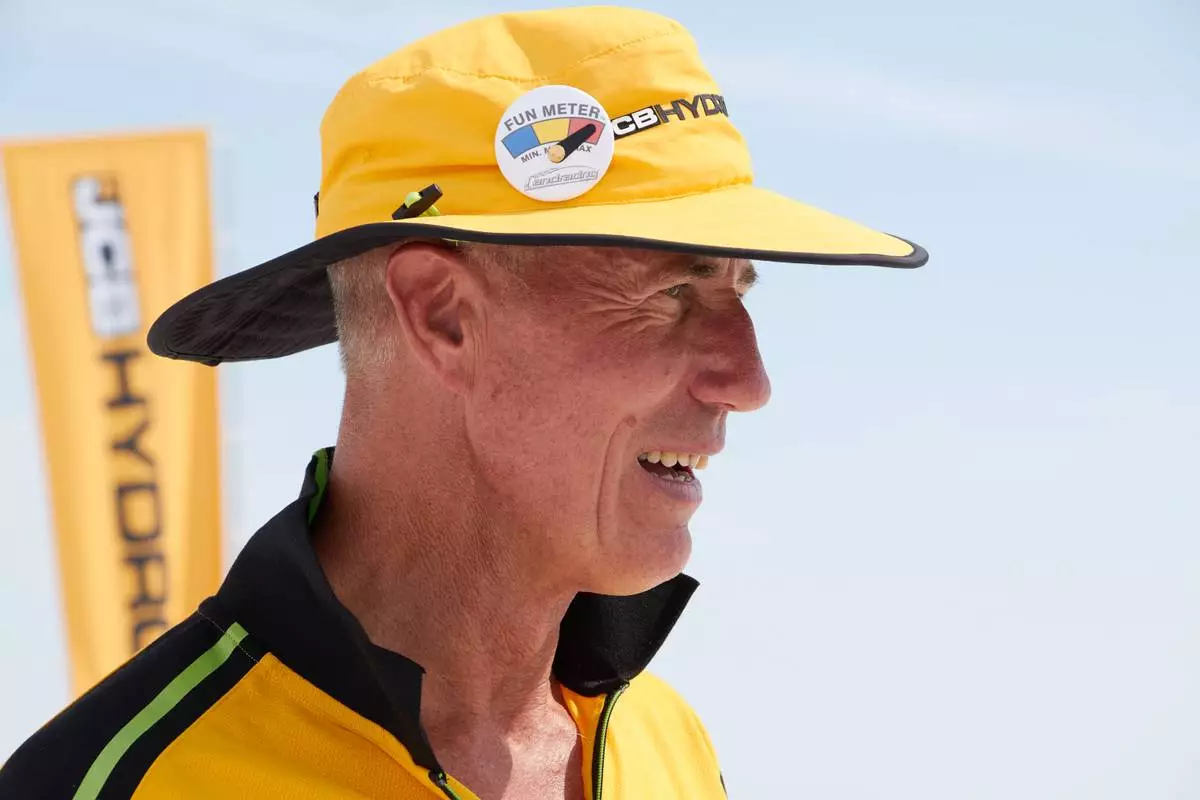
British driver Andy Green speaks to reporters after setting a new land speed record for a hydrogen-powered vehicle, Tuesday, Aug. 11, 2026, at the Bonneville Salt Flats in Utah. (AP Photo/Hannah Schoenbaum)
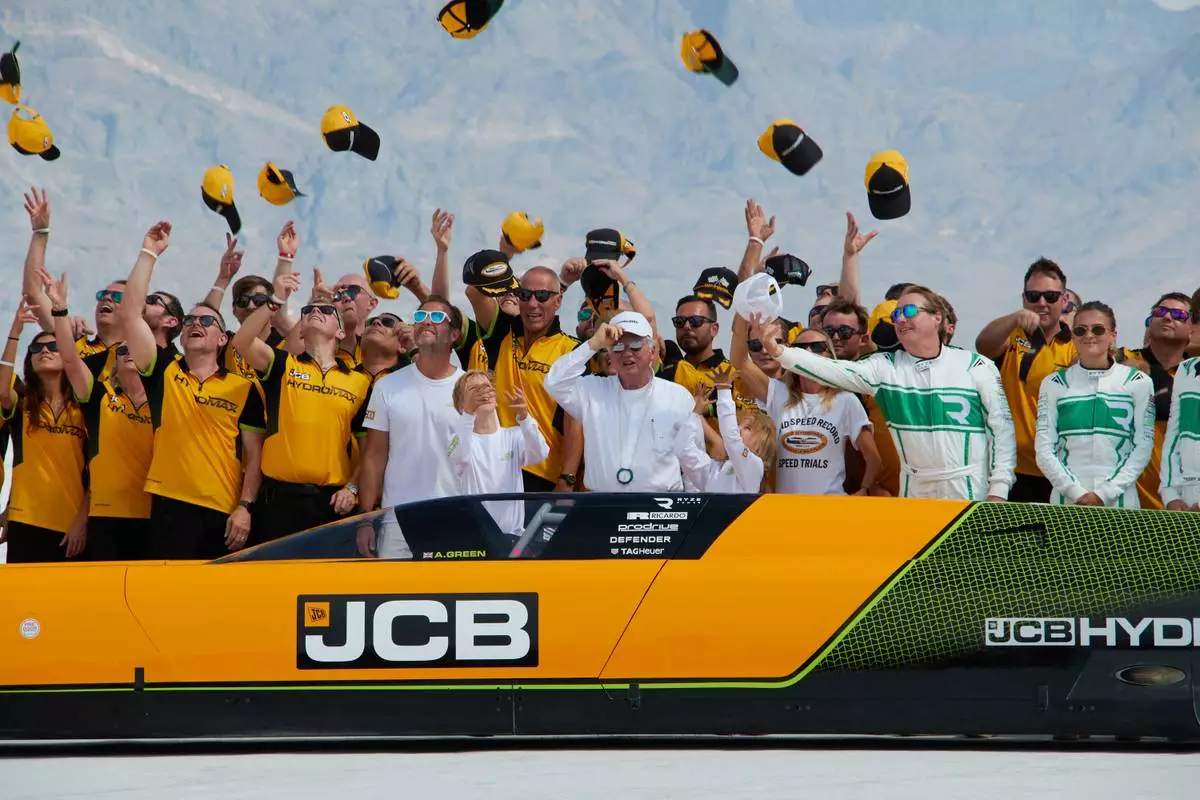
British driver Andy Green, center, and the JCB engineering team celebrate setting a new land speed record for a hydrogen-powered vehicle at the Bonneville Salt Flats in Utah, Tuesday, Aug. 11, 2026. (AP Photo/Hannah Schoenbaum)
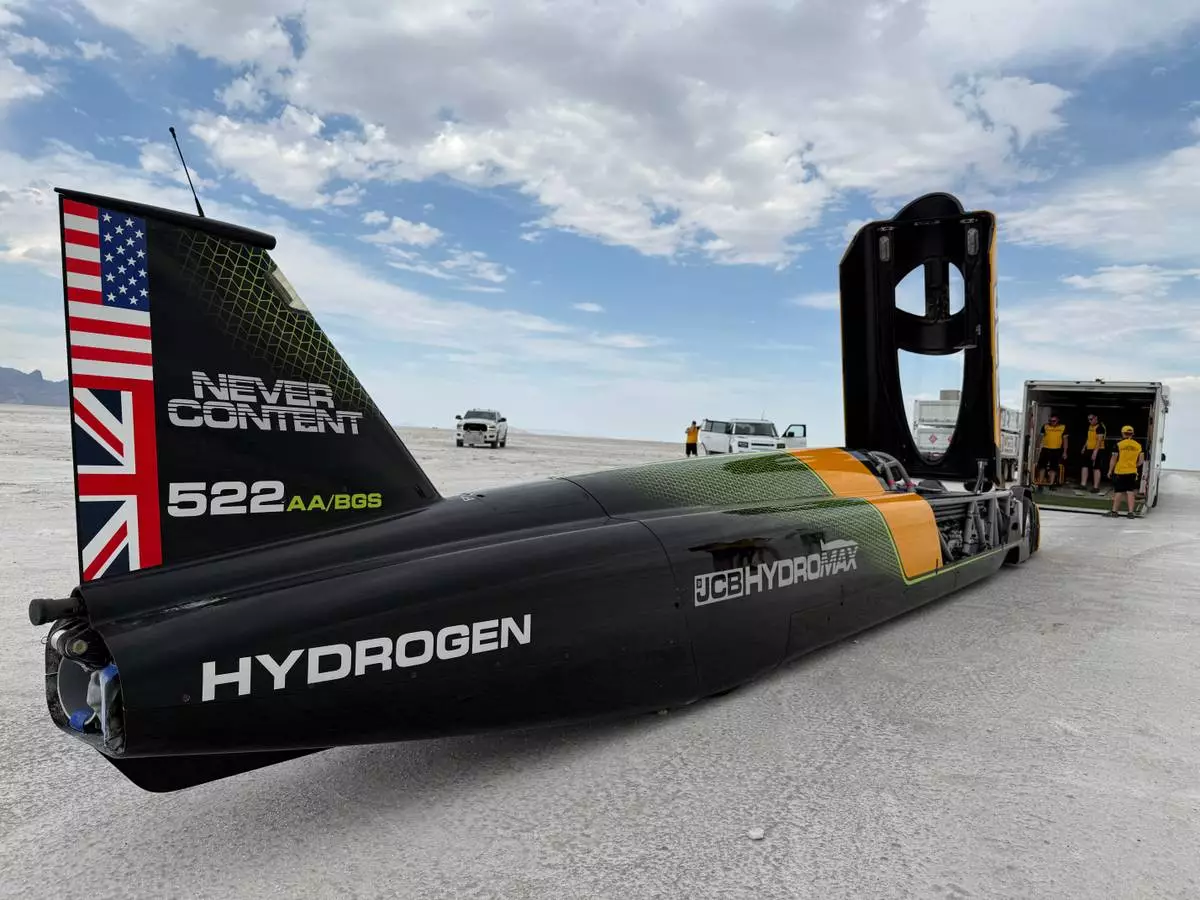
The JCB Hydromax sits on the Bonneville Salt Flats in Wendover, Utah, where Andy Green aims to drive it to a land speed record for cars powered by hydrogen internal combustion engines, Monday, Aug. 10, 2026. (AP Photo/Hannah Schoenbaum)
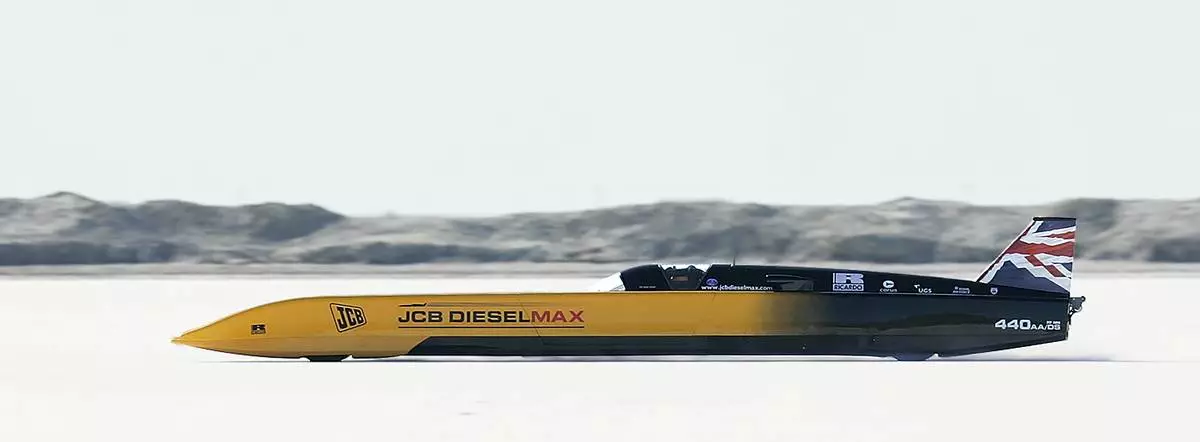
FILE - British driver Andy Green goes for a new unofficial world diesel powered land speed record of over 328 mph over two runs Tuesday, Aug. 22, 2006, on the Bonneville Salt Flats in Utah. (AP Photo/Douglas C. Pizac,File)
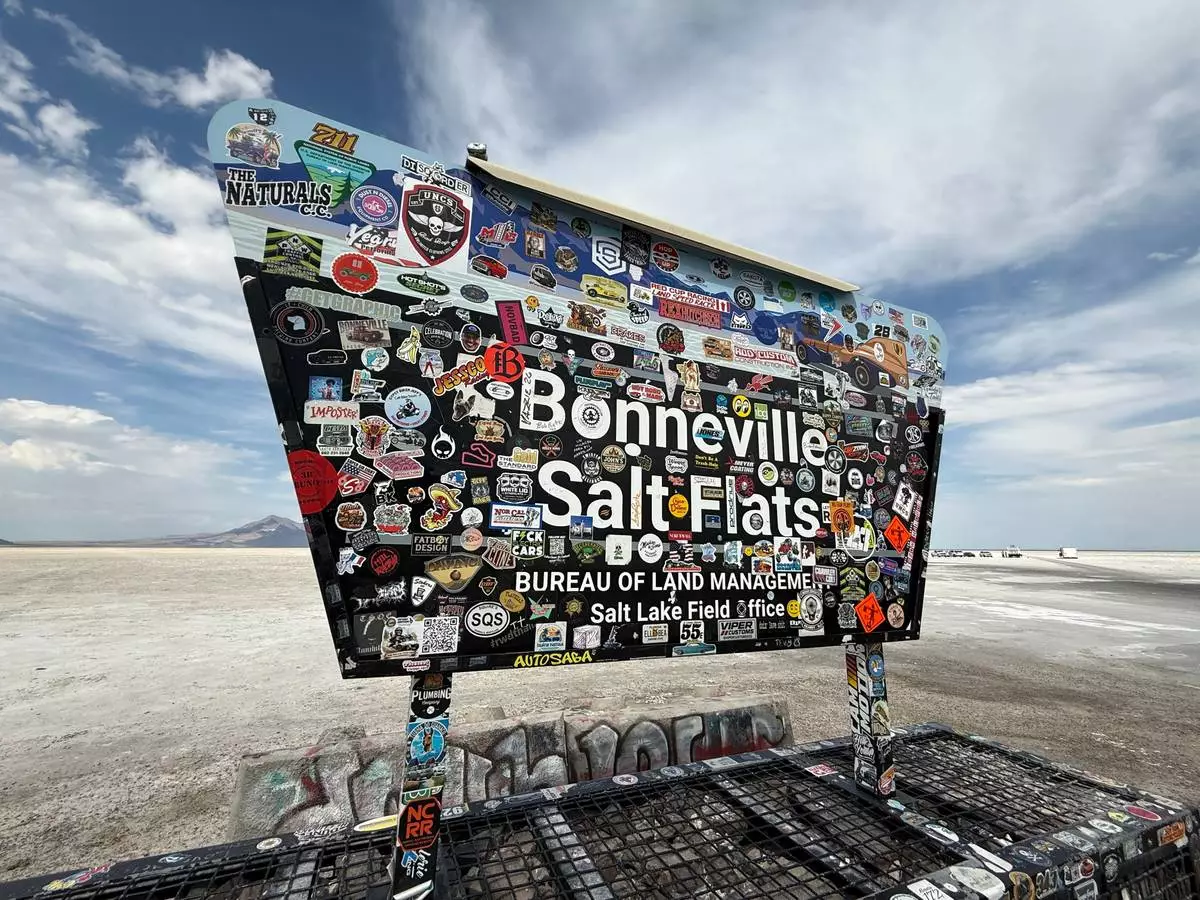
Racing stickers cover a sign for Utah’s Bonneville Salt Flats, home to a speedway where several land speed records have been set, Monday, Aug. 10, 2026. (AP Photo/Hannah Schoenbaum)
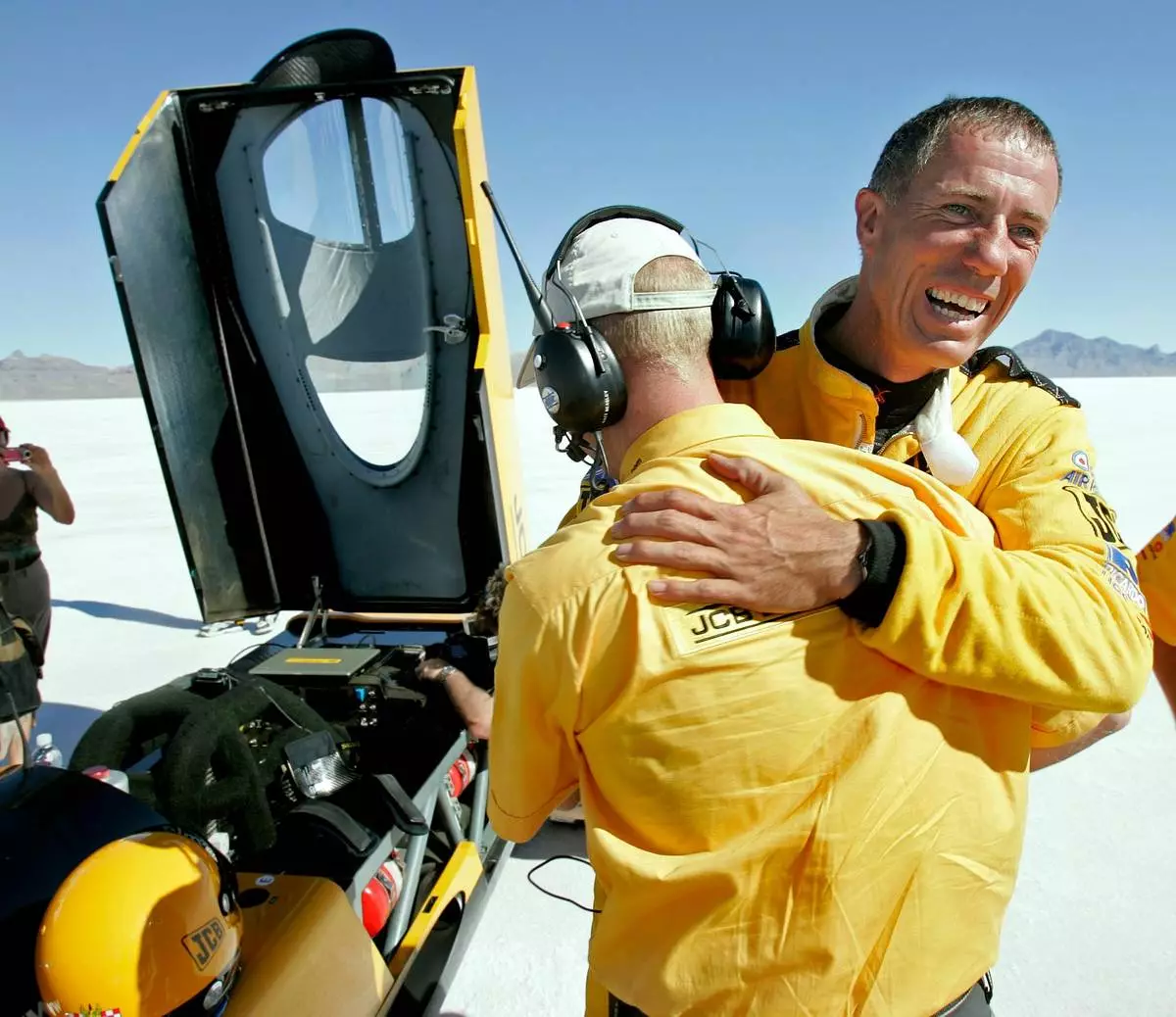
FILE - British driver Andy Green, right, is congratulated by a crew member after setting a new unofficial world diesel powered land speed record of over 328 mph over two runs on the Bonneville Salt Flats in Utah on Tuesday, Aug. 2006. (AP Photo/Douglas C. Pizac, File)
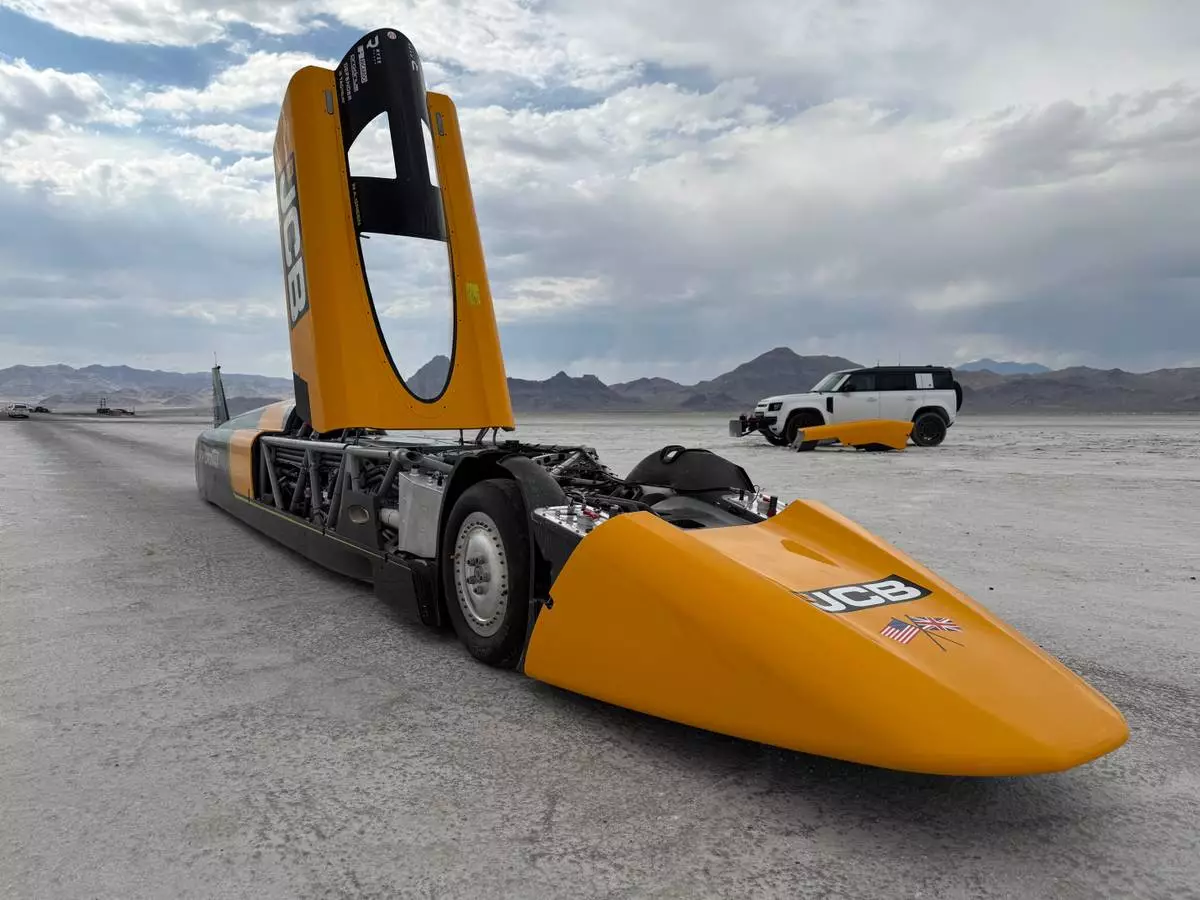
The JCB Hydromax sits on the Bonneville Salt Flats in Wendover, Utah, where Andy Green aims to drive it to a land speed record for cars powered by hydrogen internal combustion engines, Monday, Aug. 10, 2026. (AP Photo/Hannah Schoenbaum)