IRVINE, Calif.--(BUSINESS WIRE)--Aug 12, 2026--
City of Hope Orange County, part of one of the largest and most advanced cancer research and treatment organizations in the United States, announced today that Jennifer Hudson, Emmy, Grammy, Oscar and Tony Award winner and entertainment icon, will perform at its 2026 Promises of Hope Gala.
This press release features multimedia. View the full release here: https://www.businesswire.com/news/home/20260812589395/en/
The Oct. 10 gala at City of Hope Orange County’s academic research campus in Irvine will be chaired by philanthropic leader and longtime City of Hope champion Kelly J. Roberts. The annual event brings together philanthropic supporters, community partners and City of Hope advocates to recognize the generosity and community effort in delivering the full continuum of advanced cancer research and treatment to generations of patients in Orange County.
This year’s gala comes as City of Hope Orange County approaches the first anniversary of Orange County’s only cancer specialty hospital, which opened in December 2025 as part of the region’s most advanced, integrated cancer care network. The hospital is seamlessly connected to the City of Hope Orange County Lennar Foundation Cancer Center, bringing more cancer-focused expertise, advanced acute and outpatient care, clinical trials and leading capabilities to patients across the region.
“City of Hope Orange County exists because people in our community believed families should not have to leave the region to receive advanced cancer care,” said Annette Walker, president of City of Hope Orange County, Ronald and Sandi Simon Presidential Chair. “Since City of Hope opened its first Orange County location in 2020, more than 45,000 unique patients have turned to our network for care. The generous support of our philanthropic community has made it possible to bring together the level of expertise patients need most — specialists focused on their cancer, access to research that can inform treatment and clinical trials that may offer another path — all in our backyard in Orange County.”
One of the few elite artists to achieve EGOT status, Hudson will perform during an evening honoring the generosity and shared commitment that continues to fuel City of Hope Orange County’s growth and impact.
“City of Hope Orange County represents what is possible when a community comes together with a shared purpose,” said Roberts. “I’m honored to chair this year’s Promises of Hope Gala and support an organization that is advancing groundbreaking research, delivering exceptional patient care and creating hope for families throughout Orange County.”
Promises of Hope celebrates the philanthropic support for the sustained investment required to pursue new discoveries and translate research into advances for patients.
“Progress in the fight against cancer depends on people willing to support work whose impact may take years to fully realize. Without that forethought and generosity, City of Hope could not keep asking harder questions, advancing new approaches and building the kind of care patients and families need,” said Kristin Bertell, chief philanthropy officer, City of Hope. “We are also immensely grateful to Jennifer Hudson for lending her voice to a mission that depends on both scientific ambition and human commitment.”
Proceeds from Promises of Hope will support programs, research and care across City of Hope Orange County. To learn more about the event or inquire about sponsorship opportunities, visit PromisesOfHope.givesmart.com.
About Jennifer Hudson
Jennifer Hudson is a Grammy, Oscar, Tony, and Emmy winning artist and entertainment icon. Hudson’s nationally syndicated talk show, “The Jennifer Hudson Show,” is the recipient of eighteen Daytime Emmy Award nominations and two People’s Choice Awards nominations. The show, which continually features an impressive lineup of guests, earned her the AAFCA We See You Award, GLAAD's Excellence in Media Award, and multiple NAACP Image Awards for Best Talk Show Host and Outstanding Talk Series. Hudson also released her Grammy Nominated first holiday album The Gift of Love in October 2024, which features genre-defying, world-class collaborations on classics and original songs.
About City of Hope
City of Hope's mission is to make hope a reality for all touched by cancer and diabetes. Founded in 1913, City of Hope has grown into one of the largest and most advanced cancer research and treatment organizations in the United States, and one of the leading research centers for diabetes and other life-threatening illnesses. City of Hope research has been the basis for numerous breakthrough cancer medicines, as well as human synthetic insulin and monoclonal antibodies. With an independent, National Cancer Institute-designated comprehensive cancer center that is ranked among the nation’s top cancer centers by U.S. News & World Report at its core, City of Hope’s uniquely integrated model spans cancer care, research and development, academics and training, and a broad philanthropy program that powers its work. City of Hope’s growing national system includes its Los Angeles campus, a network of clinical care locations across Southern California, a new cancer center in Orange County, California, and cancer treatment centers and outpatient facilities in the Atlanta, Chicago and Phoenix areas. City of Hope’s affiliated group of organizations includes Translational Genomics Research Institute and AccessHopeTM. For more information about City of Hope, follow us on Facebook, X, YouTube, Instagram and LinkedIn.

Award-winning entertainer Jennifer Hudson will headline City of Hope Orange County’s 2026 Promises of Hope Gala on Oct. 10, 2026, at City of Hope Orange County’s Irvine campus. For sponsorships and tickets, visit PromisesOfHope.givesmart.com. (Photo Credit: Dalvin Adams)
PHOENIX (AP) — Matt Hasselbeck took some nasty hits to the head during his 17-year NFL career, four years at Boston College and a childhood full of sports, but the quarterback seems to have emerged from more than two decades of collisions relatively unscathed, enjoying middle adulthood with his wife and three children.
The 50-year-old knows that some of his friends and former teammates haven't been as lucky.
That's why the three-time Pro Bowl selection recently spent two days at Boston University, going through a battery of scans and tests to determine how much all those collisions affected his brain. The hope is that it will be a small step toward a goal that has eluded doctors — diagnosing chronic traumatic encephalopathy in the living.
“They need guys like me — they need people who are feeling good to step up to the plate and volunteer,” Hasselbeck said. “I played quarterback, so I didn’t take some of the hits that a lot of my teammates took.
“But the guys who were blocking for me, or playing special teams, or trying to get the ball back for me on defense, I wanted to do something. They had my back, so in a way I’d like to have their back."
A degenerative brain disease that has been linked to concussions and other head trauma common in military combat and contact sports, CTE has been diagnosed in more than 100 former NFL players, casting a pall over the United States' most popular sports league. Some high-profile football players diagnosed with CTE after their deaths include Hall of Famers like linebacker Junior Seau and quarterback Ken Stabler, along with former Patriots tight end Aaron Hernandez.
Right now, CTE can only be diagnosed after death.
CTE can affect regions of the brain involved with regulating behavior and emotions. This can lead to memory loss, depression, violent mood swings and other cognitive and behavioral issues, though researchers note these symptoms can also be linked to other illnesses.
Hasselbeck's participation is just a small part of a study that Michael Alosco, co-director of clinical research at the Boston University CTE Center, hopes will expand to hundreds of participants in multiple locations. Alosco is the principal investigator in Boston and there are also sites in California, Arizona, Texas and Florida with potentially more to come.
The study seeks two types of people: Those who played professional or college football and those who have been diagnosed with Alzheimer’s disease and never played contact or collision sports and have no history of repetitive head impacts.
Alosco said there are many similarities between Alzheimer’s and CTE because both are degenerative brain diseases, but there are also some key differences, and mapping out those discrepancies is key to figuring out a way to diagnose CTE properly.
“We’ve applied what we’ve known worked for Alzheimer’s disease, but we’ve learned it does not work for CTE,” Alosco said. “We’ve really got to push discovery efforts and find the marker that’s specific to the protein of CTE versus Alzheimer’s because they’re different.
“How we’re going to get there is through the research we’re doing right now.”
Nicholas Ashton, the principal investigator in Phoenix, said roughly 10 patients have participated at the Arizona site. He said that currently, diagnosing CTE in the living is mostly guesswork because so many of the symptoms mimic Alzheimer's.
“The more people involved, the more information we get and the closer we get to an answer,” Ashton said. “Treatments exploded with Alzheimer's once we were able to accurately diagnose. We're trying to get to the same spot with CTE.”
Hasselbeck said he went through a variety of mental tests — like counting backward from 100 by sevens and reciting the alphabet backward. He also had a blood sample taken, an MRI on his brain and a PET (positron emission tomography) scan that injects a small amount of safe radioactive tracer that maps out the brain's function.
The former quarterback said the procedures were eye-opening and humbling.
“I've got a healthy respect for people who are dealing with serious brain trauma, whether it’s tumors or cancer,” Hasselbeck said. “I walked in there feeling completely healthy and you still get a little anxious when you’re doing a brain scan, an MRI. You come out and you’re looking at your brain.”
Hasselbeck also is donating his brain for research after he dies.
Not everyone in the study is a famous former NFL player.
Bryan Savage, a 56-year-old who lives in Maryland, is a former linebacker at Union College in Schenectady, New York — an NCAA Division III school. He traveled to Boston for the study and also has committed to donating his brain.
Savage said he's lucky to be relatively healthy but that he's been diagnosed with depression and ADHD over the past few years.
“I was interested because of some of the things that I've gone through physically and mentally,” Savage said. “You wonder if it's just getting older, a midlife crisis or if it's related to any brain trauma I might have had playing football.”
Savage praised the researchers who were with him during the study and said he was relieved to find out his brain scans look normal for a man in his mid-50s. He's reached out to some of his former teammates, encouraging them to get involved in the study.
“I'll talk to some of my former friends and they're going through a lot of the same things,” Savage said. “They'll say — ‘Why do I feel like this? I’ve never been depressed. Things that I used to be passionate about I don't care about anymore.'”
Alosco said the main reason Alzheimer's research is much more advanced than CTE research is sheer numbers: Alzheimer's research dates back decades and there have been countless people who have been studied.
By comparison, CTE research is relatively new. Volunteers like Hasselbeck and Savage are crucial to bridge the gap. The National Institutes of Health is sponsoring the current study, awarding $15 million for the research in 2025.
“The (Alzheimer's progress) is through years and years of research, of people donating their brains, and also collecting data during life,” Alosco said. “While we’ve been studying CTE for a while, we haven’t had the point where we’ve had all this data during life, that have also donated their brain. We need to get to that place.”
He added: “I’m really hopeful about detecting CTE — I don’t think that’s too distant. Once we can accurately diagnose, that’s when we can start some treatment trials.”
Hasselbeck — who played in the NFL for the Green Bay Packers, Seattle Seahawks, Tennessee Titans and Indianapolis Colts — said he had three concussions before he even started college, one playing football, another on the basketball court and another while goofing around while ice skating. He had a few concussions during his college or NFL career, but he wasn't sure of the exact number because some might have gone undetected since there was a culture of toughness in locker rooms, particularly early in his career.
Hasselbeck's pro career spanned from 1998 to 2015 and the quarterback said there was a huge change regarding head injuries during that time. Early in his career, the only acceptable answer after a hit to the head was “I'm good,” but by the mid 2010s, players were much more honest about potential concussions.
Hasselbeck's proud of that change. Now he hopes his participation in the current CTE study can continue that progress.
“I’ve always had a passion for making the game safer,” Hasselbeck said. “I love football. One of the things I’m most proud of as an NFL guy is not just as a player, but the entire time I worked with the league and NFLPA for ways to make the game safer.”
Former AP Sports Writer Jimmy Golen in Boston contributed to this report.
AP NFL: https://apnews.com/hub/NFL
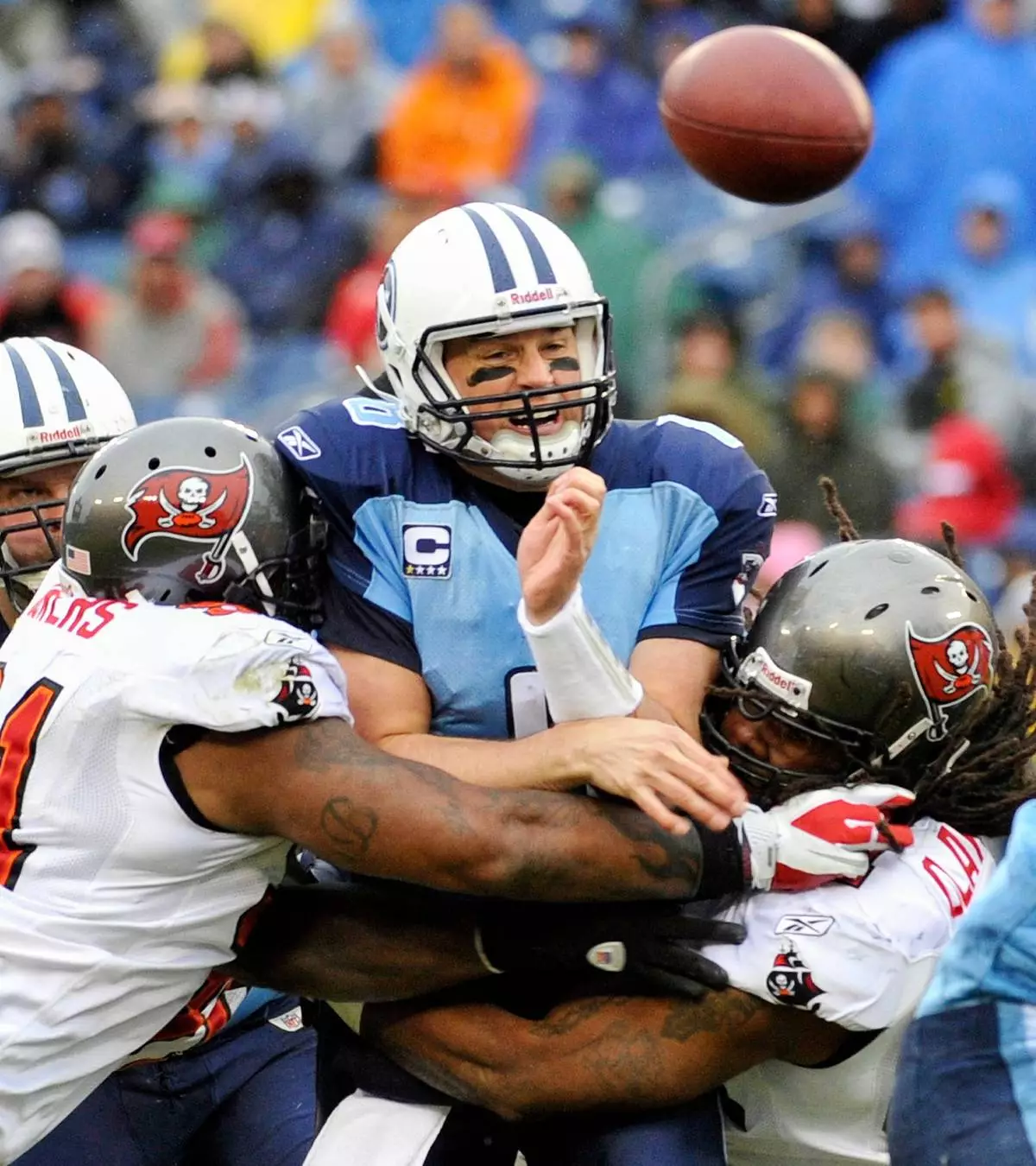
FILE - Tennessee Titans quarterback Matt Hasselbeck, center, throws as he is hit by Tampa Bay Buccaneers defenders Da'Quan Bowers, left, and Adrian Clayborn, right, in the first quarter of an NFL football game on Nov. 27, 2011, in Nashville, Tenn. (AP Photo/John Russell, File)
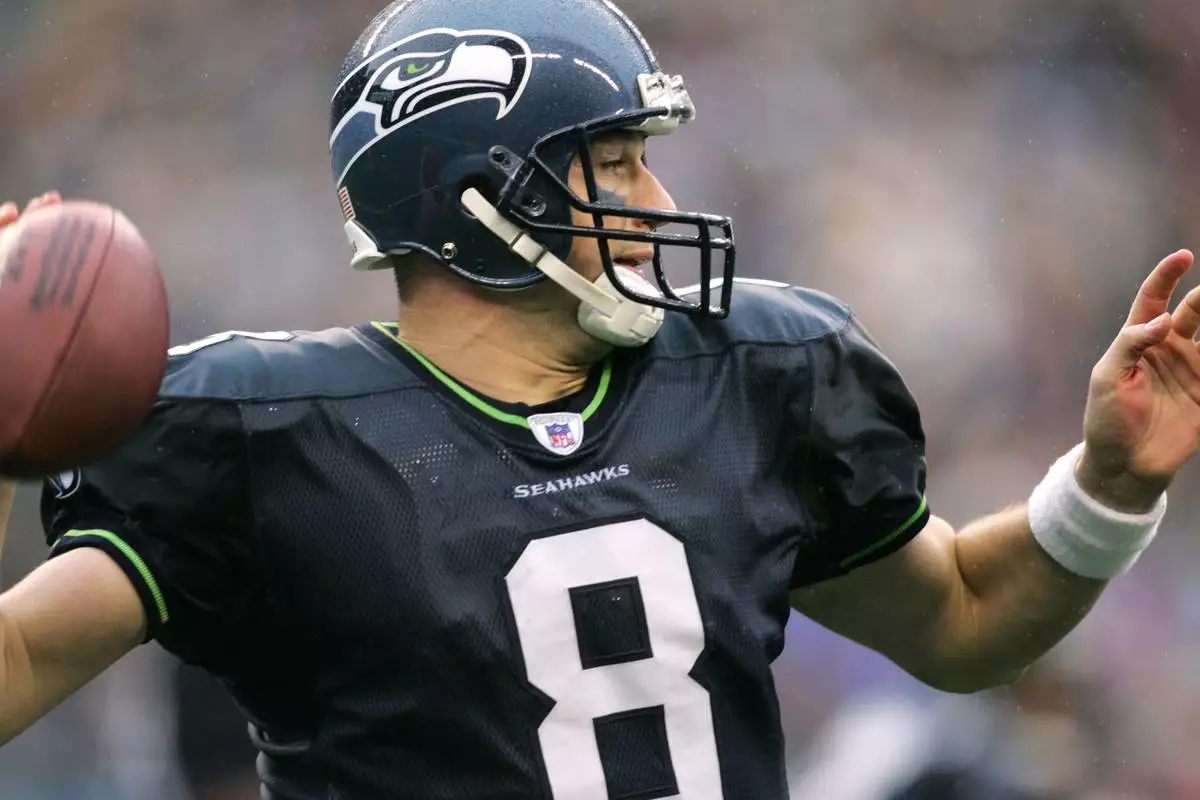
FILE - Seattle Seahawks quarterback Matt Hasselbeck passes during the fourth quarter against the Dallas Cowboys in Seattle, Oct. 23, 2005. (AP Photo/John Froschauer, File)