LONDON (AP) — Large parts of western Europe will be sweltering once again on Thursday, with Britain poised for its fifth heat wave of an exceptional summer that is expected to be the hottest on record.
Forecasters are predicting the mercury to rise as high as 38 Celsius (100 Fahrenheit) in central and southeast England, falling just short of the August record of 38.5 C, set in 2003.
Click to Gallery
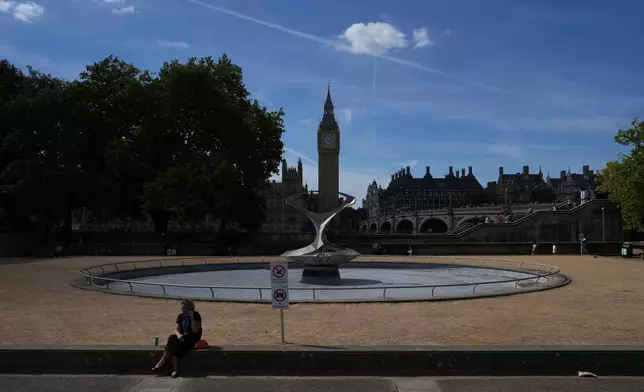
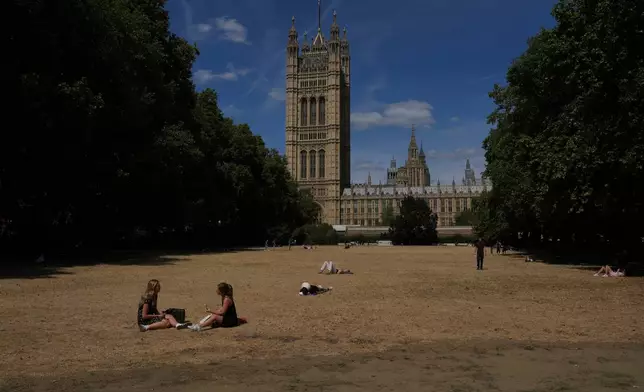
A woman sits in front of the Houses of Parliament in London, Monday, Aug. 10, 2026. (AP Photo/Kin Cheung)
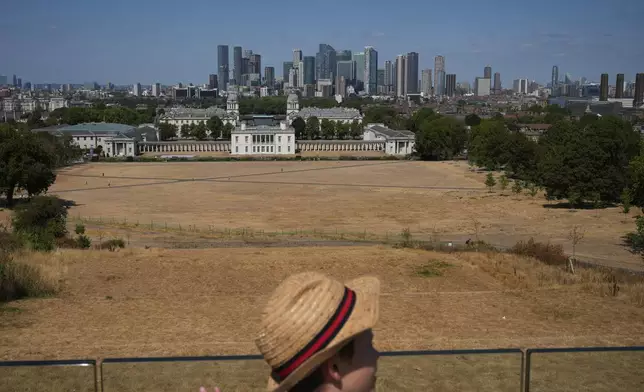
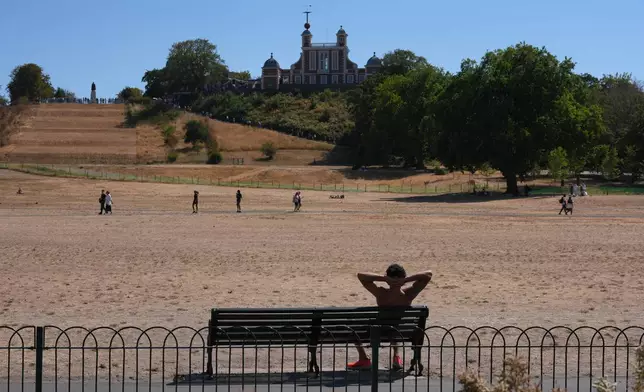
A general view of Greenwich Park amid dried grass in London, Tuesday, Aug. 11, 2026. (AP Photo/Kin Cheung)
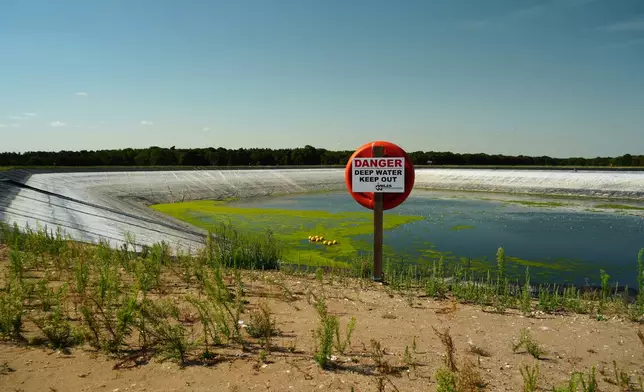
The 'Summer Pit' water reservoir on the Elveden Estate shows low water levels amid a nationwide drought, in Thetford, England, Tuesday, Aug. 11, 2026. (AP Photo/Mustakim Hasnath)
People sit on dried grass in a park outside the Houses of Parliament in London, Monday, Aug. 10, 2026. (AP Photo/Kin Cheung)
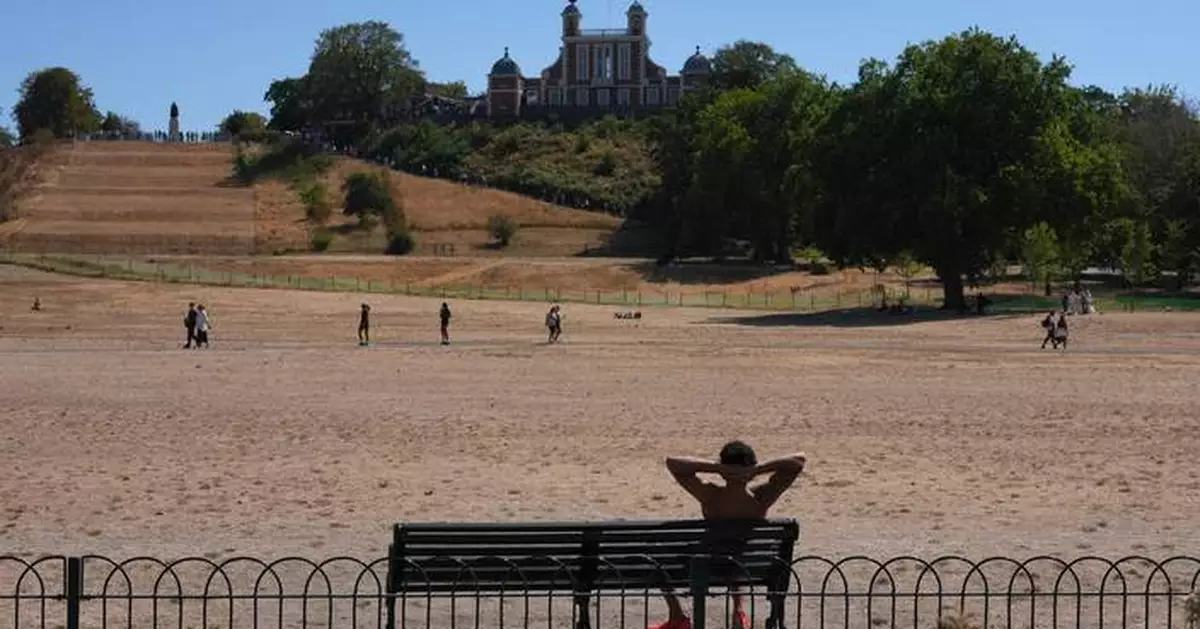
A man sits on a bench in Greenwich Park amid dried grass in London, Tuesday, Aug. 11, 2026. (AP Photo/Kin Cheung)
The Met Office said earlier this week that only average conditions were needed for the rest of August to beat last year's record for the hottest year.
For a country that's largely not equipped to deal with these levels of heat, it's been a particularly uncomfortable few weeks. Air conditioning is a rarity outside of shops and offices.
Working has been particularly difficult in hospitals, where nurses have been known to collapse from heat exhaustion, according to the Royal College of Nursing.
“When nursing staff are collapsing, feeling dizzy, sick or even being admitted to the very hospitals they work in because their workplaces cannot handle the heat, it shows just how badly they are being failed,” said RCN chief executive and general secretary Professor Nicola Ranger.
The bulk of the country is now officially in drought, heaping pressure on water resources for households, agriculture and the environment to mitigate, all of whom have to look for mitigations both in the short-term and in the long-term in the face of human-caused climate change.
Southern Water, which oversees supplies in the south of England, has applied for a rare drought order which would ban businesses from nonessential water use, including cleaning cars and filling nondomestic swimming pools, saying an “exceptional” lack of rain has threatened supplies in Hampshire and the Isle of Wight. Environment Secretary Angela Eagle will decide on the application, which would be the first such ban since May 2006.
Meanwhile, wildfires have been blazing uncontrollably, most notably this week in the New Forest in southern England. Some 1,017 wildfires have been recorded in England and Wales this year, according to data from the National Fire Chiefs Council, the same as last year’s record-breaking total.
Though not on the level as those witnessed in France, Greece and Spain, they provide ample evidence of the need for the U.K. to adjust to a new reality.
Prime Minister Andy Burnham has said he will consider imposing a ban on disposable barbecues amid the risk of further wildfires as extreme heat continues to grip parts of the U.K.
“I do believe we need to get the message out loud and clear,” he said. “People should not be using those barbecues outside at this moment in time.”
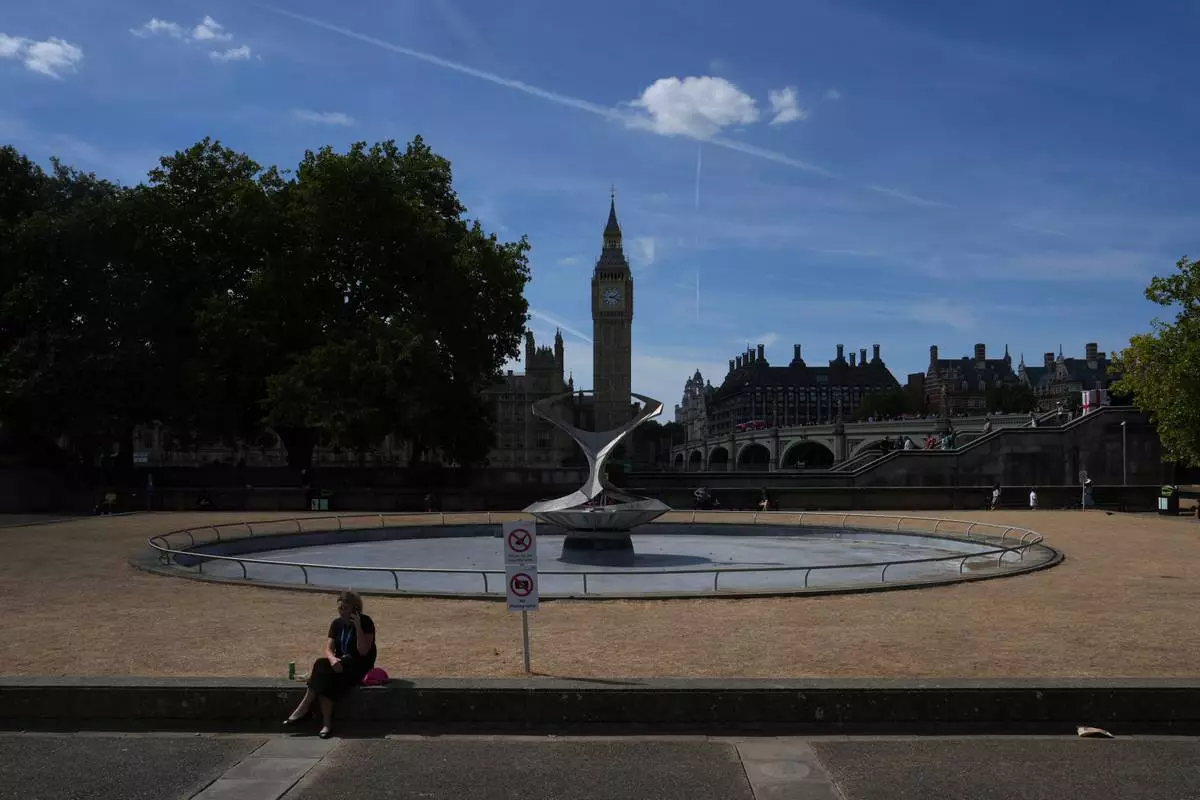
A woman sits in front of the Houses of Parliament in London, Monday, Aug. 10, 2026. (AP Photo/Kin Cheung)
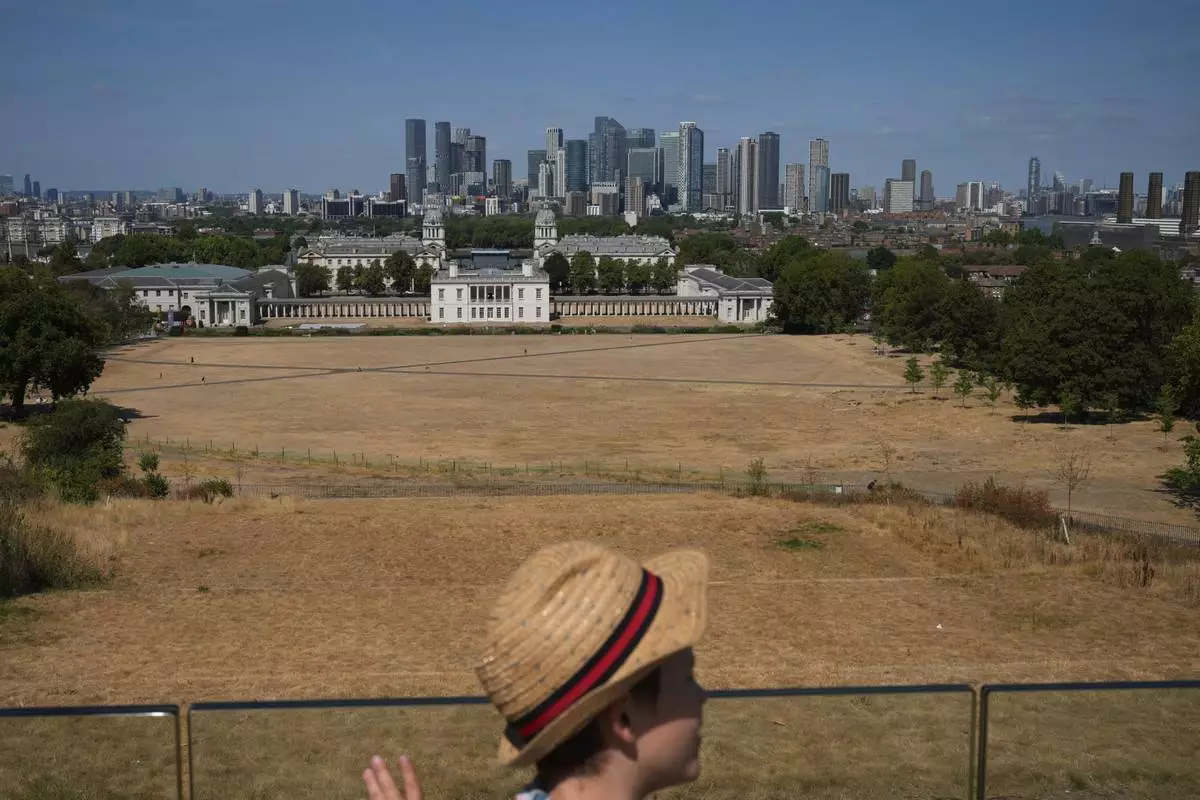
A general view of Greenwich Park amid dried grass in London, Tuesday, Aug. 11, 2026. (AP Photo/Kin Cheung)
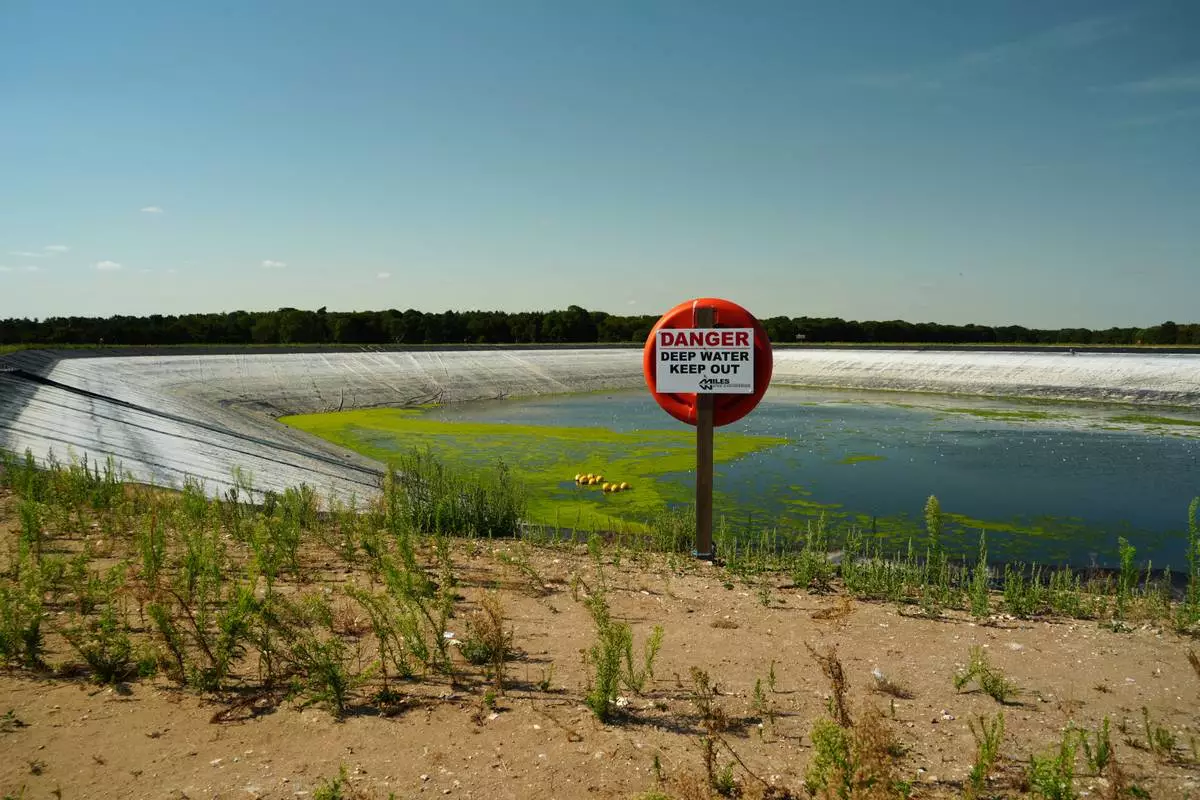
The 'Summer Pit' water reservoir on the Elveden Estate shows low water levels amid a nationwide drought, in Thetford, England, Tuesday, Aug. 11, 2026. (AP Photo/Mustakim Hasnath)
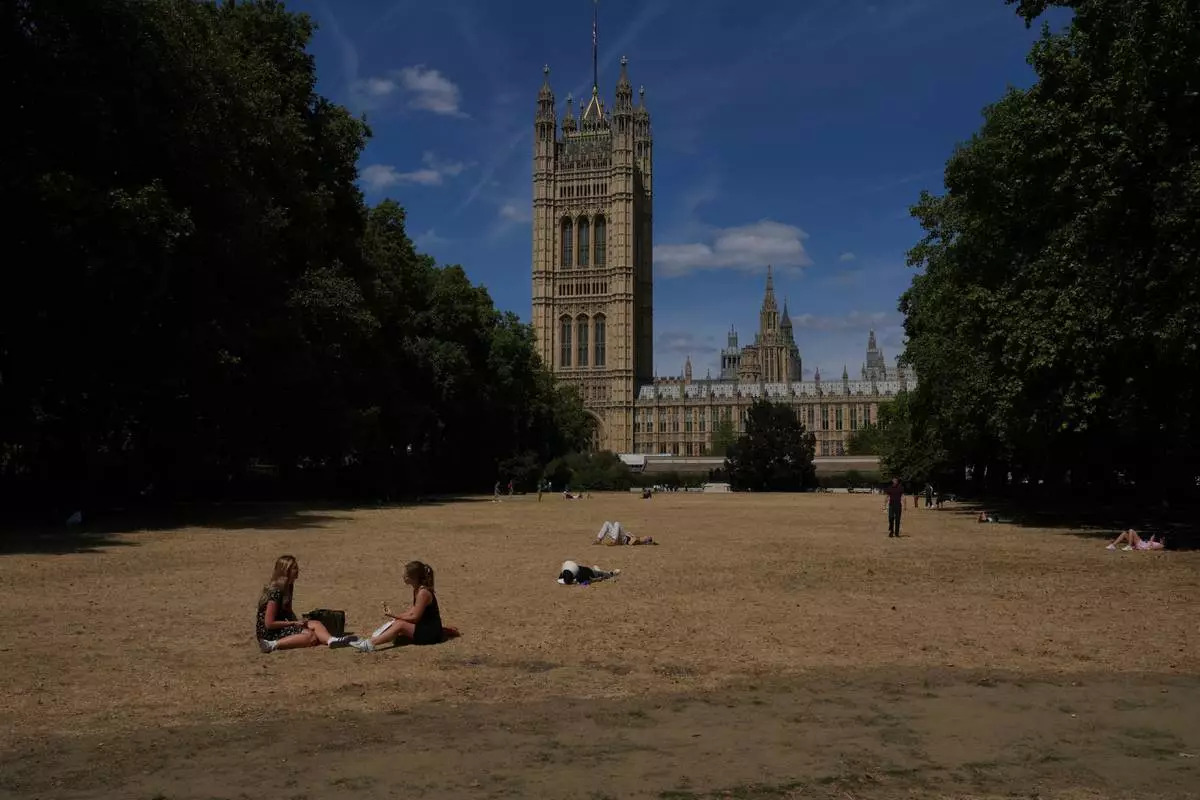
People sit on dried grass in a park outside the Houses of Parliament in London, Monday, Aug. 10, 2026. (AP Photo/Kin Cheung)
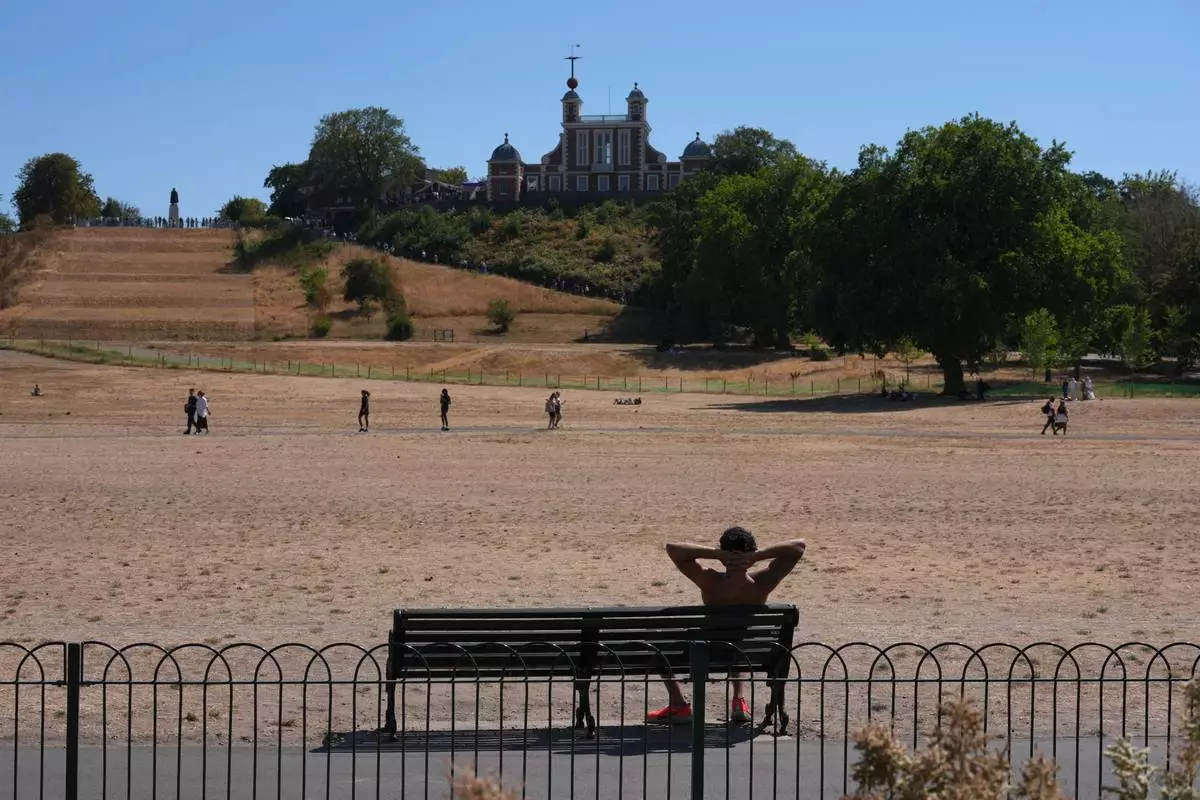
A man sits on a bench in Greenwich Park amid dried grass in London, Tuesday, Aug. 11, 2026. (AP Photo/Kin Cheung)
HAVANA (AP) — Fidel Castro would have turned 100 on Thursday, and his long shadow continues to loom over the island as he remains revered by some who miss him in the face of a crippling U.S. energy blockade and blamed by others who see him as the architect of the system that led to Cuba’s current crisis.
This week, Cuba commemorated Castro with events including the International Book Fair, art exhibitions, concerts and gatherings of delegates from leftist organizations across the continent.
Posters bearing his image hang in hospitals, while billboards displaying his slogans — including his widely-known “Homeland or Death” — line the streets. His presence is so familiar that many Cubans refer to him simply as Fidel.
“I believe (Fidel Castro) leaves Cuba a legacy of dignity, morality, tireless work and concern for the poor,” writer and essayist Miguel Barnet, who also is a member of the National Assembly, told The Associated Press. “And a philosophy that was translated into concrete policies in areas such as culture, education and public health.”
Castro’s centennial comes as Cuba faces an ever-intensifying squeeze that began when the Trump administration imposed a fuel blockade in January and followed up with a series of sanctions aimed at pressuring the communist government to make political and economic changes. The measures have deepened a five-year economic crisis fueled by earlier U.S. sanctions and a failed domestic financial overhaul.
For Cubans, the effects have been far-reaching: prolonged power outages, shortages of fuel and medicine, declining industrial and tourism activity, flight cancellations, transportation restrictions and reduced work and school hours.
Castro governed Cuba for five decades, from 1959 until he handed over the presidency to his brother in 2008, holding massive rallies and making hourslong speeches. He remained influential until his death in 2016.
“Fidel left us everything, everything good that came from Cuba’s revolutionary process,” said Argelia Mustelier, a 61-year-old retiree who lives in Old Havana. “In these difficult times we’re living through, he would have found a way to bring some happiness to his country and his people.”
Fidel Castro Ruz was born Aug. 13, 1926, in eastern Cuba’s sugar country, where his Spanish immigrant father first worked recruiting labor for U.S. sugar companies and later built up a prosperous plantation of his own. Shortly after graduating as a lawyer, he became politically active.
In 1953, Castro and more than 100 others attacked the Moncada Barracks in Santiago de Cuba in an unsuccessful attempt to overthrow dictator Fulgencio Batista. Castro was captured and later released, then went into exile in Mexico. He returned to Cuba with fellow rebels and launched a guerrilla campaign that culminated in Batista’s ouster in 1959 and Castro’s rise to power.
Castro took power and radically transformed Cuba through agrarian reform, a massive literacy campaign and the nationalization of private businesses, policies that put his government on a collision course with the U.S.
Across Latin America and developing nations, Castro became a symbol of anti-colonial and revolutionary movements. His policies also fueled deep opposition, first among wealthy Cubans, many of whom fled to the United States, and later among those who opposed the Communist Party’s monopoly on political power.
“He is a controversial figure,” said historian Manuel Cuesta Murúa, president of the opposition Council for the Democratic Transition in Cuba.
“There was no justification for sacrificing freedoms … There was no justification for preventing the rest (of the Cuban people) — and the country’s political diversity and plurality — from expressing themselves,” Cuesta said. “That created a rift whose consequences we are still living with today.”
For many younger Cubans, Castro remains an icon, but his influence is less immediate for them than for older generations who lived under his leadership.
“Our generation didn’t experience him as an active leader. What we saw was a less visible Fidel, one who rarely appeared in public,” 27-year-old Cristian Cohello said. “What remains of Fidel Castro right now, of what he left behind, is nothing; absolutely nothing.”
Speaking of the island’s current crisis, Cohello said there is no solution: “Right now, even if they brought another Fidel, they wouldn’t be able to fix this.”
Follow AP’s coverage of Latin America and the Caribbean at https://apnews.com/hub/latin-america
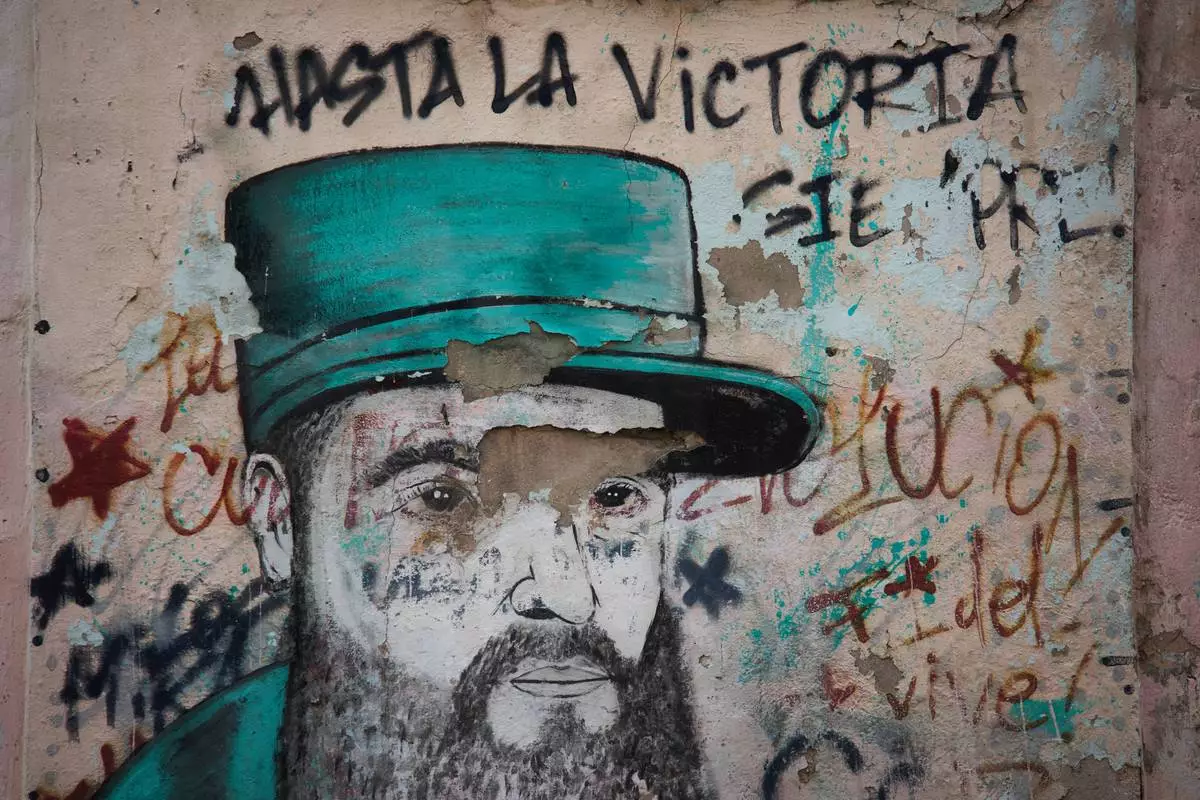
A weathered mural of Fidel Castro covers a wall in Havana, Cuba, Wednesday, Aug. 12, 2026. (AP Photo/Ramon Espinosa)
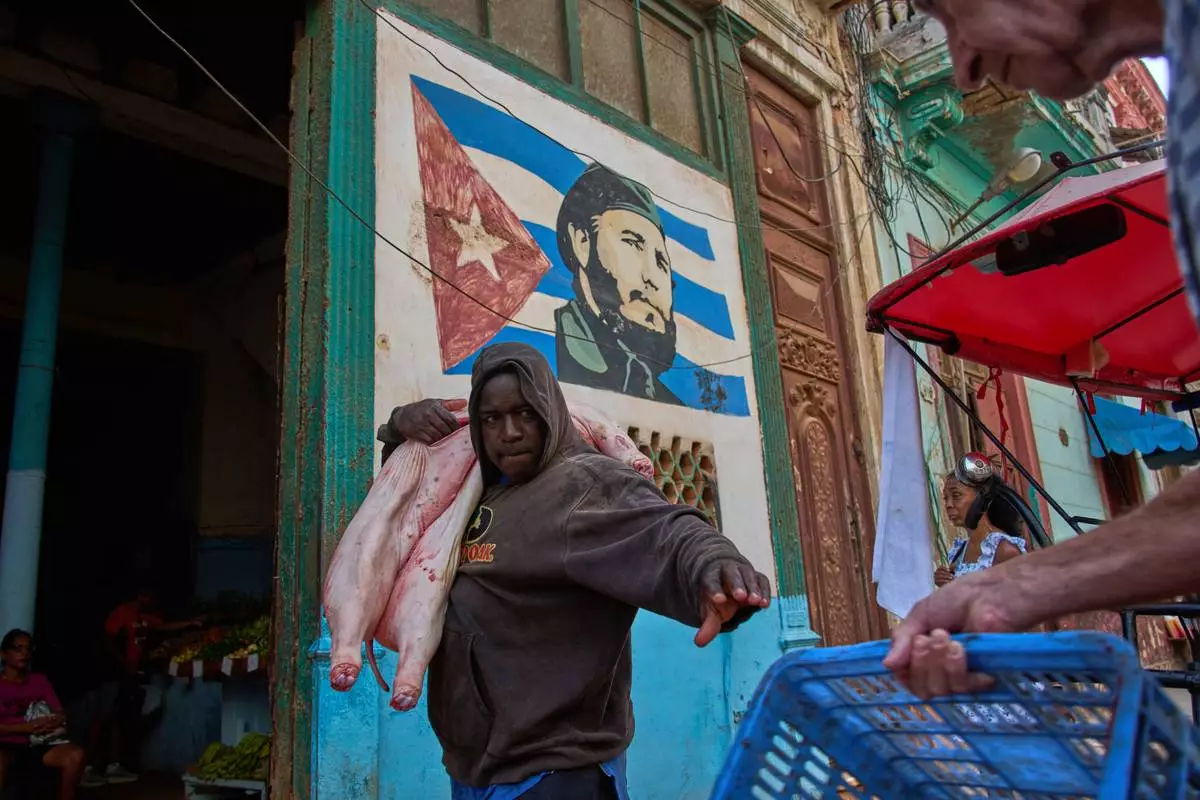
A man carries a pig at the entrance of a market, decorated with a mural of Fidel Castro, in Havana, Cuba, Wednesday, Aug. 12, 2026. (AP Photo/Ramon Espinosa)
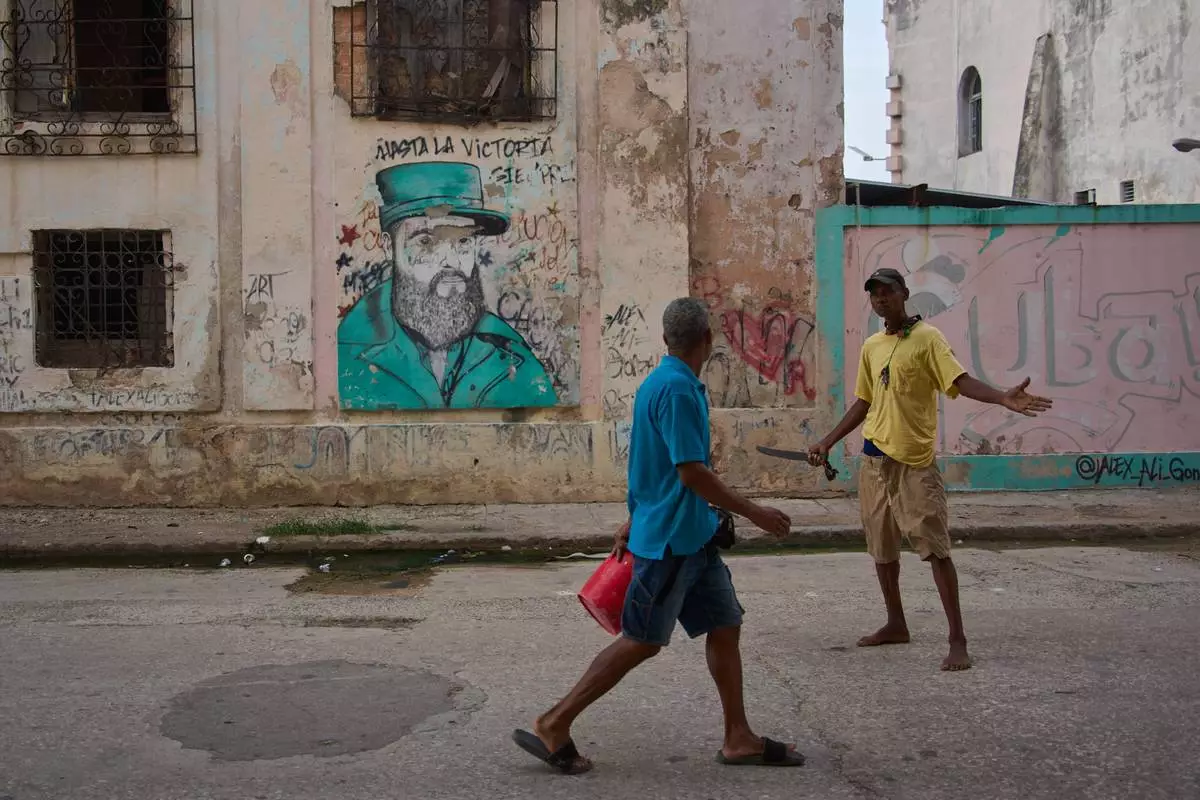
Men argue in front of a weathered mural of Fidel Castro in Havana, Cuba, Wednesday, Aug. 12, 2026. (AP Photo/Ramon Espinosa)
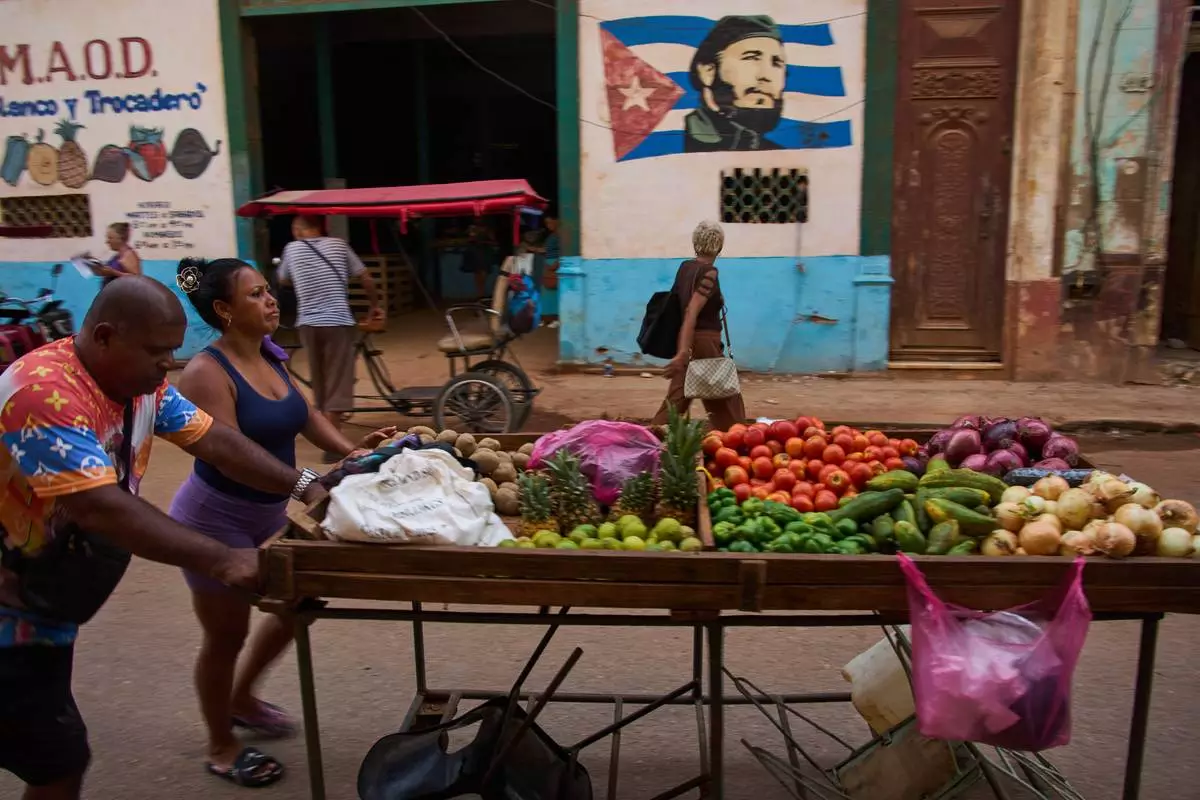
Street vendors push their cart of vegetables past a mural of Fidel Castro in Havana, Cuba, Wednesday, Aug. 12, 2026. (AP Photo/Ramon Espinosa)