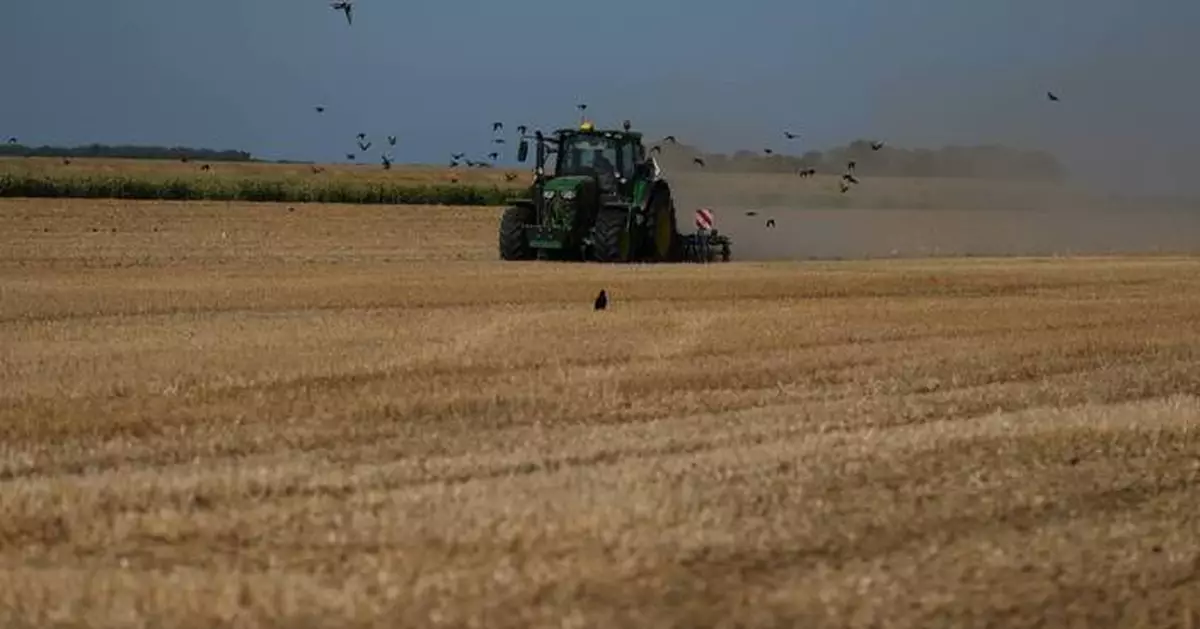
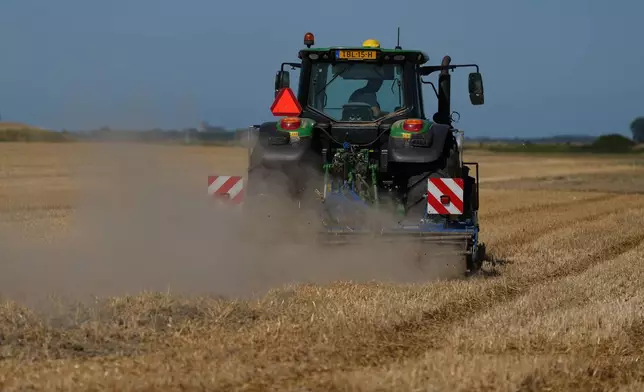
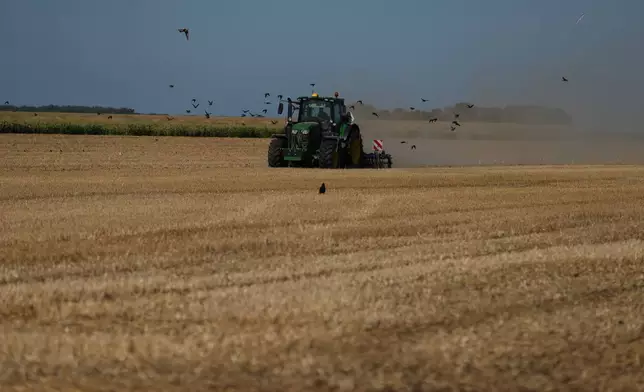
WOLPHAARTSDIJK, Netherlands (AP) — A cloud of dust billows behind Maarten Janse’s tractor as he spreads a mixture of compost, straw and manure over a field to nourish the parched soil.
Janse's farm on the fertile land of the Netherlands' southwestern Zeeland Province is drying out despite his efforts to make it more drought resistant as accelerated human-caused global warming and a supersized El Nino batter fields across Europe.
Click to Gallery
Farmer Maarten Janse drives his tractor on a drought stricken wheat field in Wolphaartsdijk, Netherlands, Tuesday, Aug. 11, 2026. (AP Photo/Virginia Mayo)
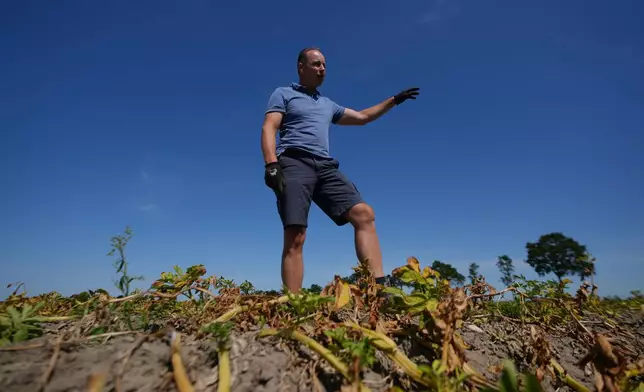
Farmer Henrik Jan ten Cate stands in his potato field, affected by the drought, in Poortvliet, Netherlands, Tuesday, Aug. 11, 2026. (AP Photo/Virginia Mayo)
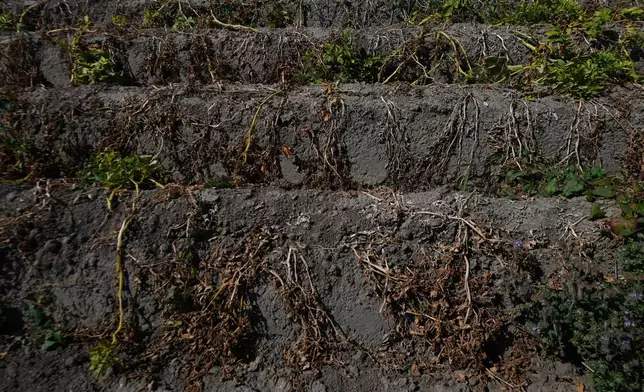
A potato field affected by the drought in Poortvliet, Netherlands, Tuesday, Aug. 11, 2026. (AP Photo/Virginia Mayo)
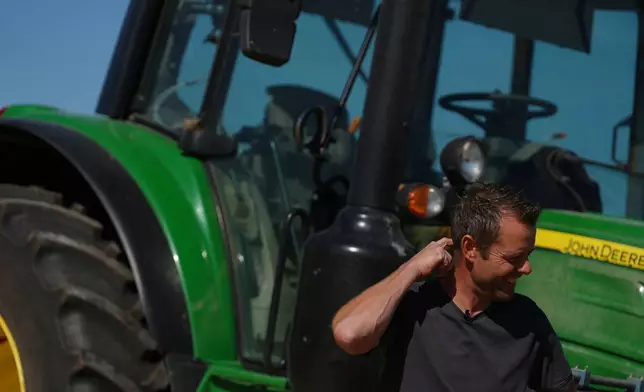
Farmer Maarten Janse stands next to his tractor on a drought stricken wheat field in Wolphaartsdijk, Netherlands, Tuesday, Aug. 11, 2026. (AP Photo/Virginia Mayo)
Farmer Maarten Janse drives his tractor on a drought stricken wheat field in Wolphaartsdijk, Netherlands, Tuesday, Aug. 11, 2026. (AP Photo/Virginia Mayo)
The drought that is roasting much of Europe this summer is taking a heavy toll on crops across the continent, from potatoes in the Netherlands to corn in Bosnia and grapes in Italy. Even when farmers try to adapt, the extreme weather is hitting their crops and water supplies.
Triodos, a Dutch bank that has a focus on sustainability, published an analysis this week that estimated the heatwaves and drought could reduce gross domestic product across the European Union by 1% for 2026 or around 180 billion euros ($208 billion). Farmers are among the hardest hit, with their crops set to be badly affected by soaring temperatures and lack of water. In large parts of the Netherlands, farmers are no longer allowed to use water from streams and drainage channels to irrigate fields and orchards.
Another farmer in Zeeland, Hendrik Jan ten Cate, looks at a field full of withered potato plants that are almost all ready for harvest — a month early and with a significantly reduced crop. His potatoes are used to make French fries for companies including McDonald’s, but they’re likely going to be too small this year.
“People want long fries,” he says as he holds one of the potatoes. “That’s going to be tough this year.”
Ten Cate is one of the lucky farmers because he is allowed to irrigate his crops. But, even so, he estimates his harvest this year will be down by about one-third compared to average years.
“It's not just the drought that is the problem," he says. "It is also the sun, the dry air and especially the hot days we have had this year. The potatoes just can't handle that combination very well.”
In Bosnia, where agriculture contributes roughly 5% of annual GDP and 10% of all employment, grain farmer Slavisa Lukic stood in one of his corn fields as stalks blew limply in the breeze. His crops have been hit by repeated heat waves and drought conditions. He said this year’s corn yield would be very poor, if he manages to harvest one at all.
Lukic remembers when he grew 6 to 7 tons per hectare on his farm. He expects this year’s corn yield will be around 1.5 to 2 tons per hectare.
Pointing to the drought-stricken land in northeastern Bosnia, Lukic said clover fields that once grew abundantly have all but disappeared. “Now they literally do not exist,” he said. “Nothing.”
The drought is even hitting one of the Czech Republic's most famous products: beer.
Plzeňský Prazdroj, the country’s largest beer producer, expects to incur losses this year due to a stunted hops yield.
Jakub Zaoral, the brewer’s sustainability manager, said that changes in rainfall patterns – characterized by long periods of dryness with occasional heavy storms – mean that when rain does fall, it runs off the dry soil. That results in inconsistent yields and increasingly low groundwater levels.
“There’s no choice but to simply accept the fact that one year will be great and the next won’t be,” he said. “If it were to happen three times in a row, that could very well become an existential problem for hop growers.”
In Romania, some heat and drought-resistant crops like sunflowers have been less affected by the extreme conditions and yields have been plentiful. But the drought is still hitting home with record-low water levels on the Danube River disrupting grain transport, causing chronically congested terminals and an increasing pileup of crops with nowhere to go.
“In a short time, maximum 10 days, we will enter full blast in sunflower harvest, to be followed by corn,” Cezar Gheorghe, founder of grain consultancy firm Agricolumn, told The Associated Press. “Already farmers are in panic mode. They can’t find a place to store the corn and sunflower seeds.”
Cattle grazing plains in Hungary are turning to dust. No rain has fallen on Sándor Molnár's dairy farm since late May and he is having to buy expensive feed for his 130 cows.
“We’re trying to hang in there and hope for the best, hoping next year will be better,” he added. “To be honest, we’ve been saying that for a few years now, but maybe this time it will be.”
Elveden Estate, with more than 10,000 acres of farmland on the Suffolk-Norfolk border in eastern England, has built a reservoir that can hold enough water to fill about 200 Olympic-sized swimming pools.
Less than a year after opening, it's almost dry. Another reservoir is at about 20% capacity.
But the farm's water policy is paying off.
"The fact that we’ve invested significantly in reservoir storage and the infrastructure associated with pumping water has meant that we’ve been in a very strong position to continue to irrigate our crops through this growing season,” the farm's managing director, Andrew Blenkiron, said.
But every drop counts.
“We’re very concerned that we haven’t got enough water to see us through this season," Blenkiron said. “We’ve got probably, if this weather stays as it is, six weeks of watering left to do.”
Janse uses no-till farming on his fields — not plowing the soil, planting crops to cover the ground year-round and adding organic matter — to help cope with the whims of the weather as climate change triggers more extremes.
He has also diversified by running a popular campsite on his farm near the picturesque town of Veere. As he tends to his fields, guests walk by toward a lake where yachts and a river cruise ship sail past.
And as dry weather causes an increase in soil salinity in fields, Janse grows samphire, also known as sea asparagus, on a small patch of land. It's a crop that can thrive in salty conditions. But with no rainfall, even that is struggling this year.
“Samphire needs fresh water, and if there is only saltwater it doesn’t grow either,” he said.
Nadja Lovadinov in London, Mustakim Hasnath in Suffolk, Stanislav Hodina in Prague, Czech Republic, Justin Spike in Budapest, Hungary, and Stephen McGrath in Leamington Spa, England, contributed to this report.
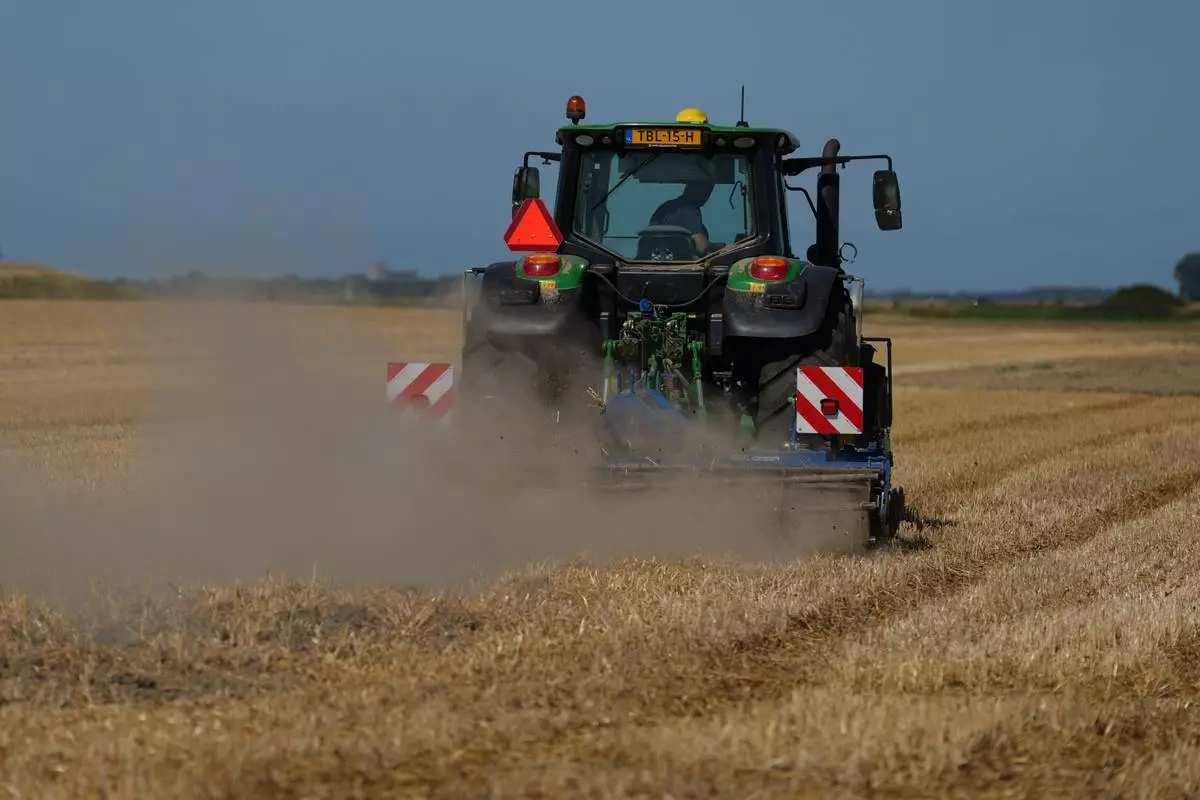
Farmer Maarten Janse drives his tractor on a drought stricken wheat field in Wolphaartsdijk, Netherlands, Tuesday, Aug. 11, 2026. (AP Photo/Virginia Mayo)
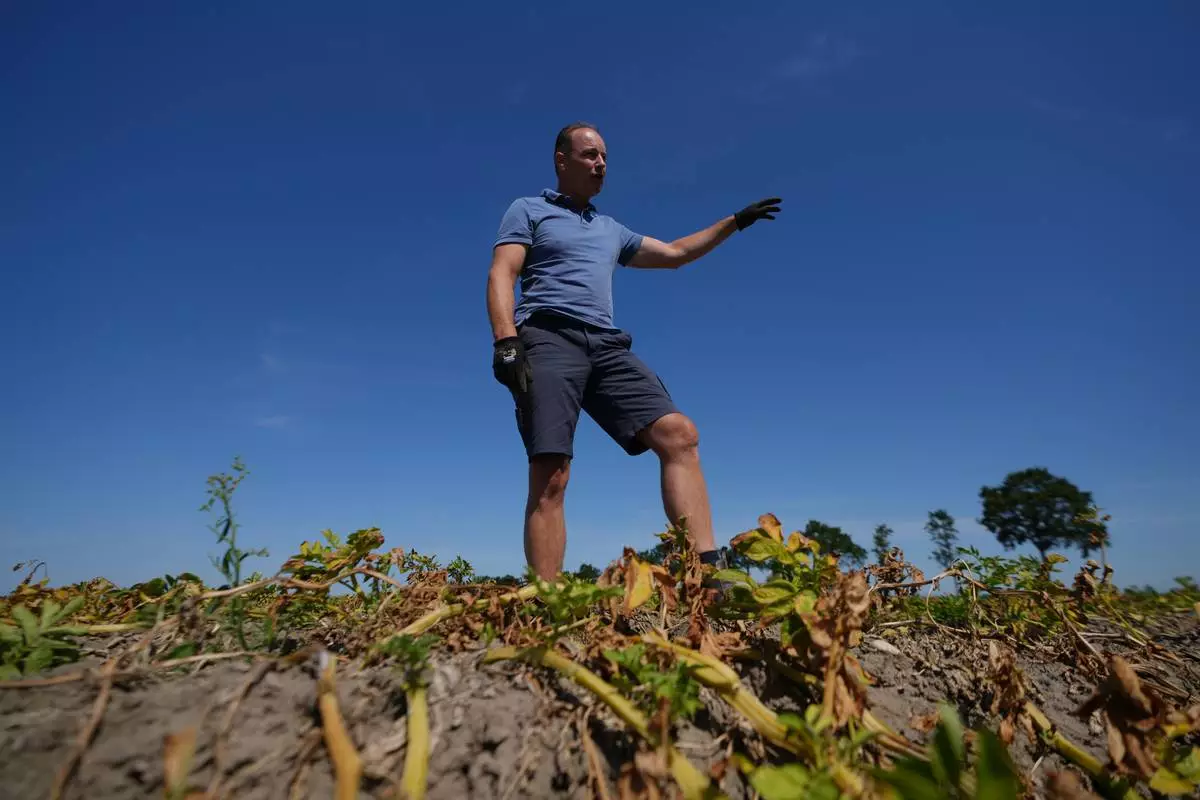
Farmer Henrik Jan ten Cate stands in his potato field, affected by the drought, in Poortvliet, Netherlands, Tuesday, Aug. 11, 2026. (AP Photo/Virginia Mayo)
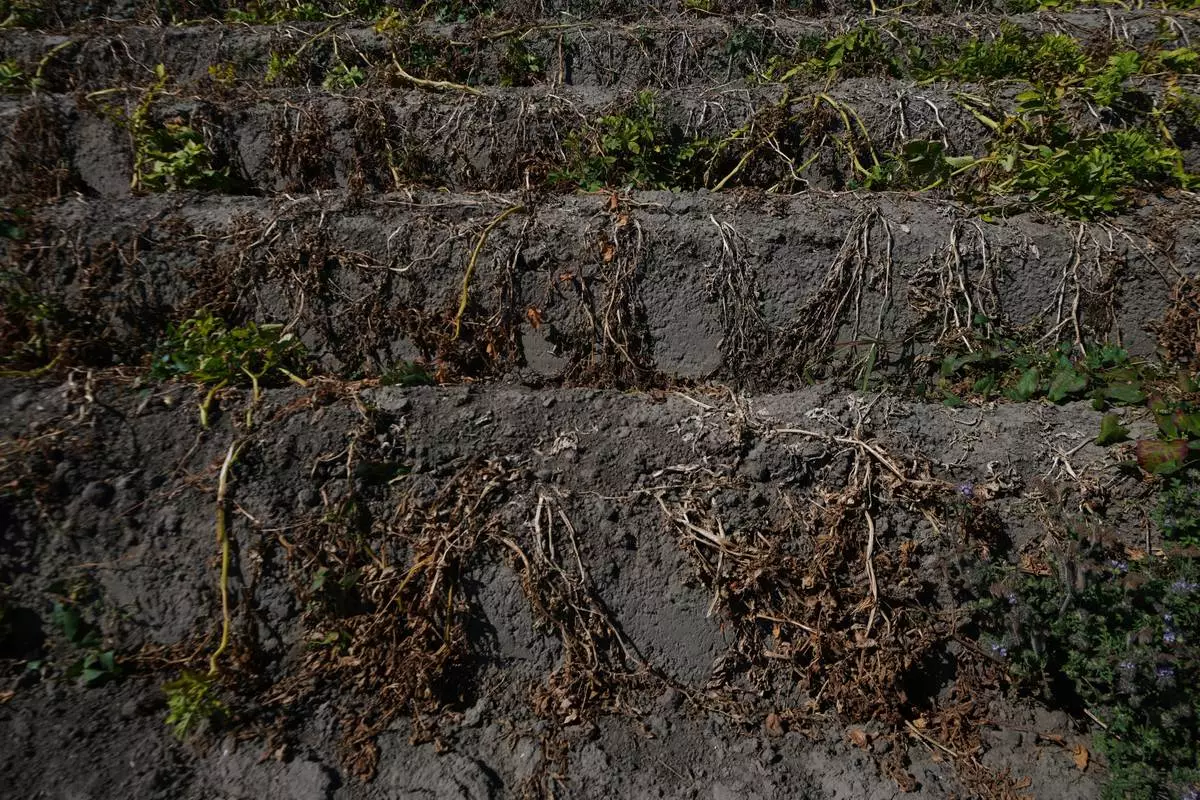
A potato field affected by the drought in Poortvliet, Netherlands, Tuesday, Aug. 11, 2026. (AP Photo/Virginia Mayo)
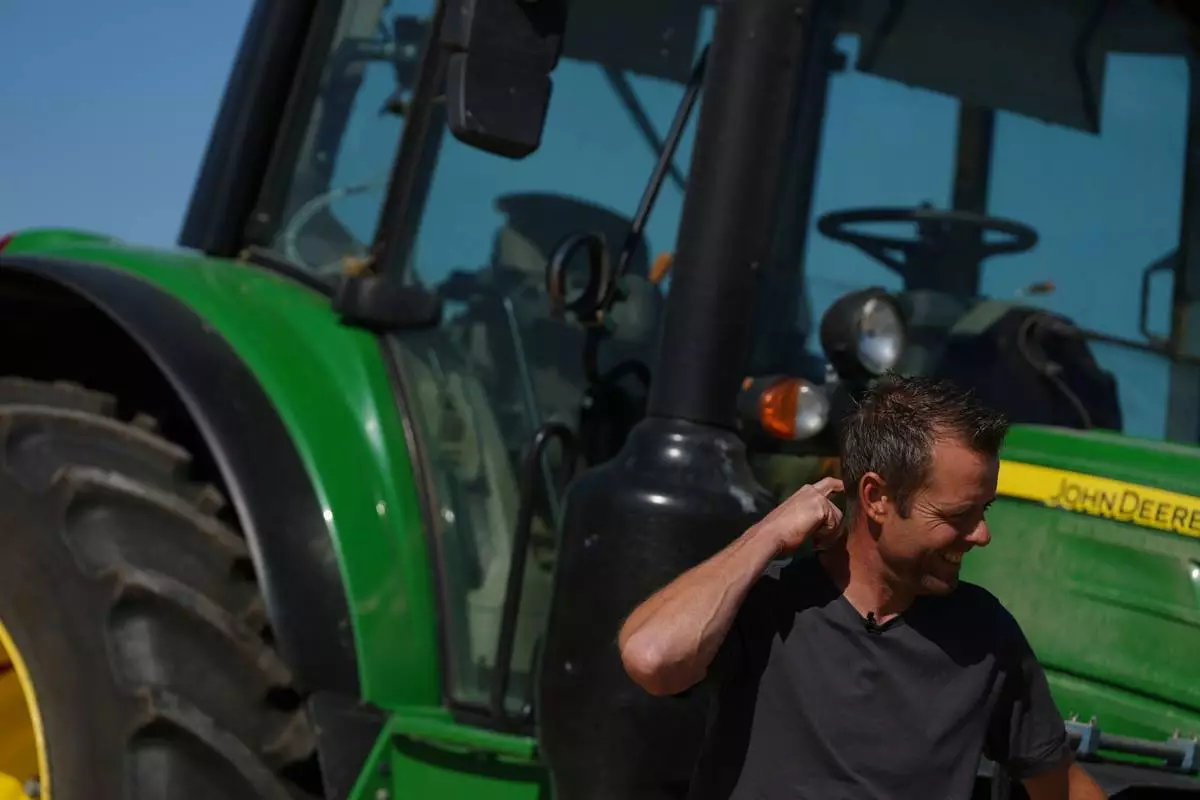
Farmer Maarten Janse stands next to his tractor on a drought stricken wheat field in Wolphaartsdijk, Netherlands, Tuesday, Aug. 11, 2026. (AP Photo/Virginia Mayo)
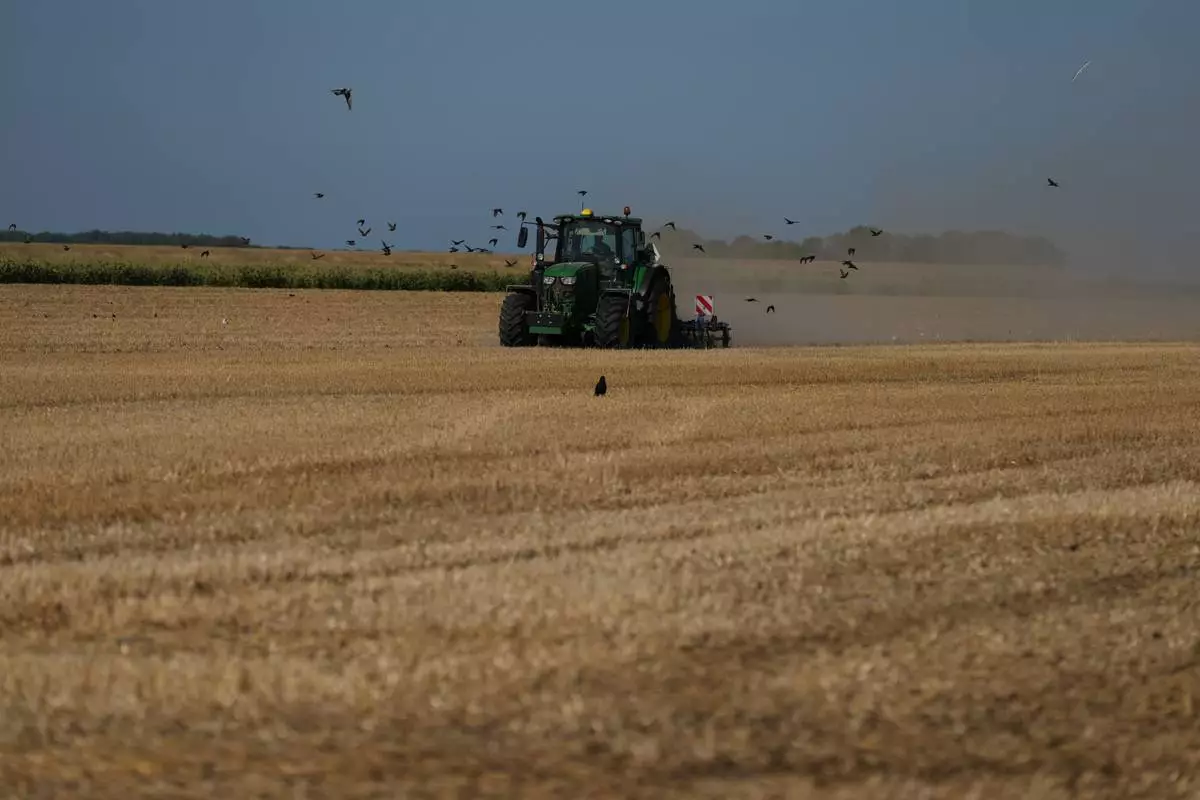
Farmer Maarten Janse drives his tractor on a drought stricken wheat field in Wolphaartsdijk, Netherlands, Tuesday, Aug. 11, 2026. (AP Photo/Virginia Mayo)
BUENOS AIRES, Argentina (AP) — For the second time in two months, the ground was shaking in South America. Once again, families flooded social media with pleas for help finding missing loved ones under flattened buildings. Once again, governments across political divides and continents pledged aid.
But in many ways, the contrast between Colombia’s 7.4-magnitude earthquake on Monday and Venezuela’s back-to-back temblors on June 24 could not have been more stark.
In Venezuela, acting President Delcy Rodríguez waited nearly four hours before addressing the nation. In Colombia, newly inaugurated President Abelardo de la Espriella announced an emergency command post to oversee rescue efforts barely an hour after the earthquake struck. For weeks, Venezuelan civilians were clawing through rubble by hand. Hours after the earthquake in Colombia, rescue teams were searching for survivors with cranes and excavators.
In Venezuela, Rodríguez relied on rescuers from around the world to fill critical gaps in the state’s response. Colombia has so far declined foreign crews except for those from the United States, saying it has enough personnel and has requested humanitarian supplies instead.
The contrast is a reminder of the differences between the neighboring nations — their political systems, resources and the strength of their institutions — and a demonstration of how those can take on life-or-death importance in catastrophes.
“The differences between an authoritarian regime and a democratic system can be seen clearly in the institutions and in their capacity to respond to an emergency,” said Ronal Rodríguez, a Venezuela specialist at Colombia's Rosario University. “Crises are also political opportunities.”
De la Espriella, a conservative former criminal defense lawyer with no previous political experience, was sworn in as president in Colombia's third-largest city, Cali, less than 72 hours before the earthquake toppled buildings there and across the country's far-flung provinces — the very regions he’d pledged to prioritize on the campaign trail.
Even before the earthquake, the political novice was navigating a fraught transition from predecessor Gustavo Petro, Colombia’s first leftist president, who at first refused to recognize de la Espriella's narrow victory and alleged electoral fraud.
Their feud derailed Colombia’s formal handover process, leaving key agencies — including the national disaster management agency — in the hands of officials de la Espriella attacked as a candidate.
But humanitarian workers say the government's earthquake response has transcended those tensions, reflecting the resilience of Colombia’s democracy.
“All the institutions have worked,” said María José Torres Macho, the United Nations' top official in Colombia. “Our ability to be working with them has not been affected by the change of government.”
Just an hour after the quake, de la Espriella posted a video saying he would “personally assume leadership” of the disaster response. “You’re not alone,” he told Colombians in the country's hard-hit coffee-growing region.
Hours later, he was in Bogota, coordinating with government officials and relief agencies. Within 36 hours, he had toured disaster zones in the western cities of Quibdo, Cali and Pereira and dispatched ministers further afield.
“There is an entire system that means that even when you change the person at the top, the institution keeps functioning,” said Ana Karina García, director of Fundación Juntos Se Puede, a Venezuelan migrant aid group based in Colombia.
Still, Colombia’s response has not been without controversy. De la Espriella’s rejection of rescue teams from around the world has raised questions about his handling of foreign aid, with China’s ambassador complaining on social media that he did not even know which Colombian official was responsible for coordinating international assistance.
Rugged terrain, poor infrastructure and communication disruptions have slowed casualty reports from the hardest-hit areas. The government's national toll of at least 265 dead and 500 missing lags far behind counts from local authorities, while an independent database lists over 4,100 as unaccounted for.
Despite Rodríguez's nearly two decades at the highest levels of Venezuela's government, she struggled to project authority over the disaster response.
Hours before Rodríguez took to the airwaves to declare a national emergency, her interior minister, Diosdado Cabello, called state television with damage reports — a sign of their competing claims to power within the ruling party.
Later, when Rodríguez gave the government’s initial casualty toll, she reported just 32 dead, a count that didn't include the epicenter of La Guaira, site of the worst destruction. Many of La Guaira’s victims lived in government-built housing complexes thrown up cheaply during the oil boom of the early 2000s, part of the self-declared socialist party's vast subsidized housing program that became a pillar of its political patronage system.
Rodríguez remained ensconced in Caracas for a full day before visiting La Guaira and assessing the damage. The government updated the death toll daily in the week that followed without offering a figure for missing people, fueling concerns of a vast undercount as civilians struggled to recover the dead without heavy machinery.
Now, more than six weeks after the quakes, a widely cited opposition-run database lists 29,000 people as unaccounted for. Government officials update the death toll once a week; as of Monday it stood at 6,301.
Years of political repression deepened Venezuelans’ distrust of the official earthquake response.
“It was very difficult for citizens to access important information about the emergency, get themselves to safety and know where to seek help,” said Gabriel Bastidas, a Venezuelan journalist based in Argentina who runs Monitoreamos.com, an independent news website critical of Venezuela’s governing political movement that's among dozens of media outlets blocked in the country.
But even if Venezuela’s response had been perfect, the aftermath might still have looked very different from Colombia’s: The twin quakes struck densely populated La Guaira around nightfall, complicating reconnaissance, while Colombia’s hit largely rural areas in daylight.
Experts caution that it often takes weeks for a full picture to emerge after a disaster of this magnitude. Colombia is only days into its response, with thousands still missing.
Still, many Venezuelans marvel at how the Colombian government has drawn on resources that years of economic crisis and mass migration under former President Nicolás Maduro have hollowed out in their country.
“From the very beginning, we saw the news media broadcasting live from the sites of the catastrophe; mayors, governors, health secretaries, emergency officials providing details about the dead and missing,” Bastidas said.
Juan Mogollon, a 28-year-old Venezuelan living in Orlando, Florida, learned from a TV broadcast Monday morning that his 16-year-old cousin, José Juan Vivas, and the boy’s grandparents were trapped in the ruins of their apartment building in Cali. Vivas, a U.S. permanent resident, was living there with his grandparents, who settled in Colombia after leaving Venezuela.
Having watched people back home plead for rescuers and equipment after Venezuela’s June earthquakes, Mogollon feared the worst.
Yet within a few hours, he said, footage from the collapse site showed excavators, cranes and other heavy machinery, along with firefighters flown in from Bogota. Security forces deployed dogs and drones equipped with thermal cameras to identify victims across stricken towns.
“They are prepared, they have the equipment, they have the protocols, they know what to do,” Mogollon said, still anxiously waiting to hear if his relatives survived. “That's the least we should expect as citizens in every country, you know? That’s the difference between my country and Colombia right now.
Associated Press writer Astrid Suárez in Bogota, Colombia, contributed to this report.
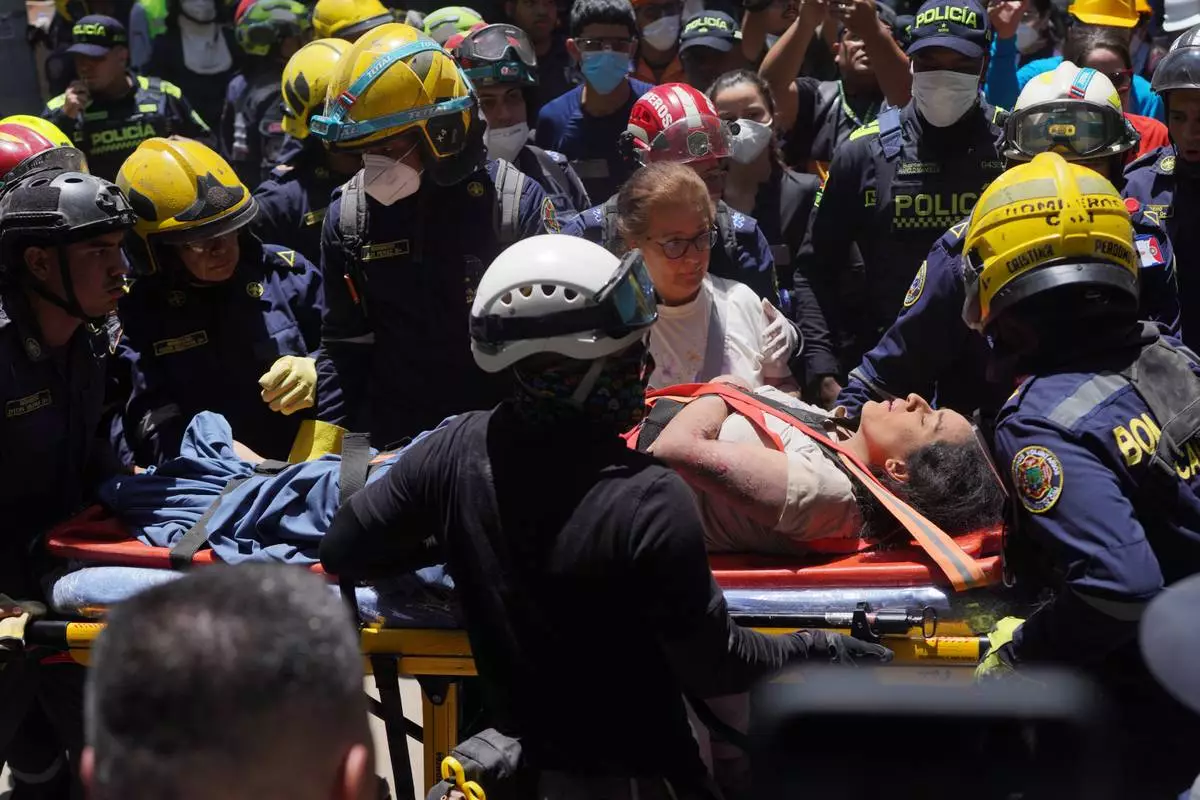
Rescue workers carry Diana Troncoso after pulling her from the rubble the day after an earthquake struck Cali, Colombia, Tuesday, Aug. 11, 2026. (AP Photo/Ivan Valencia) CORRECTION: Changes city to Cali, not Pereira.
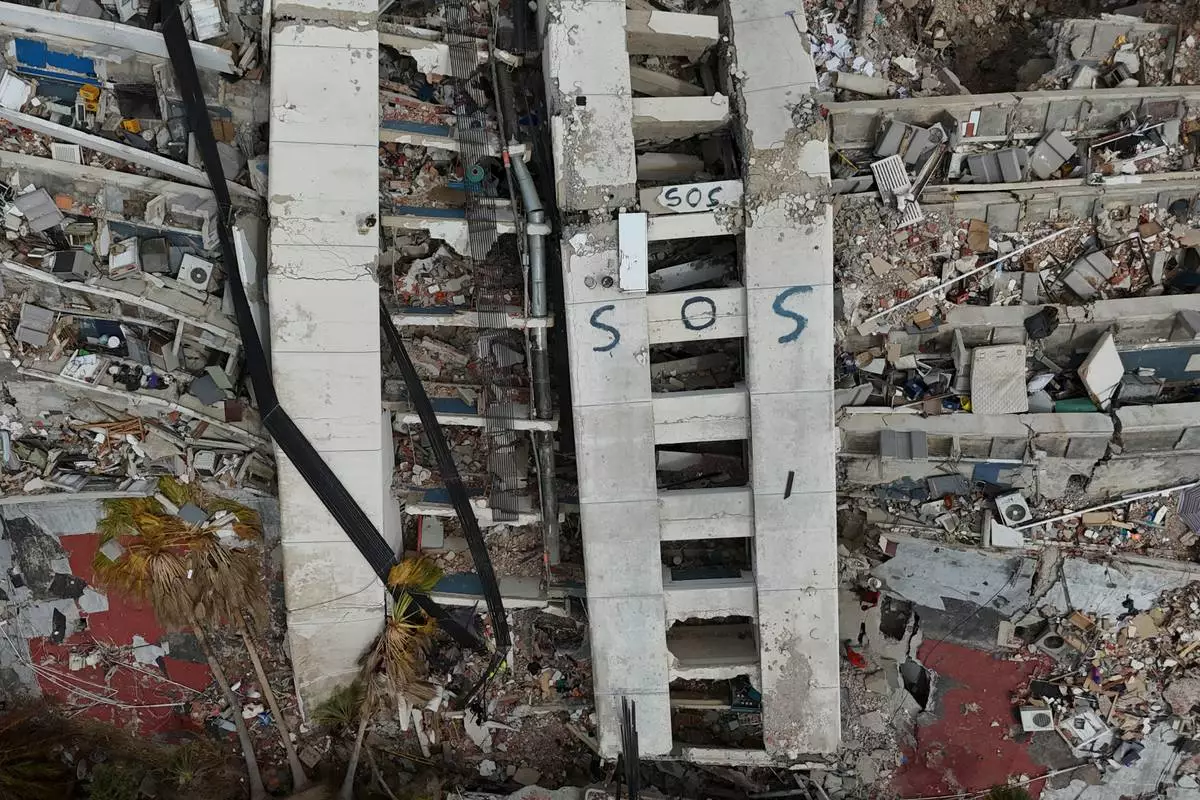
FILE - A building damaged during the earthquakes is marked with "S.O.S." painted stands in La Guaira, Venezuela, July 2, 2026. (AP Photo/Matias Delacroix, File)
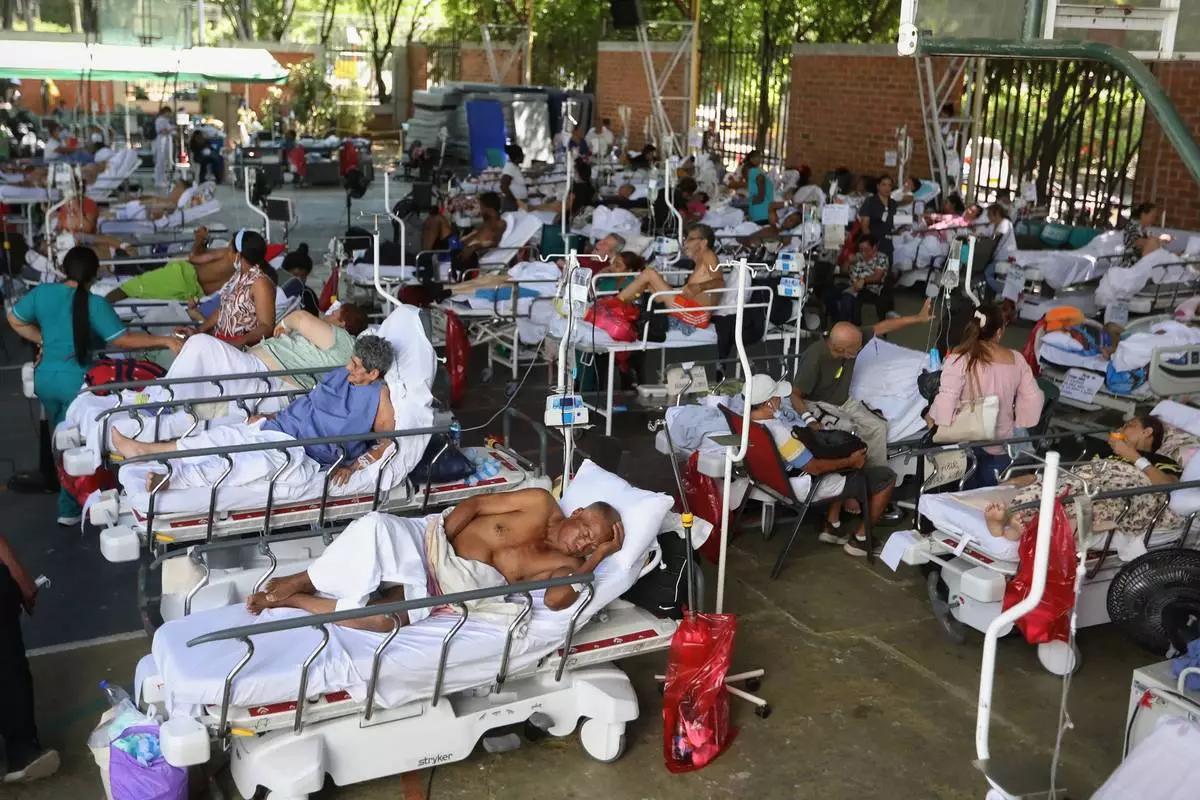
Patients from a clinic evacuated due to earthquake damage lie in beds at a temporary facility set up in a gymnasium at a nearby school in Cali, Colombia, Tuesday, Aug. 11, 2026. (AP Photo/Santiago Saldarriaga)
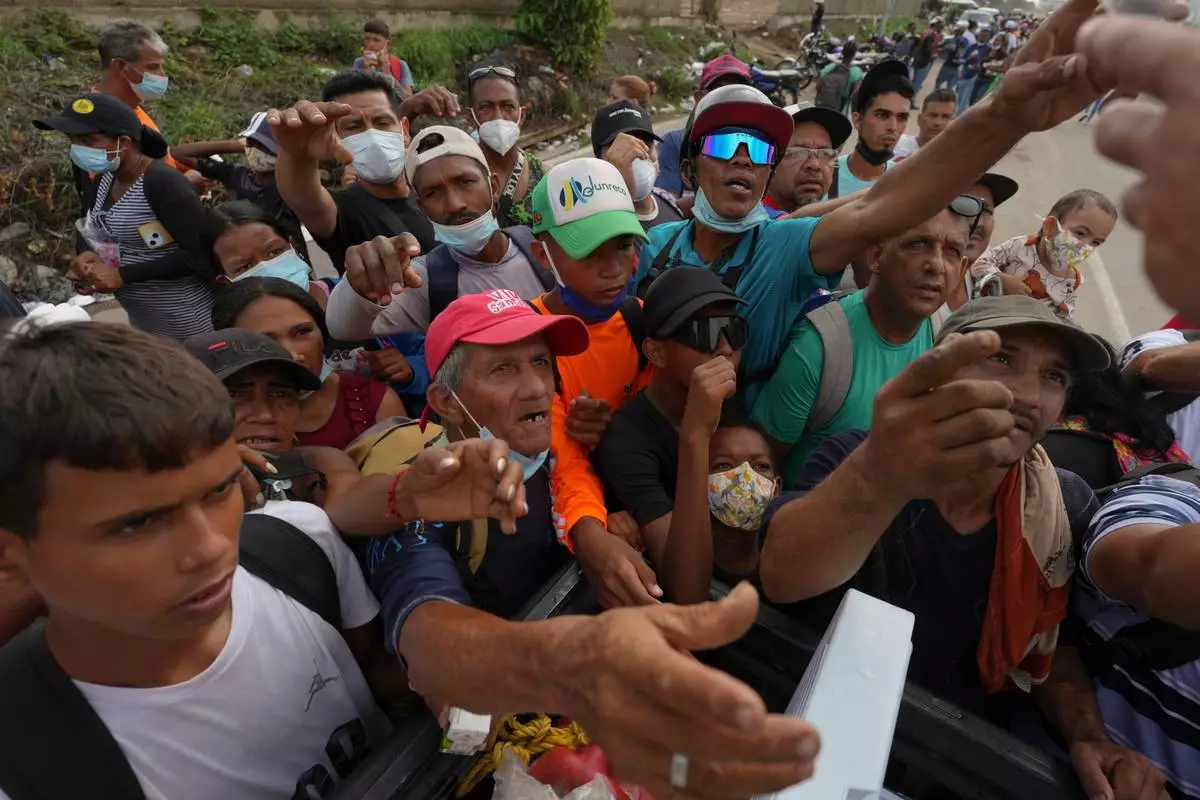
FILE - People reach out to receive supplies from volunteers, days after an earthquake struck La Guaira, Venezuela, June 30, 2026. (AP Photo/Matias Delacroix, File)
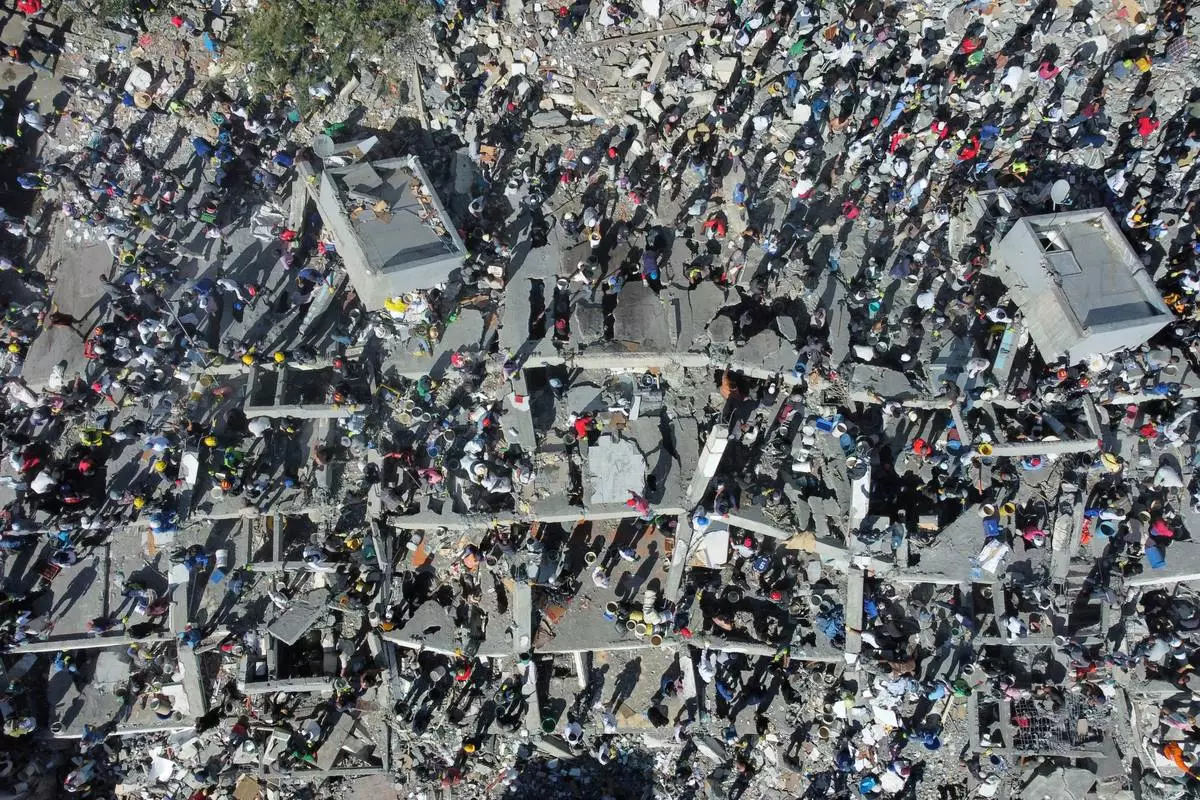
Residents and rescue workers search through the rubble after an earthquake struck Cali, Colombia, Monday, Aug. 10, 2026. (AP Photo/Santiago Saldarriaga)
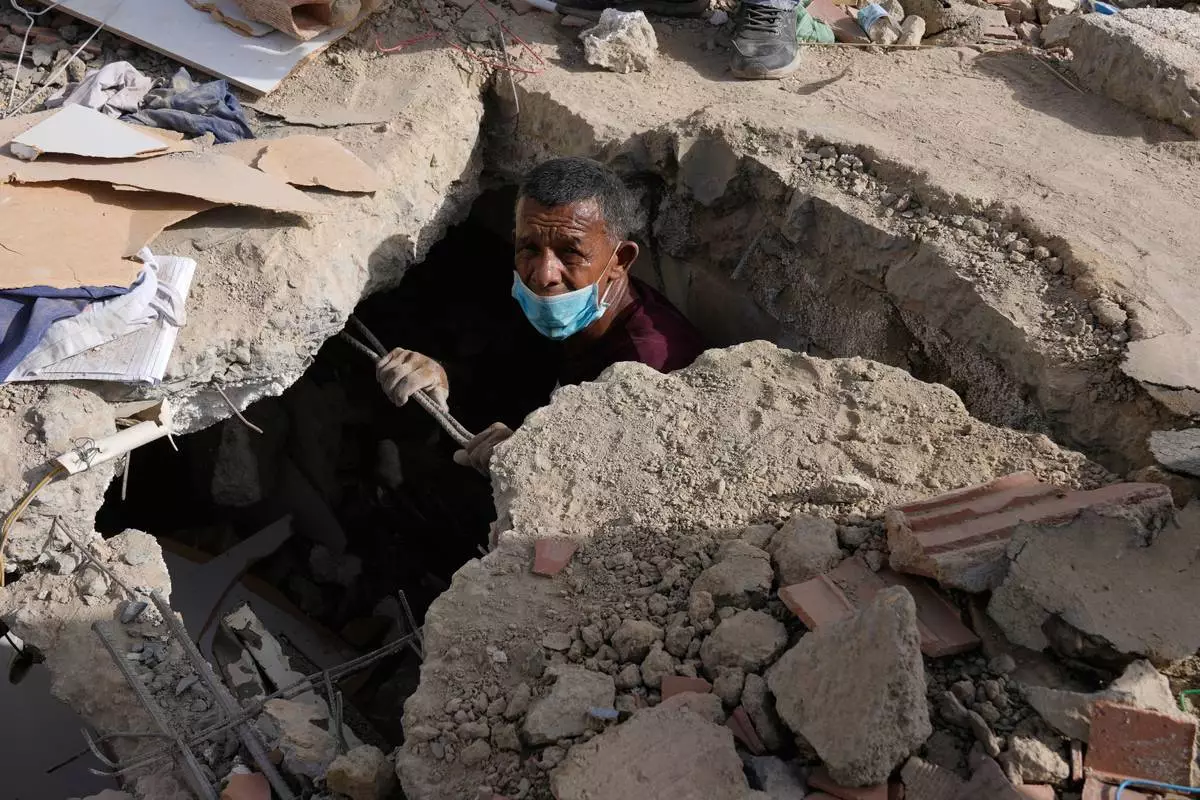
FILE - Franklin Fuentes searches for missing relatives in the collapsed building where they lived two days after earthquakes struck La Guaira, Venezuela, June 26, 2026. (AP Photo/Ariana Cubillos, File)