Skip to Content Facebook Feature Image

From black boots to pastel suits, Italian premier's wardrobe evolves with her politics

News

From black boots to pastel suits, Italian premier's wardrobe evolves with her politics
News

News

From black boots to pastel suits, Italian premier's wardrobe evolves with her politics

2026-08-13 13:12 Last Updated At:16:14

ROME (AP) — As Italian Prime Minister Giorgia Meloni's politics have evolved — from combative outsider to pragmatic establishment leader — so, too, has her fashion sensibility.

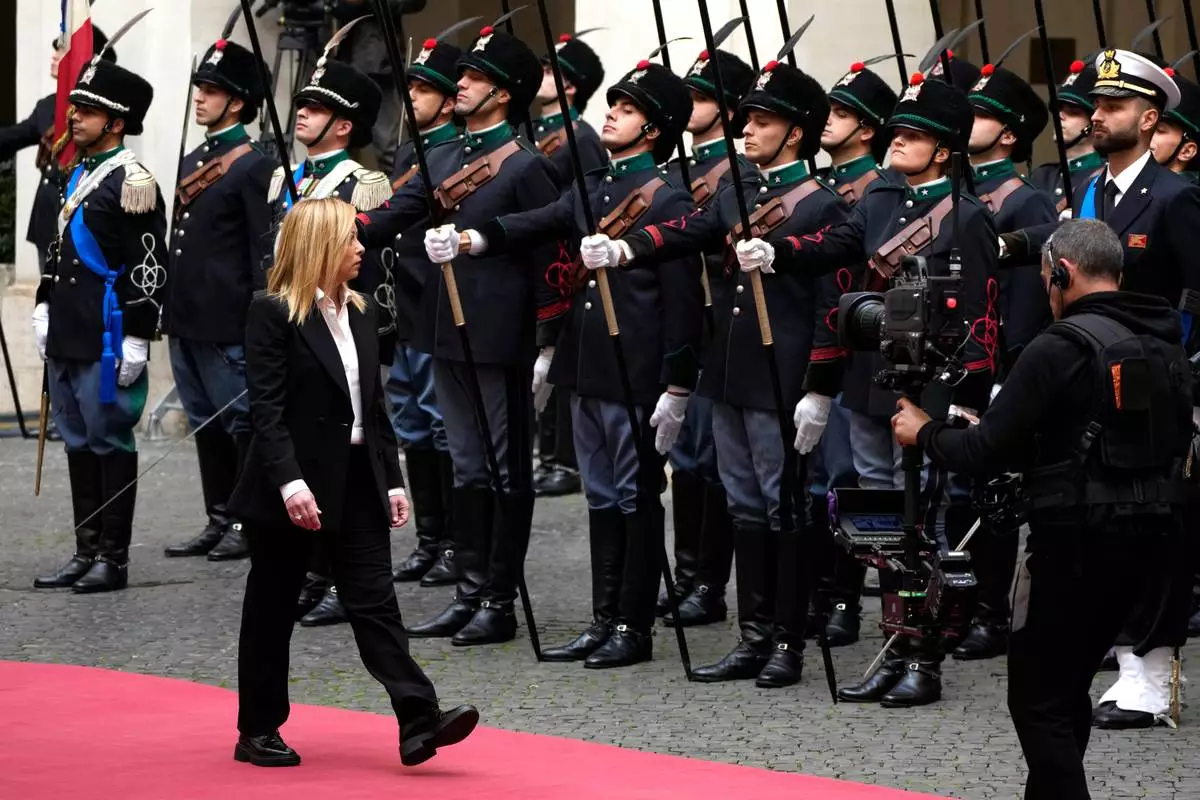
When Meloni became Italy's leader in October 2022, she arrived at the premier's office wearing a dark suit and clunky black boots, sartorial signifiers of her emergence from the fringes of the country’s right-wing politics.

More Images
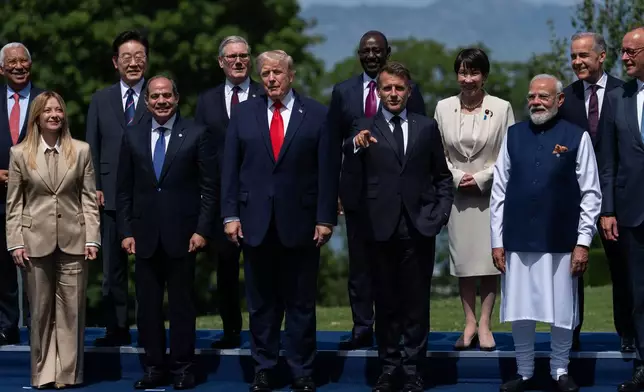
FILE - Italian Prime Minister Giorgia Meloni (front, left) gathers with other world leaders for a group photo at the G7 summit, Tuesday, June 16, 2026, in Evian-les-Bains, France. (AP Photo/Julia Demaree Nikhinson, File)
FILE - Italian Prime Minister Giorgia Meloni (front, left) gathers with other world leaders for a group photo at the G7 summit, Tuesday, June 16, 2026, in Evian-les-Bains, France. (AP Photo/Julia Demaree Nikhinson, File)

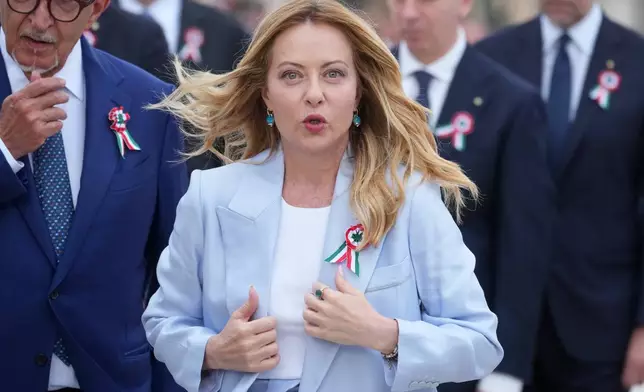
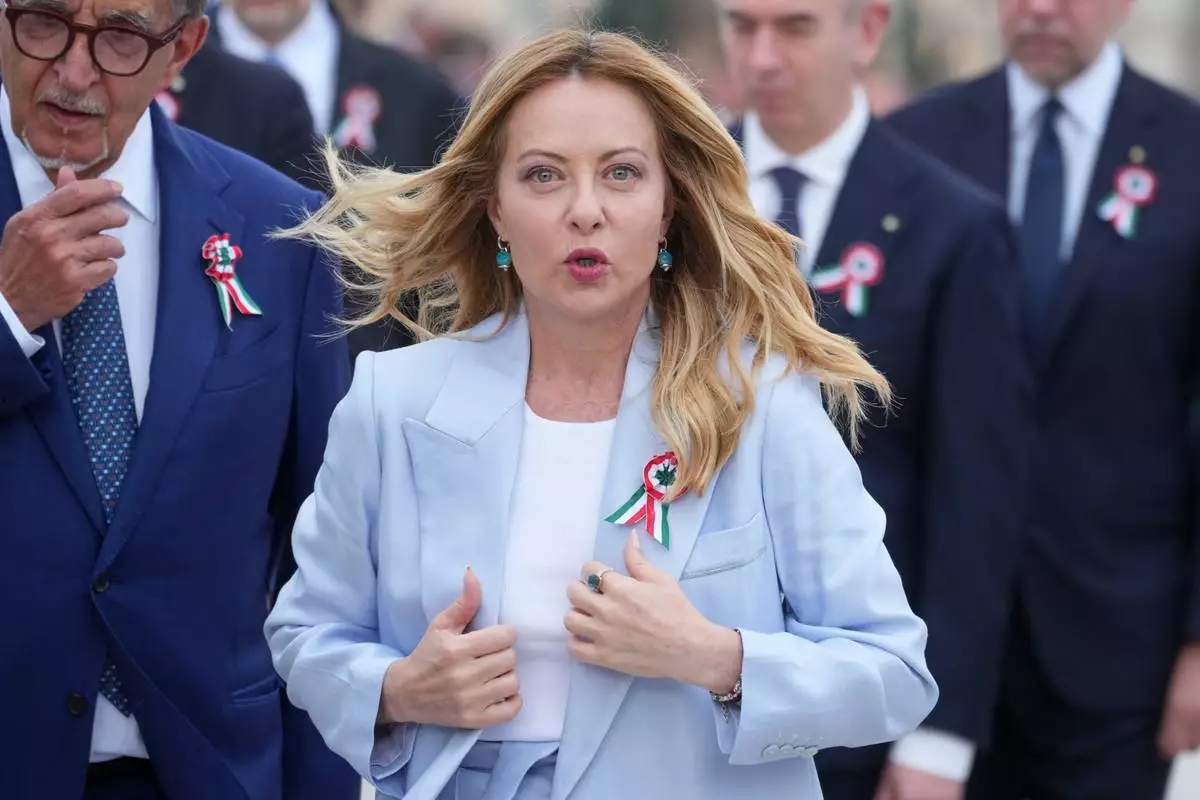
FILE - Italian Premier Giorgia Meloni arrives to attend the parade on the occasion of the 80th anniversary of the proclamation of the Italian Republic, in Rome, Tuesday, June 2, 2026. (AP Photo/Andrew Medichini, File)
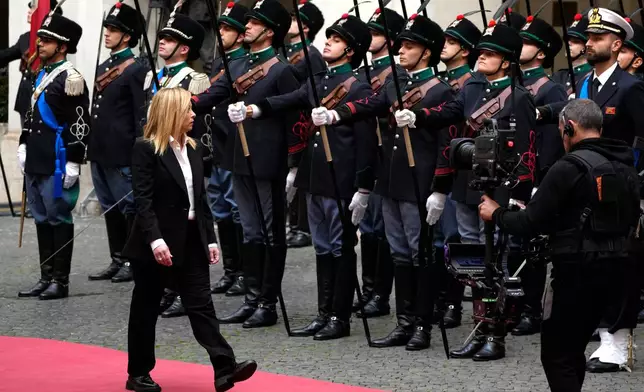
FILE - Italian Premier Giorgia Meloni arrives to attend the parade on the occasion of the 80th anniversary of the proclamation of the Italian Republic, in Rome, Tuesday, June 2, 2026. (AP Photo/Andrew Medichini, File)

FILE - New Italian Premier Giorgia Meloni arrives for the handover ceremony at Chigi Palace Premier's office, in Rome, Sunday, Oct. 23, 2022. (AP Photo/Alessandra Tarantino, File)
FILE - New Italian Premier Giorgia Meloni arrives for the handover ceremony at Chigi Palace Premier's office, in Rome, Sunday, Oct. 23, 2022. (AP Photo/Alessandra Tarantino, File)

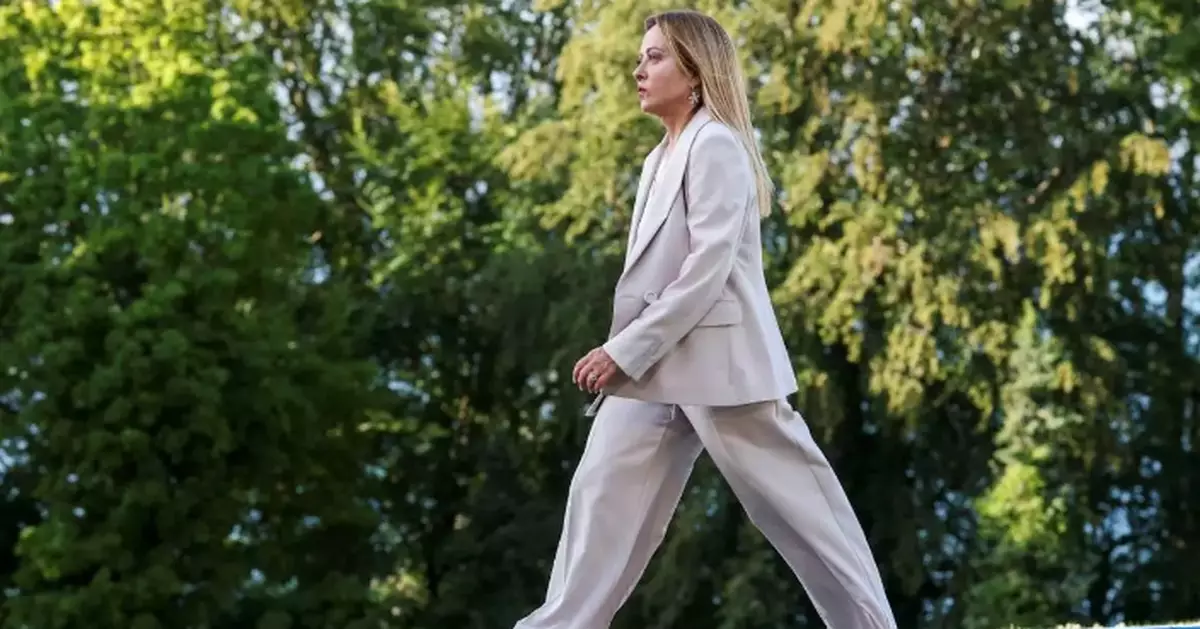
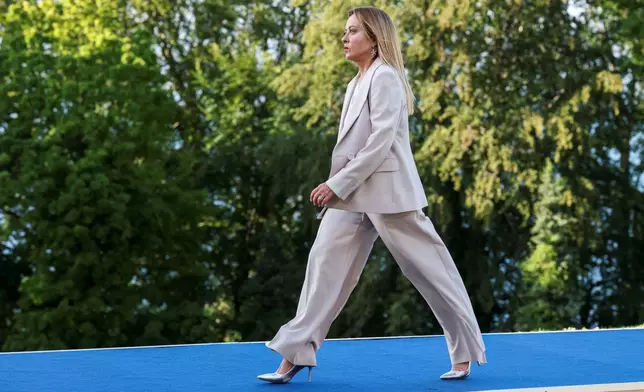
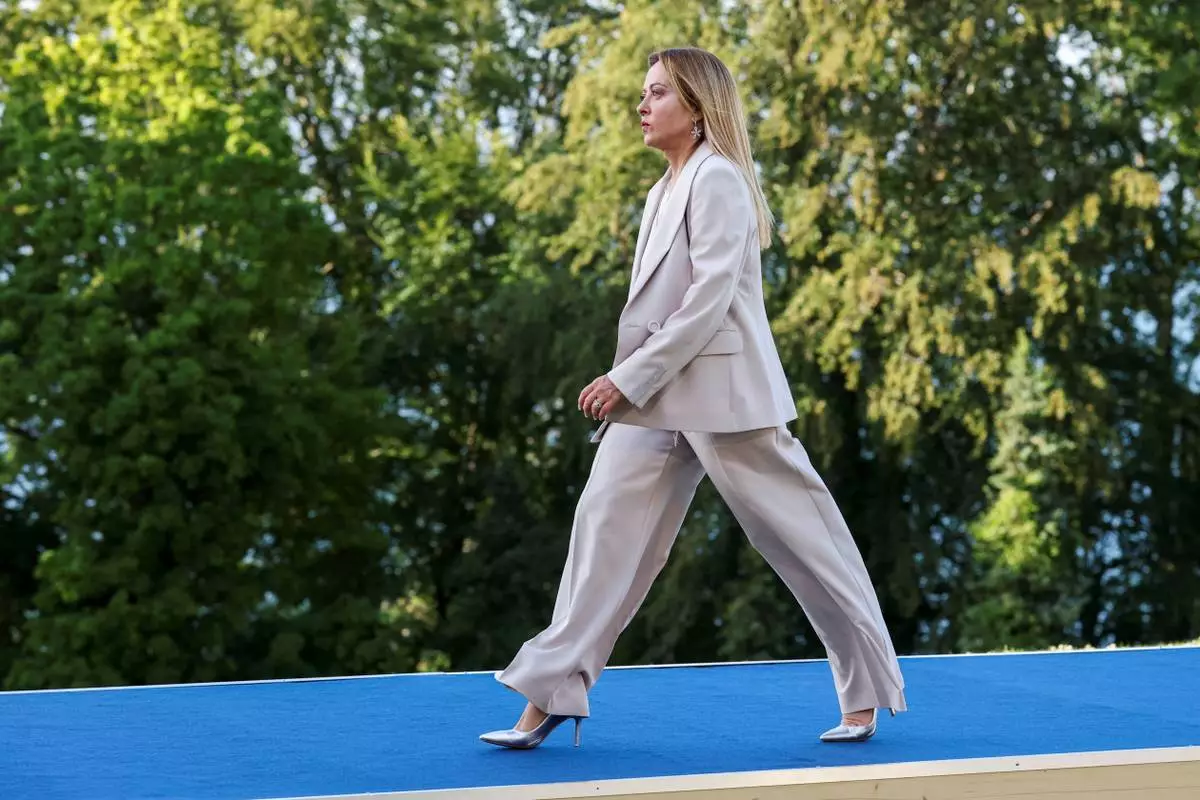
FILE - Italy's Prime Minister Giorgia Meloni walks during the official arrivals ceremony for the G7 summit in Evian-les-Bains, France, Monday, June 15, 2026. (Isabel Infantes, Pool Photo via AP, File)
FILE - Italy's Prime Minister Giorgia Meloni walks during the official arrivals ceremony for the G7 summit in Evian-les-Bains, France, Monday, June 15, 2026. (Isabel Infantes, Pool Photo via AP, File)

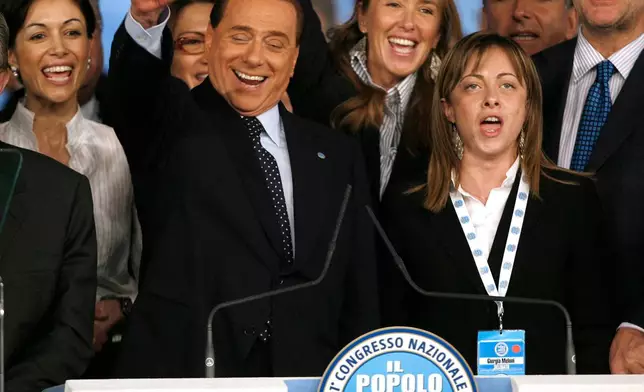
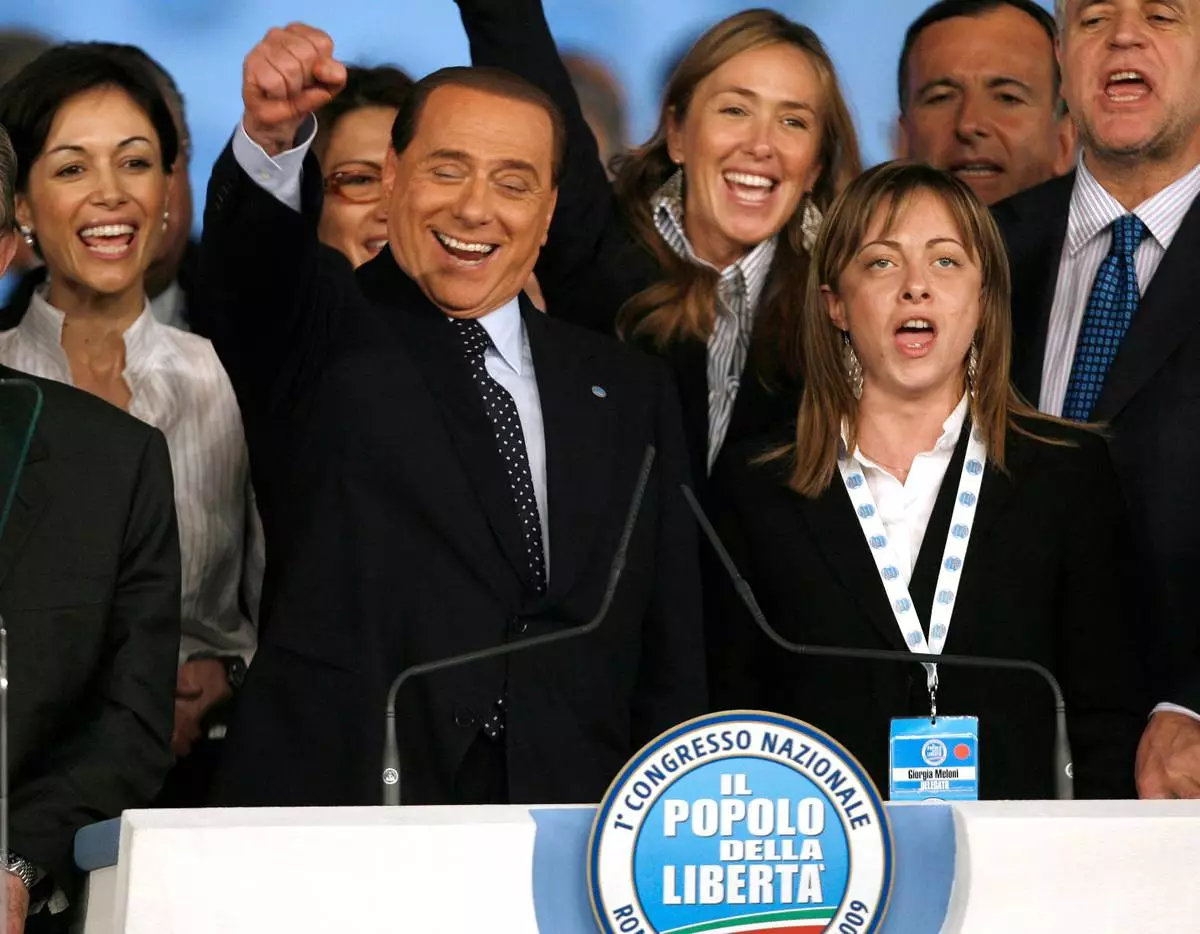
FILE - Italian premier Silvio Berlusconi is flanked by Minister of Equal Opportunities Mara Carfagna, left, Youth Policies Minister Giorgia Meloni, right, and Environment Minister Stefania Prestigiacomo, second from right, during a congress in Rome, March 29, 2009. (AP Photo/Alessandra Tarantino, File)

FILE - Italian premier Silvio Berlusconi is flanked by Minister of Equal Opportunities Mara Carfagna, left, Youth Policies Minister Giorgia Meloni, right, and Environment Minister Stefania Prestigiacomo, second from right, during a congress in Rome, March 29, 2009. (AP Photo/Alessandra Tarantino, File)

Now, as someone who governs less radically than feared and is on the cusp of becoming Italy’s longest-serving postwar leader, Meloni often wears pastel-colored suits with wide-legged trousers that cover her high heels. The effect, say experts in fashion and politics, is a softer look that conveys authority without confrontation.

“She understands how important clothing is in nonverbal communication in politics,” said Antonio Mancinelli, who teaches at Rome’s Costume and Fashion Academy.

Heading into the final year of her mandate as premier, Meloni faces a growing challenge from a right-wing politician. No matter what she’s wearing, the rivalry will highlight how she has become more moderate on some issues.

Meloni is hardly the only world leader to project political identity through wardrobe choices.

Ukrainian President Volodymyr Zelenskyy has dressed in military-style clothing since Russia’s invasion of Ukraine in 2022. The U.K.’s new premier, Andy Burnham, dons jeans and T-shirts as he promotes a policy of bringing the government closer to the working class. And Mexican President Claudia Sheinbaum wears dresses and blouses embroidered by Indigenous artisans to honor their textile traditions.

But what the first woman to lead Italy wears carries perhaps even greater weight.

“When it comes to a woman who represents a country that is famous for fashion, and it is also one of the pillars of the economy, the issue becomes much more serious,″ said Italian-Haitian fashion designer Stella Jean.

When Meloni came into office as the leader of a political party with post-fascist roots, she had been expected to be antagonistic toward Europe and extreme in her views on foreign policy.

But she has largely defied those expectations. While pursuing conservative, anti-migrant policies domestically, Meloni adopted a pragmatic approach toward the European Union and became one of Ukraine’s strongest supporters in its war against Russia. She has also shown a willingness to stand up to criticism from President Donald Trump, prompting European allies to rally around her.

“When she was a party leader of a small right-wing party, she had a small electorate that she had to relate to,” said political analyst Riccardo Alcaro of Italy’s Institute for International Affairs. “Now she is the leader of a major EU country and has to provide an image of herself as a credible leader of a government who has ideas worth debating.”

That change is reflected in her daily attire.

Soon after taking office, Meloni began to wear tailored suits and more muted colors, a look fashion critics described as elegant and one that conveyed seriousness — and approachability — as she appeared more frequently on the global stage. She even lightened her hair.

"Lighter colors suggest a loyalty, tenderness and gentleness. With light colors, you’re more welcoming,” said Michela Bonafoni, who teaches fashion at Unicollege in Florence.

Meloni's office declined to comment about her wardrobe and who advises her on fashion.

Meloni's current fashion choices — and political rhetoric — contrast starkly with those of her younger self.

In 1996, when Meloni was 19, a French television station followed the young activist — decked out almost entirely in black — as she organized members of a right-wing youth movement. During the interview, she defended Italian dictator Benito Mussolini, comments that have shadowed her political career.

Since then, she has sought to distance herself from the extremism that haunts Italy's past.

In 2008, Prime Minister Silvio Berlusconi tapped Meloni to be his youth minister. Meloni began appearing in more serious apparel in this new role, mostly dark suits with white shirts.

By the time she won Italy’s 2022 election, Meloni had already begun broadening her appeal. During the campaign she made a speech in which she passionately described herself as “a woman, a mother, a Christian,” words that later became the basis of a viral remix, and helped her to gain support among conservative centrists.

As premier, she has rarely been seen in public wearing all-black suits and boots. While black is widely worn to look stylish, and by mourners, in Italy it also has long been associated with fascism.

These days, Meloni almost always wears trousers, avoids bold patterns and favors pastels and other neutral colors. Even her high heels are typically hidden beneath wide-cut pants.

“She cannot clash visually with the image she wants to project,” said Alcaro, who noted that her Brothers of Italy party has grown from 4% of the vote in 2018 to close to 26% in 2022.

Close observers say a key moment in Meloni’s visual transformation was in 2024 during the G7 summit in Puglia. After a strong showing by her party in European Parliament elections, she welcomed world leaders to Italy wearing a flowing pastel pink tailored suit and palazzo pants.

By then, she had become one of the most politically secure leaders in Europe and was increasingly comfortable on the international stage.

Her growing confidence was on display again at this year’s G7 summit in Evian-les-Bains, France, where she appeared in a beige suit paired with a matching necktie, drawing notice from German Chancellor Friedrich Merz.

Open microphones captured Merz telling her: “You’re wearing a tie today.”

“Yeah,” Meloni replied, “so you can consider me a fighter.”
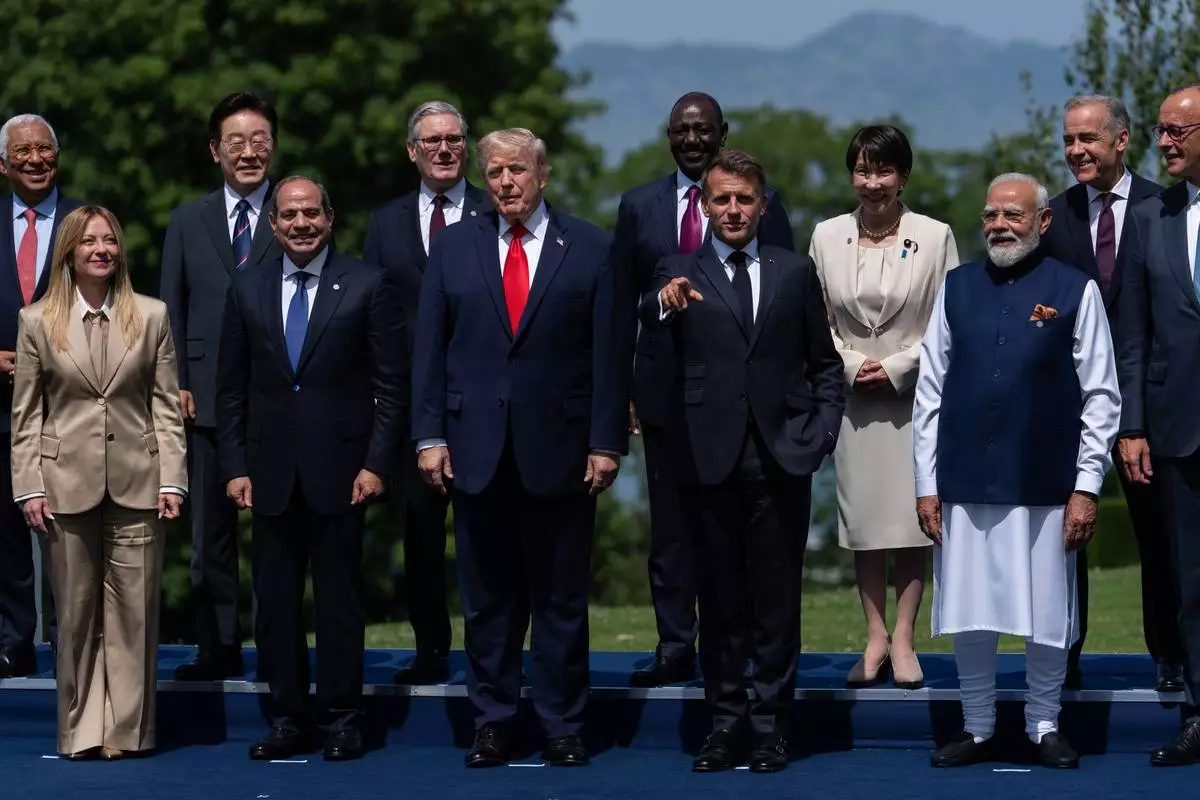
FILE - Italian Prime Minister Giorgia Meloni (front, left) gathers with other world leaders for a group photo at the G7 summit, Tuesday, June 16, 2026, in Evian-les-Bains, France. (AP Photo/Julia Demaree Nikhinson, File)
FILE - Italian Prime Minister Giorgia Meloni (front, left) gathers with other world leaders for a group photo at the G7 summit, Tuesday, June 16, 2026, in Evian-les-Bains, France. (AP Photo/Julia Demaree Nikhinson, File)

FILE - Italian Premier Giorgia Meloni arrives to attend the parade on the occasion of the 80th anniversary of the proclamation of the Italian Republic, in Rome, Tuesday, June 2, 2026. (AP Photo/Andrew Medichini, File)
FILE - Italian Premier Giorgia Meloni arrives to attend the parade on the occasion of the 80th anniversary of the proclamation of the Italian Republic, in Rome, Tuesday, June 2, 2026. (AP Photo/Andrew Medichini, File)

FILE - New Italian Premier Giorgia Meloni arrives for the handover ceremony at Chigi Palace Premier's office, in Rome, Sunday, Oct. 23, 2022. (AP Photo/Alessandra Tarantino, File)
FILE - New Italian Premier Giorgia Meloni arrives for the handover ceremony at Chigi Palace Premier's office, in Rome, Sunday, Oct. 23, 2022. (AP Photo/Alessandra Tarantino, File)

FILE - Italy's Prime Minister Giorgia Meloni walks during the official arrivals ceremony for the G7 summit in Evian-les-Bains, France, Monday, June 15, 2026. (Isabel Infantes, Pool Photo via AP, File)
FILE - Italy's Prime Minister Giorgia Meloni walks during the official arrivals ceremony for the G7 summit in Evian-les-Bains, France, Monday, June 15, 2026. (Isabel Infantes, Pool Photo via AP, File)

FILE - Italian premier Silvio Berlusconi is flanked by Minister of Equal Opportunities Mara Carfagna, left, Youth Policies Minister Giorgia Meloni, right, and Environment Minister Stefania Prestigiacomo, second from right, during a congress in Rome, March 29, 2009. (AP Photo/Alessandra Tarantino, File)

FILE - Italian premier Silvio Berlusconi is flanked by Minister of Equal Opportunities Mara Carfagna, left, Youth Policies Minister Giorgia Meloni, right, and Environment Minister Stefania Prestigiacomo, second from right, during a congress in Rome, March 29, 2009. (AP Photo/Alessandra Tarantino, File)
HAVANA (AP) — Fidel Castro would have turned 100 on Thursday, and his long shadow continues to loom over the island as he remains revered by some who miss him in the face of a crippling U.S. energy blockade and blamed by others who see him as the architect of the system that led to Cuba’s current crisis.

This week, Cuba commemorated Castro with events including the International Book Fair, art exhibitions, concerts and gatherings of delegates from leftist organizations across the continent.

Posters bearing his image hang in hospitals, while billboards displaying his slogans — including his widely-known “Homeland or Death” — line the streets. His presence is so familiar that many Cubans refer to him simply as Fidel.

“I believe (Fidel Castro) leaves Cuba a legacy of dignity, morality, tireless work and concern for the poor,” writer and essayist Miguel Barnet, who also is a member of the National Assembly, told The Associated Press. “And a philosophy that was translated into concrete policies in areas such as culture, education and public health.”

Castro’s centennial comes as Cuba faces an ever-intensifying squeeze that began when the Trump administration imposed a fuel blockade in January and followed up with a series of sanctions aimed at pressuring the communist government to make political and economic changes. The measures have deepened a five-year economic crisis fueled by earlier U.S. sanctions and a failed domestic financial overhaul.

For Cubans, the effects have been far-reaching: prolonged power outages, shortages of fuel and medicine, declining industrial and tourism activity, flight cancellations, transportation restrictions and reduced work and school hours.

Castro governed Cuba for five decades, from 1959 until he handed over the presidency to his brother in 2008, holding massive rallies and making hourslong speeches. He remained influential until his death in 2016.

“Fidel left us everything, everything good that came from Cuba’s revolutionary process,” said Argelia Mustelier, a 61-year-old retiree who lives in Old Havana. “In these difficult times we’re living through, he would have found a way to bring some happiness to his country and his people.”

Fidel Castro Ruz was born Aug. 13, 1926, in eastern Cuba’s sugar country, where his Spanish immigrant father first worked recruiting labor for U.S. sugar companies and later built up a prosperous plantation of his own. Shortly after graduating as a lawyer, he became politically active.

In 1953, Castro and more than 100 others attacked the Moncada Barracks in Santiago de Cuba in an unsuccessful attempt to overthrow dictator Fulgencio Batista. Castro was captured and later released, then went into exile in Mexico. He returned to Cuba with fellow rebels and launched a guerrilla campaign that culminated in Batista’s ouster in 1959 and Castro’s rise to power.

Castro took power and radically transformed Cuba through agrarian reform, a massive literacy campaign and the nationalization of private businesses, policies that put his government on a collision course with the U.S.

Across Latin America and developing nations, Castro became a symbol of anti-colonial and revolutionary movements. His policies also fueled deep opposition, first among wealthy Cubans, many of whom fled to the United States, and later among those who opposed the Communist Party’s monopoly on political power.

“He is a controversial figure,” said historian Manuel Cuesta Murúa, president of the opposition Council for the Democratic Transition in Cuba.

“There was no justification for sacrificing freedoms … There was no justification for preventing the rest (of the Cuban people) — and the country’s political diversity and plurality — from expressing themselves,” Cuesta said. “That created a rift whose consequences we are still living with today.”

For many younger Cubans, Castro remains an icon, but his influence is less immediate for them than for older generations who lived under his leadership.

“Our generation didn’t experience him as an active leader. What we saw was a less visible Fidel, one who rarely appeared in public,” 27-year-old Cristian Cohello said. “What remains of Fidel Castro right now, of what he left behind, is nothing; absolutely nothing.”

Speaking of the island’s current crisis, Cohello said there is no solution: “Right now, even if they brought another Fidel, they wouldn’t be able to fix this.”

Follow AP’s coverage of Latin America and the Caribbean at https://apnews.com/hub/latin-america

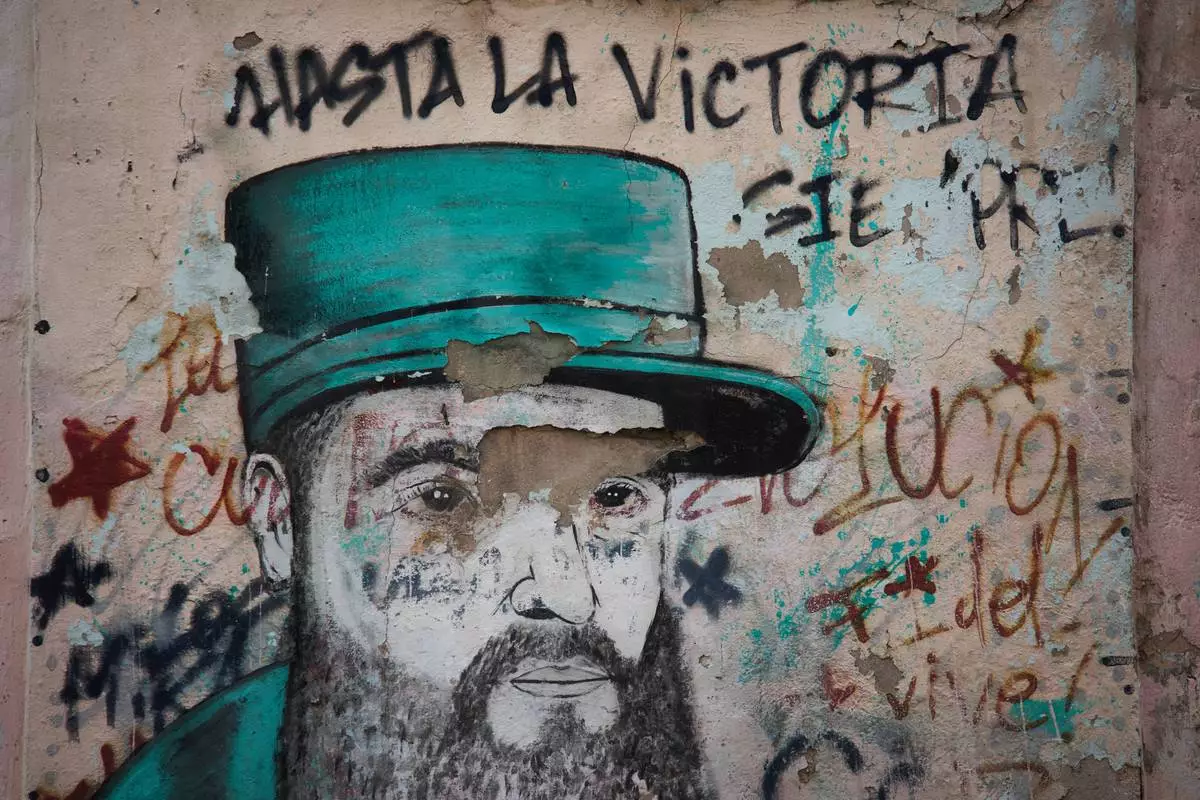
A weathered mural of Fidel Castro covers a wall in Havana, Cuba, Wednesday, Aug. 12, 2026. (AP Photo/Ramon Espinosa)

A weathered mural of Fidel Castro covers a wall in Havana, Cuba, Wednesday, Aug. 12, 2026. (AP Photo/Ramon Espinosa)

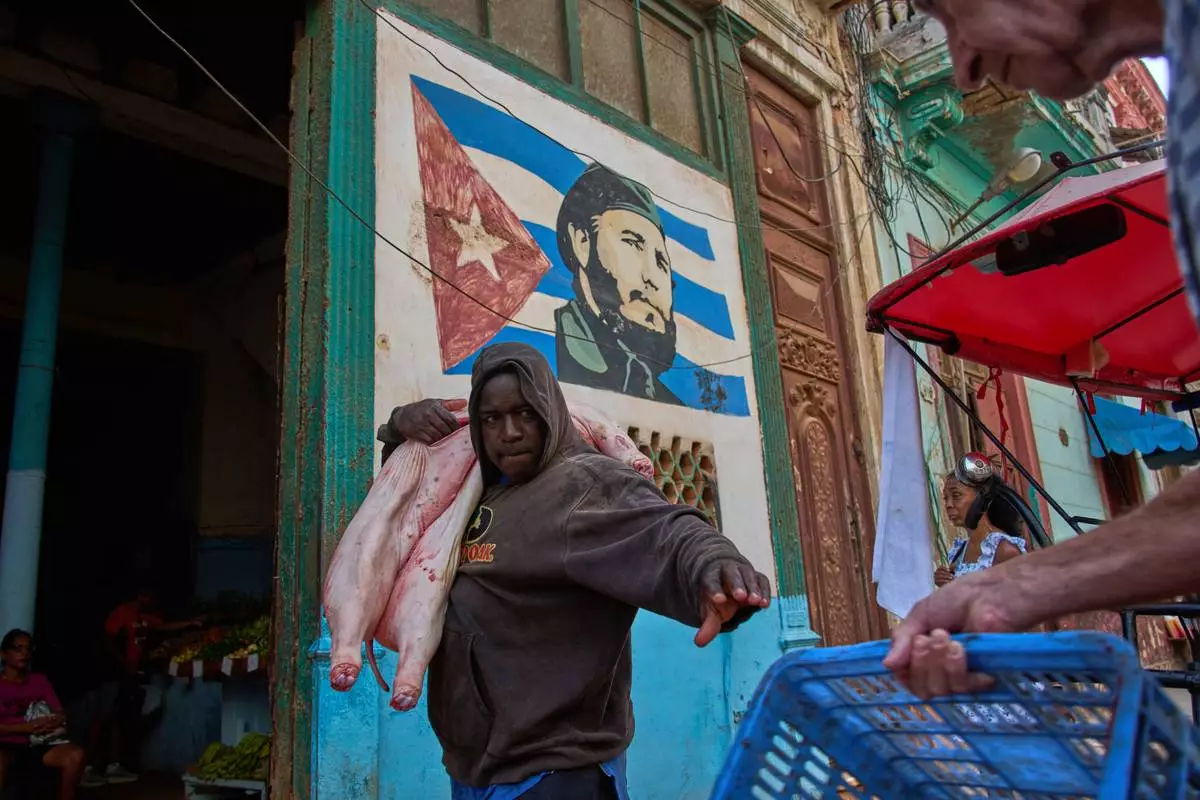
A man carries a pig at the entrance of a market, decorated with a mural of Fidel Castro, in Havana, Cuba, Wednesday, Aug. 12, 2026. (AP Photo/Ramon Espinosa)

A man carries a pig at the entrance of a market, decorated with a mural of Fidel Castro, in Havana, Cuba, Wednesday, Aug. 12, 2026. (AP Photo/Ramon Espinosa)

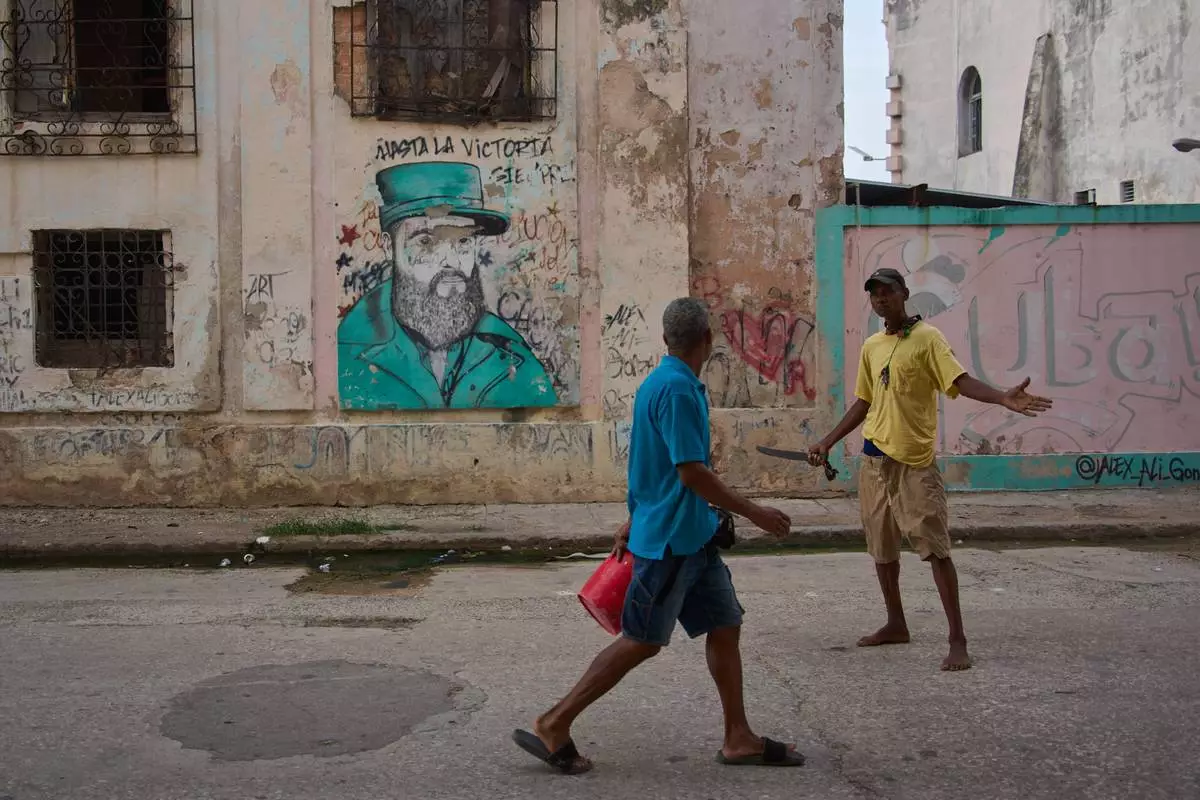
Men argue in front of a weathered mural of Fidel Castro in Havana, Cuba, Wednesday, Aug. 12, 2026. (AP Photo/Ramon Espinosa)

Men argue in front of a weathered mural of Fidel Castro in Havana, Cuba, Wednesday, Aug. 12, 2026. (AP Photo/Ramon Espinosa)

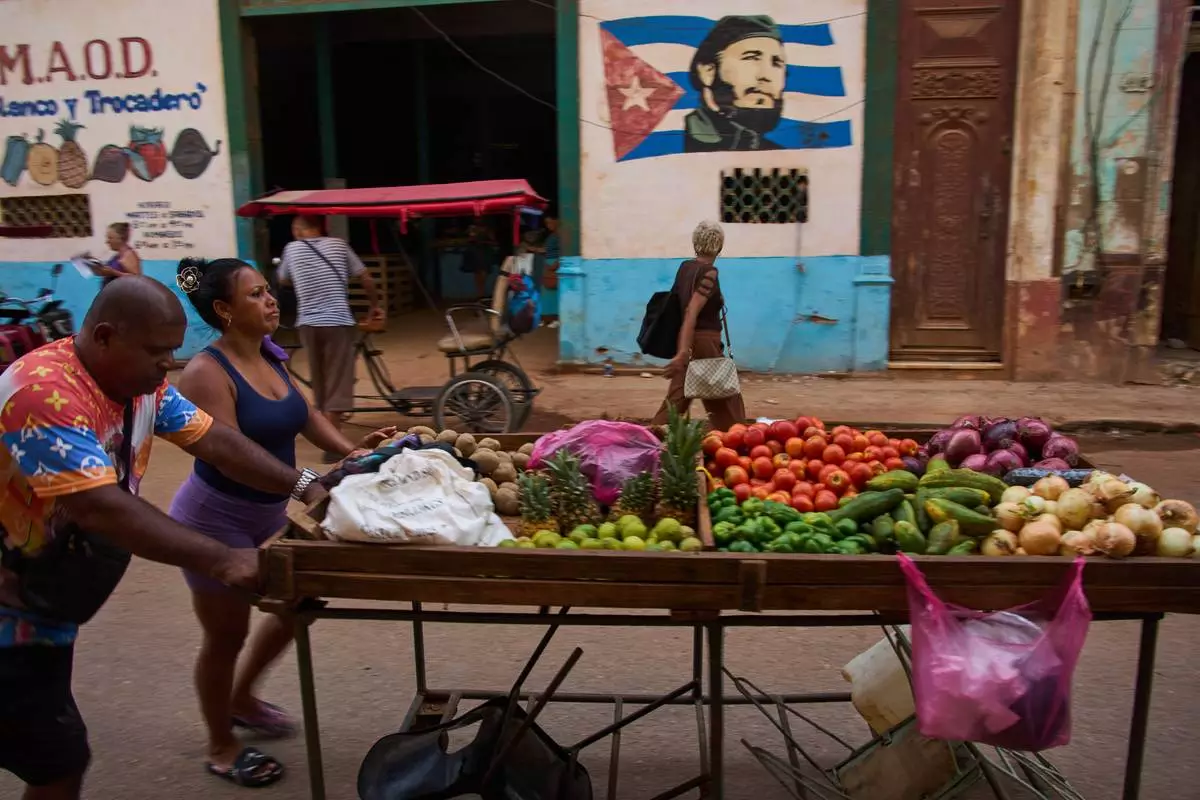
Street vendors push their cart of vegetables past a mural of Fidel Castro in Havana, Cuba, Wednesday, Aug. 12, 2026. (AP Photo/Ramon Espinosa)

Street vendors push their cart of vegetables past a mural of Fidel Castro in Havana, Cuba, Wednesday, Aug. 12, 2026. (AP Photo/Ramon Espinosa)

Recommended Articles