Eight people have been pulled alive from the rubble of a collapsed residential building in Cali, Colombia, in the wake of a powerful earthquake hitting the country two days ago.
The 7.5-magnitude quake jolted cities across Colombia's western region at 07:34 local time on Monday, completely destroying the apartment building named Torres del Limonar, and leaving its residents trapped underneath the ruins.
Since then, rescue teams and volunteers have worked there non-stop for dozens of hours, hoping to save more lives from the disaster.
After the critical 48-hour window closed, the rescuers have gradually shifted the focus of their work to recovering bodies of the victims.
The death toll from the powerful earthquake had risen to 265, with 3,494 people injured and 496 others still missing, Colombian President Abelardo de la Espriella said Wednesday.
The Colombian president said more than 11,000 homes were destroyed nationwide and over 53,000 people were affected by the disaster.
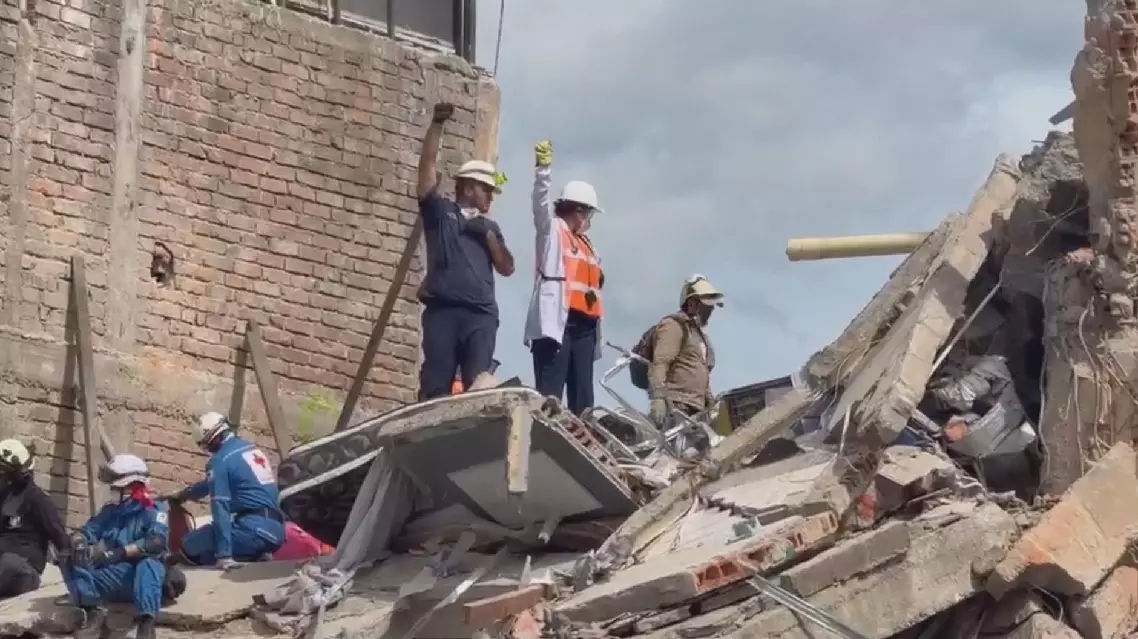
8 survivors pulled from rubble of collapsed apartment building after Colombia quake
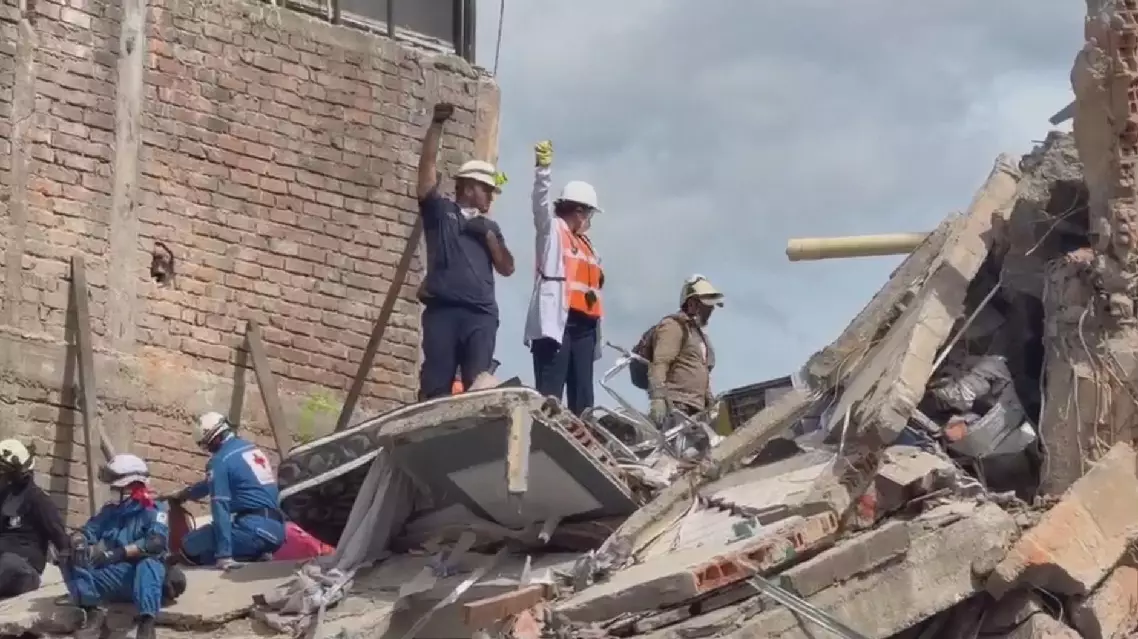
8 survivors pulled from rubble of collapsed apartment building after Colombia quake
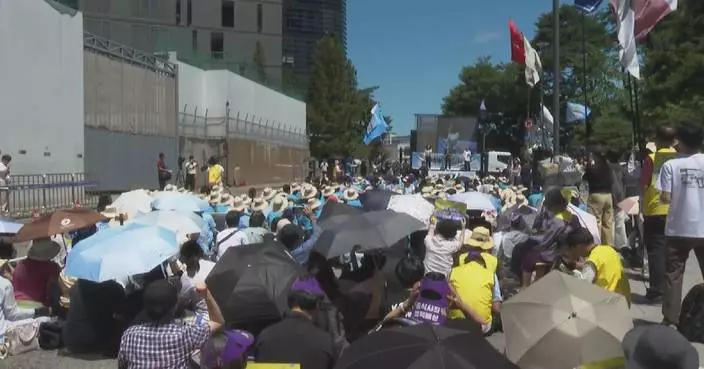
Demonstrators of the Republic of Korea (ROK) in Seoul on Wednesday gathered outside the Japanese embassy to commemorate victims of Japan's wartime military sexual slavery, commonly referred to as "comfort women," two days ahead of the annual international memorial day, expressing commitment to ensuring that the victims are never forgotten.
"Comfort women" refers to victims forced into sexual slavery by Japanese troops during World War II (WWII).
In 2012, the day of Aug. 14 was designated the International Memorial Day for "Comfort Women" by the 11th Asian Alliance Conference for "Comfort Women."
In November 2017, the ROK's National Assembly passed legislation to designate the date as a national memorial day for "comfort women".
It was on Aug 14, 1991, when the late victim, Kim Hak-sun, first publicly recounted her experience of being forced into sexual servitude by the Japanese military during World War II. Her testimony not only exposed Japan's wartime abuses but also encouraged other survivors to share their stories.
Wednesday's protest has drawn ROK younger generations who are determined to keep the victims' stories alive.
"I've always felt so many people are here to remember this issue and to make sure that something like this never happens again. The moment I realized that people were coming here to remember the testimonies the grandmothers first shared, I've been wanting to come to this Wednesday protest every week ever since," said Choi Su-bin, a university student.
The issue has become a rallying point for international solidarity and human rights advocacy, according to a scholar.
"The story of the victims has become an internationally recognized issue, and one of the few issues through which people around the world can come together and show solidarity. People continue to talk about it because they want to remember the victims and make sure something like this never happens again," said Park Jung-ae, a research fellow of the Northeast Asian History Foundation.
The history of the issue has shown that public discourse around it can affect the broader relationship between the ROK and Japan.
"We have experienced how statements attacking and insulting the victims caused deep wounds among people in both Japan and the ROK, and how they ultimately damaged relations between the two countries. I think both sides can approach the issue much more carefully, having learned from the experience that such remarks actually made relations worse," Park said.
The scholar also noted that remembrance risks becoming generic when individual stories are lost.
"In the past, we remembered individual victims -- Kim Hak-soon, Kim Bok-dong, Gil Won-ok, and so many others -- by learning about their individual stories. But increasingly, I worry that we simply refer to them collectively [as 'comfort women,'] without really knowing what it is that we are remembering. I think we need to return to that original spirit," she said.
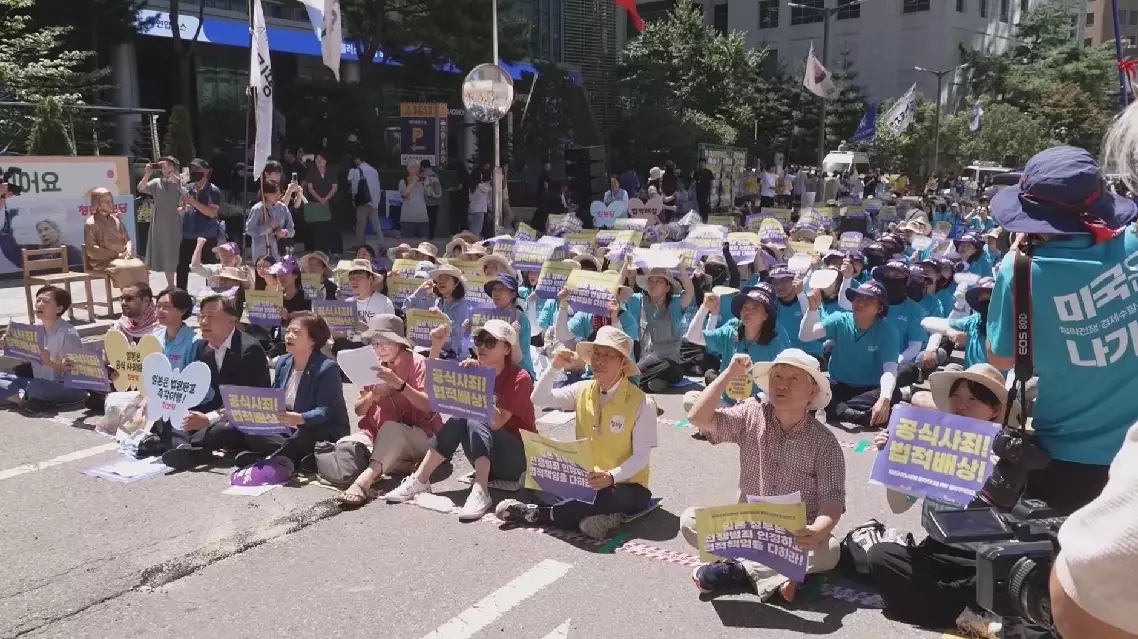
ROK demonstrators express commitment to remembering "comfort women"