Housing Bureau releases latest quarterly Composite Waiting Time for Subsidised Rental Housing
The Housing Bureau (HB) released today (August 13) that the latest qH Composite Waiting Time for Subsidised Rental Housing (CWT) is 4.8 years, a slight increase of 0.1 years as compared with the last quarter, which remains lower than the records between 2018 and 2025, and continues to maintain below 5.0 years.
Click to Gallery
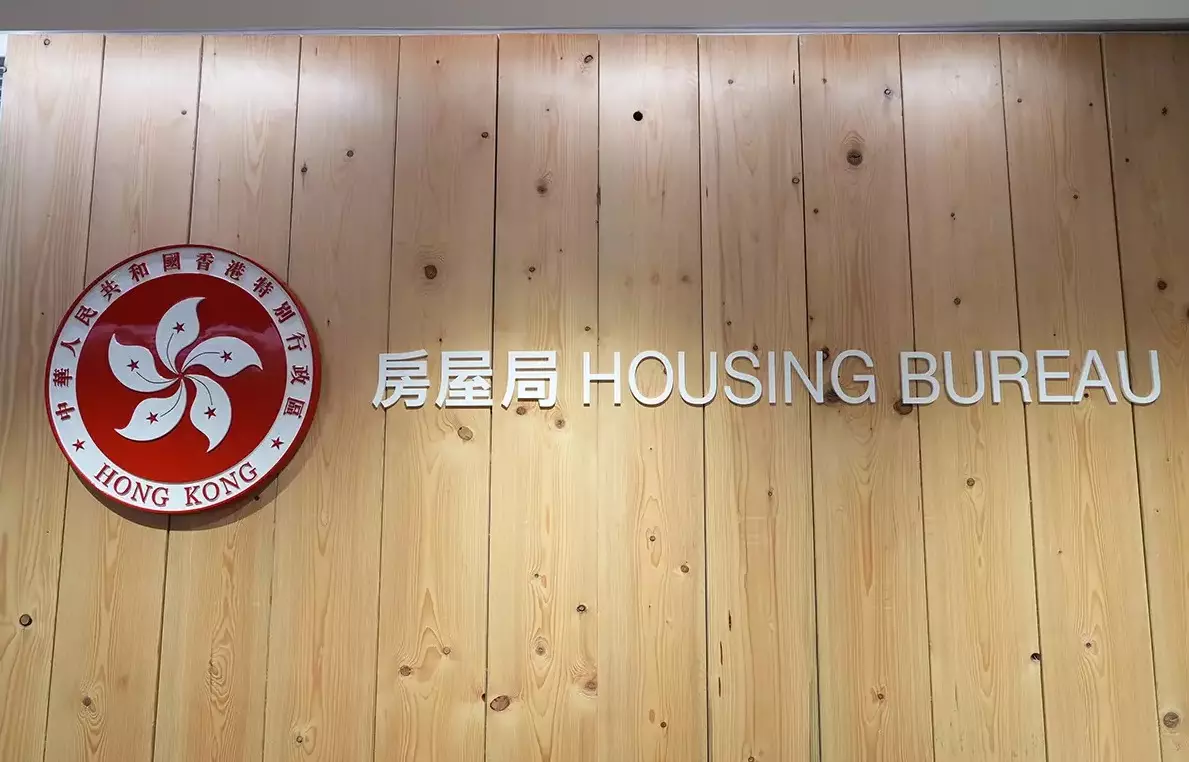
The Housing Bureau, Photo by Bastille Post
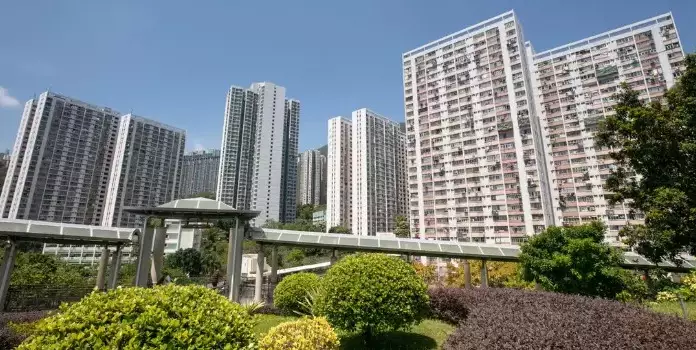
Public Housing, Photo source: reference image
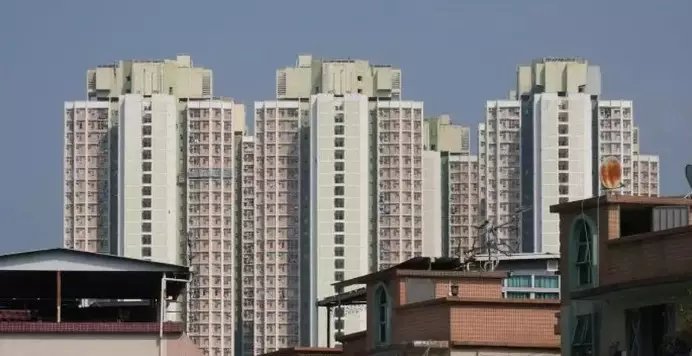
Public Housing, Photo source: reference image

Public Housing, Photo source: reference image
The Housing Bureau, Photo by Bastille Post
CWT entering new stage, moving towards target of 4.5 years
"In order to meet the public's housing needs, the Government will continue to strive to provide public housing (including subsidised sale flats (SSF) and public rental housing (PRH)) of more than 30 000 units per year on average in the next five years (i.e. from 2026-27 to 2030-31). Together with the 20 350 Light Public Housing (LPH) units to be completed starting from 2026-27, the total housing supply involved represents a new high over the past 24 years. With the PRH applicants having a longer waiting time being housed to PRH, the short-term fluctuations in the average waiting time for PRH reflect a positive sign, proving that we are effectively tackling the long-standing backlog of waiting cases and laying the foundation for significant improvements in the future. In the long run, the average waiting time for PRH will clearly trend in a positive direction," said the HB spokesman.
Under the current-term Government's unremitting efforts to "enhance speed, quantity, quality and efficiency" over the past four years, the back-loaded situation has been completely reversed by the public housing production. This shift has enabled faster fulfilment of the housing needs of low-income families. The CWT will move towards the target of reducing it to 4.5 years in 2026-27.
CWT maintaining at relatively low level
The newly announced record of 4.8 years is calculated based on general applicants (i.e. family and elderly one-person applicants) that were housed to PRH or LPH in the past 12 months as at end-June 2026. Compared with the highest level of 6.1 years before the current-term Government took office, the CWT has been shortened by 1.3 years.
Public Housing, Photo source: reference image
As many as 4,400 general applicants housed
"In the second quarter of 2026, we have successfully arranged for a total of about 4 400 general applicants to be housed to PRH or LPH, incluing about 720 newly completed PRH flats, about 2 400 recovered PRH flats, and about 1 300 LPH units," said the HB spokesman.
Proportion of flats allocated in urban district and extended urban district exceeds 70 per cent this quarter
Among the general applicants housed to PRH and LPH units over the past 12 months, the proportion of those located in urban district and extended urban district reached 74 per cent, higher than the corresponding figure (69 per cent) in the last quarter. The vast majority of recovered PRH units (reaching 81 per cent) were located in urban district and extended urban district. As the waiting time for urban district and extended urban district is generally over a year longer than that for the New Territories, taking into account their longer waiting time in the calculation of the latest CWT has resulted in a slight increase of 0.1 years.
Waiting time for LPH only three years on average
"In fact, the waiting time for PRH units in urban district in the past 12 months was about six years. During the same period, the waiting time for general applicants housed to LPH was about three years on average, while the waiting time for LPH units in the New Territories was only about two years. This clearly demonstrates that choosing LPH can significantly shorten the waiting time by as much as three to four years, thereby shortening the overall CWT. We hope that families in need will make the most appropriate decision for their family members, particularly for the health of elderly members and the growth of children," said the HB spokesman.
Current average quarterly supply about double that of three years before current-term Government took office
In fact, over the past 12 months, the Government's overall supply of PRH and LPH has increased to about 7 400 units per quarter, which is about double the average quarterly supply of about 3 800 units during the three years before the current-term Government took office (i.e. from the third quarter of 2019 to the second quarter of 2022), showing the supply has significantly increased. This fully highlights the original policy intent of LPH to promptly assist residents in alleviating their hardships, which has not only played a key role in shortening the waiting time for PRH, but also improved living conditions and quality of life of low-income families. Furthermore, as compared with subdivided units in the private market, residents who are housed to LPH can also save an average of over $50,000 in rent per year, which can be accumulated as family savings to plan for a better future.
Public Housing, Photo source: reference image
Further shortened PRH waiting queue, with general applications significantly reduced by more than 30 per cent over past five years or so
"With our multipronged approach to expedite the turnover of PRH flats, the number of PRH general applicants has further decreased by 2 900 cases this quarter. Compared to the number in that last quarter (the first quarter of 2026), the number of new applications of this quarter (the second quarter of 2026) has decreased by about 8 per cent. We have also observed that many general applicants for urban districts and extended urban districts with a waiting time of six years or above were gradually housed to PRH, which tangibly reflects that our efforts over the past four-plus years are taking effect progressively," said the HB spokesman.
As at end-June 2026, there were about 100 500 general applications for PRH, and about 81 000 non-elderly one-person applications under the Quota and Points System. As compared with the highest level of 156 400 cases and 143 700 cases of general applications and non-elderly one-person applications, the application number reduced significantly by more than 30 per cent and over 40 per cent respectively. Among these, the number of non-elderly one-person applicants aged below 30 recorded an even sharper decline of about 60 per cent over the 10-year period, from about 71 500 as at end-June 2016 to about 29 400 as at end-June 2026, clearly demonstrating that the PRH waiting queue is being reduced.
Overall public housing production reaching its peak
Looking ahead to the next five years starting from 2026-27 onwards, the overall public housing production (including SSF, PRH and LPH) will be about 196 000 units, about 85 per cent higher than when the current-term Government took office. Among these, about 115 000 PRH flats will be completed during this period, reaching the supply peak. In respect of LPH, about 19 130 units have been completed, among which about 9 650 units have been fully occupied as at the second quarter of 2026, while other completed units have also commenced intake by phases starting from mid-June 2026. About 10 670 and 210 units will be successively completed in the remainder of 2026 and early 2027 respectively, steadily moving towards the target of completing the construction of about 30 000 LPH units by 2027-28.
Public Housing, Photo source: reference image