BUCHAREST, Romania (AP) — Romania on Thursday began a controlled shutdown of the second reactor at its Cernavoda nuclear power plant as a severe drought continues to grip the continent.
Scorching heat and low rainfall in recent weeks have left the Danube River at record lows and forced the state-owned Cernavoda plant to shut down its first reactor in late July. The plant accounts for about 20% of the country’s electricity generation when fully operational and uses river water to cool its two reactors.
Click to Gallery
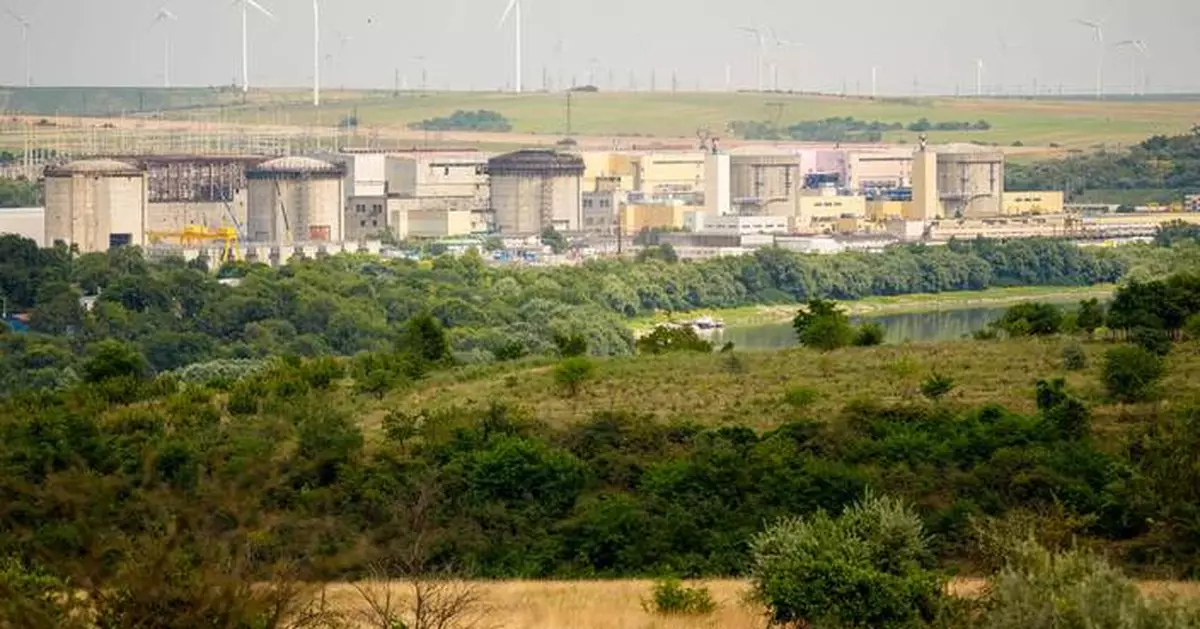
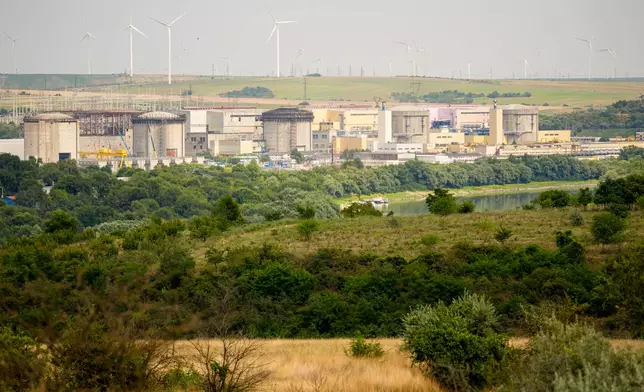
The Cernavoda Nuclear Power Plant, which had to close one of its reactors due to extremely low water levels, stands near the Danube River in Cernavoda, Romania, Monday, Aug. 3 2026. (AP Photo/Andreea Alexandru)
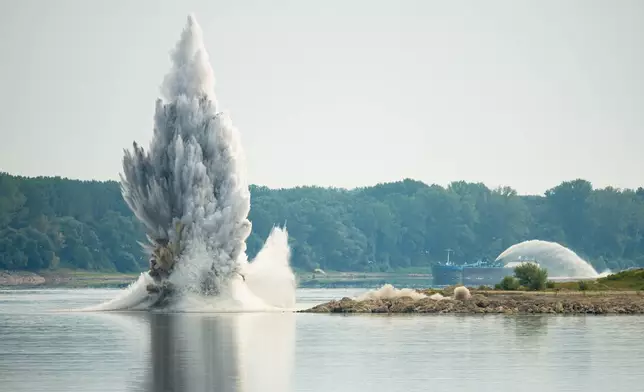
The Romanian Navy detonates underwater explosives during a controlled demolition of submerged rocks to improve water flow to the Cernavoda Nuclear Power Plant amid exceptionally low water levels on the Danube River, in Izvoarele, Romania, Monday, Aug. 3, 2026. (AP Photo/Andreea Alexandru)
People walk on a sandbank on the Danube River as usually submerged areas are exposed amid exceptionally low water levels, in Rasova, Romania, Friday, Aug. 7, 2026. (AP Photo/Andreea Alexandru)
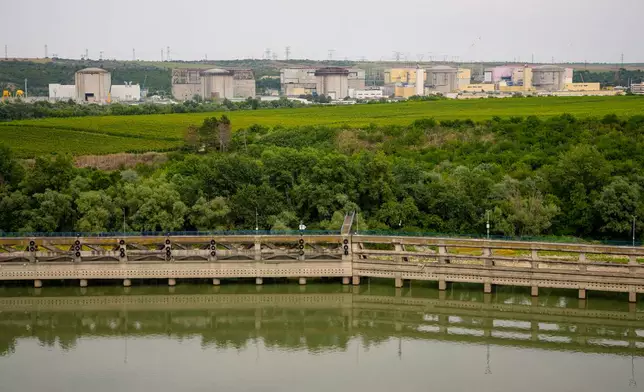
Cernavoda Nuclear Power Plant, which had to close one of it's reactors due to extremely low water levels on the Danube River, is seen in Cernavoda, Romania, Monday, Aug. 3 2026. (AP Photo/ Andreea Alexandru)
“The decision to carry out a controlled shutdown of Unit 2 was determined by the continued significant decrease in the level of the Danube River,” the plant operator Nuclearelectrica said in a statement Thursday addressed to the Bucharest Stock Exchange.
Romania’s Ministry of Energy said in a statement Wednesday that estimates show the European Union member’s electricity supply would be “fully covered by alternative sources and imports” after a shutdown of the second reactor.
After acting Prime Minister Ilie Bolojan announced a nationwide state of alert in the energy sector on Jul. 31 for August, efforts by the Romanian authorities to avert a shutdown of Cernavoda’s second reactor have been unprecedented.
Romania last week began sinking four barges loaded with rock near the Danube’s Bala Canal that its military blasted from the river using explosives. The barges were meant to create an underwater barrier and redirect the water down the river’s main channel and toward the Cernavoda plant.
But ultimately, the Danube's water levels receded to levels below what is necessary to keep the Cernavoda reactor operational.
“Maintaining both units in a safe shutdown state has no impact on nuclear safety parameters, including personnel, the environment and the population,” Nuclearelectrica added.
The Romanian development comes as authorities in Hungary plan steps, including the sinking of barges and building a bed sill, to try to raise the level of the Danube River this week in order to ensure the country’s only nuclear power plant, Paks, can continue operating. The plant is on the brink of shutting down for the first time in its 44-year history.
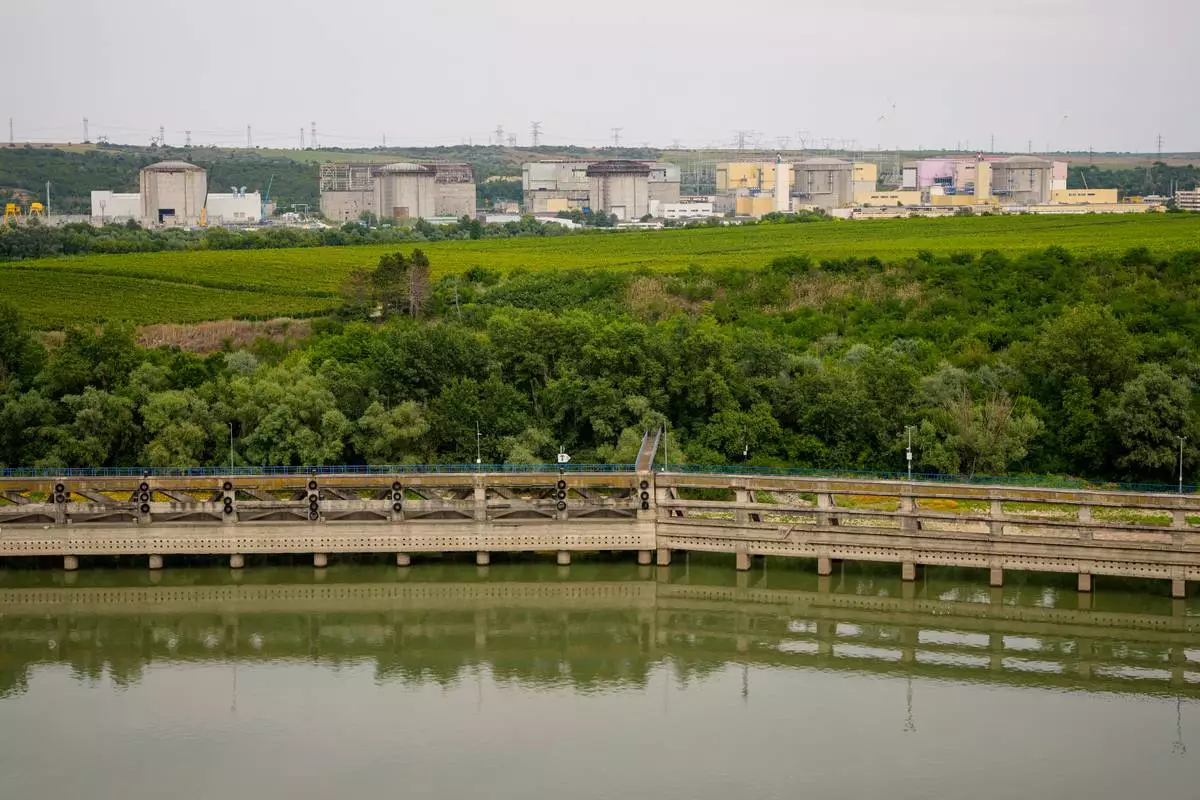
The Cernavoda Nuclear Power Plant, which had to close one of its reactors due to extremely low water levels, stands near the Danube River in Cernavoda, Romania, Monday, Aug. 3 2026. (AP Photo/Andreea Alexandru)
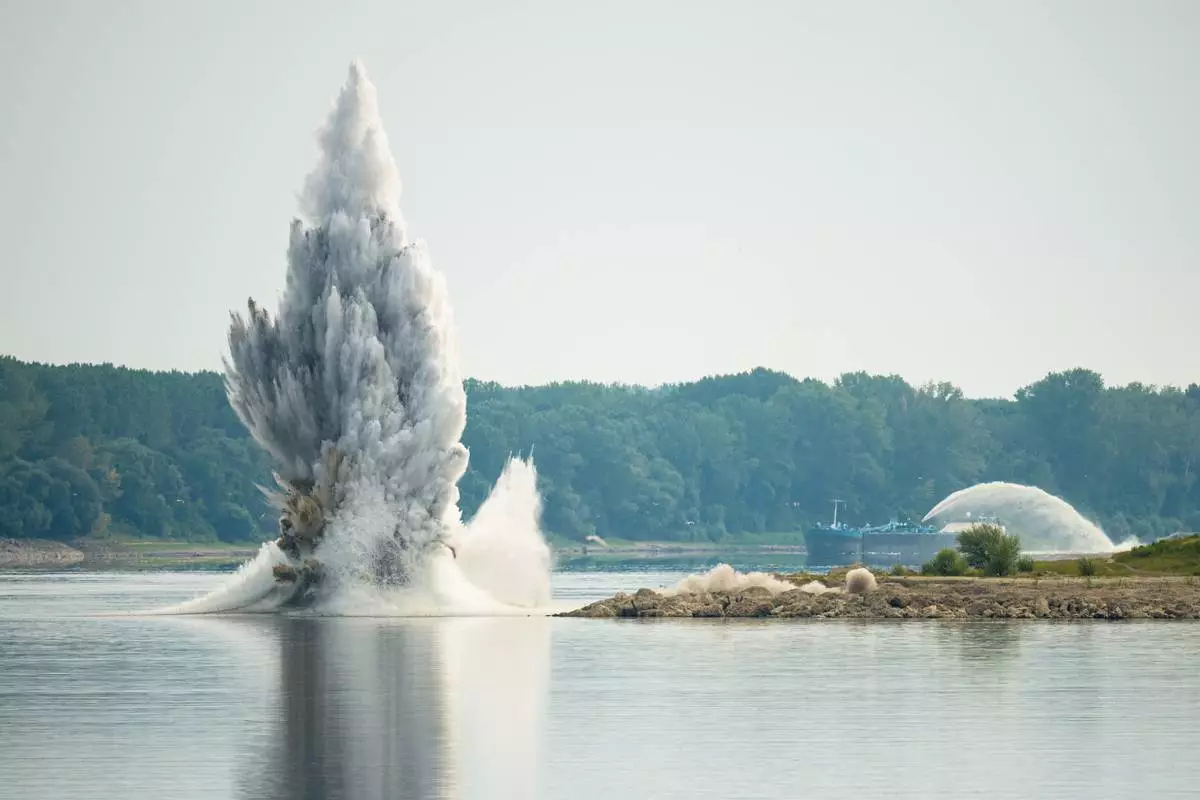
The Romanian Navy detonates underwater explosives during a controlled demolition of submerged rocks to improve water flow to the Cernavoda Nuclear Power Plant amid exceptionally low water levels on the Danube River, in Izvoarele, Romania, Monday, Aug. 3, 2026. (AP Photo/Andreea Alexandru)

People walk on a sandbank on the Danube River as usually submerged areas are exposed amid exceptionally low water levels, in Rasova, Romania, Friday, Aug. 7, 2026. (AP Photo/Andreea Alexandru)
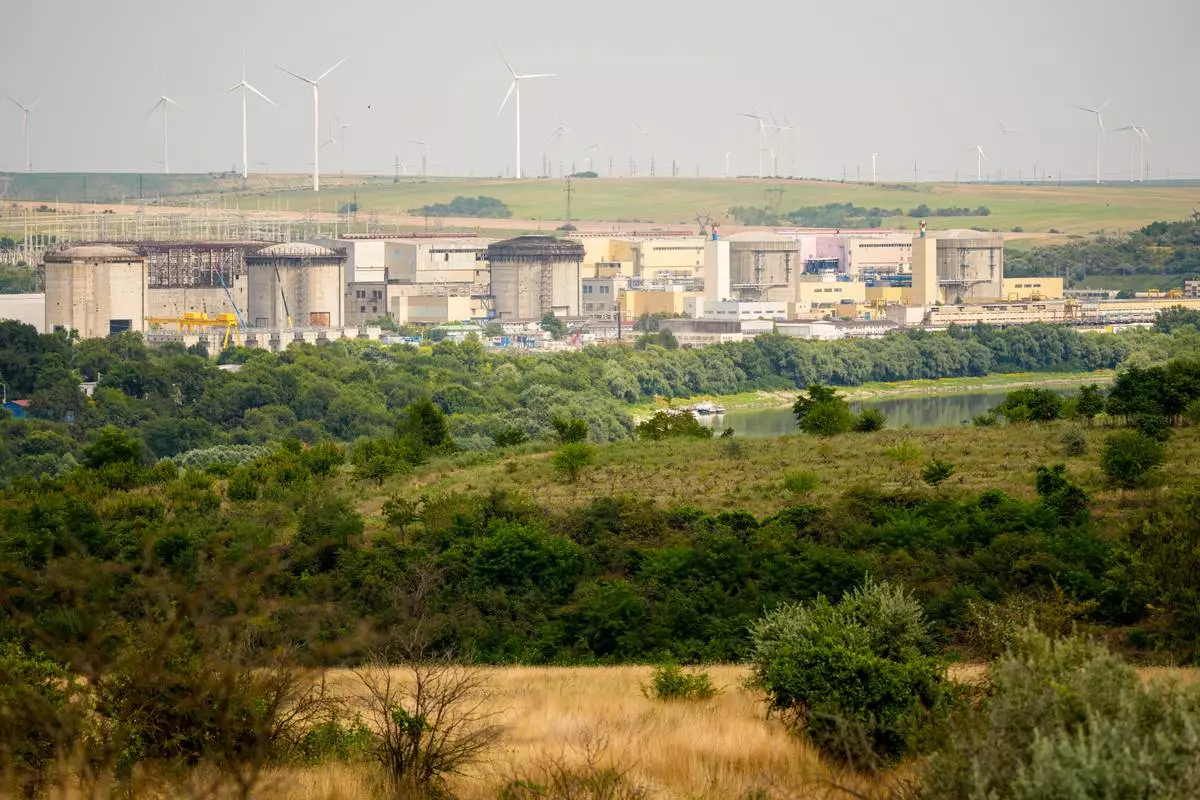
Cernavoda Nuclear Power Plant, which had to close one of it's reactors due to extremely low water levels on the Danube River, is seen in Cernavoda, Romania, Monday, Aug. 3 2026. (AP Photo/ Andreea Alexandru)
TOKYO (AP) — Japanese Crown Prince Akishino, the younger brother of Emperor Naruhito, on Thursday said he has “mixed feelings” about the government's revision to the Imperial House Law that reinforces a rule dictating only men can become emperor.
“I believe there is no difference between men and women” in serving the roles of the imperial family to respond to social needs, Akishino said at a news conference ahead of a trip to Paraguay later this month to mark the 90th anniversary of Japanese emigration to the South American country.
The comments by Akishino, the next in line for the throne, come just weeks after a historic revision to the Imperial House Law by the conservative government of Prime Minister Sanae Takaichi that insists only paternal-lineage men can become emperor.
The law has been criticized as anachronistic and sexist, and the revision sparked outrage and concern that the measure could doom the already shrinking imperial family.
Critics say the government’s insistence on the male-only succession imposes an inhumane system on the royals without taking into consideration their perspective.
As an imperial family member who is not supposed to make political statements, Akishino was nuanced in his comments.
“I have mixed feelings about it, and it's rather strange if I don't,” Akishino said when asked about the government’s decision. He added that it “is a difficult question, and the reality is that I can't talk about it.”
“Society needs to keep making progress, and I believe it is important for people with different views to keep thinking what's best,” Akishino said.
Naruhito’s 24-year-old daughter, Princess Aiko, is hugely popular and many Japanese want her to be his successor, but as a woman she is ineligible. The male-only succession rule means the throne must go to Akishino, then to his 19-year-old nephew Prince Hisahito. Next in line after him is the emperor’s 90-year-old uncle.
The revisions by Takaichi's government to the antiquated law is meant to solidify the principle of the imperial bloodline, but pushes aside the emperor’s daughter.
The revision allows princesses to keep their status and perform royal duties if they marry a commoner, but their husbands and children will remain non-royals.
A more controversial change allows unmarried male descendants aged 15 or older of very distant imperial male relatives to be adopted into the immediate royal family to father heirs. Only those of paternal lineage can be chosen for adoption.
The revisions have led to protests from Japanese who see the government efforts as an attempt to eliminate Princess Aiko from ruling and justify discrimination against women and a patriarchal system.
Akishino's popular younger daughter, Princess Kako, has taken on official duties in recent years, including overseas trips. His elder daughter, former Princess Mako, renounced her royal status in 2021 when she married her college boyfriend and moved to the U.S. where he now is a lawyer. Under the revised law, Kako gets to choose whether to keep her status if she marries, though her intention is unknown.
Akishino said he hopes Kako and his son Hisahito cherish each official duty when they serve their roles. “As a parent ... I just hope they will find their way to happiness.”
There have been eight female monarchs in Japan. The last was Empress Gosakuramachi, who ruled from 1762 to 1770.
The paternal-line male succession was stipulated for the first time in the 1890 Imperial House Law, when Japan promoted patriarchal systems. That law was largely carried over to the current 1947 version.
There is also worry that the government’s push will upset the legacy of former Emperor Akihito, including making amends for the victims of World War II, which was fought in his father’s name.
Akihito, who abdicated in 2019, tried to bring what was seen as an aloof monarchy closer to the people, an example followed by his son, Naruhito, and his family.
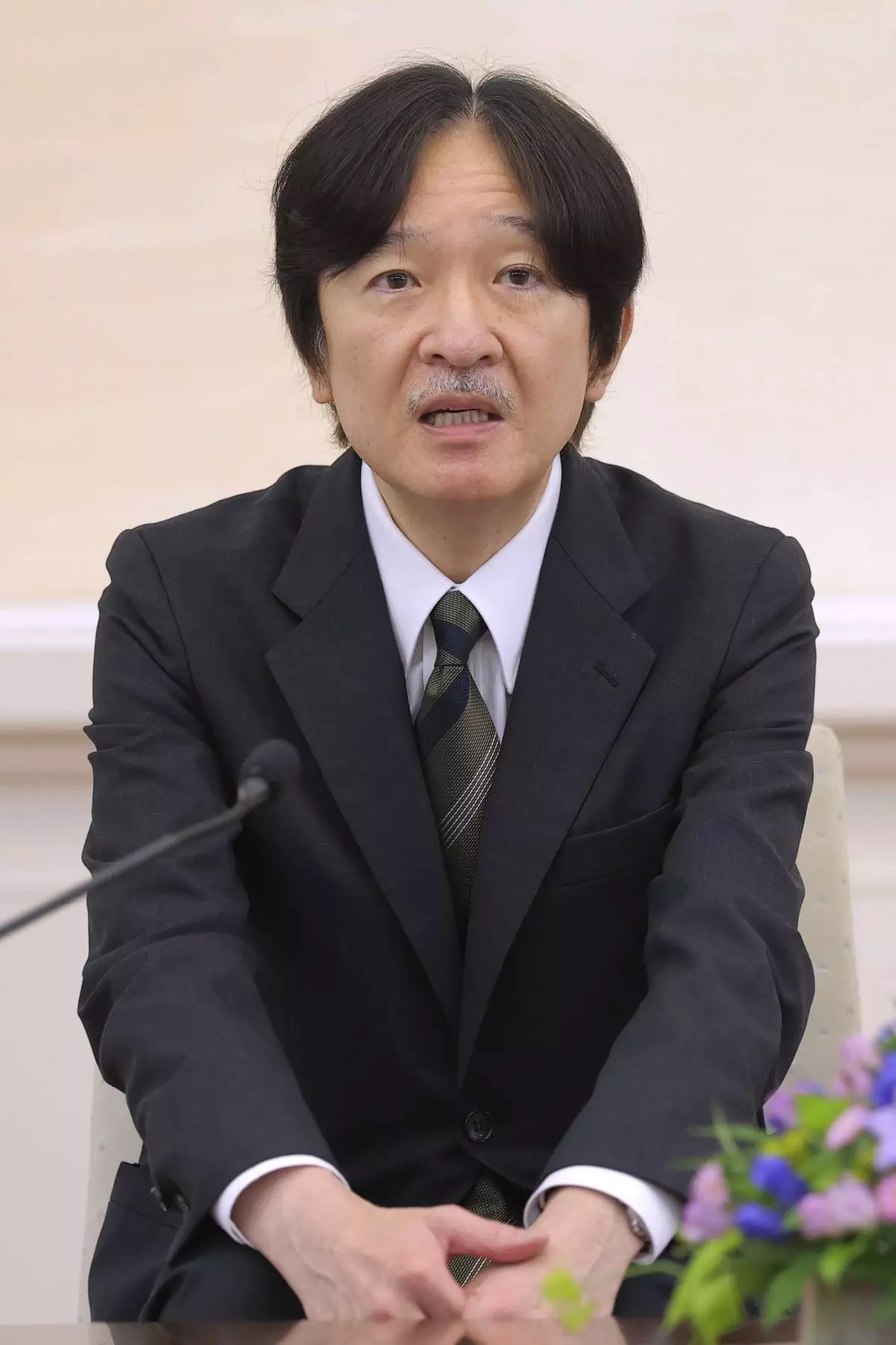
Japan's Crown Prince Akishino attends a news conference in Tokyo, Thursday, Aug. 13, 2026, ahead of his visit to Paraguay. (Japan Pool/Kyodo News via AP)
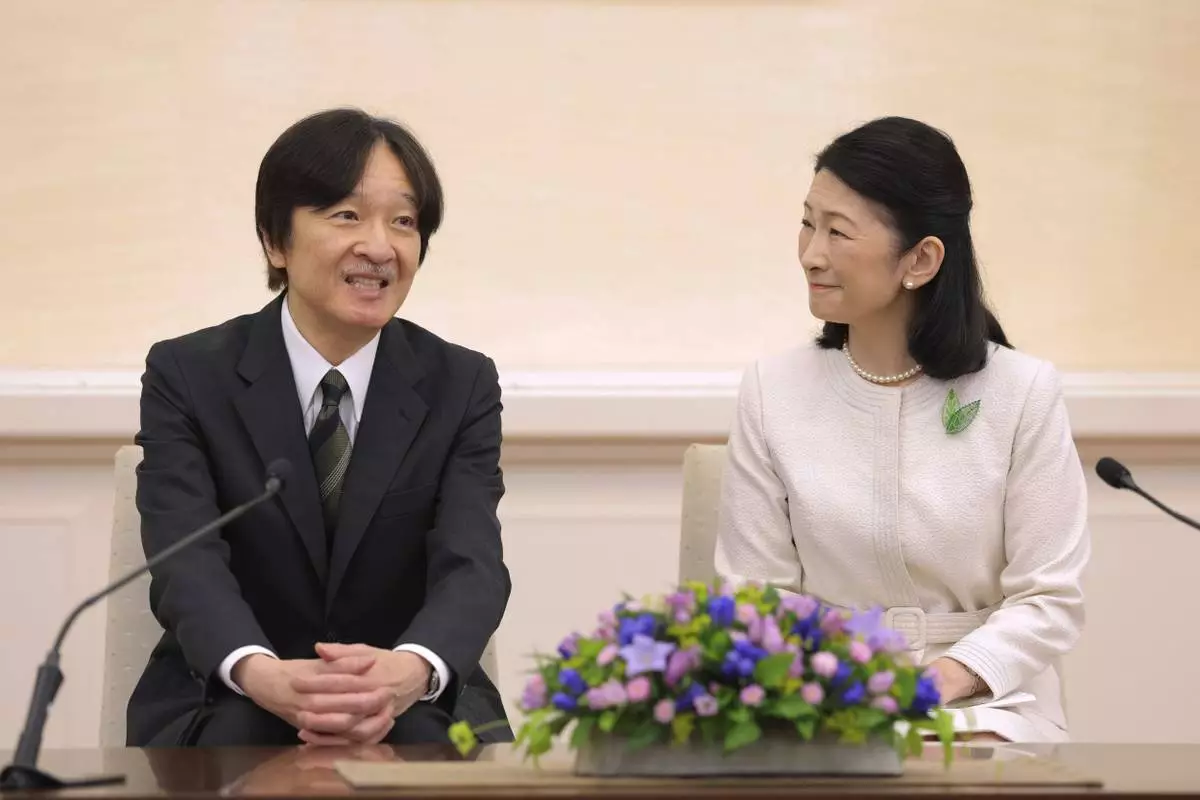
Japan's Crown Prince Akishino and Crown Princess Kiko attend a news conference in Tokyo, Thursday, Aug. 13, 2026, ahead of their visit to Paraguay. (Japan Pool/Kyodo News via AP)
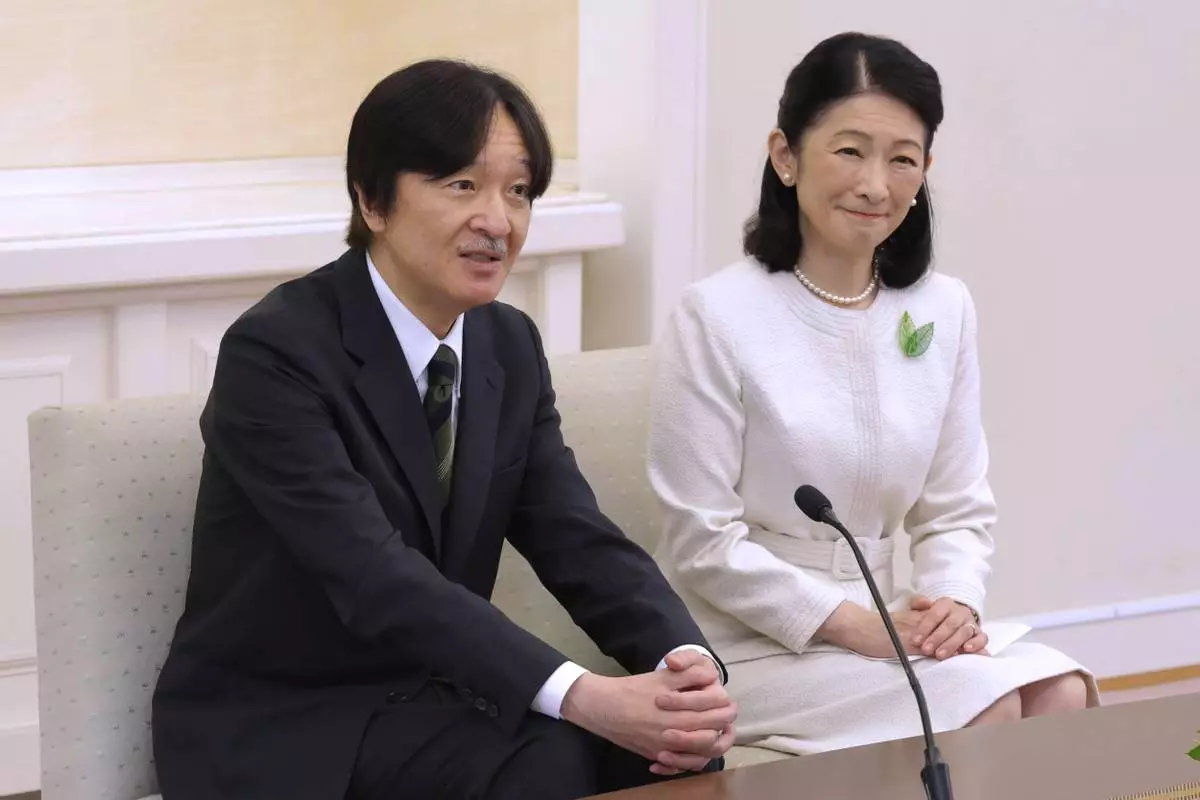
Japan's Crown Prince Akishino and Crown Princess Kiko attend a news conference in Tokyo, Thursday, Aug. 13, 2026, ahead of their visit to Paraguay. (Japan Pool/Kyodo News via AP)