Skip to Content Facebook Feature Image

China's homegrown cruise ship Adora Magic City ready to sail from Greater Bay Area for 1st time

China

China

China

China's homegrown cruise ship Adora Magic City ready to sail from Greater Bay Area for 1st time

2026-08-13 17:35 Last Updated At:08-14 13:18

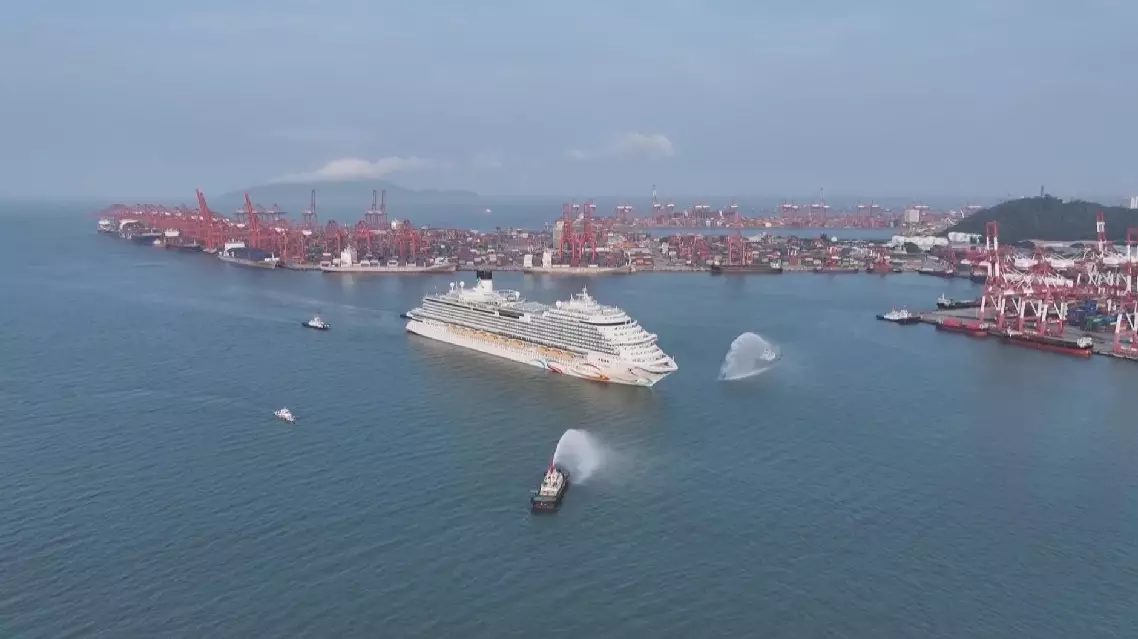
China's first domestically built large cruise ship, the Adora Magic City, is ready to sail from the Guangdong-Hong Kong-Macao Greater Bay Area for the first time on an international journey on Thursday evening, marking a major milestone for the country's cruise industry as the vessel expands its operations to southern China's shores.

The 323.6-meter-long, 135,500-tonne cruise ship is scheduled to depart at around 19:00 from the Shekou cruise home port in Shenzhen, the tech hub in Guangdong, carrying nearly 4,600 passengers on a 5-day, 4-night journey to Vietnam.

It marks the Adora Magic City's debut in the Greater Bay Area since commencing commercial operations in January 2024 with its global maiden voyage from Shanghai. The ship will operate from its home port in Shenzhen throughout the summer season, which will last through Sept 16. It will sail on a variety of international itineraries calling at ports in countries including Vietnam, South Korea, and Malaysia.

Upon its arrival in Shenzhen, the ship was welcomed by a traditional water cannon salute, the highest maritime honor, as it docked at the port for the first time.

Among the passengers were cruise enthusiasts, families with children on summer vacation, and international tourists.

"I'm in my 80s now, but I decided to come aboard for the cruise experience," said a passenger surnamed Zhou.

"Now that we have a homegrown cruise ship, we can come aboard and experience it firsthand. So, we brought our kid along during the summer holiday to enjoy the experience," said another passenger surnamed Lin.

To enhance passenger experience, Shenzhen port authorities have opened dedicated cruise inspection channels and implemented streamlined clearance procedures, enabling passengers to disembark quickly upon arrival.

"We have expanded dedicated cruise inspection channels and implemented streamlined clearance codes, ensuring that passengers can step off the ship the moment it docks and get cleared with maximum efficiency," said Zhao Weidong, a border inspection officer in Shenzhen.

In the first half of the year, the Shekou cruise home port in Shenzhen handled 985,000 passenger trips, up 10.8 percent from the same period last year. With China's first homegrown large cruise ship now entering the southern region, the Greater Bay Area is poised to offer global travelers a richer and more diverse selection of international cruise routes.

The Guangdong-Hong Kong-Macao Greater Bay Area is a major urban and economic cluster that encompasses nine mainland cities and the Hong Kong and Macao special administrative regions in south China, with a total population of around 86 million.
China's homegrown cruise ship Adora Magic City ready to sail from Greater Bay Area for 1st time

China's homegrown cruise ship Adora Magic City ready to sail from Greater Bay Area for 1st time
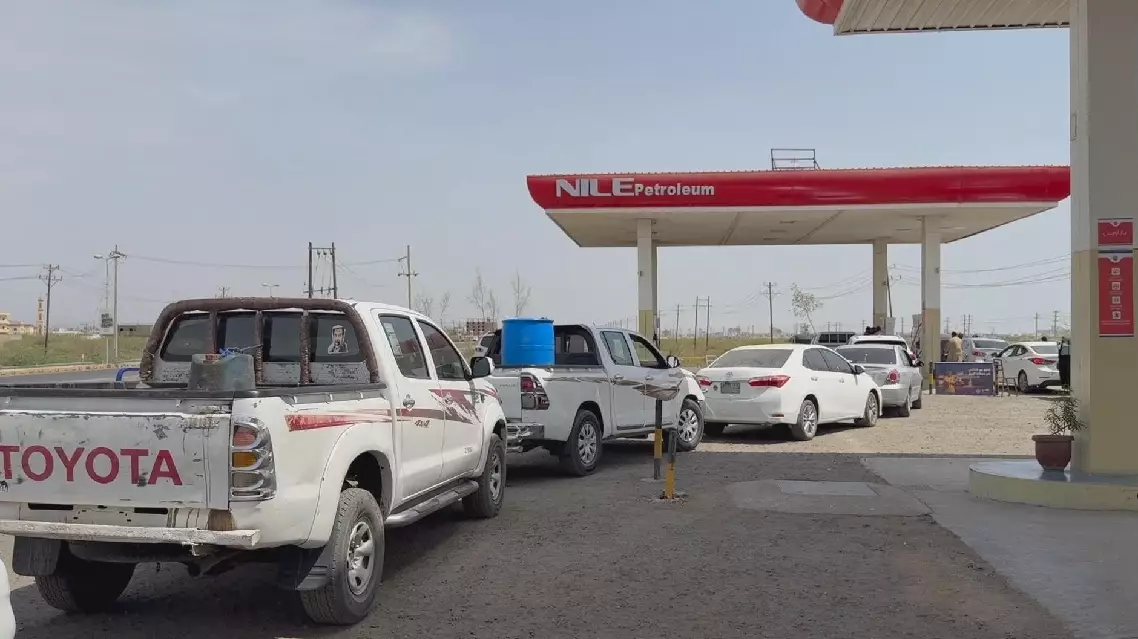
A deepening fuel crisis is paralyzing daily life across Sudan, where long lines of vehicles at the few operating stations have become a daily routine.

With domestic refining crippled and import prices rising, the country is under mounting pressure over its energy supply. The lingering and spreading crisis has also driven local prices sharply higher.

"I started queuing for gas at 7 this morning, and I've been waiting for over two hours now. I don't know how much longer I'll have to wait. I haven't been able to fill up for a week. And the price of gasoline has further gone up recently. Now it costs 35,000 Sudanese pounds (about 58.19 U.S. dollars) per gallon. It has increased by 5,000 Sudanese pounds in just several days," said Osman Faisal, a resident.

The crisis stems from war damage to Sudan's oil infrastructure. Relentless clashes since fighting erupted in April 2023 between the Sudanese Armed Forces and the paramilitary Rapid Support Forces have forced major oil fields to shut down. The Khartoum refinery, which once met about 70 percent of national fuel needs, has shut down. Several oil fields are also offline, forcing Sudan to rely almost entirely on imports.

The escalation in the Middle East since late February has led to significant fluctuations in international energy market prices, and Sudan's domestic supply is directly exposed to that backdrop.

This external shock has been coupled with the depreciation of the Sudanese pound against the U.S. dollar, making every imported shipment more expensive. Caught between rising global prices and a plummeting local currency, gas station operators are forced to constantly recalculate their rates and frequently shut down pumps.

The unpredictability forced workers into an impossible daily trade-off between earning a living and waiting in line.

"The Sudanese pound continues to depreciate against the U.S. dollar, exacerbating the fuel crisis. Hopefully, the exchange rate will stabilize as soon as possible. Every morning when we wake up, we are forced to make a choice -- go to work or queue for gas?" said Adnan Osman, another resident.

In addition to disrupting people's travel, the fuel shortage has driven up transportation and delivery costs, pushing the prices of food and daily necessities higher.

"The prices of food, including vegetables and bread, are also on the rise. The life of everyone in this country is being severely affected," said Alrazy Mohamed, a resident.

Sudan paralyzed by fuel crisis as war, currency collapse choke supply

Sudan paralyzed by fuel crisis as war, currency collapse choke supply

Recommended Articles