The main structure of two anchorages of the Shiziyang Grand Bridge, a critical part of the Shiziyang Channel in south China's Guangdong Province, saw its construction completed on Thursday.
Situated at the mouth of the Pearl River, the east and west anchorages are now seated on either side of the grand bridge. The west anchorage, with a foundation diameter of 130 meters, a total weight of 1.4 million tons and a depth of 36 meters, is currently the world's largest suspension bridge anchorage.
With the main anchorage structure now finished, the bridge's foundation is secured, providing the basis for the next phases, including the installation of the bridge's catenaries and cables.
"Once the project is completed in 2029, the main bridge is expected to set five world records for double-deck suspension bridges -- the main span length, the main tower height, the anchorage foundation, the main cable diameter and the number of lanes," said Xiong Haoxiang, deputy chief engineer of the Shiziyang Grand Bridge project.
The 35-kilometer Shiziyang Grand Bridge connects the cities of Guangzhou and Dongguan, featuring 16 double-deck lanes. It will help establish a "one-hour living circle" to boost the development of the Guangdong-Hong Kong-Macao Greater Bay Area city cluster and the Pearl River Estuary area in south China.
The Shiziyang Channel is a mega infrastructure project after the Hong Kong-Zhuhai-Macao Bridge and the Shenzhen-Zhongshan Link in the Greater Bay Area.
The Greater Bay Area consists of the Hong Kong Special Administrative Region, the Macao Special Administrative Region, as well as nine cities in Guangdong Province -- Guangzhou, Shenzhen, Zhuhai, Foshan, Huizhou, Dongguan, Zhongshan, Jiangmen and Zhaoqing. China plans to vigorously develop the Greater Bay Area into a world-class bay area and a top international city cluster as an important driver for national economic growth.
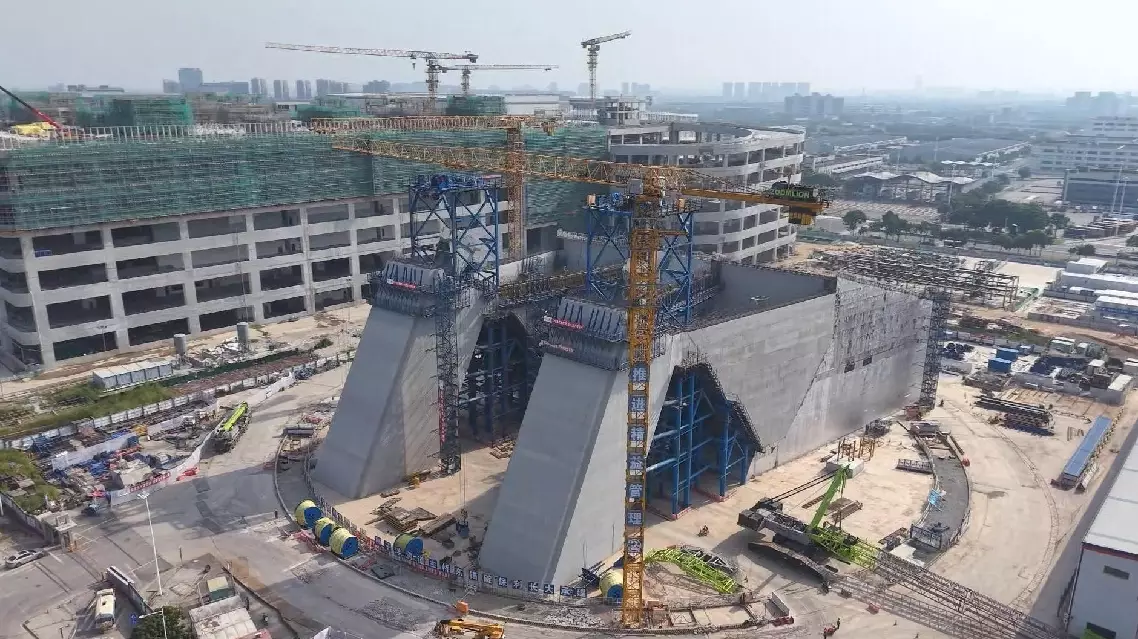
Major progress achieved on construction of grand bridge in Greater Bay Area
Boosted by advanced medical technologies and improved administrative support, China is emerging as a major global hub for cross-border medical travel, adding a new bright spot to China's service-trade exports.
The trend is clearly evident in Guangzhou, capital of south China's Guangdong Province, which has established itself as a key destination for international cancer treatment, drawing an increasing number of overseas patients seeking advanced, minimally-invasive care.
According to the 2025 report from China's National Health Commission, key foreign-oriented hospitals in China received 1.28 million international patients, marking a 73.6-percent increase over a three-year period.
Peng Xiaochi, a specialist physician, has witnessed a sharp rise in foreign patients over the past decade, mostly from Southeast Asia. Among them is Ronald, a patient from Indonesia seeking treatment for conditions that yielded few viable options at home.
"We combined interventional therapy and cryoablation. Phase-one results were positive," said Peng.
The personalized approach has earned high praise from Ronald, who recounted his healthcare journey.
"Yeah, the treatment is very good and very nice. The doctors are very kindful. And yeah, they helped me very good. And last week I get my first treatment, which was a little bit painful, but yeah, okay, that's normal. It's for a few days and now it's becoming a little bit better. So we will go on for the next week," said Ronald.
A sense of relief was shared by Ronald's family.
"The conditions here are great. I feel reassured seeing him get treatment here," said a family member.
Ronald's story mirrors a broader trend. For overseas patients who find few viable treatment options at home, hospitals in Guangzhou offer reliable, minimally-invasive alternatives, according to local physicians.
"Surgery went perfectly. Lesions are fully addressed," said Yang Zhiguo, an attending physician.
Ronald left the hospital about one month after his procedure, which followed new international medical policies introduced in Guangzhou on April 29 to bolster services for overseas patients.
The city announced 12 supportive measures and launched an international medical tourism service center, providing comprehensive, end-to-end assistance that includes visa support, remote pre-consultations, and streamlined cross-border payments.
Wang Wensheng, president of human resources and travel service provider Sunbright Group, said the city's new policies streamline the medical journey.
"From pre-arrival assessment to post-discharge cross-border follow-up, patients are freed from cumbersome paperwork," said Wang.
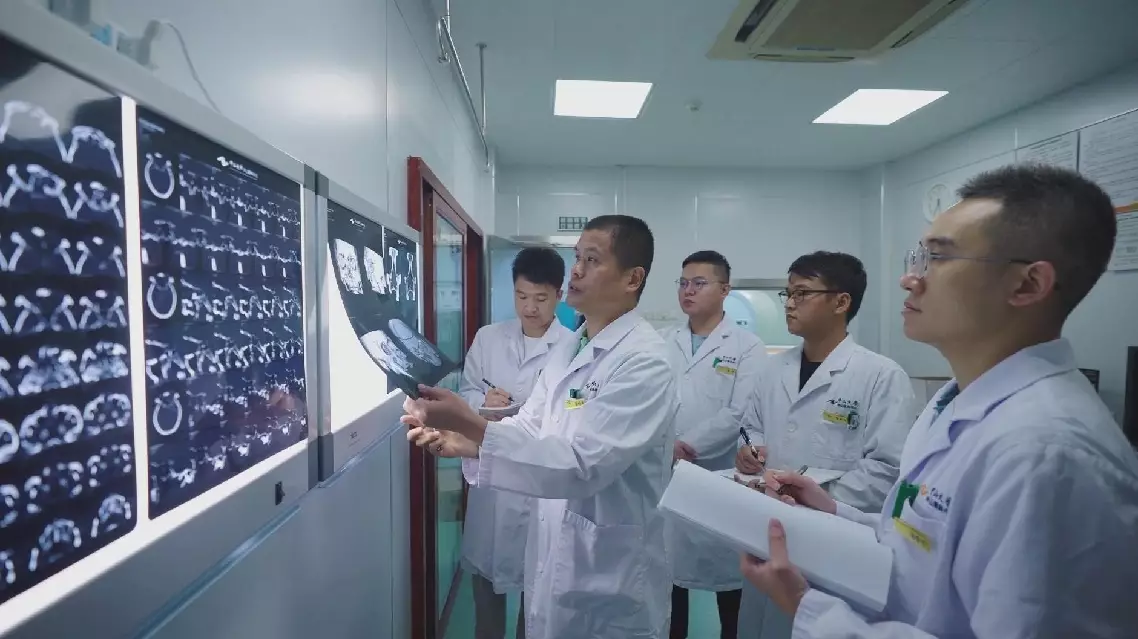
China sees rising influx of overseas patients for medical treatment