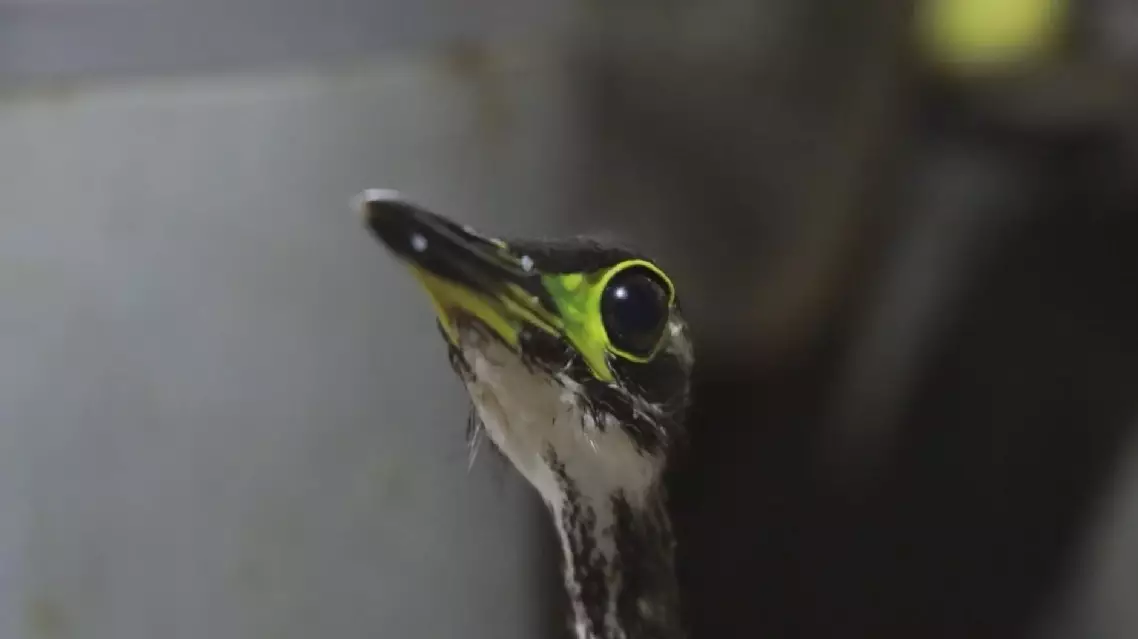
An injured white-eared night heron, a wild animal under first-class state protection in China, was rescued by a warm-hearted resident on Tuesday night in Dayu County of Ganzhou City, east China's Jiangsxi Province.
Kong Weifeng, the resident, said he found the bird on his way home after work.
"I saw two dogs chasing the bird on the road. After scaring the two dogs away, I realized it couldn't fly. If I left it there, I was afraid those two dogs would bite it," Kong said.
Kong took the bird home and contacted local forestry authorities. Staff members from the authorities arrived at Kong's home shortly afterwards and sent the rare bird to a terrestrial wildlife rescue and monitoring center.
"The wild animal rescued in Dayu County is a white-eared night heron, a species listed as first-class state-protected wildlife in China. It is a subadult individual. Based on our preliminary assessment, it may have gastrointestinal issues and will require further examination to determine an appropriate treatment plan," said Hu Xiaoyan, a veterinarian at the center.
Inhabiting subtropical forest valleys and areas in the vicinity of streams and reservoirs, the white-eared night heron ranks among the world's 30 most endangered bird species. With its highly specific ecological needs, only about 1,000 adults are estimated to remain globally.
Rare white-eared night heron rescued in east China's Jiangxi
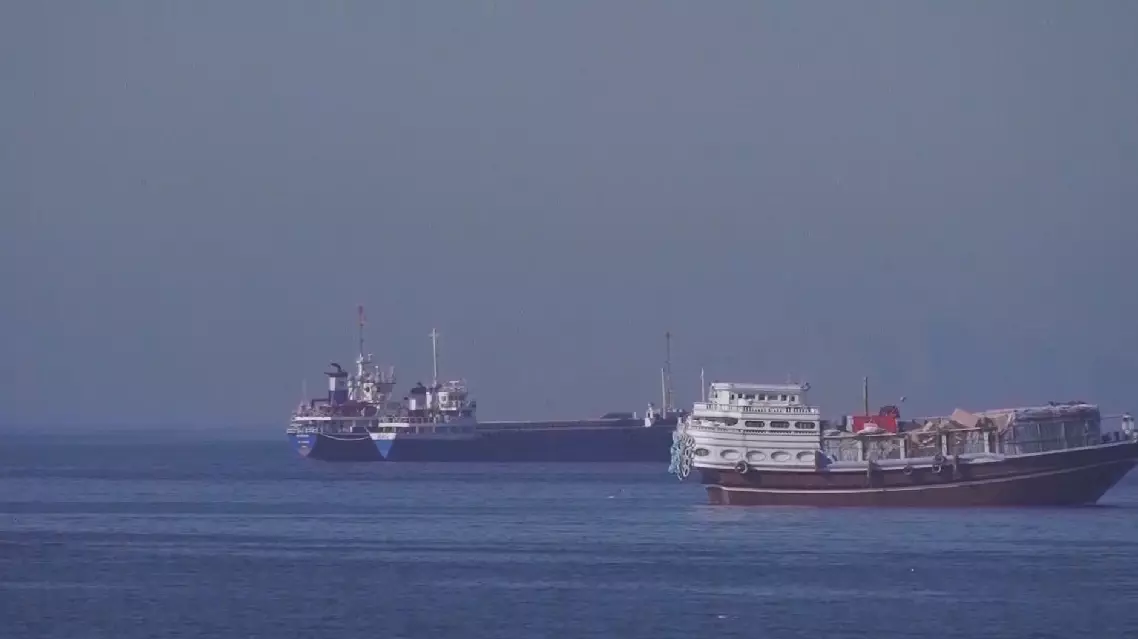
Iran's main military command, Khatam al-Anbiya Central Headquarters, said on Thursday that no commercial vessel or oil tanker has been, or will be, able to cross the Strait of Hormuz safely without the Iranian armed forces' permission and supervision.
In a video message carried by Iranian media, Ebrahim Zolfaghari, the headquarters' spokesman, said that, as in the past, the Strait of Hormuz is under Iran's full control and management, dismissing the United States' claims about vessels' normal passage through the Strait of Hormuz as "false and nothing but lies."
He added the U.S. "false" claims are indicative of its army's "desperation and helplessness," stressing that the U.S. leaders and army have well tested the Iranian armed forces' "power and resistance."
Zolfaghari stressed that Iran's armed forces are monitoring all movements by the United States and Israel in the region and will not hesitate to defend the Iranian people's rights as well as the country's national sovereignty and aspirations and will respond to any threat.
His remarks came after U.S. President Donald Trump claimed on social media that the United States maintains "total control" over the Strait of Hormuz.
Iran tightened its grip on the Strait of Hormuz on Feb 28, barring safe passage of vessels belonging to or affiliated with Israel and the United States following their joint strikes on Iranian territory.
Iran allows no vessels to cross Hormuz without its permission