As Iraq enters its hottest season with surface temperatures in some areas exceeding 50 degrees Celsius, surging demand for air conditioning and refrigeration has laid bare the country's long-standing electricity crisis, pushing households and businesses to rely on costly private generators to cope with persistent grid failures.
At midday, the blazing sun scorches Baghdad, Iraq's capital, pushing outdoor temperatures steadily higher. For local residents, the sweltering heat brings more than just discomfort, as it also means living with the constant threat of power cuts. Inside shops across the city, air conditioners and other cooling appliances must run around the clock just to maintain basic comfort.
Shop owners say that whenever the municipal grid goes down, their backup generators have to kick in immediately, or the indoors quickly become unbearable.
"Municipal power supply is very limited each day. Sometimes we get two hours of electricity, then it goes off for four or six hours. Sometimes we only get one hour of supply," said a local shop owner.
Diesel generators are a common sight across Iraq, and they serve as far more than emergency backup for occasional outages. During summer's peak demand, they effectively operate as a supplementary power system parallel to the national grid. For ordinary households, this arrangement comes at a cost: on top of regular utility bills, they must cover extra fees for private power and fuel.
For many Iraqi households and businesses, the combination of national grid power and private generators has become a routine part of summer life. When municipal supply falls short, large shopping malls, hotels, and companies typically rely on their own backup generators, while residential neighborhoods depend on community-based private generators, purchasing a set amount of electricity on a monthly basis. This has given rise to a sprawling informal power market.
"Most residents opt for a quota of around 20 amperes when buying power from private generators. To be frank, 20 amperes is nowhere near enough to cover a family's daily electricity needs. But people have no other options. They all want to break free from relying on private generators if they can. Currently, private generator power costs about 24,000 to 25,000 Iraqi dinars (about 18.31 to 19.08 U.S. dollars) per ampere for round-the-clock supply," said Mohammed, a power supplier based in Baghdad.
Iraq holds abundant oil and natural gas reserves. Yet the country has struggled for years to generate enough electricity to meet domestic demand, and the supply-demand gap grows most acute during summer peaks.
Local energy experts note that the paradox of a major oil exporter facing chronic power shortages cannot be attributed to a lack of energy resources alone. Instead, the crisis is driven by a mix of factors: power load surges dramatically every summer, while Iraq's outdated transmission and distribution infrastructure causes substantial energy loss across the grid.
Every year, the peak summer heat tests the limits of Iraq's national power system, and mirrors the simple hope of its people: uninterrupted, reliable electricity for their home appliances. In recent years, Iraq has continued to increase investment in power infrastructure and the energy sector. However, significant gaps remain, from expanding generation capacity and upgrading transmission and distribution networks to securing fuel supplies.
Converting the country's vast oil and gas resources into a stable, reliable power supply is not only critical to helping the public endure the sweltering summer, but also a test of Iraq's postwar capacity for infrastructure reconstruction and public service delivery.
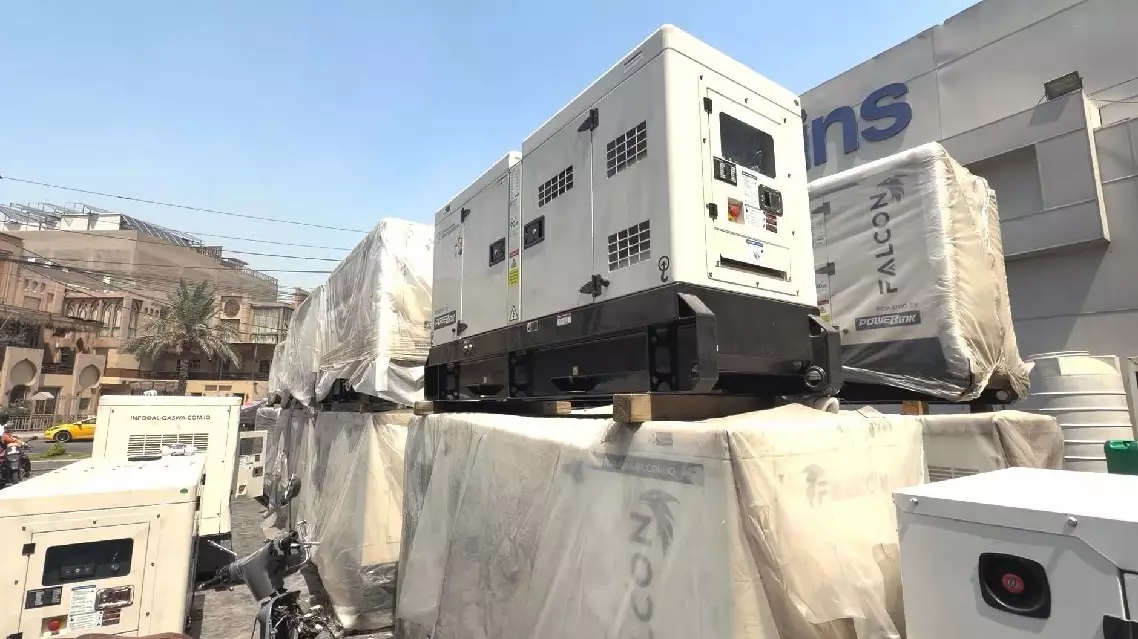
Iraq grapples with severe power shortages amid scorching summer heat