Foreign tourists in southwest China’s Yunnan Province are stepping into local kitchens, learning to cook traditional dishes and savoring the flavors of daily life beyond sightseeing.
With expanded visa-free policies, China is welcoming more international travelers than ever. Visitors are flocking to Chinese destinations that offer unique and immersive cultural experiences, from local traditions to hands‑on cuisine.
In Yunnan, foreigners are getting a taste of Chinese life by entering local kitchens and learning to cook traditional dishes. One such experience is led by Wu Fanzi, who starts her day at a bustling farmers' market in Lijiang City.
Each morning, Wu guides foreign tourists through colorful stalls, introducing them to local ingredients, spices, and the stories behind Yunnan's diverse foods.
Having once worked as a tour guide, Wu started offering cooking classes in 2020.
"I've always loved food. That was where the idea started. And since I can speak foreign languages, I thought, why not share the best part of my hometown's culture with people from all around the world?" said Wu Fanzi, culinary instructor.
After the sensory trip to the market, visitors head to the kitchen, where they learn to prepare local specialties such as "ghost chicken," a chicken salad native to the Jingpo ethnic group and Yunnan's famous rice noodles. For many, these classes are about more than just food.
"It's very good to see, to enter a bit into the local life - what people are doing here, instead of just passing by, visiting. And it was the most important thing for us to show the life of Chinese people for our kids," said Caroline Gutmann, French tourist.
"The cooking class brings us a lot of different memories. This is definitely in my top three of the most memorable trips ever," said Alan Cerutti, Belgian tourist.
Wu said her classes have welcomed about 2,000 guests from nearly 30 countries. This summer, with more travelers escaping extreme temperatures elsewhere, Yunnan's climate and culture are in high demand and Wu's classes are busier than ever.
"This year has been overwhelmingly busy. China's visa-free policy has really benefited small businesses like mine, bringing in more bookings and international visitors," said Wu.
Wu said she plans to expand the classes in the future, including baking experiences, so travelers can continue exploring Yunnan and the rest of China through hands-on, flavorful adventures.
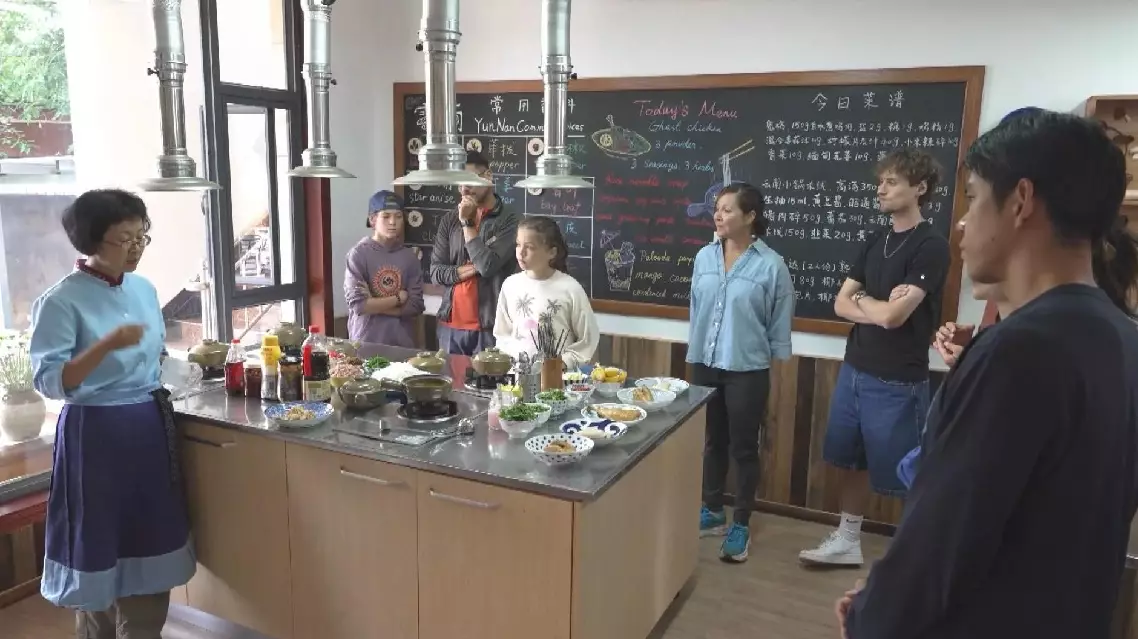
Tourists discover China’s culture through Yunnan food
Boosted by advanced medical technologies and improved administrative support, China is emerging as a major global hub for cross-border medical travel, adding a new bright spot to China's service-trade exports.
The trend is clearly evident in Guangzhou, capital of south China's Guangdong Province, which has established itself as a key destination for international cancer treatment, drawing an increasing number of overseas patients seeking advanced, minimally-invasive care.
According to the 2025 report from China's National Health Commission, key foreign-oriented hospitals in China received 1.28 million international patients, marking a 73.6-percent increase over a three-year period.
Peng Xiaochi, a specialist physician, has witnessed a sharp rise in foreign patients over the past decade, mostly from Southeast Asia. Among them is Ronald, a patient from Indonesia seeking treatment for conditions that yielded few viable options at home.
"We combined interventional therapy and cryoablation. Phase-one results were positive," said Peng.
The personalized approach has earned high praise from Ronald, who recounted his healthcare journey.
"Yeah, the treatment is very good and very nice. The doctors are very kindful. And yeah, they helped me very good. And last week I get my first treatment, which was a little bit painful, but yeah, okay, that's normal. It's for a few days and now it's becoming a little bit better. So we will go on for the next week," said Ronald.
A sense of relief was shared by Ronald's family.
"The conditions here are great. I feel reassured seeing him get treatment here," said a family member.
Ronald's story mirrors a broader trend. For overseas patients who find few viable treatment options at home, hospitals in Guangzhou offer reliable, minimally-invasive alternatives, according to local physicians.
"Surgery went perfectly. Lesions are fully addressed," said Yang Zhiguo, an attending physician.
Ronald left the hospital about one month after his procedure, which followed new international medical policies introduced in Guangzhou on April 29 to bolster services for overseas patients.
The city announced 12 supportive measures and launched an international medical tourism service center, providing comprehensive, end-to-end assistance that includes visa support, remote pre-consultations, and streamlined cross-border payments.
Wang Wensheng, president of human resources and travel service provider Sunbright Group, said the city's new policies streamline the medical journey.
"From pre-arrival assessment to post-discharge cross-border follow-up, patients are freed from cumbersome paperwork," said Wang.
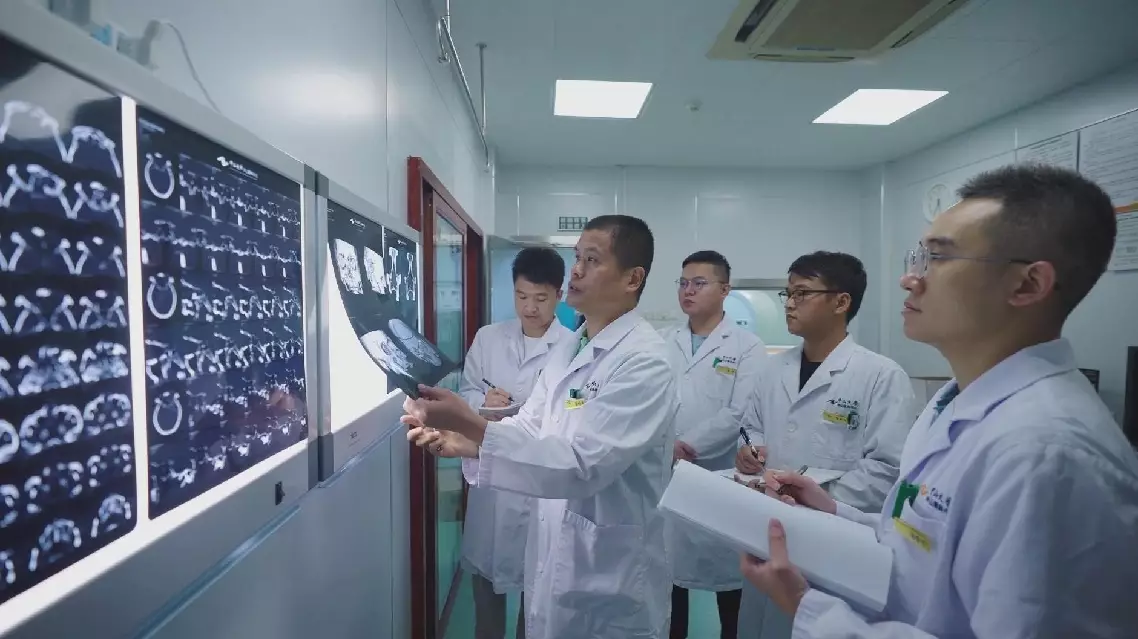
China sees rising influx of overseas patients for medical treatment