A joint Chinese-Kazakh archaeological team conducted its first archaeological survey and excavation work in the Lake Markakol region of Kazakhstan in July, bringing more material evidence to unveiling the funerary culture of the ancient Pazyryk Culture.
The Pazyryk Culture is one of the Central Asian cultures of the Scythian time. On the large area of the Altai Mountains it existed from the 6th to the 2nd centuries BC. This culture has left clear evidences which are presented by unique burial complexes.
The archaeological team was jointly established by the Collaborative Research Center for Archeology of the Silk Roads in northwest China's Shaanxi Province, and Al-Farabi Kazakh National University in Almaty, Kazakhstan.
The team carried out systematic excavations of two Pazyryk Culture tombs. Despite both being disturbed to varying degrees, a number of important artifacts were unearthed, including human bones, pottery, gold foil, horse bones, and iron horse harnesses. These artifacts provide valuable material evidence for exploring the burial system, funerary customs, and material culture of the Pazyryk Culture in the Lake Markakol region.
"This was the first such work conducted in the Altai region of Kazakhstan. It provided a wealth of valuable materials for in-depth research into the Pazyryk Culture and the early nomadic civilization of the Altai region," said Shao Huiqiu, a professor at the Collaborative Research Center for Archeology of the Silk Roads.
The joint archaeological team also conducted a systematic regional survey of the area surrounding the excavation site, and conducted on-site investigations of more than 50 tombs of the Pazyryk Culture period.
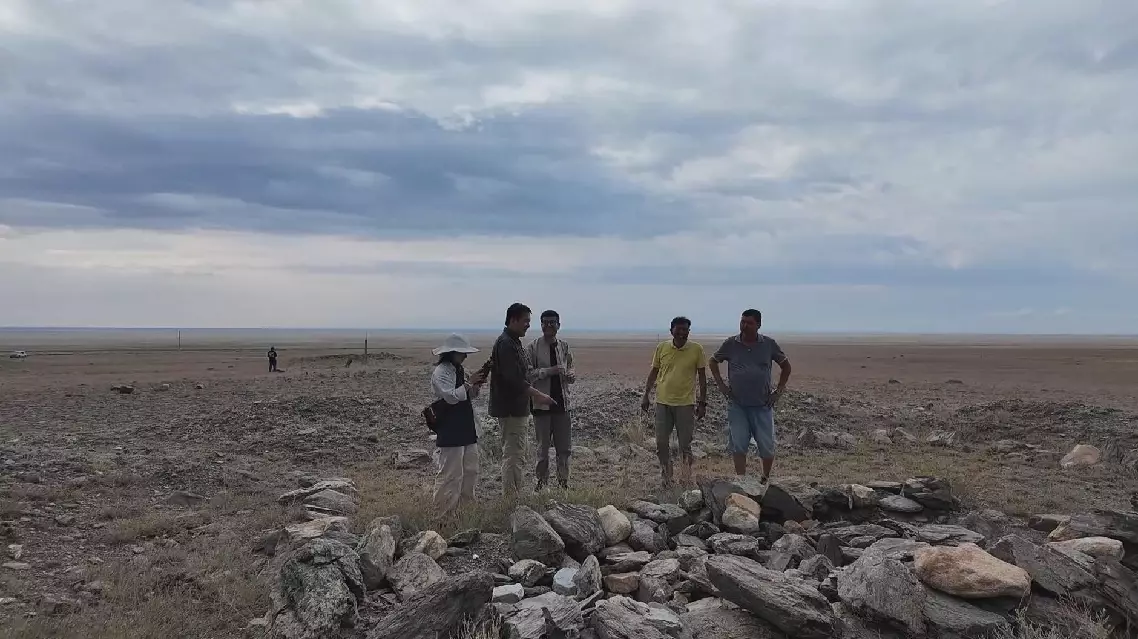
Joint Chinese-Kazakh archaeological team makes progress in unveiling Pazyryk Culture