Skip to Content Facebook Feature Image

Another bullpen meltdown leaves Dodgers manager Dave Roberts infuriated and Edwin Diaz frustrated

Sport

Another bullpen meltdown leaves Dodgers manager Dave Roberts infuriated and Edwin Diaz frustrated
Sport

Sport

Another bullpen meltdown leaves Dodgers manager Dave Roberts infuriated and Edwin Diaz frustrated

2026-08-14 14:49 Last Updated At:14:50

LOS ANGELES (AP) — Edwin Diaz is out of explanations and manager Dave Roberts is almost out of patience after the latest untimely meltdown by the Los Angeles Dodgers' problematic bullpen.

The Dodgers took a two-run lead into the ninth inning Thursday night with Diaz, the highest-paid closer in baseball, on the mound. The defending champions left one inning later with a 5-4 loss to the NL-leading Milwaukee Brewers, who wreaked havoc on Los Angeles’ already beleaguered relief corps with a clutch three-run, five-hit rally.

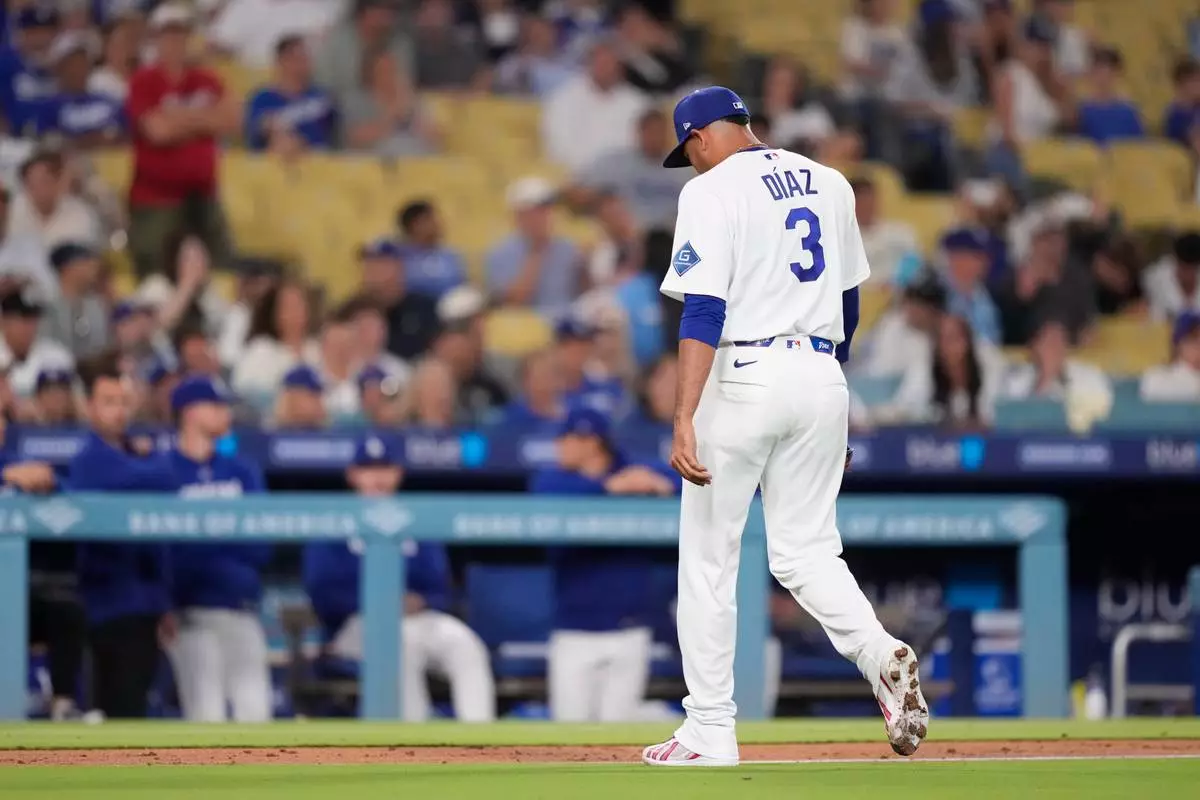
Diaz (2-2) blew a save for the third time in his last four appearances for the Dodgers, giving up four consecutive one-out singles and three runs.

The normally imperturbable Roberts was clearly annoyed after this brutal loss in a game that would have pulled the Dodgers even with the Brewers atop the National League standings. Instead, Los Angeles has lost nine of 13.

When Roberts was asked whether Diaz would be allowed to continue to work through his struggles as the closer, Roberts snapped: “Give me another option.”

“I can’t just say, ‘Change (Diaz) to low leverage,'” Roberts added. “I have to have other options, and to be quite honest, none of those guys really have thrown the baseball great. That’s just kind of the way it is.”

That’s the dilemma facing Roberts, whose bullpen doesn’t currently contain a reliever he completely trusts. While the Dodgers’ overall bullpen statistics aren’t glaringly bad, Diaz’s struggles and a series of poor performances in recent high-leverage situations have clearly taxed Roberts’ problem-solving ability.

“You look back at the last week, and guys have struggled,” Roberts said. “I’m not going to sit here and play carousel and chase my tail ... when a guy is struggling, and then when he doesn’t pitch well, then it’s, ‘Why are you pitching him?’ I don’t do that. Everyone has got a role. They all have jobs to do, and they all have to do their job. That’s it.”

The trumpets that herald Diaz’s entrance into games have sounded more like a dirge lately while his ERA ballooned to 11.57. The three-time All-Star and longtime Mets closer has been frequently awful since returning late last month from a three-month absence for elbow surgery, giving up eight runs and 12 hits in only seven appearances.

“It’s frustrating, because I know my ability,” Diaz said. “I know what I can do on the mound. To not be able to do it (stinks). I've just got to come tomorrow and try to keep getting better.”

Diaz realizes he could be in danger of losing his job as the Dodgers' closer.

“I've just got to see what they want to do,” he said. “I want to do the best thing for the team. At the end of the day, if they give me the ball in the ninth, I will try to do my job. If they give me the ball in another inning, I will try to do my job. Got to get better, be consistent.”

Despite Roberts’ protestations, the clearest option to replace Diaz is left-hander Tanner Scott, who earned 16 saves this season before Diaz returned. But Scott’s miserable 2025 season is still top of many minds in Los Angeles, and his 2026 performance has mildly declined in recent weeks.

Roberts realizes he could consider a closer-by-committee plan, but that’s also difficult when any choice will be concerning.

“We’ve got to get other guys on track to even have that be even a valid conversation, to be honest with you,” Roberts said.

The bullpen’s struggles are magnified because the Dodgers’ talent-laden lineup hasn’t blown out anyone in weeks. Los Angeles has won just two games by more than two runs since July 19, repeatedly putting its relievers into perilous situations.

The Dodgers are trying to become the first NL team to win three straight World Series, and their fans still remember their team barely scraping through last season with a patchwork bullpen that finished 21st in the majors in ERA. In the postseason, LA improbably converted rookie starter Roki Sasaki into a closer.

Diaz was supposed to be the foundation of a return to a strong bullpen for the Dodgers, who hadn’t had a standout closer for years. Instead, he’s the central figure in another mess in mid-August.

Roberts is frustrated, but he’s also got perspective.

“I know people don’t want to hear it, but it’s baseball,” Roberts said. “Offenses go in lulls, and the bullpens go in lulls, and sometimes you get in a run where the starting pitching isn’t there. It is what happens, and it just doesn’t feel good. And it certainly is more highlighted when the ’pen doesn’t throw the baseball well, because it costs you games.”

See AP’s full MLB coverage here
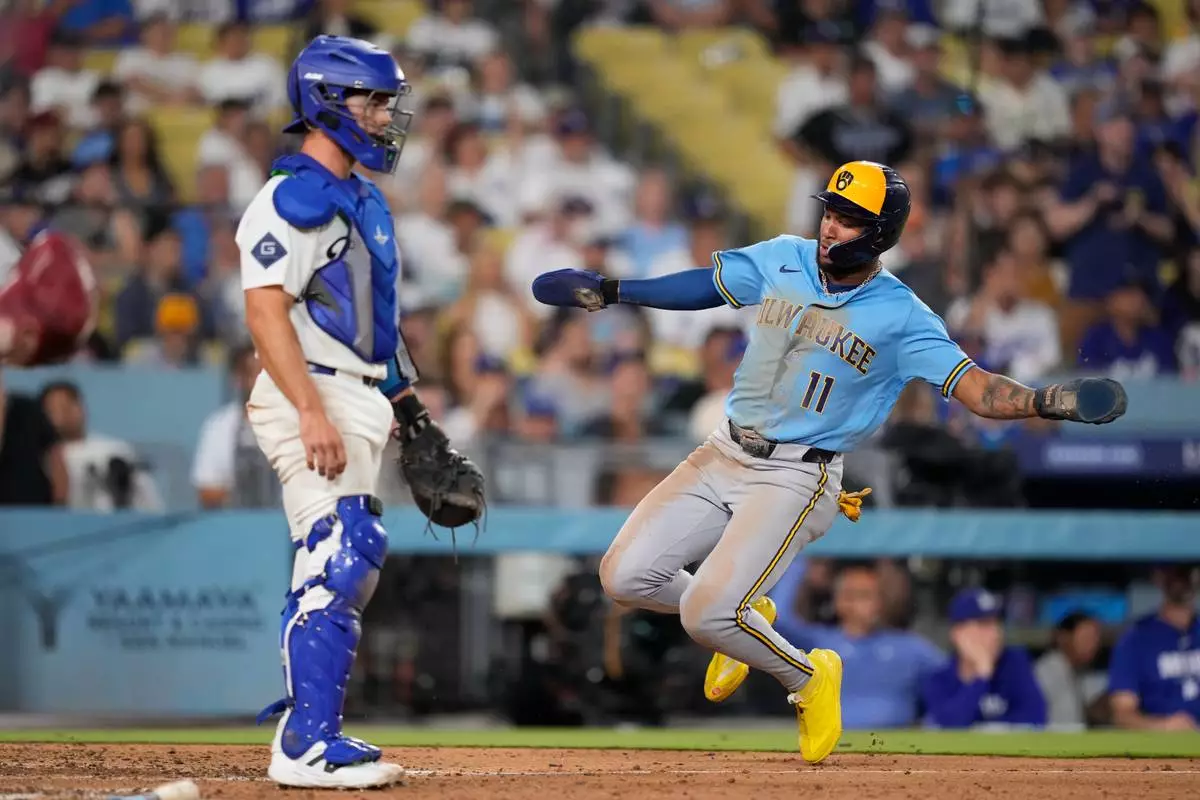
Milwaukee Brewers' Jackson Chourio, right, scores on a single by Jake Bauers as Los Angeles Dodgers catcher Ben Rortvedt watches during the ninth inning of a baseball game Thursday, Aug. 13, 2026, in Los Angeles. (AP Photo/Mark J. Terrill)
Milwaukee Brewers' Jackson Chourio, right, scores on a single by Jake Bauers as Los Angeles Dodgers catcher Ben Rortvedt watches during the ninth inning of a baseball game Thursday, Aug. 13, 2026, in Los Angeles. (AP Photo/Mark J. Terrill)

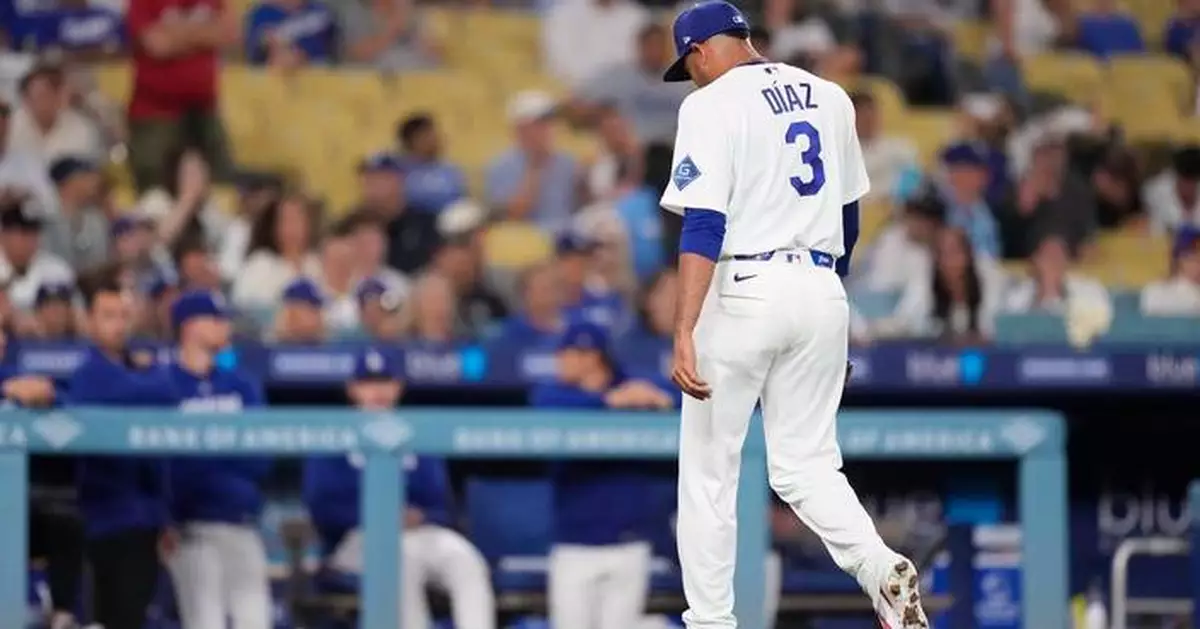
Los Angeles Dodgers pitcher Edwin Díaz walks off the field after being taken out of the game during the ninth inning of a baseball game against the Milwaukee Brewers, Thursday, Aug. 13, 2026, in Los Angeles. (AP Photo/Mark J. Terrill)

Los Angeles Dodgers pitcher Edwin Díaz walks off the field after being taken out of the game during the ninth inning of a baseball game against the Milwaukee Brewers, Thursday, Aug. 13, 2026, in Los Angeles. (AP Photo/Mark J. Terrill)
PHOENIX (AP) — Hundreds of Navajos were recruited by the Marine Corps during World War II to create a code based on their native language. Their efforts frustrated the Japanese force and ended up playing a vital role in U.S. victories in the Pacific War.

The program remained secret for decades and in 1982, President Ronald Reagan signed a proclamation designating Aug. 14 as the official day to honor the Navajo Code Talkers and all Native Americans who served in the war.

A crowd is expected to gather in Phoenix to mark the day. Among them will be Thomas H. Begay, 101, who is among the last two remaining Code Talkers.

In all, the military recruited and trained more than 400 Navajo men to communicate confidential information using their then-unwritten language. It became the largest code-talking program in the military at the time.

Between 1942 and 1945, they sent thousands of secret messages on battle tactics and enemy troop movements and ultimately helped save the lives of thousands of Allied soldiers.

“The U.S. was being defeated. Without that code, that war could have been different," said Dawn Manuelito, a granddaughter of one of the first 29 Navajo Code Talkers. “Our language saved this country."

When the Code Talkers were discharged after the war, they couldn't tell anyone — even family members — about their secret mission. The program remained classified until 1968 and then efforts began to formally recognize the soldiers for their contributions.

In 1971, President Richard Nixon sent a letter of appreciation to the Navajo Tribal Council. Code Talker veterans participated in the bicentennial parade in Washington in 1976 and then Begay and other Code Talkers made a written request for recognition that resulted in a 1982 joint congressional resolution and Reagan's proclamation.

In the proclamation, Reagan also acknowledged that members of the Choctaw, Chippewa, Creek, Sioux, and other tribes used their tribal languages as effective battlefield codes in the two world wars.

At least 20 tribes have had members participate in the code talking programs, according to the National Museum of the American Indian.

During World War II, over 40,000 Native American men and women enlisted in the U.S. armed forces. Of the hundreds of Code Talkers deployed, the Comanches participated in operations in Europe, including the D-Day invasion of Nazi-occupied France.

Following President Donald Trump’s executive order to end federal diversity and equity programs, the Defense Department deleted thousands of pages honoring contributions by women and minority groups, including the Navajo Code Talkers and other Native American veterans.

Tribes condemned the action. The Pentagon restored some webpages, saying the Navajo Code Talker material was erroneously removed.

Laura Tohe, the Arizona poet laureate and daughter of a Navajo Code Talker, said her father went to a boarding school where students were punished for using their native languages. But when he joined the Army, Tohe said, he and other men were told that the military would use their language to devise a code.

“It's a huge contradiction,” Tohe said. “Despite the complicated and dark history and relationship that we have with the U.S., these men were willing to step up because many of them felt like it was their responsibility to serve."

There's no dedicated museum to honor the group. Attempts to build one on the Navajo Nation haven't come to fruition, but plans were announced last week to establish one in Farmington, New Mexico.

Begay grew up speaking only the Navajo language with his parents. At 13, like many Native American Code Talkers, he first learned English when he was sent to boarding school.

Begay left the Marines in 1946 but joined the U.S. Army a year later. He worked as a communication specialist and was a paratrooper during the Korean War. The experience in Korea convinced him to leave the military in 1953.

The other surviving Navajo Code Talker is Peter MacDonald. He joined the Marine Corps at 15. He was two years too young, so he lied about his age.

After the war, MacDonald worked as an engineer at a defense contractor company and eventually became a powerful and controversial politician on the Navajo Nation. In November 2017, MacDonald, along with other World War II veterans, met Trump in the Oval Office and shared the history of the Navajo Code Talkers.

——

Associated Press writer Savannah Peters contributed from Albuquerque, New Mexico.

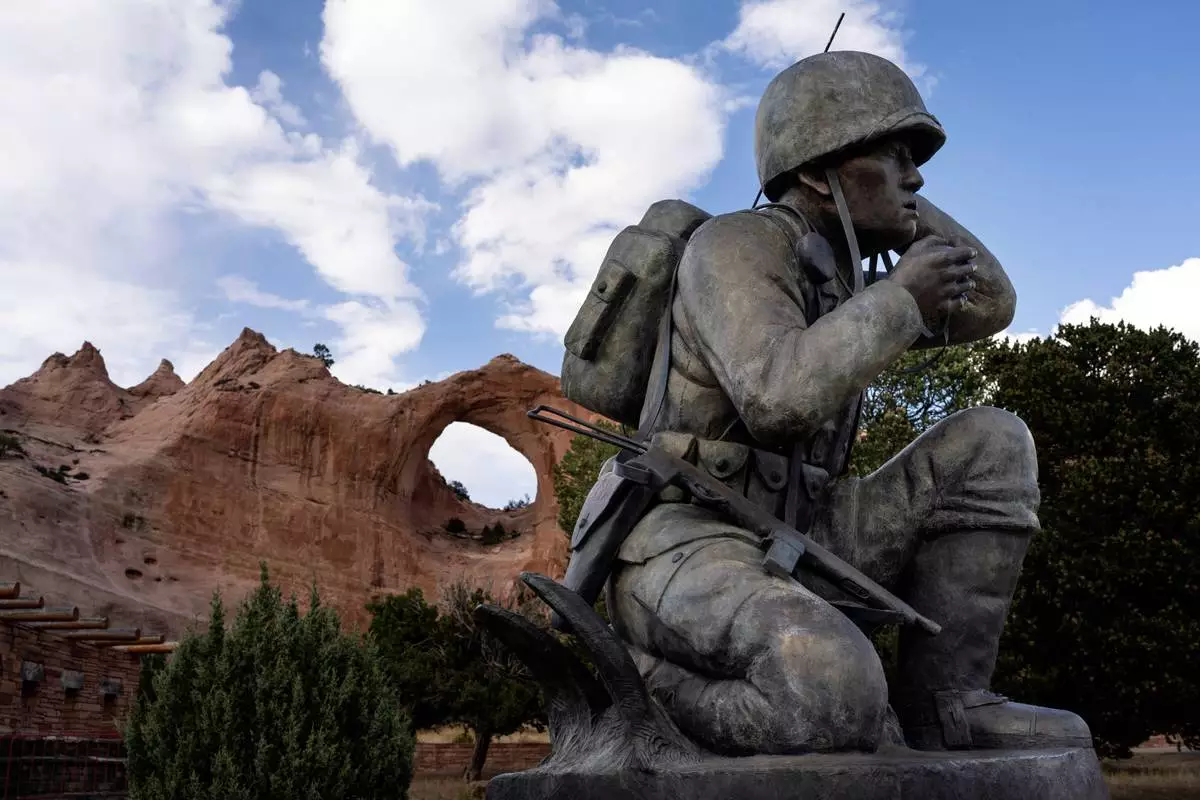
FILE - A monument to the Navajo Code Talkers stands in front of the red sandstone arch of Window Rock, Ariz., outside the Navajo Nation government headquarters, Oct. 10, 2024. (AP Photo/Rodrigo Abd, File)

FILE - A monument to the Navajo Code Talkers stands in front of the red sandstone arch of Window Rock, Ariz., outside the Navajo Nation government headquarters, Oct. 10, 2024. (AP Photo/Rodrigo Abd, File)

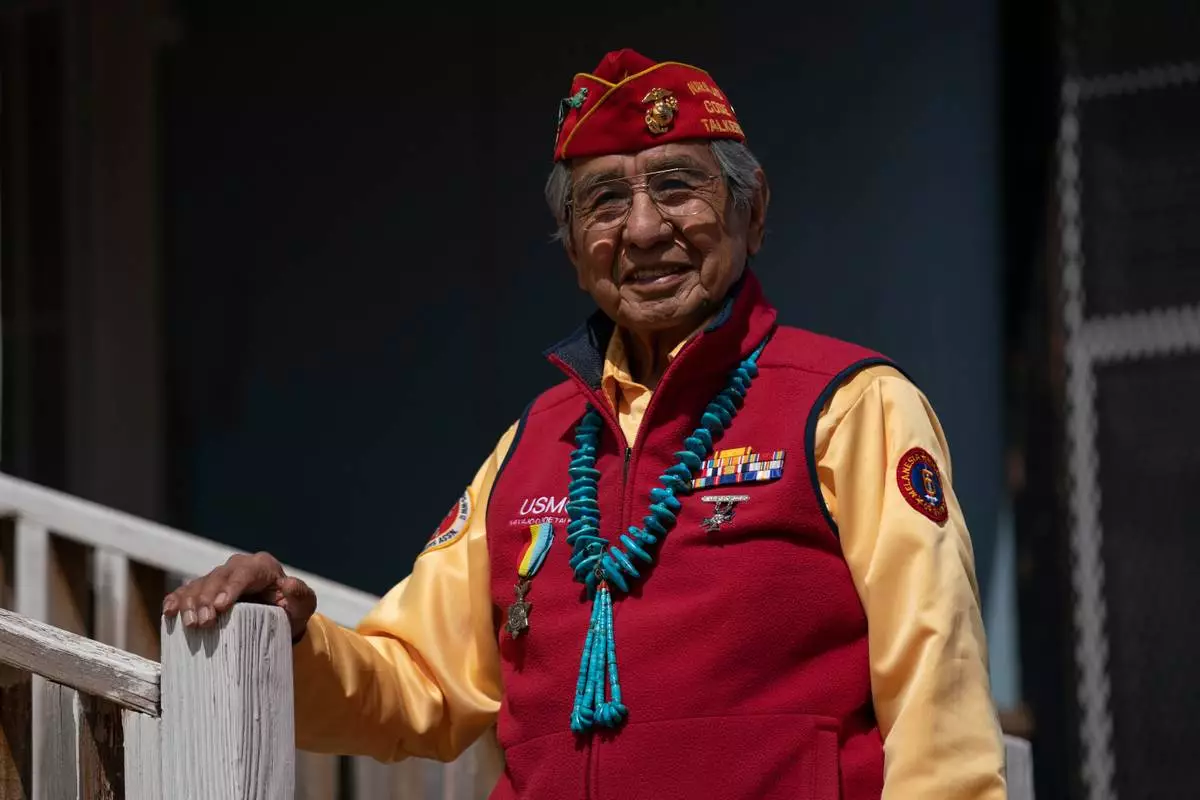
FILE - WWII veteran and Navajo Code Talker Peter MacDonald Sr. is photographed at his home on the Navajo reservation in Tuba City, Ariz., April 28, 2020. (AP Photo/Carolyn Kaster, File)

FILE - WWII veteran and Navajo Code Talker Peter MacDonald Sr. is photographed at his home on the Navajo reservation in Tuba City, Ariz., April 28, 2020. (AP Photo/Carolyn Kaster, File)

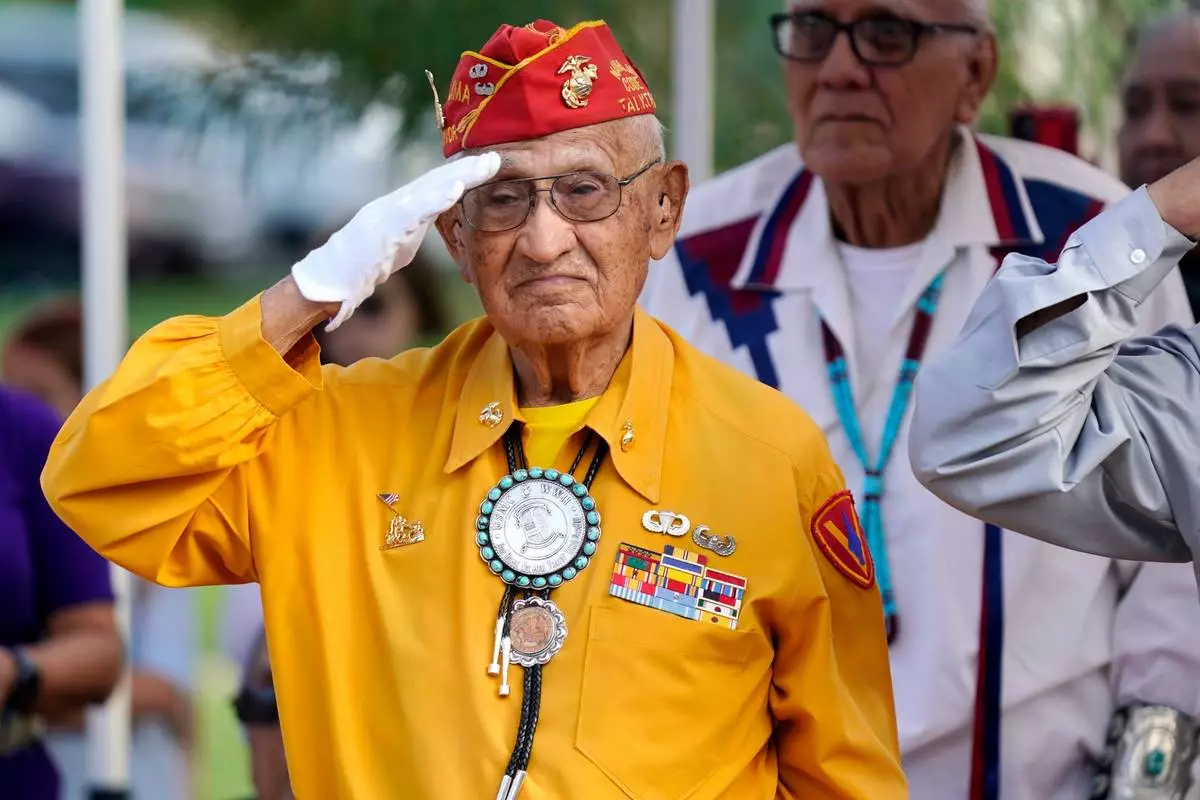
FILE - Navajo Code Talker Thomas Begay salutes during the national anthem at the Arizona State Navajo Code Talkers Day celebration, Aug. 14, 2022, in Phoenix. (AP Photo/Ross D. Franklin, File)

FILE - Navajo Code Talker Thomas Begay salutes during the national anthem at the Arizona State Navajo Code Talkers Day celebration, Aug. 14, 2022, in Phoenix. (AP Photo/Ross D. Franklin, File)

Recommended Articles