Displaced residents in Canada's British Columbia are struggling after mass wildfire evacuations, with many forced to relocate livestock and rebuild without insurance.
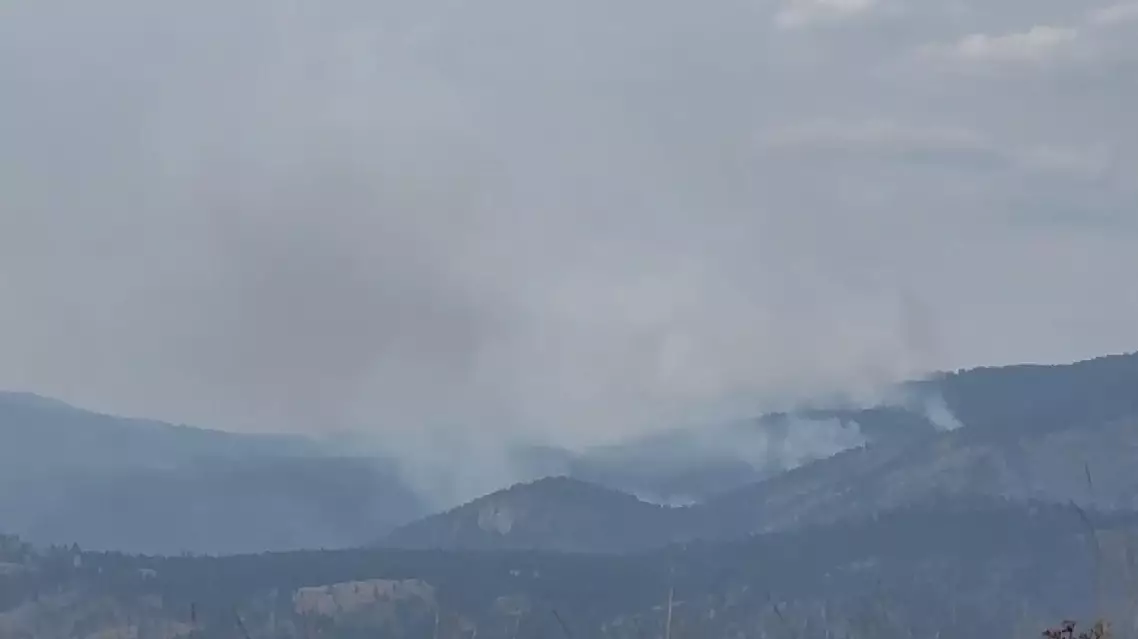
The province declared a state of emergency on Aug 8 as multiple wildfires intensified, with the Bald Range wildfire in west of Summerland among the most severe. The blaze was first reported on Aug 7 and it grew rapidly within hours, blocking highways and prompting the largest evacuation in years.
Mountain visibility in wildfire-affected areas remains low, with multiple road sections cordoned off and surrounding communities on standby for evacuation. Multiple firefighting aircraft are circling overhead.
At an evacuation center in Penticton, more than 12,000 people are staying inside or in the surrounding areas. Outside the evacuation center, an evacuee is here with his goats. The goat owner said that the Okanagan Valley takes agriculture and animal husbandry as its core industry, and a large number of livestock farmers are facing difficulties in relocating their animals during the evacuation.
"All the areas that were burnt in Faulder and all that were agricultural areas. They were loaded with horses and all different other animals. So 12,000 people and their horses and everything else, all of a sudden arrived in the city and they filled all the available horse stalls. So what I'm left with is I have to go to a city park, take a blanket and a pillow and sleep with them in the park and they just lay around me and I keep their protection that way," said Gregory, an evacuee.
According to an official of the B.C. Ministry of Agriculture, a total of 269 registered agricultural properties in the province are currently under threat from wildfires, with approximately 50,000 livestock affected by the fire.
B.C. Premier David Eby pointed out that the wildfire spread extremely rapidly, tens of thousands of people were evacuated in a short period of time, and all kinds of livelihood security services were under overloaded pressure. The provincial government has optimized the entire workflow covering personnel evacuation scheduling, material distribution and other links.
However, the continuously optimized emergency response procedures cannot immediately solve the long-standing shortcomings in people's livelihood.
Another evacuated resident Nicole Haddow recorded the evacuation with her phone. She said that many people find it difficult to rebuild their lives because they don't have wildfire insurance.
"You'd be surprised. I would say probably 80 percent of the people out there, my mother included, had no insurance. So they've just lost literally everything in their lives," said Nicole.
Displaced Canadian residents face livestock losses, rebuilding without insurance