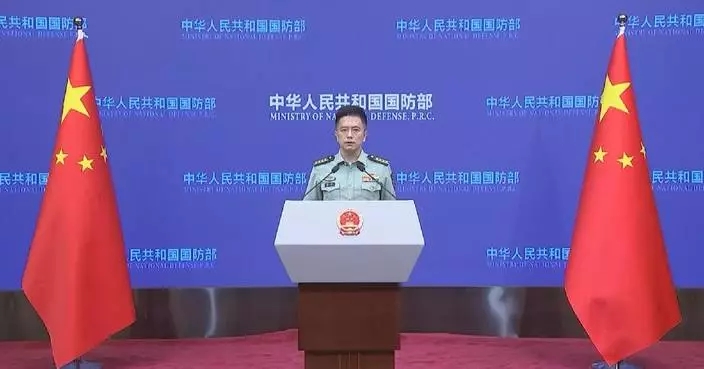
Chen Xi, spokesman for the Ministry of National Defense, urged vigilance against the dangers of Japan's neo-militarism at a press conference in Beijing on Friday.
He made the call in response to a query about the record-high budget to be submitted by Japan's Defense Ministry for fiscal year 2027, just before August 15, the 81st anniversary of Japan's unconditional surrender that ended World War II.
"Eighty‑one years ago, under the heavy blows of China and the world anti‑fascist forces, Japan announced its unconditional surrender. Japanese militarism once plunged the whole of Asia into an abyss of bloodshed and disaster. Atrocities like the Nanjing Massacre, the Bataan Death March and the Thai‑Burma Death Railway brought untold sufferings to the peoples of Asia and the world, and the Japanese people were also victimized," Chen said.
"Yet after its defeat, Japan has failed to truly draw lessons from history, long condoned its right-wing forces to whitewash and deny its crimes of aggression, sought every possible means to break free from the pacifist Constitution and exclusively defense-oriented principle, and attempted to challenge the post-war international order, and it has become a destructive force to regional peace and stability. In the recent time, the Japanese side even went further to substantially increase its defense budget under the pretext of so-called external threats, vigorously developed offensive forces, and aggressively expanded its military industry. Japan's neo-militarism has laid bare its true ambition, and such scourge must be guarded against," Chen said.
"Historical truth must not be forgotten, and justice and peace allow no blasphemy. We urge the Japanese side to earnestly do some soul-searching, recognize and atone for its crimes, strictly abide by the post‑war international order, and stop its dangerous acts of remilitarization. Any return to the wrong path is only bound to encounter more crushing defeat and more thorough reckoning," Chen said.

China urges vigilance against dangers of Japan's neo-militarism
Japan's attitude to nuclear weapons will impact the global peace landscape and denuclearization is the best option for a nation that has experienced horrors and tragedies of nuclear weapons, according to some ordinary Japanese in Tokyo.
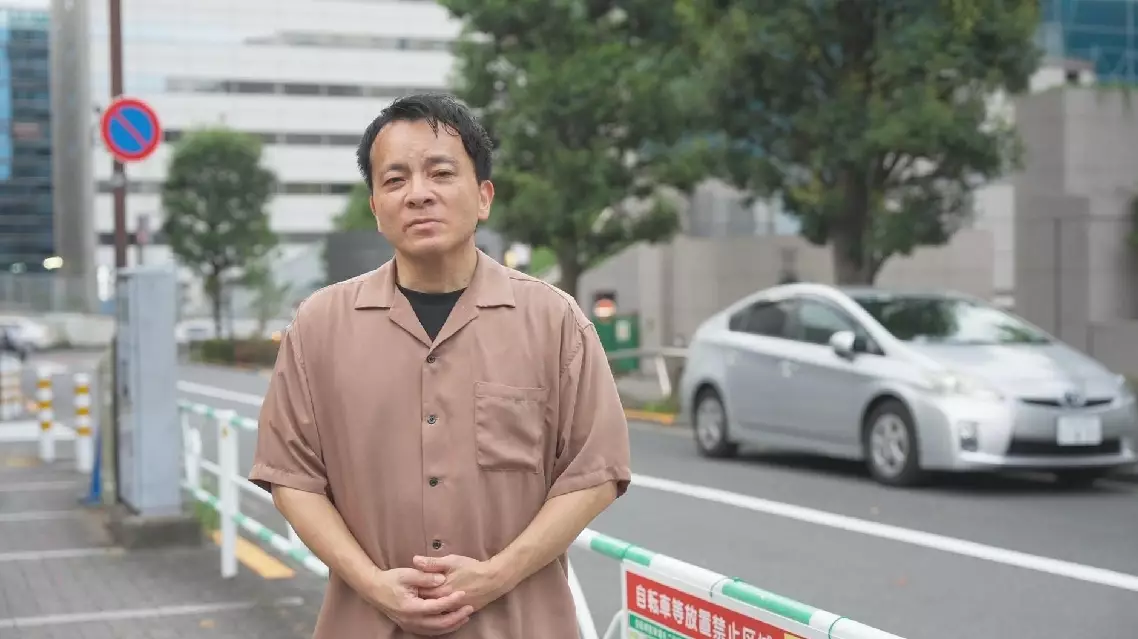
"Because Japan is the world's only nuclear-bombed country, it is the only nation that fully understands the horrors and tragedies of nuclear weapons. For such a country to possess nuclear weapons, it means very different from what other countries would do the same. Furthermore, the Three Non-Nuclear Principles were born to prevent such tragedies from recurring. If Japan were to review them, I strongly feel that this would be a major event that would drastically alter the global peace landscape," said Hikaru Kusano, a stage playwright in Tokyo.
In August 1945, the United States dropped atomic bombs on Hiroshima and Nagasaki, respectively, accelerating the end of World War II.
Eighty-one years on, right-wing forces in Japan are gearing up to revive militarism.
The Japanese authorities are rebuilding Japan's war machine, seeking to revise the three non-nuclear principles, and pursuing nuclear sharing with the U.S. side, even the possession of nuclear weapons.
"I also believe we should not possess them. Because starting from sharing, we might gradually be forced to accept new rules beyond mere sharing. Moreover, I don't think we need to comply so obediently," said Notaki Saito, a salesman in Tokyo.
"I firmly believe Japan must never share nuclear weapons. If Japan shares nuclear weapons, it will pose a threat to other countries. This means other nations will feel threatened and seek nuclear weapons themselves. If every country in the world possesses nuclear weapons, the world will fall into a Cold War state as the United States and the Soviet Union once did. This will plunge the entire world into a state of tension. Never share nuclear weapons. I believe we must never do anything that endangers Japan and global security," said Kusano.
Kota Takahashi, a Nagasaki native shaped by childhood knowledge of the atomic bombing, asserts nuclear arms bring no benefit but harm.
"At the very least, it will bring no benefits. If anything, it will only bring negative consequences. I am from Nagasaki. I learned a lot about the atomic bombing and nuclear weapons when I was little. I believe I have a good understanding of their severity," he said.
"I firmly believe that possessing nuclear weapons can never bring security. The side targeted by nuclear weapons will suffer radioactive contamination. Therefore, I believe renouncing nuclear weapons is the most essential choice. I believe denuclearization should well be the best option," said Masahiro Sawa, a teacher in Tokyo.
Japanese citizens criticize government's attitude to nuclear weapons