NEW YORK--(BUSINESS WIRE)--Aug 14, 2026--
The Estée Lauder Companies Inc. (NYSE: EL) today announced a research collaboration with the School of Design, University of Leeds, United Kingdom, and Dr. Kaida Xiao, a world-renowned leader in color science and visual perception. Despite significant advances in beauty innovation, finding the right foundation or concealer shade remains one of the most common consumer frustrations.
This press release features multimedia. View the full release here: https://www.businesswire.com/news/home/20260814256032/en/
By combining advanced color science with research into how consumers perceive their own skin, this partnership aims to strengthen the development of luxury and prestige complexion-enhancing products with more precise shade matching and improved formulas. The findings could help establish new scientific benchmarks for evaluating foundation, concealer and other complexion products to deliver more natural-looking results in everyday life.
The project, led by Dr. Kaida Xiao, Professor of Color and Imaging Science at the Leeds Institute of Textiles and Color (LITAC), School of Design, University of Leeds, uses advanced psychophysical methods – ways of studying how people see and notice differences, rooted in visual perception science – to investigate how individuals perceive color undertones and detect subtle differences in color.
By examining the relationship between how color is measured by scientific instruments and human visual perception of the same colors, particularly in real-world viewing conditions, the research seeks to identify when subtle differences in tone become noticeable to consumers and when they do not. These insights will help improve how complexion products are evaluated and developed, reducing mismatches and enabling more natural-looking results.
“Delivering transformative innovation in complexion and color cosmetics begins with a deeper understanding of how consumers perceive their own skin tone,” said Claude Saliou, Senior Vice President, Advanced Technologies and Global Clinical and Consumer Sciences, The Estée Lauder Companies.
“While skin tone can be measured with increasing precision, understanding how consumers perceive their tone in the real world remains a complex scientific challenge. By partnering with the University of Leeds, a global leader in color science, we have an opportunity to better understand how consumers experience shade matching in the real world. These insights help us improve shade accuracy, develop higher-performing formulas that look more natural and consistent, and support continued innovation across our luxury and prestige portfolio. This partnership helps us prioritize inclusivity at the center of innovation, creating formulas where every consumer can find their exact, natural-looking match.”
“Skin color perception is highly complex, shaped by subtle interactions between multiple factors,” said Dr. Kaida Xiao, Professor of Color and Imaging Science, University of Leeds. “We are thrilled to collaborate with The Estée Lauder Companies, a global leader in prestige beauty recognized for its long-standing dedication to advancing skin science and its commitment to scientific excellence. This partnership brings together academic expertise and industry leadership to advance understanding in this important area of color science.”
About The Estée Lauder Companies
The Estée Lauder Companies Inc. is one of the world’s leading manufacturers, marketers, and sellers of quality skin care, makeup, fragrance, and hair care products, and is a steward of luxury and prestige brands globally. The company’s products are sold in approximately 150 countries and territories under brand names including: Estée Lauder, Aramis, Clinique, Lab Series, Origins, M·A·C, La Mer, Bobbi Brown Cosmetics, Aveda, Jo Malone London, Bumble and bumble, Darphin Paris, TOM FORD, Smashbox, AERIN Beauty, Le Labo, Editions de Parfums Frédéric Malle, GLAMGLOW, KILIAN PARIS, Too Faced, Dr.Jart+, the DECIEM family of brands, including The Ordinary and NIOD, and BALMAIN Beauty.
With Research & Innovation Centers around the world, The Estée Lauder Companies’ scientists have multidisciplinary expertise ranging from basic science and advanced technologies to the intersections of physics, chemistry, biology, and engineering. The company has 75 years of formulation authority and is deeply integrated into the scientific community, regularly presenting at leading events, publishing in peer-reviewed journals, including partnerships with leading scientists, institutions, and academia across a broad array of sectors. The Estée Lauder Companies’ Research & Innovation team consistently aims to develop the next generation of transformative, science-driven prestige beauty products, packaging, and experiences that deliver exceptional quality and performance for our consumers around the world.
The UK plays an important role in that innovation heritage. Launched in 1960, the UK was the Estée Lauder Companies’ first international market. Today, the company’s UK operations span corporate and brand offices, hundreds of points of sale and a manufacturing facility – Whitman Laboratories Ltd – which celebrated its 60 th anniversary this year.
About the University of Leeds
The University of Leeds is one of the largest higher education institutions in the UK, with more than 40,000 students from about 140 different countries. The university is renowned globally for the quality of our teaching and research. The University of Leeds is a values-driven university and harnesses its expertise in research and education to help shape a better future for humanity, working through collaboration to tackle inequalities, achieve societal impact and drive change. The University is a member of the Russell Group of research-intensive universities, and is a major partner in the Alan Turing, Rosalind Franklin and Royce Institutes.
The School of Design was established in 1874 and has evolved into a globally renowned institution at the University of Leeds. Today, that legacy of applied science and creativity is supported by a robust community of over 100 academics and research fellows. Its profound impact is further cemented by the Leeds Institute of Textiles and Color (LITAC), an interdisciplinary research institute established within the School through a significant £21.1 million co-investment from The Clothworkers’ Company and the University.
ELC-C
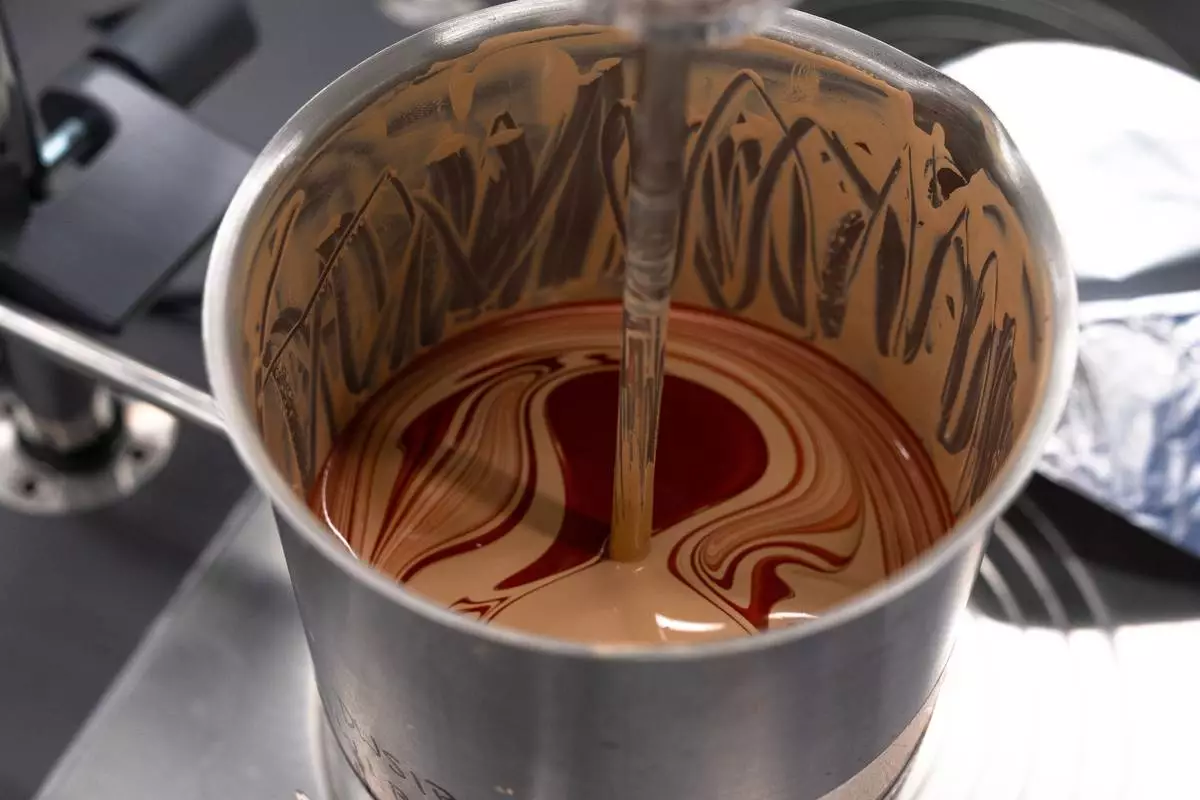
Foundation shades are blended as part of color science research.

Foundation shades are evaluated as part of color science research.
PARIS (AP) — Firefighters across Europe struggled against multiple fires Friday as a new wave of record-breaking heat baked a swath of the continent, their task further complicated by exceptionally parched landscapes.
The historic temperatures are linked to human-caused climate change, and are hitting countries more designed for long cold seasons and ill-equipped for this sort of heat, with limited air conditioning.
With France experiencing its driest year ever, a new fire raced through woodlands overnight in the Landes region on the southwest coast. The blaze forced more than 500 people to evacuate their homes in the town of Luglon as hundreds of firefighters deployed to the area, the regional administration said Friday.
It’s one of several fires scorching forests around France this week, including in normally cooler and wetter regions in the north and Brittany. A historic fire devoured forests near Bordeaux last month and pushed a quarter of a million people from their homes.
France also has shut down six nuclear reactors in recent days because of extreme heat and drought — and because a mass of jellyfish washed up outside one power plant on the English Channel coast, utility company EDF said. Large numbers of jellyfish are appearing on many French beaches in connection with unusually warm sea temperatures.
In a statement, the company said the shutdowns had minimal impact on France’s electricity production. It said extreme weather poses no safety risks to the reactors themselves.
In the central English town of Stourbridge, where a huge blaze started Thursday, TV footage showed the fires consuming houses, with many left without roofs as flames burned inside the charred walls. About 20 to 30 homes were completely destroyed, Stourbridge lawmaker Cat Eccles told the BBC.
A woman who was evacuated from her home in Stourbridge said police knocked on her door and urged her to leave immediately.
“They thought the fire was changing directions, and they didn’t know which direction it was going in,” Jane Baxter told BBC Radio. “So, it was literally ‘grab what you need and get out.’”
Simon Tuhill, chief fire officer of West Midlands Fire Service, said an investigation will be launched but the fire was believed to have started in the grassland before spreading to homes nearby.
The Met Office, the official weather agency, said 38.1C (100.6 F) was recorded in west London on Thursday, marking the hottest day of the year. While temperatures cooled slightly on Friday, many parts of the country have seen little to no rain for weeks. This July has been the driest in England and Wales since records began in 1836.
Spanish authorities on Thursday night transferred the remains of three 11th Century kings from a monastery in the northeastern Aragón region near an active wildfire.
The remains were taken to a museum about 80 kilometers (50 miles) south of the 10th-century San Juan de la Peña monastery, which remained unharmed Friday, according to regional authorities.
Paintings, liturgical objects and the clothes of a notable 18th-century Spanish count were among the other items removed from the monastery.
The wildfire was not yet contained midday Friday with some 800 residents evacuated. Temperatures were expected to cool slightly Saturday.
A separate, much larger wildfire in southern Spain has burned more than 300 square kilometers (120 square miles) in the province of Huelva, also forcing evacuations.
All 1,800 residents of the village of Gey in western Germany were evacuated after a wildfire with shifting winds in the nearby Hürtgen forest threatened to reach their homes. Nearly 300 hectares (1.16 square miles) of forest were ablaze on Friday morning, local authorities said.
Unexploded ordnance from World War II in the forest hampered firefighting efforts, German news agency dpa reported.
The fire advanced to within 300 meters (1,000 feet) of Gey, which sits on the edge of the forest near the Belgian border. The cause of the blaze remains unknown.
Germany has set a new record for heat-related deaths so far this year, surpassing the 2018 level for the entire year, the Robert Koch Institute said Thursday. An estimated 12,500 people died from heat-related causes between Jan. 1 and Aug. 2.
In Croatia, one person was killed and 14 people were hospitalized, of whom seven remained in life-threatening condition early Friday, from a fire that raged overnight by the coastal town of Omis and forced more than 1,000 people to evacuate their homes. The person's body was found as police combed through the burned-out area.
The fire erupted late Thursday in an Omis suburb and quickly spread because of strong wind. The regional maritime authorities said 194 people, including children, were plucked from the sea and from various boats as they were trying to flee the fire.
Firefighters put out the blaze by Friday morning as other crews in planes headed further south toward the Peljesac peninsula where another wildfire broke out overnight.
Albania has been battling dozens of wildfires in recent weeks, with 11 active fires reported across the country Friday.
The largest fire is in the Gure-Lure area, where the perimeter near residential homes has been brought under control.
Three people have been prosecuted over that fire, which engulfed Lura National Park. They are suspected of failing to take the necessary measures to protect and safeguard the territory under their responsibility from fire, authorities said.
Meanwhile, in northern Greece, more than 300 vacationers and residents were evacuated by sea Thursday after a wildfire swept through a pine forest and threatened seaside homes, authorities said.
Belgium was expecting to hit its highest temperature of the summer on Friday, climbing to 37 C (98.6 F) in the capital, Brussels.
The mercury was also set to hit 37 C (98.6 F) in the neighboring Netherlands. The country is suffering from severe drought, with water shortages in some areas, but Dutch authorities have held off declaring a water crisis as rain is expected in the coming days.
Hui reported from London. Stefanie Dazio in Berlin; Claudia Ciobanu in Warsaw, Poland; Zana Cimili in Pristina, Kosovo; Jovana Gec in Belgrade, Serbia; Lorne Cook in Brussels; and Suman Naishadham in Madrid contributed to this report.
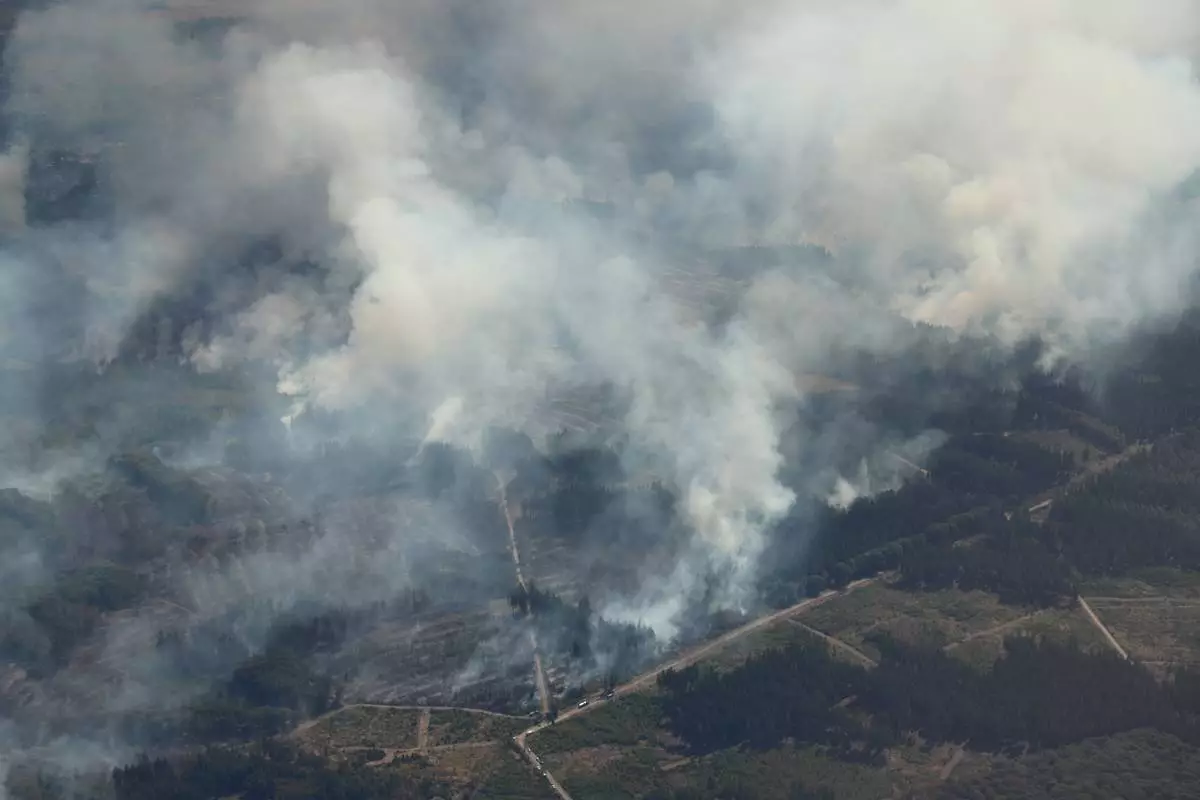
Smoke from a forest fire rises above the Hürtgenwald, in Düren, Germany, Friday, Aug. 14, 2026. (Sascha Thelen/dpa via AP)

A view of a beach bar in the aftermath of a wildfire on the Adriatic coast near Omis, southern Croatia, Friday, Aug. 14, 2026. (AP Photo/Josko Ponos)
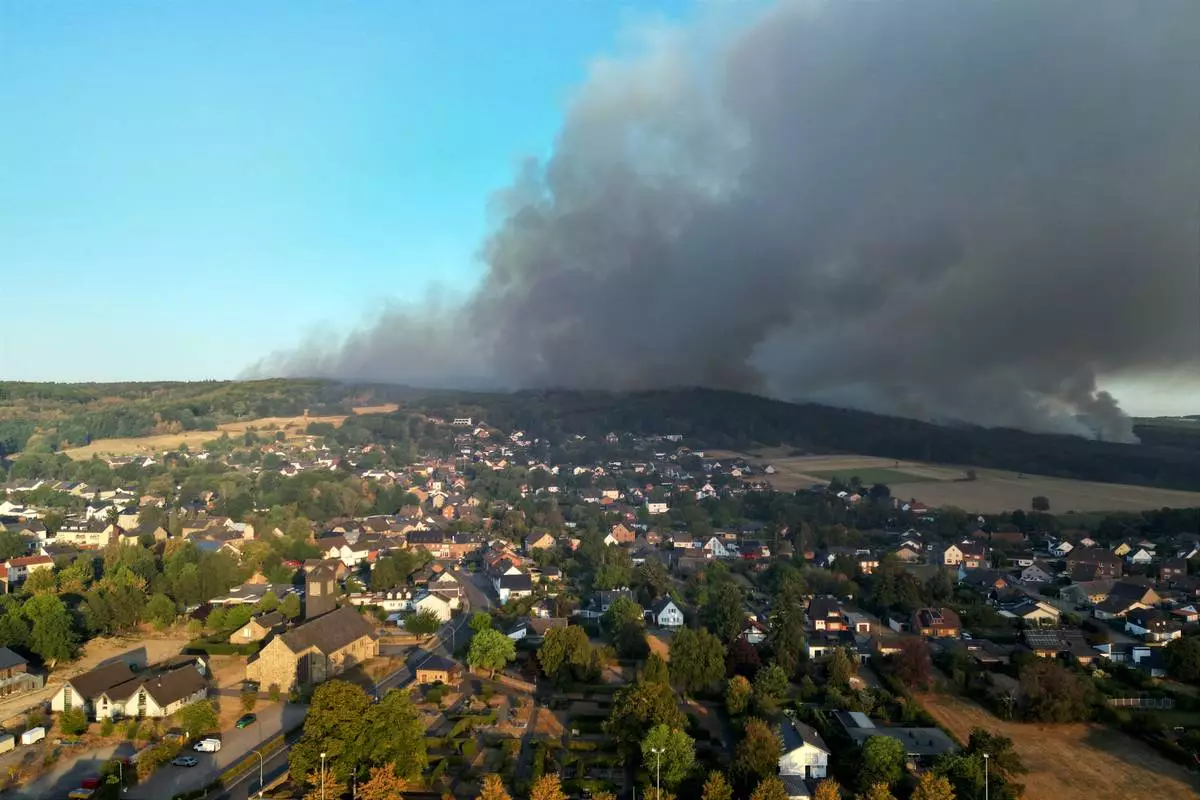
Thick smoke drifts over the Gey district from a forest fire in Hürtgenwald, Germany, Friday, Aug. 14, 2026. (Federico Gambarini/dpa via AP)
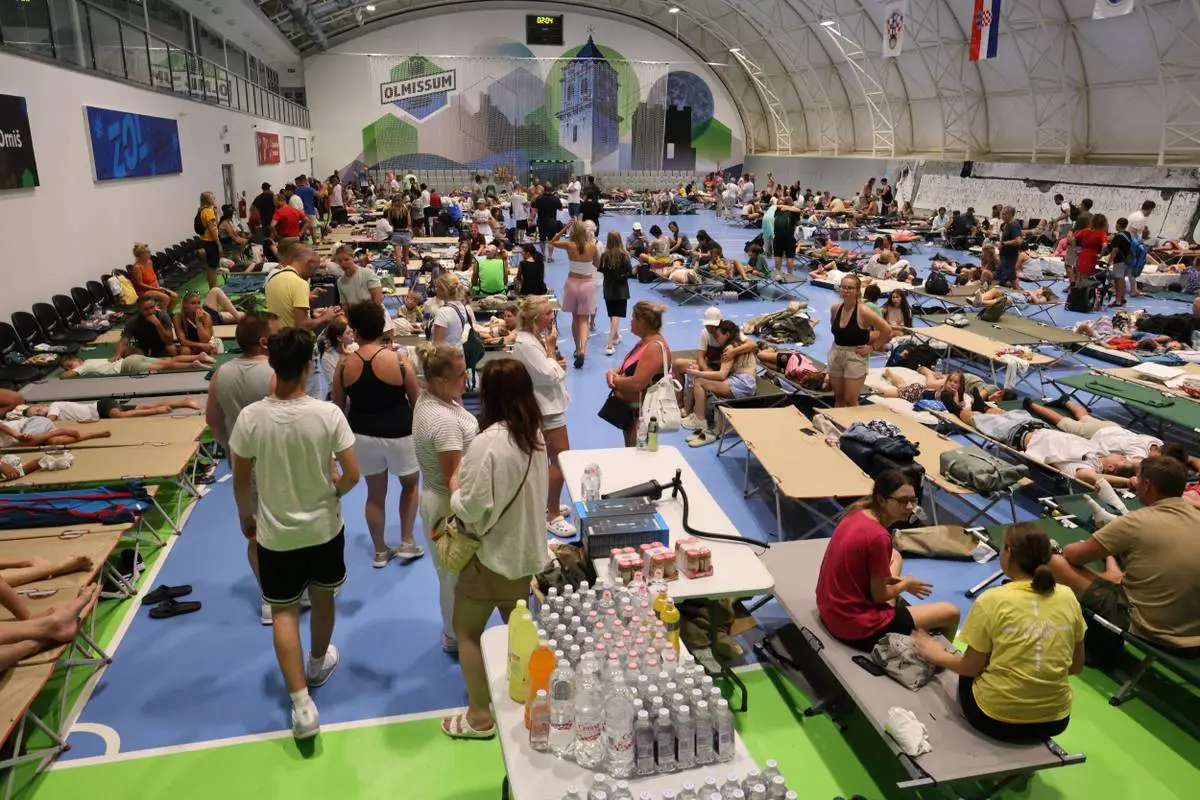
Residents and tourists evacuated from a wildfire gather inside a sports hall in Omis, southern Croatia early Friday, Aug. 14, 2026. (AP Photo/Jakov Prkic)
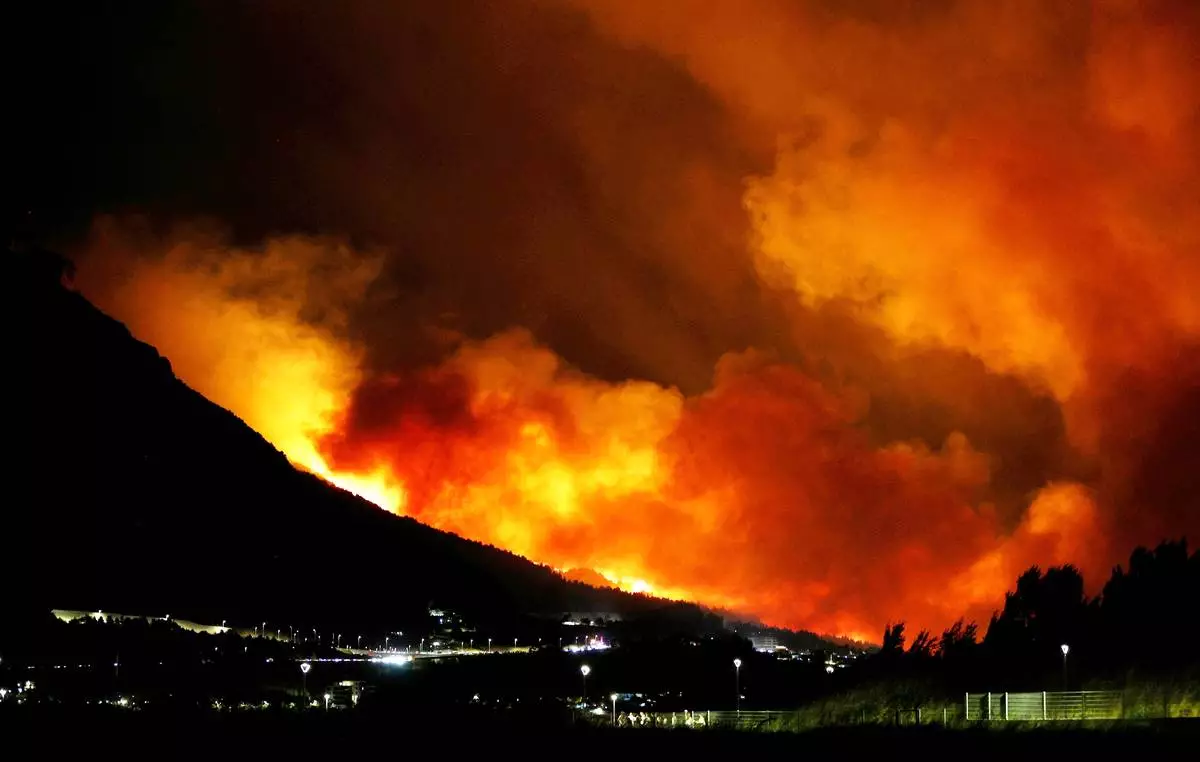
A general view of a wildfire near Omis, southern Croatia early Friday, Aug. 14, 2026. (AP Photo/Jakov Prkic)

A pharmacy sign displays a temperature of 37 degrees Celsius (98.6 degrees Fahrenheit) in Bordeaux, France, Thursday, Aug. 13, 2026, as a heatwave affects much of the country. (AP Photo/Caroline Blumberg)

A woman splashes water on her face at a public fountain on a hot day in Bordeaux, France, Thursday, Aug. 13, 2026, as a heatwave affects much of the country. (AP Photo/Caroline Blumberg)
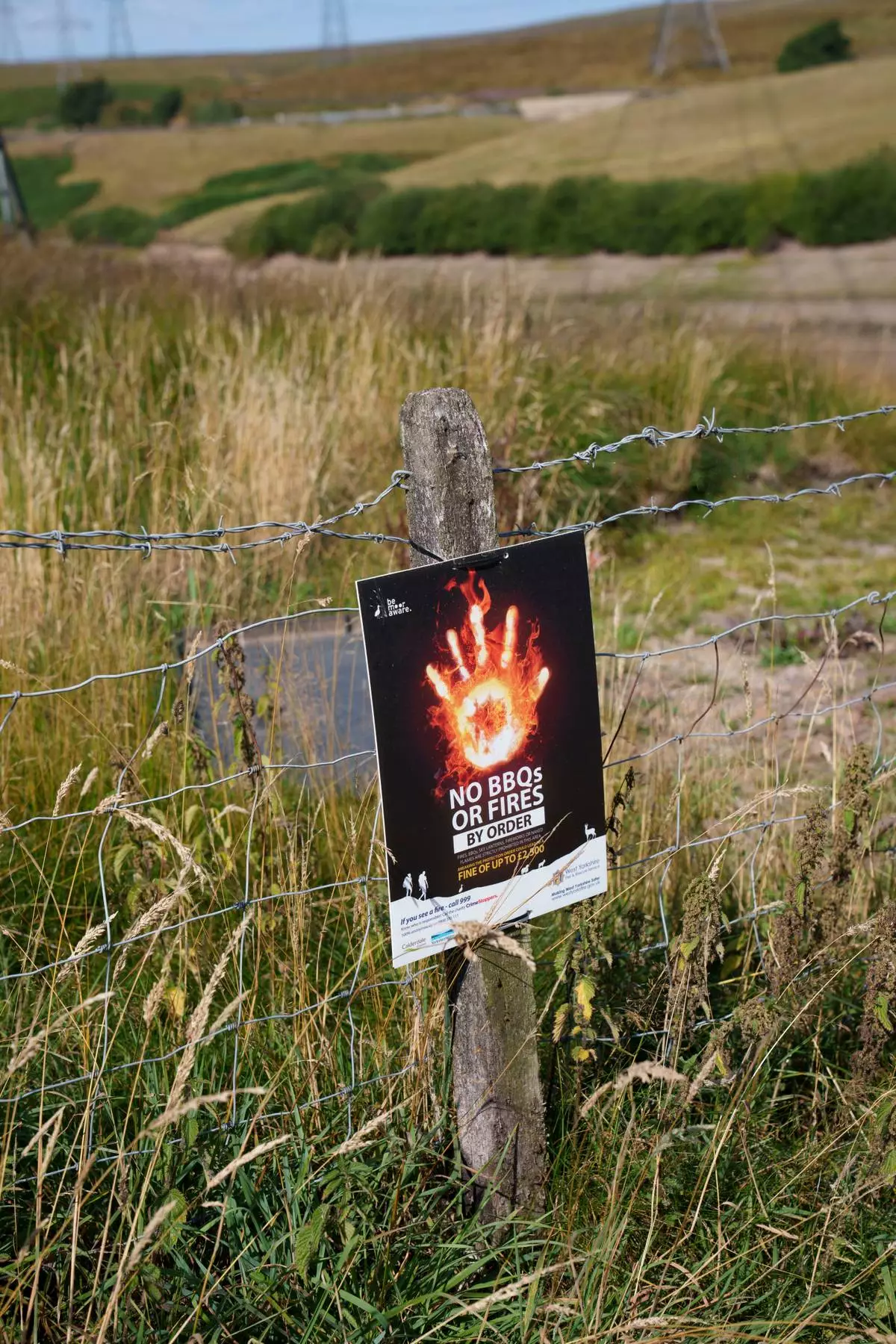
A safety signage to avoid fires is seen at Baitings reservoir near Sowerby Bridge as water levels drop throught the country, in Sowerby Bridge, England, Thursday, Aug. 13, 2026. (AP Photo/Jon Super)
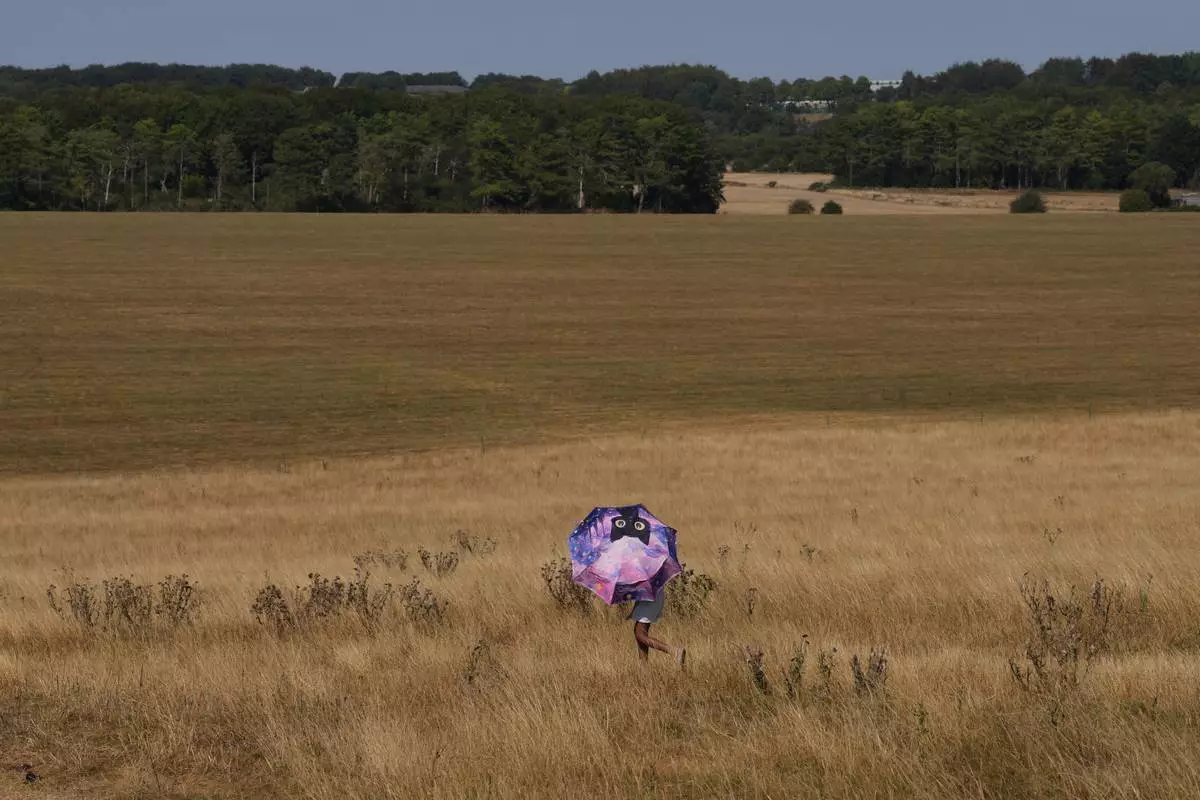
A person holds an umbrella and walks through dry grass at Stonehenge in Wiltshire, England, Thursday, Aug. 13, 2026. (AP Photo/Kin Cheung)