The Chinese mainland stock markets witnessed another volatile week with biotech stocks as well as optical module and data center cooling companies being one of the biggest winners, according to Timothy Pope, a market analyst for China Global Television Network (CGTN), on Friday.
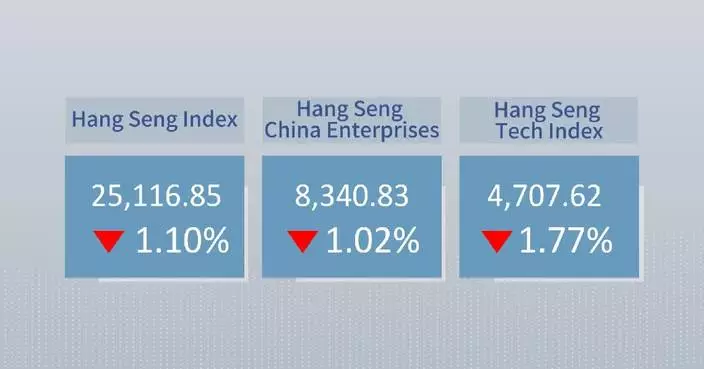
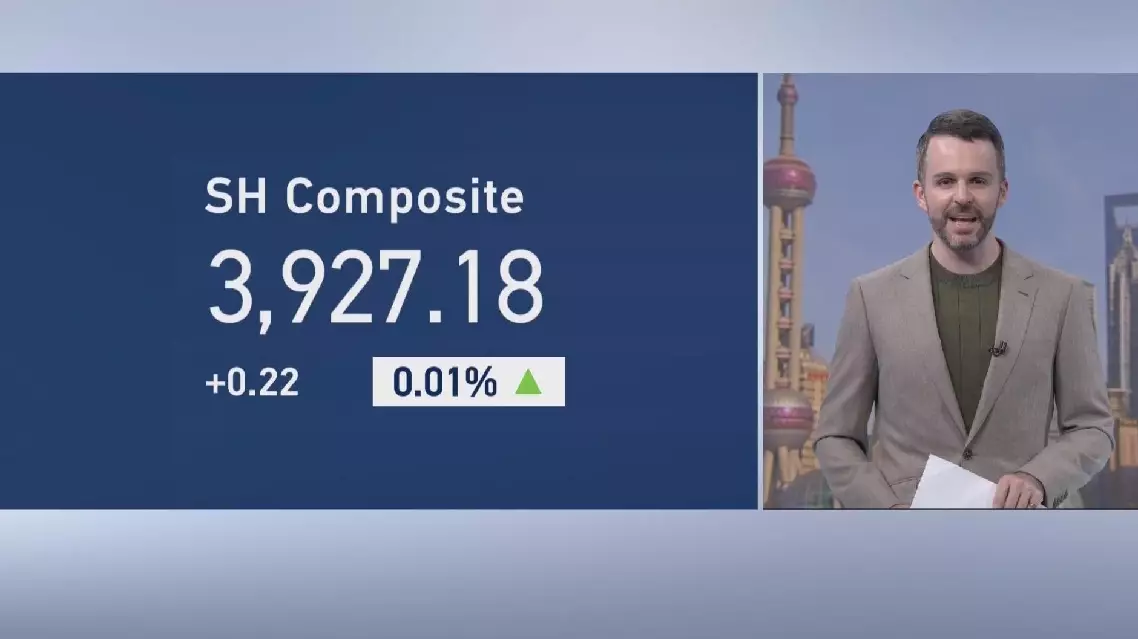
Chinese stocks closed higher on Friday, with the benchmark Shanghai Composite Index up 0.01 percent to 3,927.18 points. The Shenzhen Component Index closed 0.45 percent higher at 14,354.31 points.
The ChiNext Index, tracking China's Nasdaq-style board of growth enterprises, climbed 1.12 percent to close at 3,626.30 points.
Pope said that the bullish weekly performance of biotech stocks was supported by business growth of innovative drug companies in the first half of this year, and the share price rise of optical module and data center cooling companies demonstrates that investors are continuing to inject money into building AI infrastructure.
"Volatility does seem to have set in for the moment on the Chinese mainland stock markets. We've had another week of investors throwing their money from one side of the market to the other and back again, although there have actually been some consistent winners. Today, the market started fairly muted after Thursday's selloff, but there was a late recovery and that helped the Shanghai Composite Index close flat. The Shenzhen Component [Index] added almost half of one percent, and the ChiNext board gained 1.1 percent. Biotech stocks, they did pretty well pretty much all this week. We talked before about the really strong first half of the year that we've seen for Chinese innovative drug companies, and that's really getting reflected in the market at the moment. And the other winners were optical module and data center cooling companies. We had investors looking for new angles to buy a slice on the AI infrastructure build-out," said Pope.
The total value of China's innovative drug out-licensing deals exceeded 100 billion U.S. dollars in the first half of the year, reaching a record high, according to the latest official data.
The industry's export delivery value exceeded 210 billion yuan (about 30.91 billion U.S. dollars) in the first six months, up nine percent from a year earlier.
Pope added that a massive share purchase by Zhongji InnoLight, a leading Chinese high-speed optical module manufacturer, reflects that tech giants are also investing in AI infrastructure construction.
"Today, we saw it wasn't just investors doing that actually. Optical module maker Zhongji InnoLight announced that it's buying a more than 10 percent stake in Zhongshi Technology, also called Beijing Jones Tech, which makes thermal management products for data centers. It helps keep all of Zhongji InnoLight's products cool while they're running. Zhongji is spending around 1.75 billion yuan (about 260 million U.S. dollars) on that purchase. Its shares were up 2.4 percent after that announcement, and Zhongshi hit its 20 percent daily limit gain. That move as well is going to look pretty familiar to anyone who's been watching the U.S. AI boom with companies that are benefiting from the AI infrastructure growth increasingly taking stakes elsewhere in their own supply chains," he said.
Pope said this week, Unitree Robotics opened subscriptions for its initial public offering (IPO) on the Shanghai Stock Exchange's STAR Market, drawing great interest from investors.
"The other big story this week was the Unitree [Robotics] IPO, which was more than 8,000 times oversubscribed just by retail investors, so demand was absolutely massive. The robot maker raised 6.1 billion yuan at an IPO valuation of around 61 billion yuan. That's around 9 billion U.S. dollars, and that valuation is well above the roughly 42 billion that was implied by its original fund-raising plan. As of right now, we don't have an exact date for its debut, but it's expected to start trading on the STAR Market next week," he said.
The Hangzhou-based company is offering about 40.45 million shares at 150.80 yuan (about 22 U.S. dollars) each, representing 10 percent of its post-offering share capital. The offering is expected to raise about 6.10 billion yuan in gross proceeds.
The offering drew overwhelming interest during preliminary price inquiries. After invalid bids and the highest-priced portion of proposed subscriptions were excluded, the remaining proposed offline subscriptions totaled 71.46 billion shares, 2,760.67 times the initial offline offering size before adjustment for strategic placement, according to the issuance announcement.
Chinese shares see another volatile week: analyst