WASHINGTON (AP) — Full disclosure: this should really be two tales. How better to pay tribute to the natural and perhaps inevitable combination of two distinctly American icons: fast food and cars?
Those two massive sociological forces had already joined up, Voltron-style, early in the 20th century with the development of the drive-in restaurant – that classic scene evocative of “Happy Days” where customers sat in their cars while servers (ideally on skates) brought out food that was consumed on site from window trays.
Click to Gallery
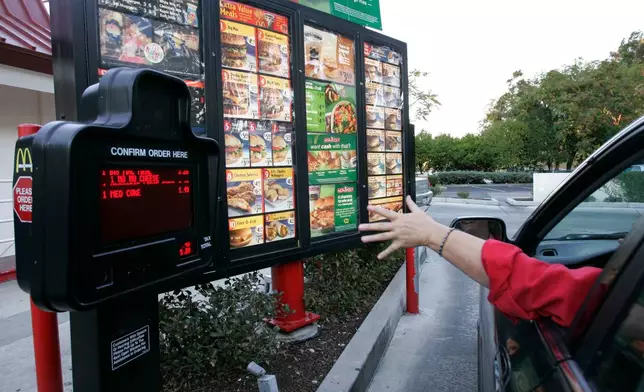
FILE - A customer orders a meal at a drive-thru at McDonald's restaurant in Palo Alto, Calif., Wednesday, Oct. 18, 2006. (AP Photo/Paul Sakuma, File)
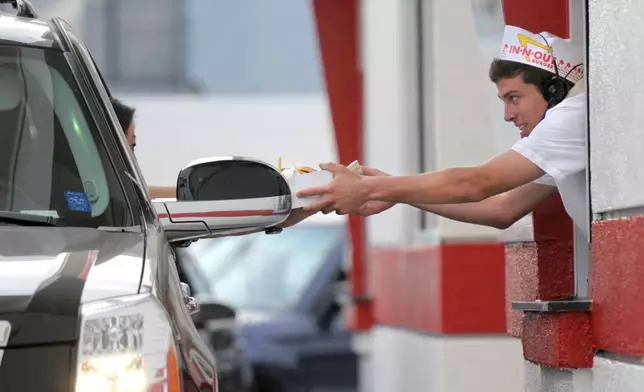
FILE - A customer receives her burger and fries from the drive-thru at In-N-Out Burger on Friday, June 11, 2010, in the Hollywood area of Los Angeles. (AP Photo/Adam Lau, File)
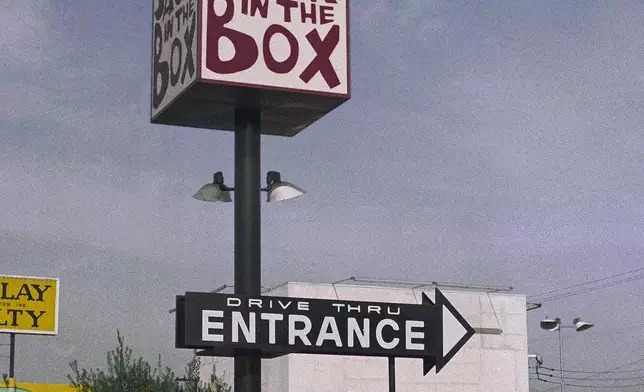
FILE - A Jack in the Box restaurant is shown in Los Angeles in November 1970. (AP Photo/David F. Smith, File)
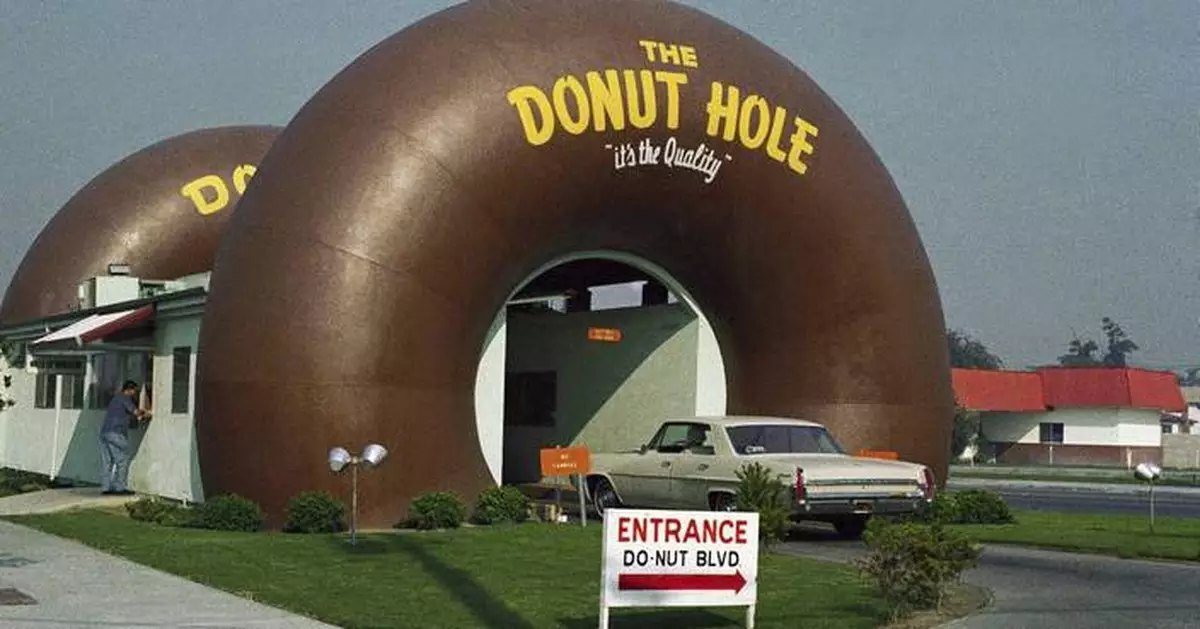
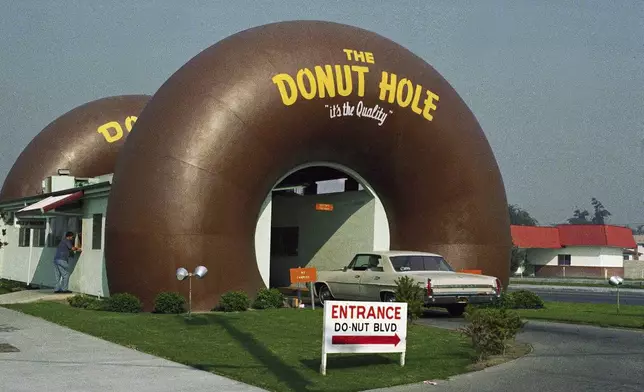
FILE - A drive-thru coffee and donut shop the Donut Hole is seen in Los Angeles in November 1970. (AP Photo/David F. Smith, File)
But the real innovation dates to the late 1940s and is the brainchild of either (depending on which source you trust) an In-N-Out Burger in California in 1948 or Red’s Giant Hamburg in Springfield, Missouri in 1947. (In comparison, the first reported drive-thru in Europe didn’t open until 1985 in Dublin.)
By the mid 1960s, this had mushroomed into a robust American market, spawning imitators and innovators. Jack in the Box pioneered the drive-thru exclusive restaurant with no indoor seats and no parking — and a talking mechanical clown to take your order. In Western states, residents of a certain age will recall the Wienershnitzel chain with its distinctive A-frame structures specially built with a tunnel down the middle for cars.
The innovation sparked unexpected knock-on developments. Restaurant menus shifted heavily toward sandwiches, fries, chicken strips and other portables that could be consumed on the go. The cars themselves adjusted over the years to accommodate larger and larger drink holders. What sociological (and nutritional) impact this has all had on the actual consumers would be the subject of a much longer essay.
The innovation hasn’t stopped. Modern drive-thrus have evolved into tightly coordinated multi-lane affairs. At Chick-fil-As around the country, actual humans with electronic tablets now stand – breathing in exhaust fumes all day – to ensure a seamless ordering process with no mechanical speaker garbles.
The drive-thru, with its distinctly American creative spelling, has become woven into the fabric of the culture. It has been enshrined in the Smithsonian Museum of American History and has played a memorable role in recent and successful Presidential campaigns.
As one historian put it, somewhat pointedly: “The drive-in was less a pure novelty than an expression of great American passions that go hand in hand: speed, efficiency and, sometimes, laziness.”
Part of a recurring series, “American Objects,” marking the 250th anniversary of the United States. For more American objects, click here. For more stories on the anniversary, click here.
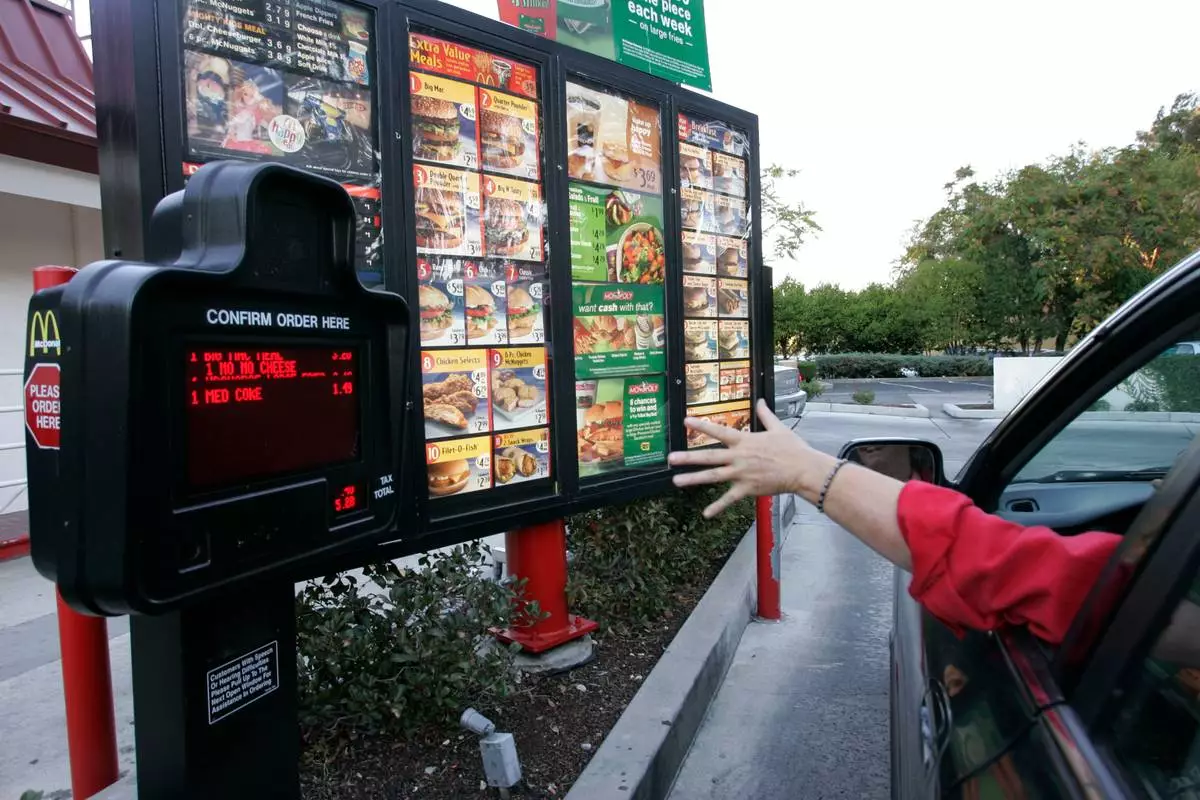
FILE - A customer orders a meal at a drive-thru at McDonald's restaurant in Palo Alto, Calif., Wednesday, Oct. 18, 2006. (AP Photo/Paul Sakuma, File)
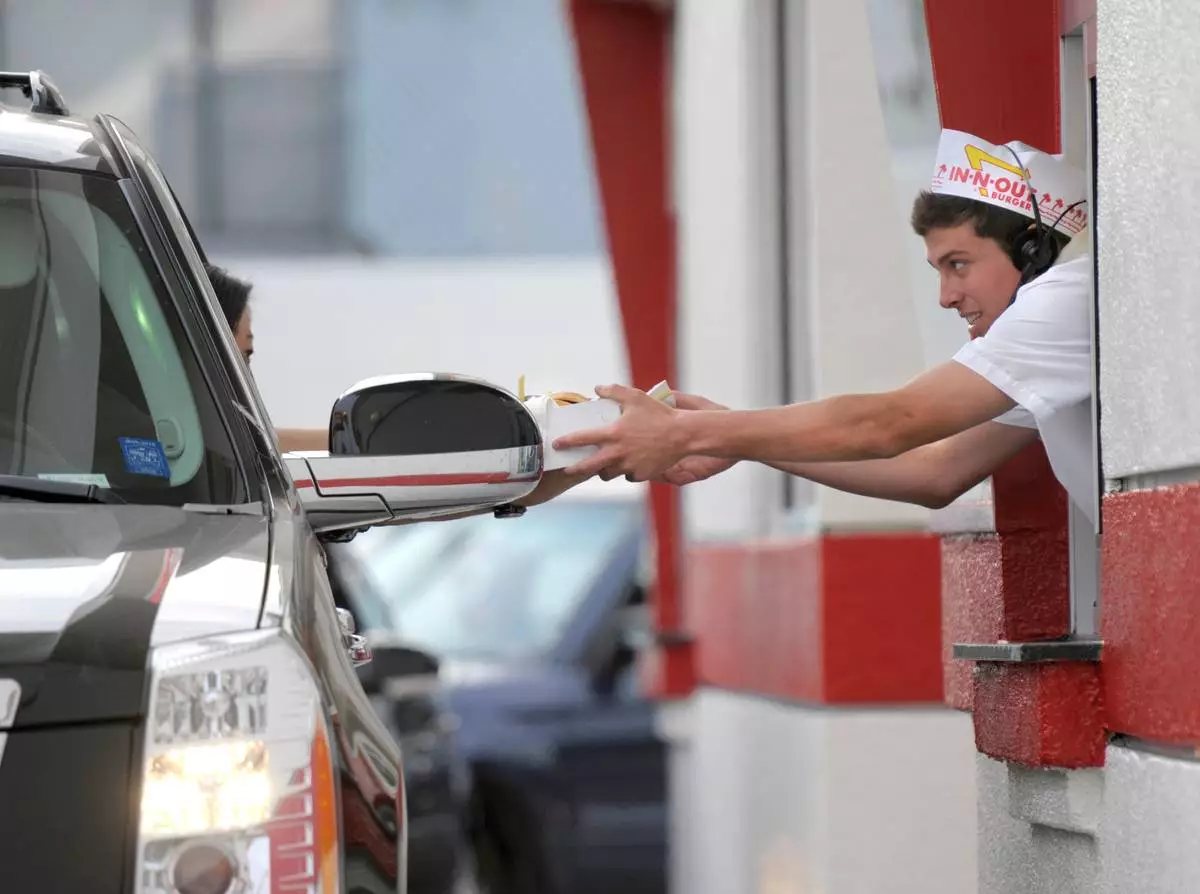
FILE - A customer receives her burger and fries from the drive-thru at In-N-Out Burger on Friday, June 11, 2010, in the Hollywood area of Los Angeles. (AP Photo/Adam Lau, File)
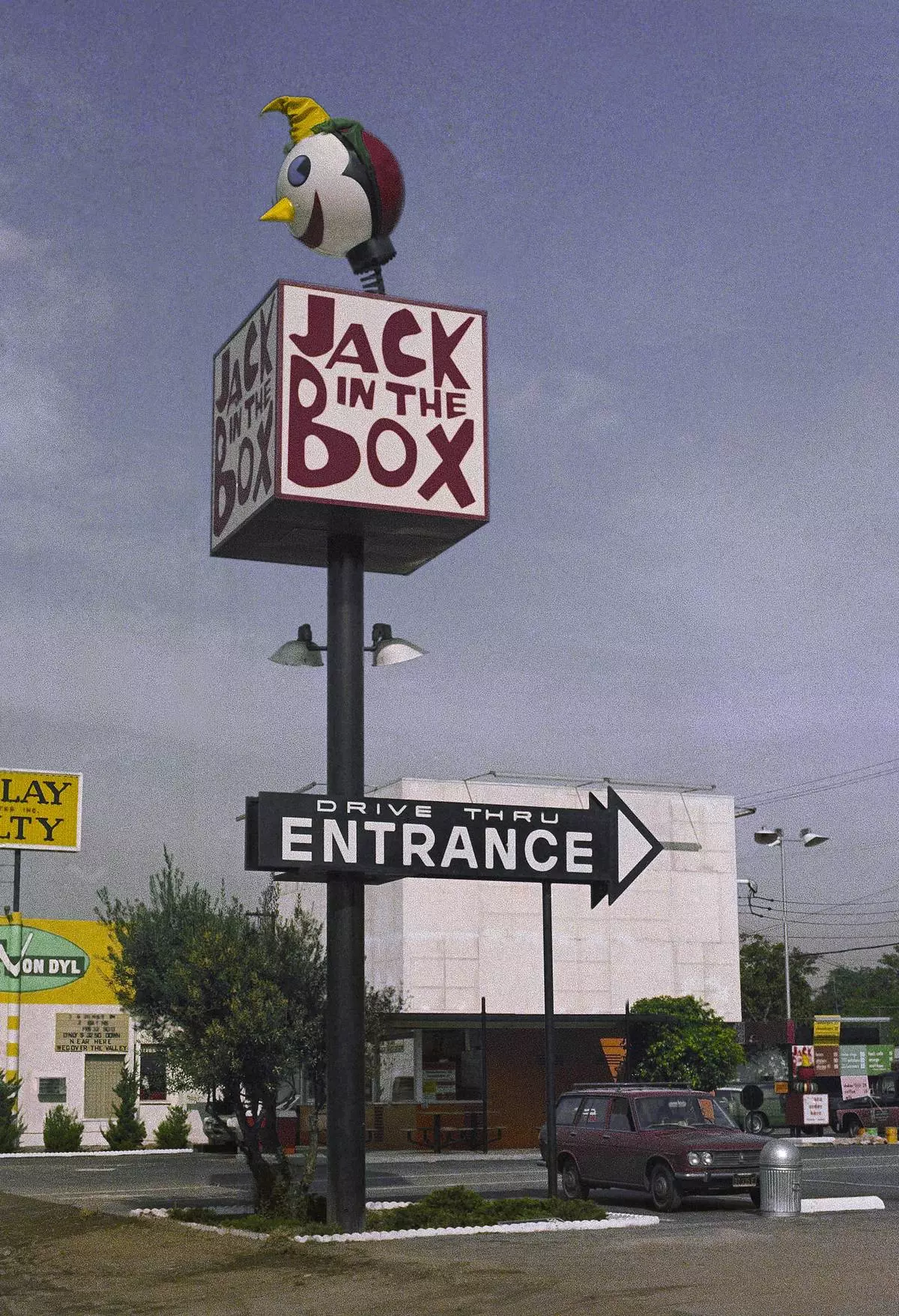
FILE - A Jack in the Box restaurant is shown in Los Angeles in November 1970. (AP Photo/David F. Smith, File)
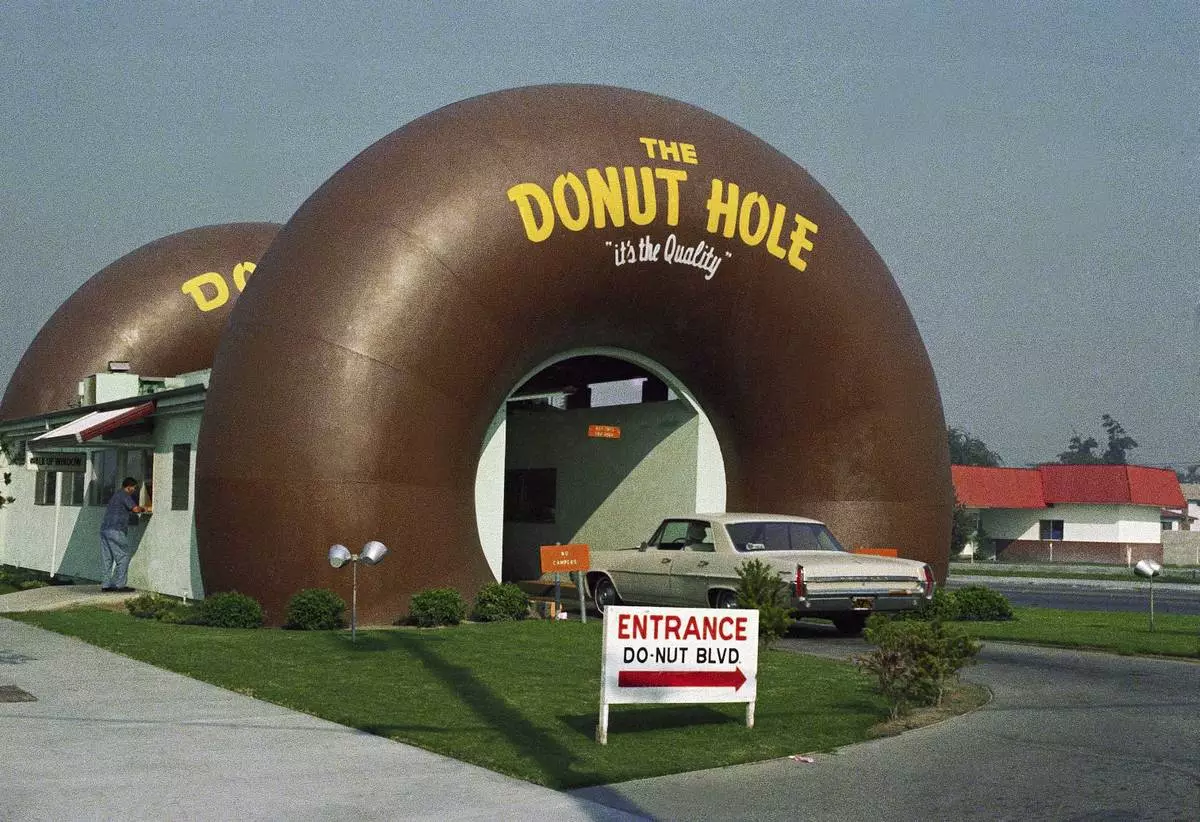
FILE - A drive-thru coffee and donut shop the Donut Hole is seen in Los Angeles in November 1970. (AP Photo/David F. Smith, File)
NEW YORK (AP) — Luigi Mangione pleaded guilty on Friday to federal stalking charges in the killing of UnitedHealthcare CEO Brian Thompson, admitting matter-of-factly that he trailed the executive to an investor conference and gunned him down on a New York City street in 2024.
Mangione, 28, said he even used a ruse to glean information about the event, contacting the health insurance company ahead of time under the guise of being an investor at a multibillion-dollar firm.
"On the morning of Dec. 4, 2024, I shot Mr. Thompson in Manhattan, and he died,” Mangione told the Manhattan federal court, which he entered shackled at the feet but not handcuffed in his beige jail uniform.
Listening in the audience, Thompson's wife, Paulette, took several deep breaths and repeatedly wiped tears from her eyes.
Prosecutors plan to seek a life prison term at Mangione's sentencing, set for Dec. 18. When U.S. District Judge Margaret M. Garnett asked whether he understood that he could spend the rest of his life behind bars, Mangione answered neutrally: “Yes.”
In a statement, Thompson’s family called the plea “an important step toward justice” and noted that Mangione still faces other cases, including a New York state murder prosecution. It carries the potential for a separate long sentence.
Federal prosecutors didn’t give Mangione any deal or incentive to plead guilty, they and his lawyers said. Nor did Mangione plead guilty to avoid a potential death sentence. That possibility was taken off the table when a federal murder charge was tossed out this winter.
But after Mangione entered the plea at Friday's hastily scheduled hearing, his lawyers quickly sought to have the New York case thrown out on double jeopardy grounds. The state’s double jeopardy protections can kick in if a prior prosecution ends in a guilty plea.
“Mr. Mangione has accepted full responsibility for the death of Brian Thompson,” defense lawyer Karen Friedman Agnifilo said outside court, arguing that her client shouldn’t face two prosecutions over a “single tragic event.”
The Manhattan district attorney’s office, which is handling the state prosecution, said it remains committed to its case and would contest the defense’s efforts to shut it down.
Surveillance video of the ambush showed a masked gunman shooting Thompson, 50, from behind. Police say “delay,” “deny” and “depose” were written on the ammunition, mimicking a phrase used to describe how insurers avoid paying claims.
That detail — and revelations that Mangione's private writings lambasted health insurers as greedy, according to authorities — made the case a fulcrum for debate about the industry and made Mangione a cause célèbre for some of its critics.
A University of Pennsylvania graduate from a wealthy Maryland family, Mangione told the court Friday that he pursued Thompson “after years of enduring severe pain from a broken back and navigating the obstacles of the health insurance system.”
Friedman Agnifilo later said her client “believed that the system had failed him and destroyed his life.”
Mangione never was a UnitedHealthcare customer, according to police and the company.
“To those who idolize Luigi Mangione, I say this. Violence is not a cause. Murder is not a message. And a killer is certainly not a hero,” New York Police Commissioner Jessica Tisch said outside court Friday.
U.S. Attorney Jamie McDonald, whose office handled the federal case, added: “There can be no celebrity in assassination."
Thompson led one of the United States' largest health insurers, but he wasn't well known outside the industry. Trained as an accountant, he worked at parent company UnitedHealth Group Inc. for 20 years and became CEO of its insurance arm, UnitedHealthcare, in 2021. He and his wife had two sons, who were in high school when their father was killed.
Thompson's violent death “devastated everyone who knew and loved him,” the company said in a statement Friday, thanking law enforcement for bringing Mangione to justice.
Mangione was arrested five days after the shooting, when he was spotted at a McDonald’s in Altoona, Pennsylvania, about 230 miles (370 kilometers) west of Manhattan. Police had released various images of the suspected shooter, including one showing his face as he checked into a hostel.
Although his lawyers got the federal murder charge dismissed, Garnett also delivered some setbacks to the defense, ruling in January that prosecutors could use items collected from Mangione’s backpack during his arrest as evidence against him. They included a 3D-printed pistol that investigators said matched the one used to kill Thompson and a notebook in which authorities say Mangione described his intent to kill an insurance executive.
Similarly, the judge in the state case threw out terrorism charges against Mangione but agreed to let the gun and notebook be used as evidence. The case has been heading toward a September trial, but his lawyers' new bid to dismiss it could complicate the timeline.
Associated Press writers Dave Collins in Hartford, Connecticut, and Alanna Durkin Richer in Washington contributed.
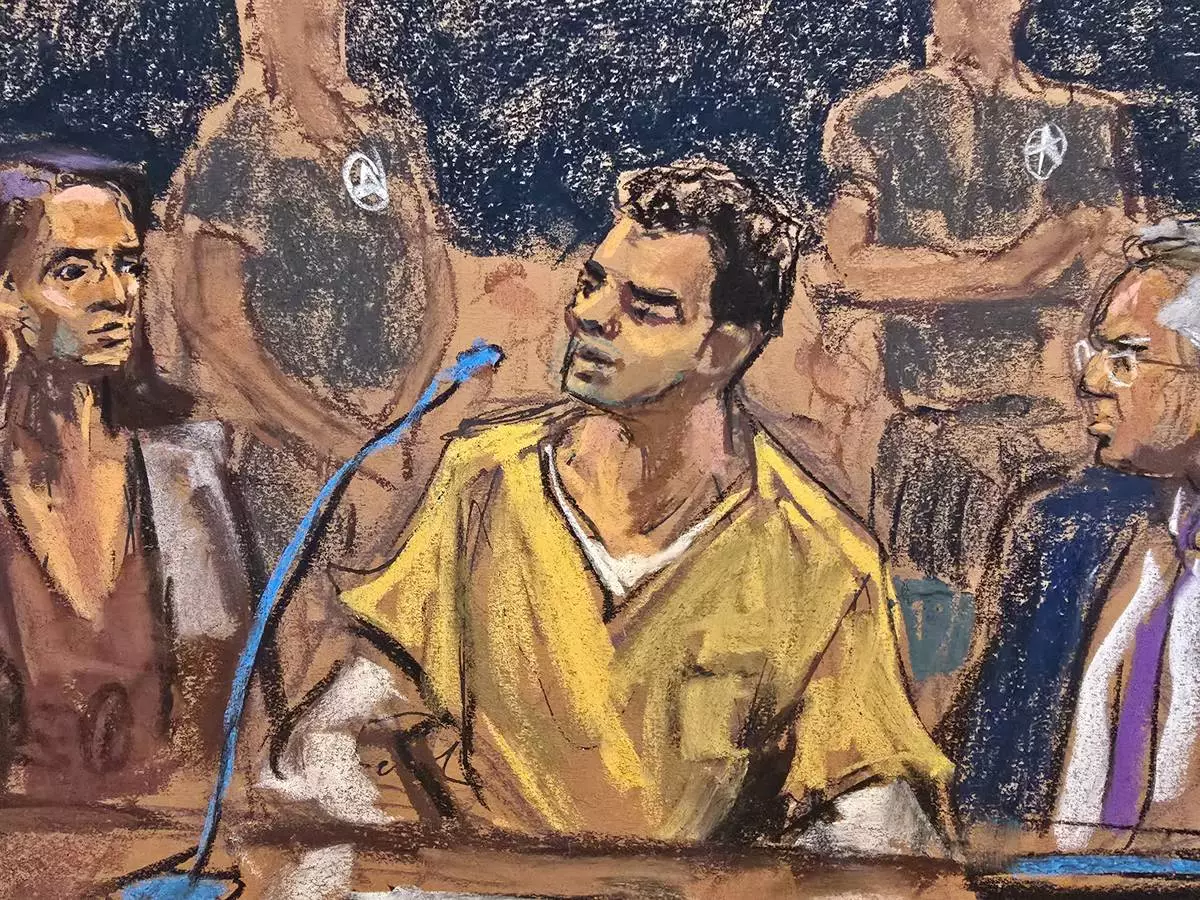
In this courtroom sketch, Luigi Mangione, center, sits between his attorneys, Karen Friedman Agnifilo, left, and Marc Agnifilo, right, before pleading guilty to federal stalking charges in the killing of UnitedHealthcare CEO Brian Thompson, Friday, Aug. 14, 2026, in New York. (Jane Rosenberg via AP)
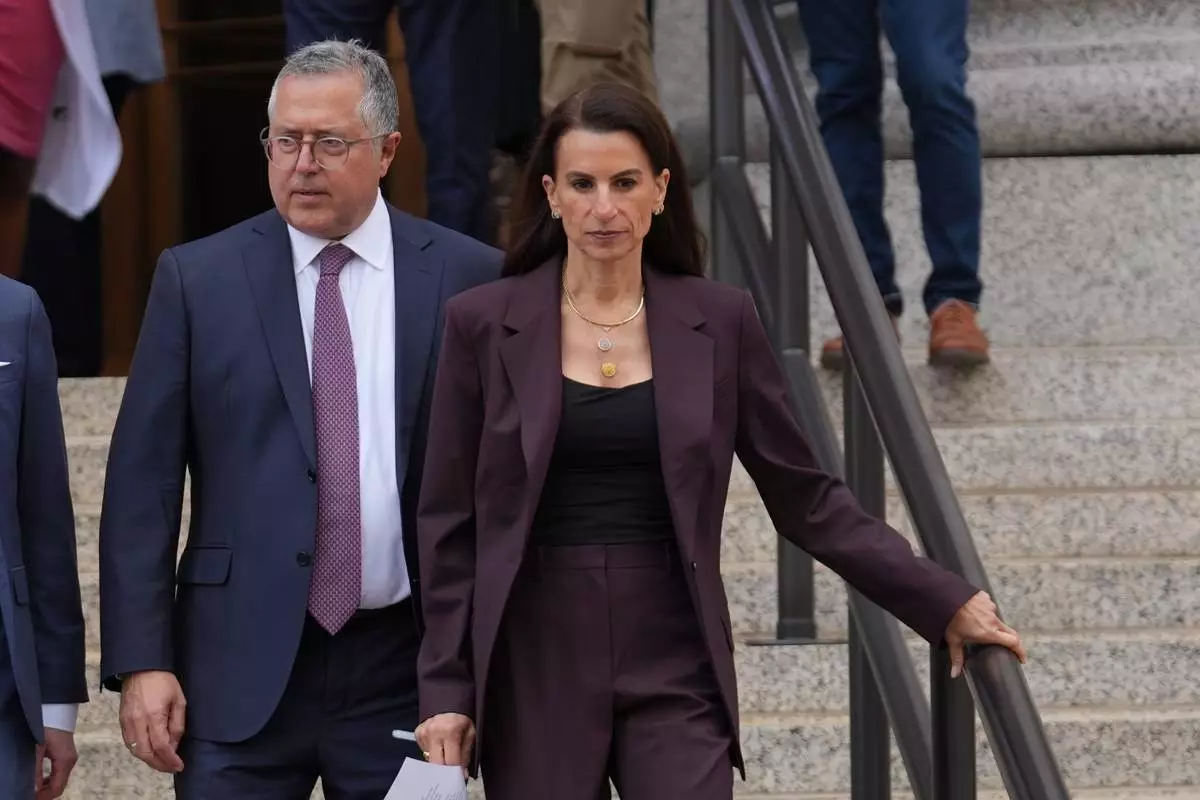
Defense attorneys for Luigi Mangione, Marc Agnifilo and Karen Friedman Agnifilo exit Manhattan federal court after Mangione pleaded guilty on to federal stalking charges in the killing of UnitedHealthcare CEO Brian Thompson, Friday, Aug. 14, 2026 in New York. (AP Photo/Ryan Murphy)
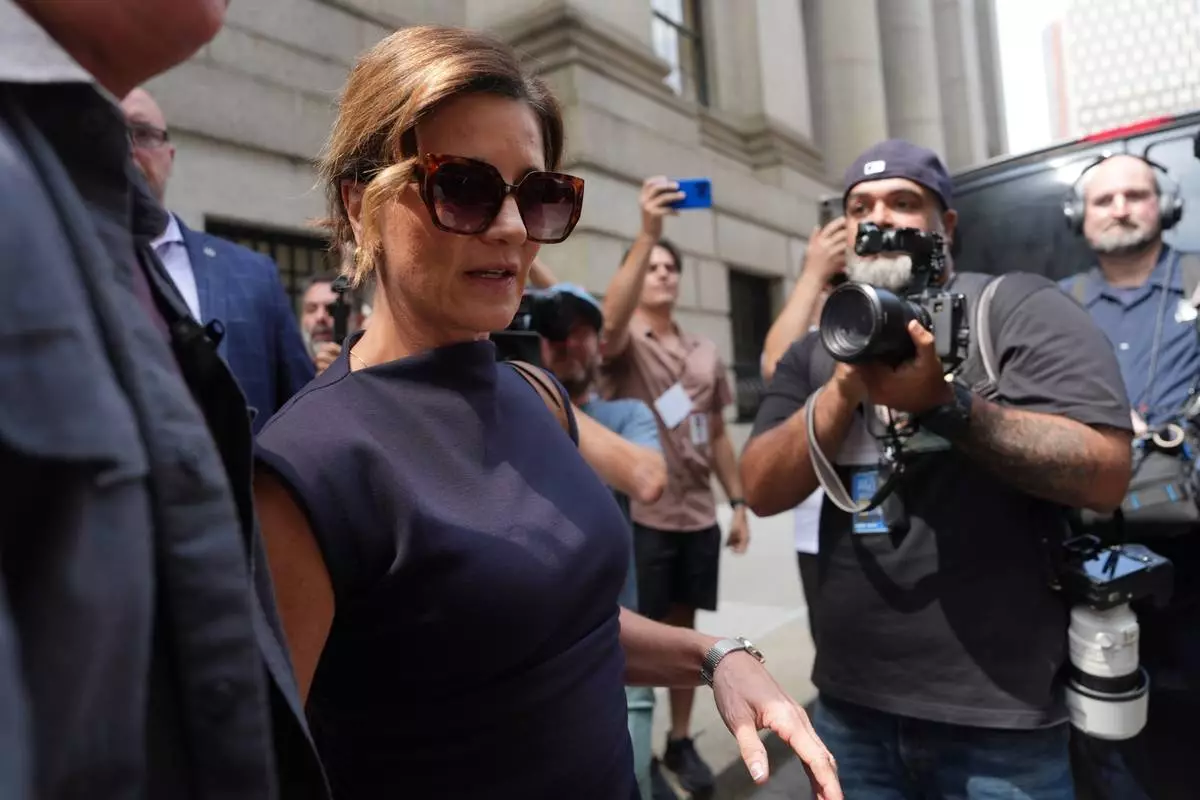
Paulette "Pauley" Thompson exits Manhattan federal court after Luigi Mangione pleaded guilty on to federal stalking charges in the killing of her husband, UnitedHealthcare CEO Brian Thompson, Friday, Aug. 14, 2026 in New York. (AP Photo/Ryan Murphy)
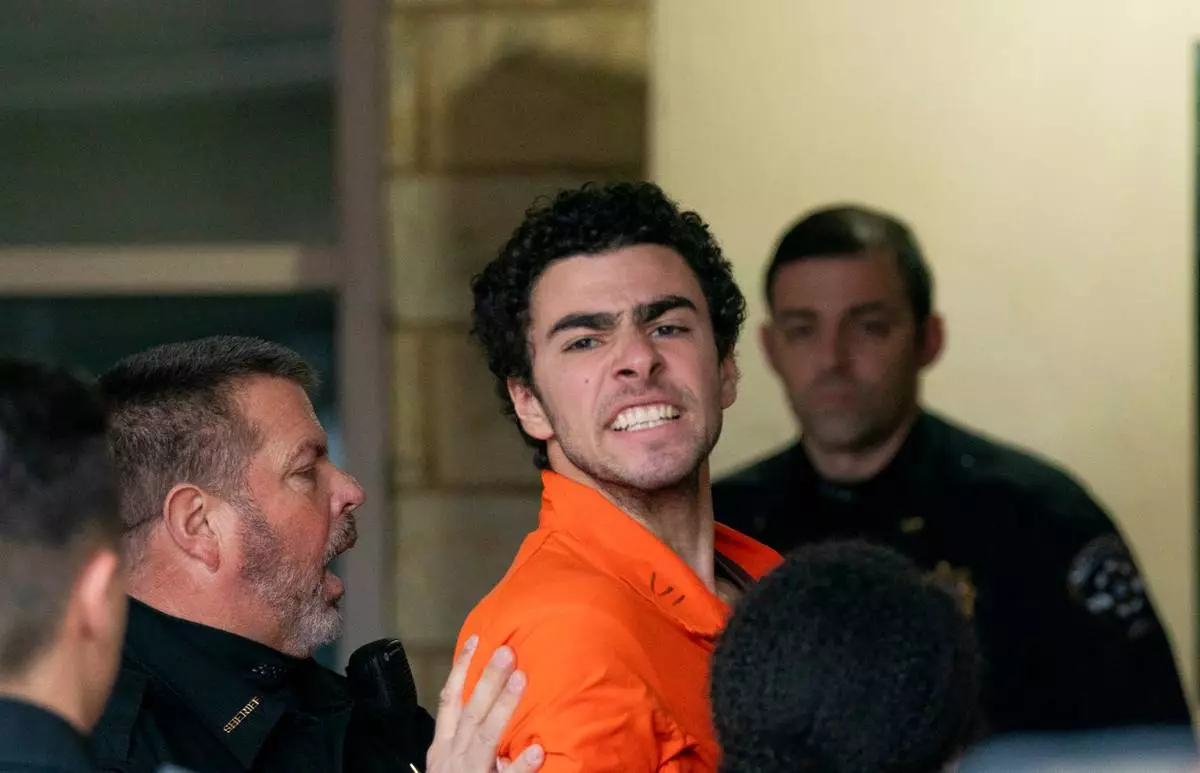
FILE - Suspect Luigi Mangione is taken into the Blair County Courthouse on Tuesday, Dec. 10, 2024, in Hollidaysburg, Pa. (Benjamin B. Braun/Pittsburgh Post-Gazette via AP, File)
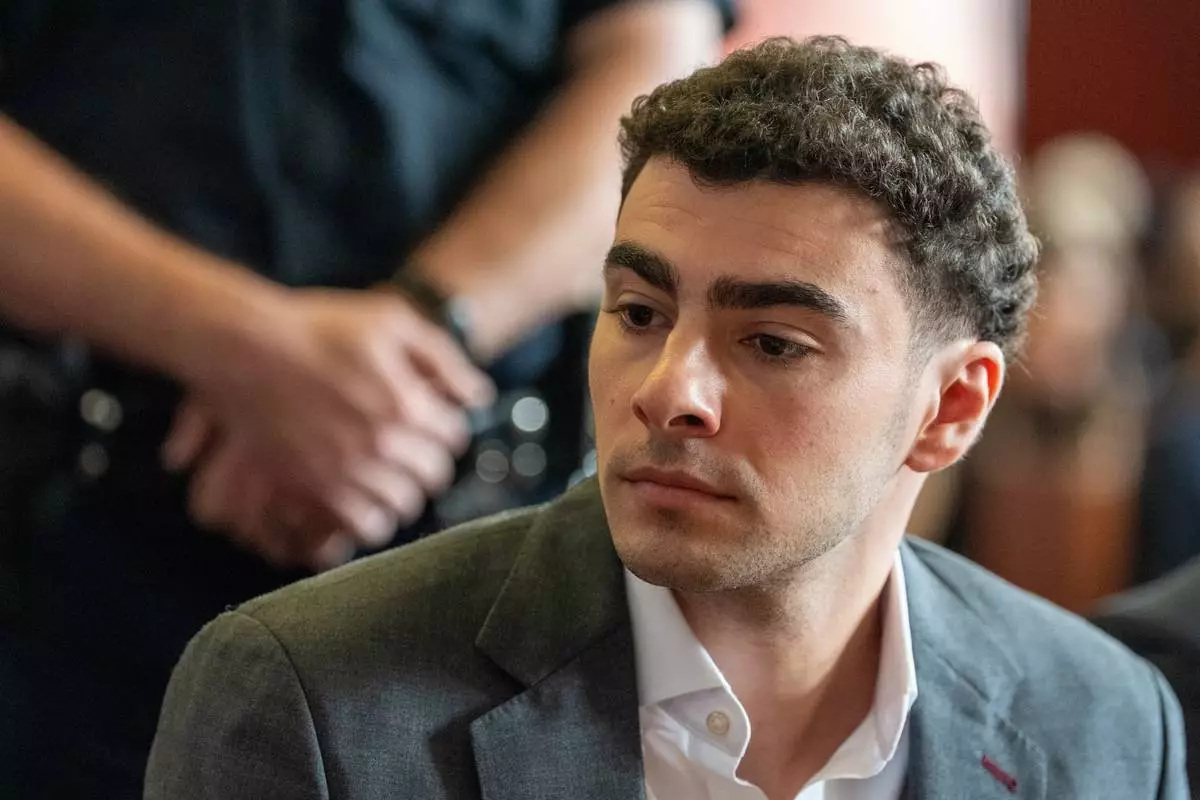
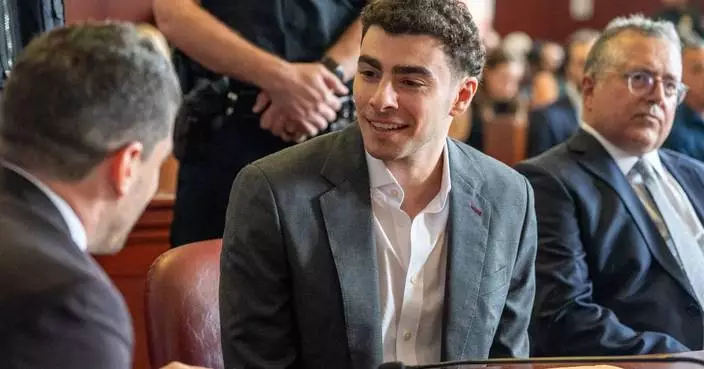
Luigi Mangione attends a pre-trial hearing at Manhattan Criminal Court in New York, Tuesday, Aug. 11, 2026. (David Dee Delgado/Pool Photo via AP)
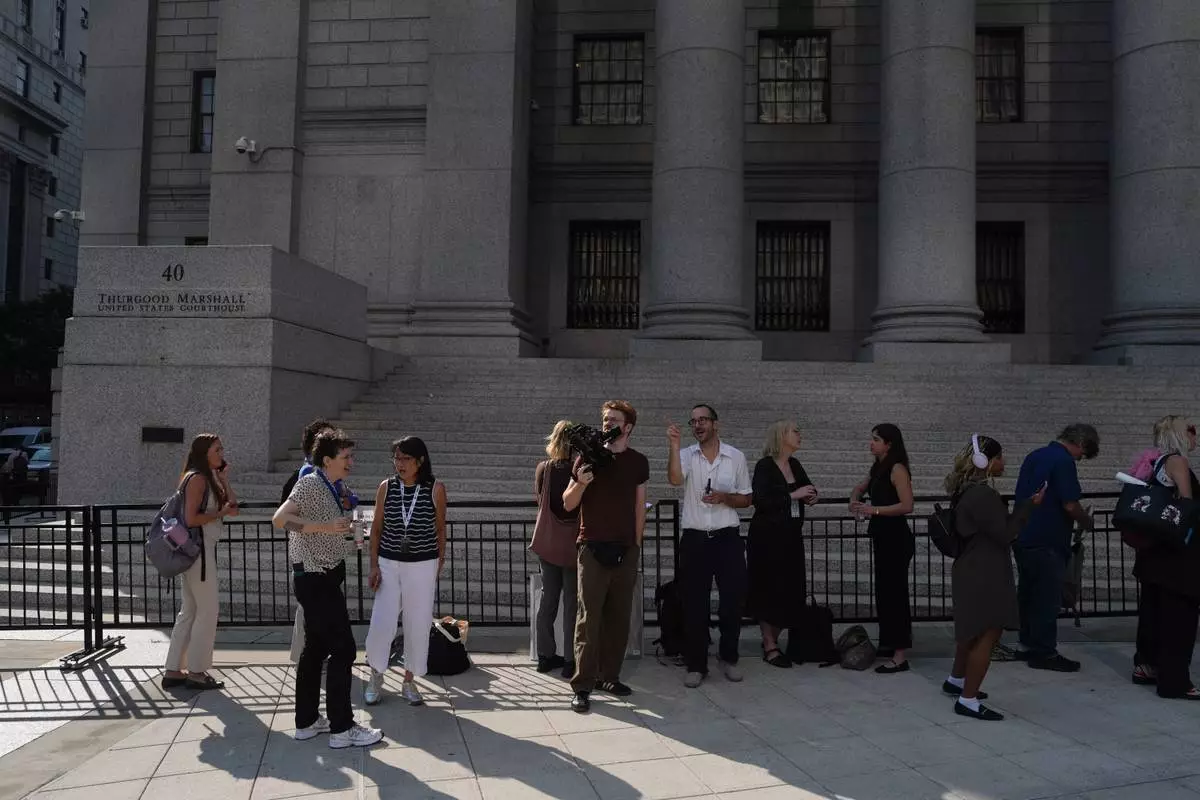
Members of the media wait in line outside of Manhattan Federal Court on the day of a hearing for Luigi Mangione on Friday, Aug. 14, 2026, in New York. (AP Photo/Ryan Murphy)
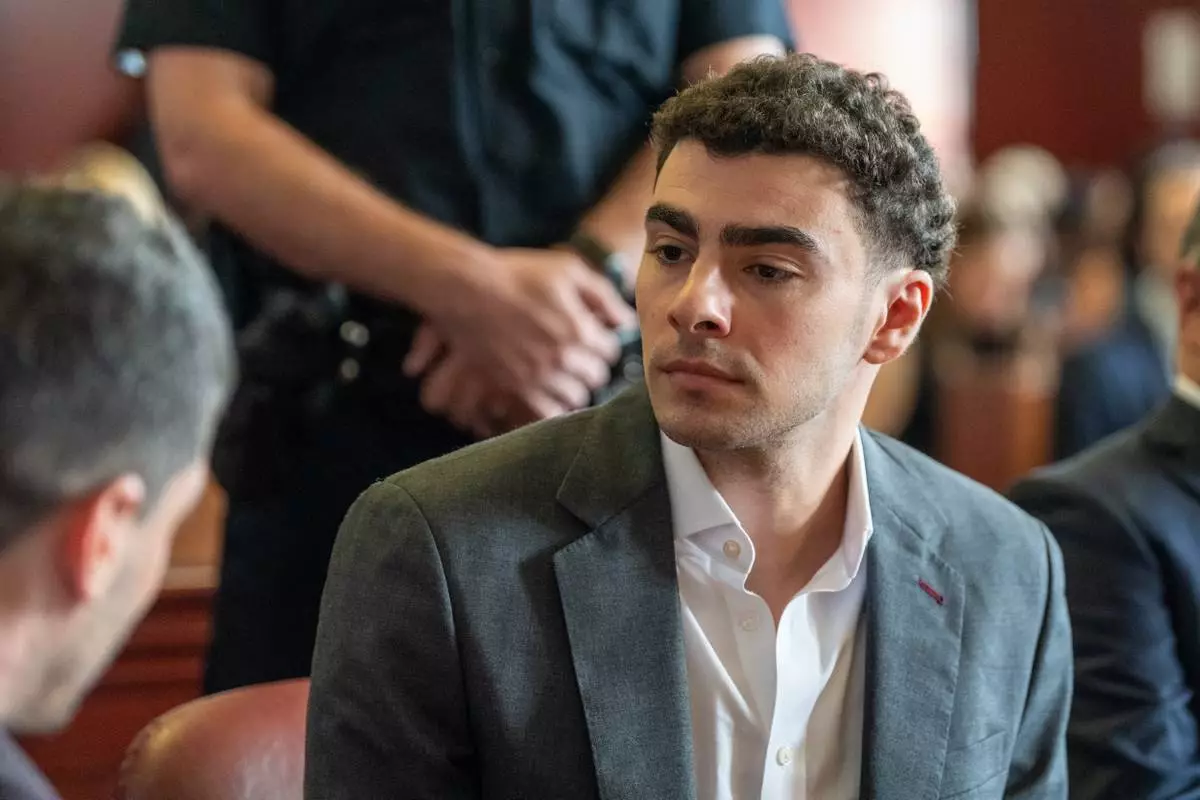
Luigi Mangione appears for a pre-trial hearing at Manhattan Criminal Court in New York, on Tuesday, Aug. 11, 2026. (David Dee Delgado/Pool Photo via AP)
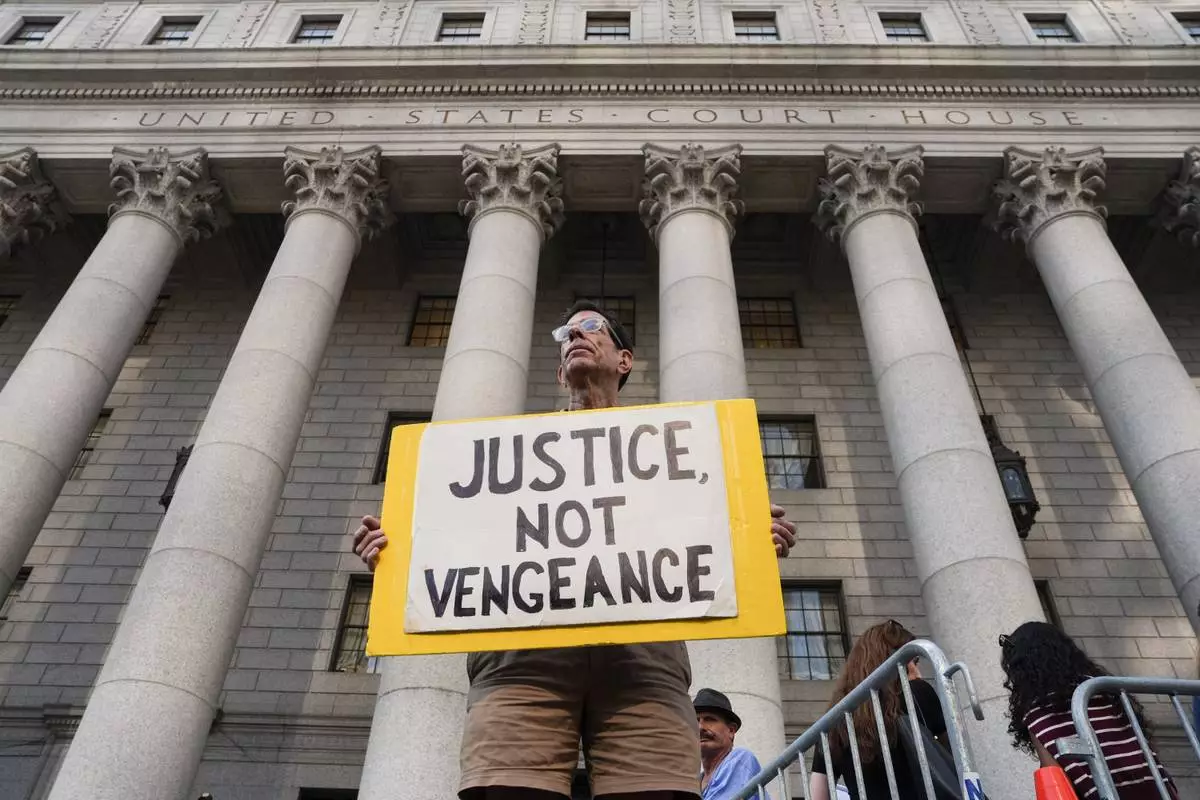
A man holds a sign outside of Manhattan Federal Court on the day of a hearing for Luigi Mangione on Friday, Aug. 14, 2026, in New York. (AP Photo/Ryan Murphy)
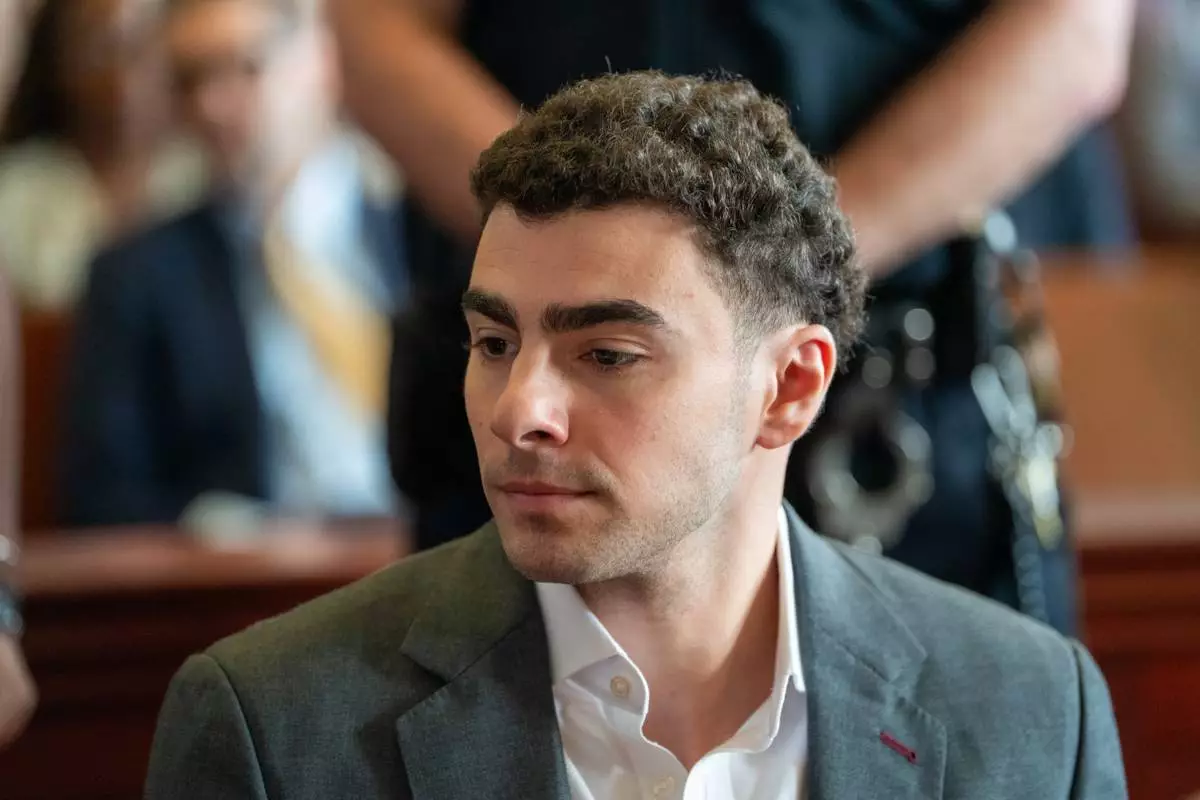
Luigi Mangione appears for a pre-trial hearing at Manhattan Criminal Court in New York, on Tuesday, Aug. 11, 2026. (Steven Hirsch/New York Post via AP, Pool)