President Donald Trump's goal of ending gender-affirming care is not improper and cannot be the basis for quashing a subpoena issued by the Justice Department against a provider of medical treatment for transgender youth, a divided federal appeals court ruled Friday.
The Justice Department announced last year that it had issued more than 20 subpoenas to doctors and clinics that provide gender-affirming care as part of an effort to investigate healthcare fraud. Federal judges have quashed many of the subpoenas as illegitimate efforts to intimidate providers into ending care.
In a 2-1 decision, a panel of the 9th U.S. Circuit Court of Appeals said the efficacy and long-term risks of the treatments are "uncertain," and the president has the power to align the Justice Department's enforcement priorities with his broader policy goals.
“Every President has law enforcement priorities, just as every President has signature policies (often, the former are components of the latter)," Judge Carlos Bea wrote.
Bea, a nominee of Republican President George W. Bush, was joined in the opinion by Daniel Bress, a Trump nominee. They reversed a ruling that quashed the subpoena against telemedicine provider QueerDoc, sending the case back to the district court to consider other arguments.
The subpoena seeks QueerDoc's personnel files, billing documents, communications with drug manufacturers and records of patients who were prescribed puberty blockers or hormone therapy, among other information, according to the 9th Circuit decision.
American Civil Liberties Union attorney Adrien Leavitt, who represented Washington state-based QueerDoc, said the ACLU would continue fighting the subpoena in district court. QueerDoc has also argued the subpoena is overbroad and burdensome. The Justice Department has said it has reason to believe the company may be misleading people about puberty blockers and hormones.
"We’re ready to continue defending one of the most fundamental principles of healthcare: every patient’s right to confidential medical care,” Leavitt said in a statement.
He said the San Francisco-based 9th Circuit was the first appeals court to weigh in on the subpoenas.
Trump has signed one executive order defining sex as only male or female — and as unchangeable — and another that seeks to end federal funding of the care for patients under 19. The latter order also directs the Justice Department to “prioritize investigations” into violations of a drug safety law by “any entity that may be misleading the public about long-term side effects of chemical and surgical mutilation.”
Gender-affirming care includes a range of medical and mental health services to support a person’s gender identity, including when it’s different from the sex they were assigned at birth. It encompasses counseling, medications that block puberty and hormone therapy to produce physical changes as well as surgeries to transform chests and genitals, though those are rare for minors.
Most major medical groups say access to the treatment is important for those with gender dysphoria and see gender as existing along a spectrum.
The 9th Circuit majority called discussion around gender-affirming care "an unsettled scientific debate," and said the Trump administration could also justify its opposition to the treatment on ethical or philosophical grounds.
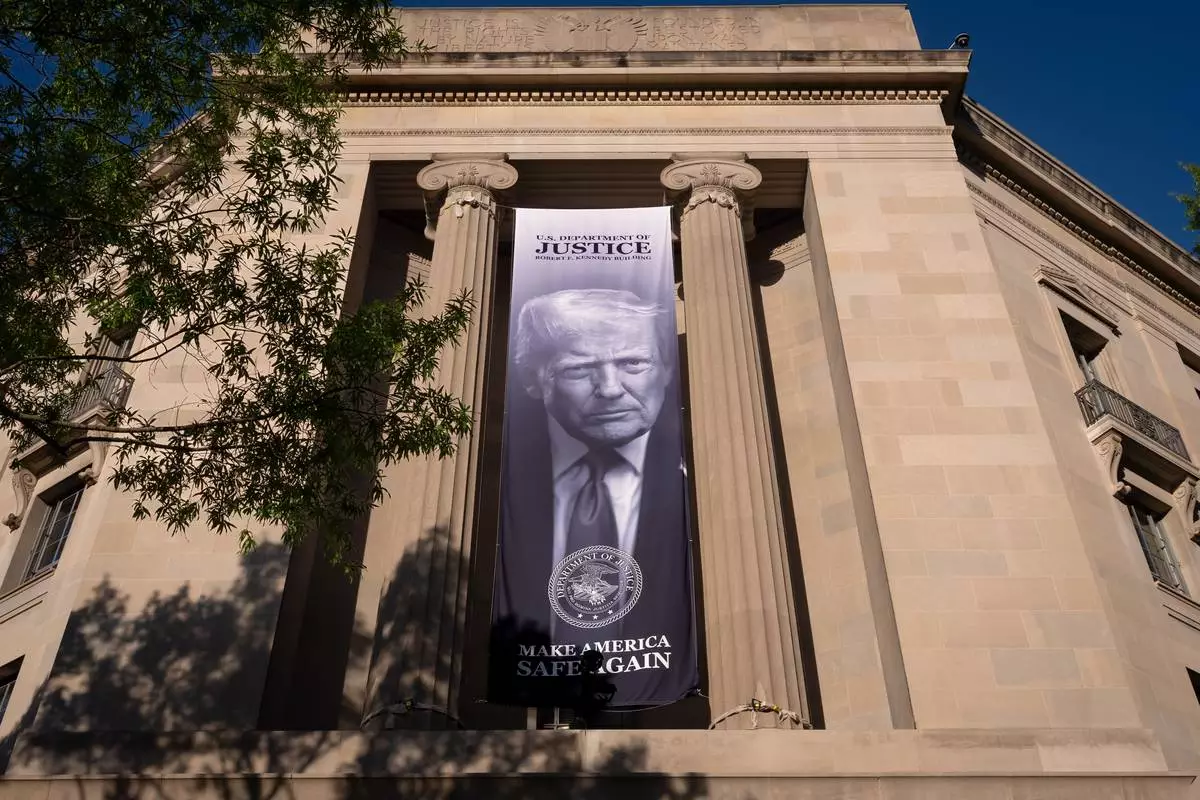
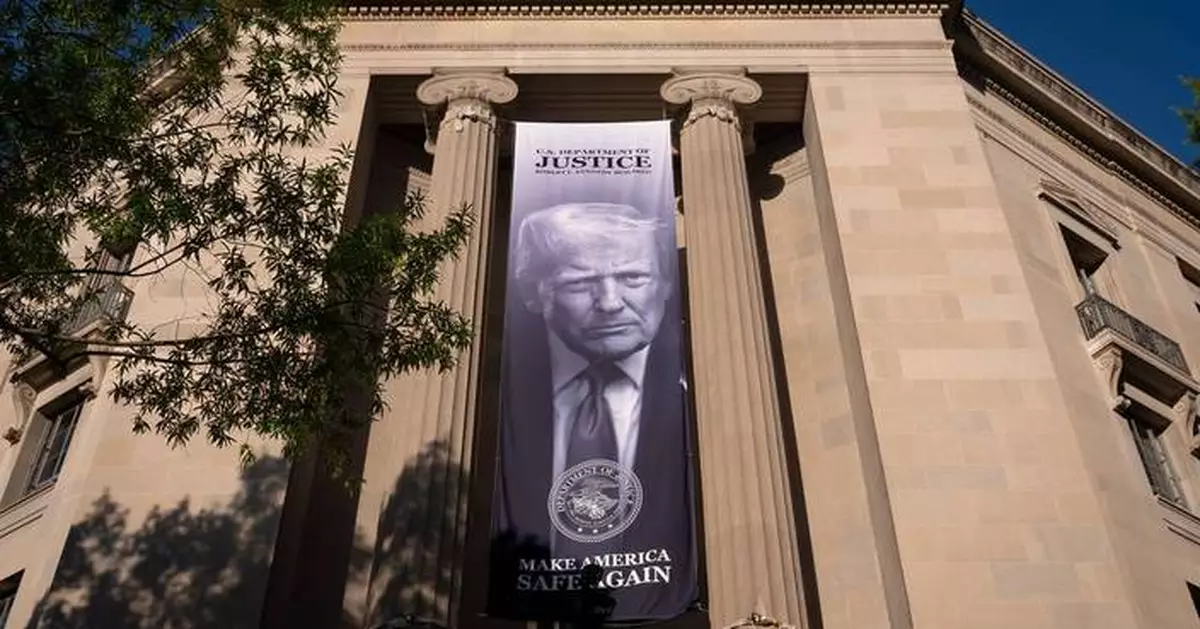
FILE - A portrait of President Donald Trump is displayed at the Justice Department building in Washington, June 2, 2026. (AP Photo/J. Scott Applewhite, File)
NEW YORK (AP) — After splurging on the World Cup and Amazon Prime Day sales, Americans unexpectedly cut their spending in July by the biggest amount in more than a year.
Retail sales fell 0.6% last month, marking the biggest decrease since May 2025, compared with a revised gain of 0.2% in June, according to the Commerce Department data released Friday. Economists were projecting a small increase.
The decline followed a notable bump in spending in both April and May as Americans dipped into their government tax refunds.
The drop in spending for July, however, raised concern among some economists about the resiliency of consumers who have powered the economy forward despite nagging inflation and soaring gasoline prices. Yet, it may be too early to declare a retreat by one of the strongest and most consistent forces in the U.S. economy of late.
Still, the weak sales report follows unexpectedly sluggish jobs figures last week, and both suggest the economy could be slowing after strong consumer and business spending in the first half of the year.
Separately, consumers turned more pessimistic about the economy this month, likely driven by stubbornly high prices, according to the University of Michigan’s consumer sentiment index, released Friday.
While most economists still expect solid economic growth in the July-September quarter, many have lowered their forecasts in the wake of the retail sales report.
Prices in July, which were not adjusted for inflation, were impacted by falling sales at gas stations. Fuel prices remained low until later in the month when evidence of a stalemate between the U.S. and Iran in the Strait of Hormuz began to grow. Business at gas stations fell 0.9% last month, according to the report.
Gas prices have been rising since the final week of July and ticked higher again overnight to $4.08 per gallon, up from $3.85 a month ago, according to motor club AAA. That's 92 cents more per gallon than Americans were paying last year at this time.
Gas prices typically begin to recede in August as the driving season comes to a close and the AAA said this week that the high cost of fuel for Americans this late in the year is unprecedented.
Excluding sales at gas stations and auto dealers, retail sales in July fell 0.2%.
Business at motor vehicle and parts dealers saw a 1.8% drop from a 1.9% increase in June, which was helped by auto makers' promotion incentives.
Electronics and appliance sales declined 0.5%. Online sales fell 2.2% from June when they were fueled by spending surrounding Amazon’s four-day Prime Day event that began in late June, earlier than previous years.
The drop in online sales weighed heavily on the so-called control group—which excludes food services, autos, building materials and gas station sales and is used to calculate economic growth. That figure fell 0.4% last month.
“American consumers are showing signs of fatigue, “ Heather Long, chief economist at Navy Federal Credit Union, wrote Friday. “July retail sales were disappointing on all levels.”
But the weak sales seemed to be concentrated in a few areas.
Among some of the bright spots in the report: clothing and accessories stores, furniture and home furnishing stores as well as building material and garden supplies merchants all posted gains last month.
The data offers only a snapshot of consumer spending and doesn’t include activities like travel and hotel stays. But the lone services category – restaurants – registered a healthy 0.5% increase
“Though the latest numbers warrant a downgrade to the spending forecast, it’d be premature to write off the consumer,” Bernard Yaros, lead U.S. economist at Oxford Economics said.
He noted the job market is “broadly balanced,” and wealthy households, boosted by strong gains in the stock market, continue to spend.
New data this week showed that inflation declined slightly in July as gas and grocery prices slipped, though it is still rising more quickly than before the Iran war.
Consumer prices increased 3.4% in July from a year ago, down slightly from 3.5% in June, the Labor Department said Wednesday. Inflation had fallen to 2.4% before the Iran war. On a monthly basis, prices rose just 0.1% from June to July.
The modest decline marked the second straight decrease after sharply higher gas prices pushed inflation to 4.2% in May, a three-year high.
Given the volatile economic environment, economists are closely watching how families spend behind Christmas.
Shopping has been steady, though Americans have dialed in on sales as they grow more careful with their money.
Off-price retailers, consumer electronics and office supply retailers have had a “strong early start” to the back-to-school season, said Elizabeth Lafontaine, director of research at Placer.ai.
“Consumers have looked to take advantage of early deals to check off their lists,” Lafontaine said.
Walmart, Target and other retailers have been pushing discounts for the fall season, seeking to lure inflation-weary shoppers.
Target, for example, says that 95% of prices for school supplies are at or below last year’s levels.
Retailers begin reporting quarterly earnings next week.
Stephen Yalof, CEO of the outlet mall operator Tanger, noted an increase in foot traffic this summer because of the World Cup festivities.
More Americans were shopping too, Yalof said, because more people are vacationing close to home to save money.
“We’re rewarding with value, and we’re getting customers to come in … and shop more frequently,” Yalof told The Associated Press.
AP Economics Writer Christopher Rugaber contributed to this report from Washington.
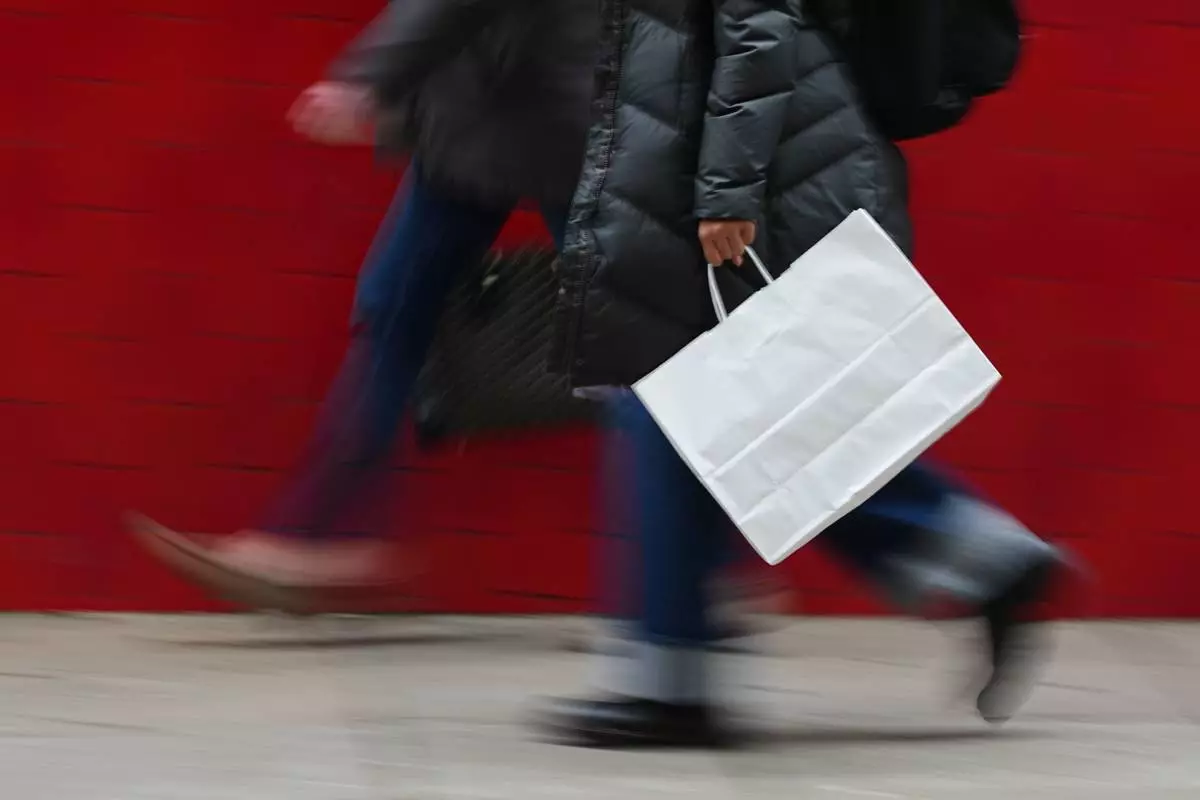
FILE - A person carries a shopping bag in Philadelphia, Dec. 10, 2025. (AP Photo/Matt Rourke, File)