LUJAN, Argentina (AP) — Thirty lions and tigers that were kept alive — barely — for years in cramped concrete cages at a shuttered Argentine zoo began entering jumbo-size transport crates Friday as they embarked on ambitious journeys to wildlife sanctuaries halfway across the world in South Africa and the United States.
The cats are being rescued from the former Luján Zoo, about 70 kilometers (43 miles) northwest of Argentina's capital of Buenos Aires, after years of uncertainty over their fate. Four Paws, the international animal-welfare organization overseeing the transfer, described it as one of the largest relocations of captive big cats in the world.
Click to Gallery
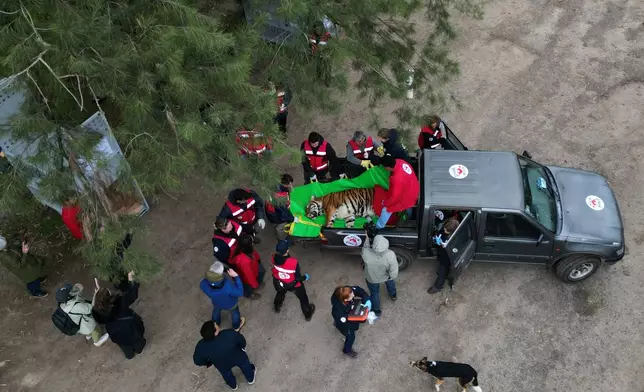
Members of the Four Paws animal welfare organization load a tiger onto a truck for its transfer from a shuttered zoo to a sanctuary in South Africa, in Lujan, Argentina, Friday, Aug. 14, 2026. CORRECTION: Corrects sanctuary from United States to South Africa. (AP Photo/Natacha Pisarenko)
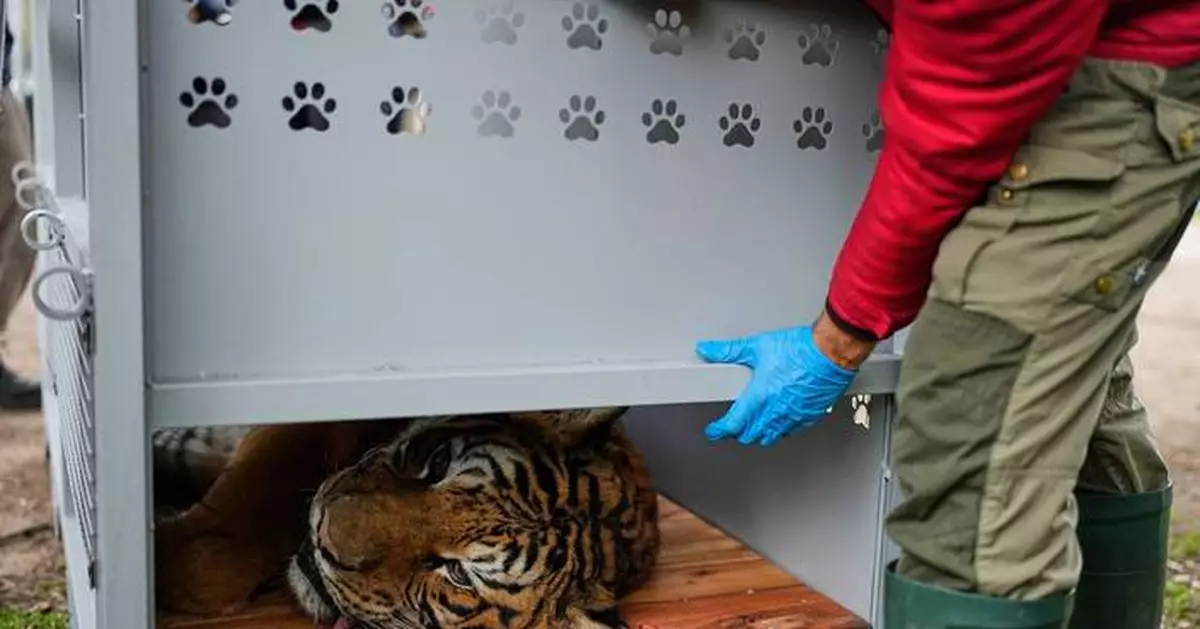
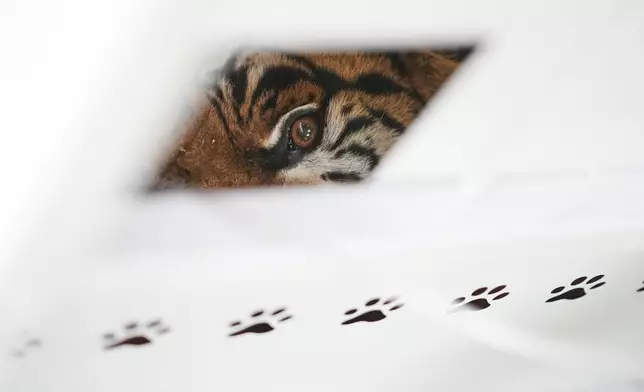
A tiger lies in a crate as Four Paws animal welfare organization members prepare for its transfer from a shuttered zoo to a sanctuary in South Africa, in Lujan, Argentina, Friday, Aug. 14, 2026. CORRECTION: Corrects sanctuary from United States to South Africa. (AP Photo/Natacha Pisarenko)
A tiger lies in a crate as Four Paws animal welfare organization members prepare for its transfer from a shuttered zoo to a sanctuary in South Africa, in Lujan, Argentina, Friday, Aug. 14, 2026. CORRECTION: Corrects sanctuary from United States to South Africa. (AP Photo/Natacha Pisarenko)
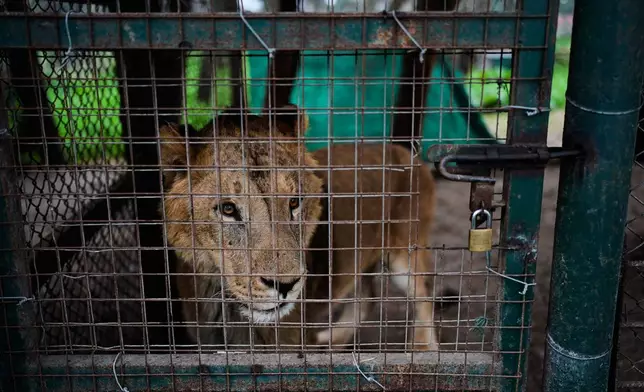
A lion looks out from a cage as members of the Four Paws animal welfare organization prepare to transfer it from the shuttered zoo to a sanctuary in the United States, in Lujan, Argentina, Friday, Aug. 14, 2026. (AP Photo/Natacha Pisarenko)
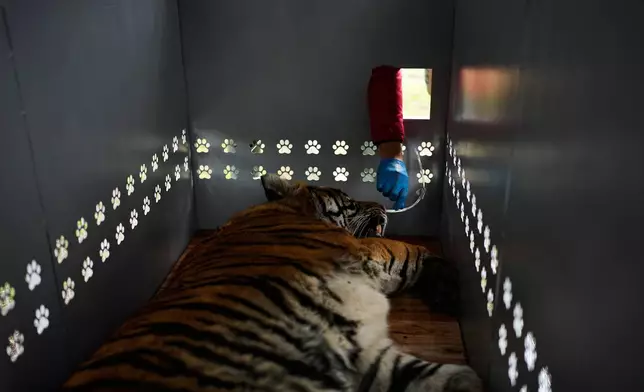
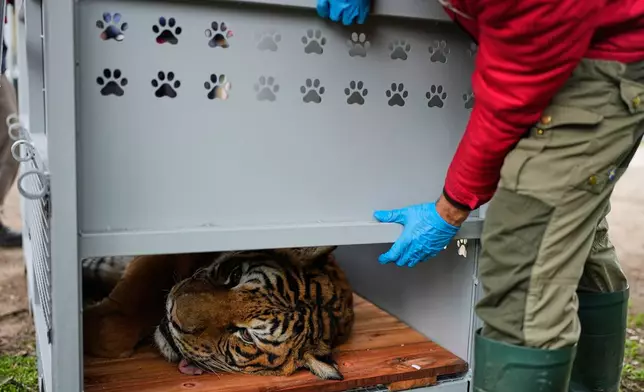
A tiger lies in a crate as a Four Paws animal welfare organization member prepares for its transfer from a shuttered zoo to a sanctuary in South Africa, in Lujan, Argentina, Friday, Aug. 14, 2026. (AP Photo/Natacha Pisarenko)
“We are putting everything into making this go as smoothly as possible so we can celebrate that 30 lives have improved because of this effort,” said Luciana D’Abramo, program director for Four Paws.
Once loaded into their crates and placed aboard cargo and passenger jets, nine tigers and six lions will be flown to Lionsrock, a Four Paws sanctuary in South Africa that houses more than 80 big cats across natural enclosures sprawling 60 hectares (148 acres). The remaining eight tigers and seven lions will travel to The Wild Animal Sanctuary in Colorado, a vast refuge on the grasslands northeast of Denver where rescued lions, tigers and other animals roam expansive habitats.
But getting there is no easy feat: The big cats bound for Colorado will fly through Chile, while the others will travel to Johannesburg via Frankfurt or Amsterdam before a four-hour drive to Lionsrock.
The Four Paws handlers trained many of the lions and tigers to enter the crates voluntarily. But some of the big cats required sedation, including two tigers that veterinarians hoisted in canvas slings Friday and carried by hand to their transport crates.
Argentine authorities shut down the Lujan Zoo — famous for letting visitors handle and pose for pictures with tigers and lions — over safety and animal welfare concerns in 2020. D’Abramo said about 200 big cats were living there when it closed. Only 112 remained when Four Paws first arrived in 2023 seeking a solution.
By the time the organization was allowed to take over the site two years later, that number had fallen to 62. Some of the captive animals can barely walk because of obesity, muscle loss or poor nutrition. Others suffer from dental and kidney disease, complications from declawing and injuries that never healed properly.
“That alone shows the level of overcrowding and the conditions in which these animals have endured,” D’Abramo said.
The organization retrained longtime zoo employees in modern animal-welfare practices and began improving the cats’ diets and medical care. This transfer leaves more than 20 lions and tigers at Luján while Four Paws searches for their long-term homes.
Follow AP’s Latin America coverage at https://apnews.com/hub/latin-america
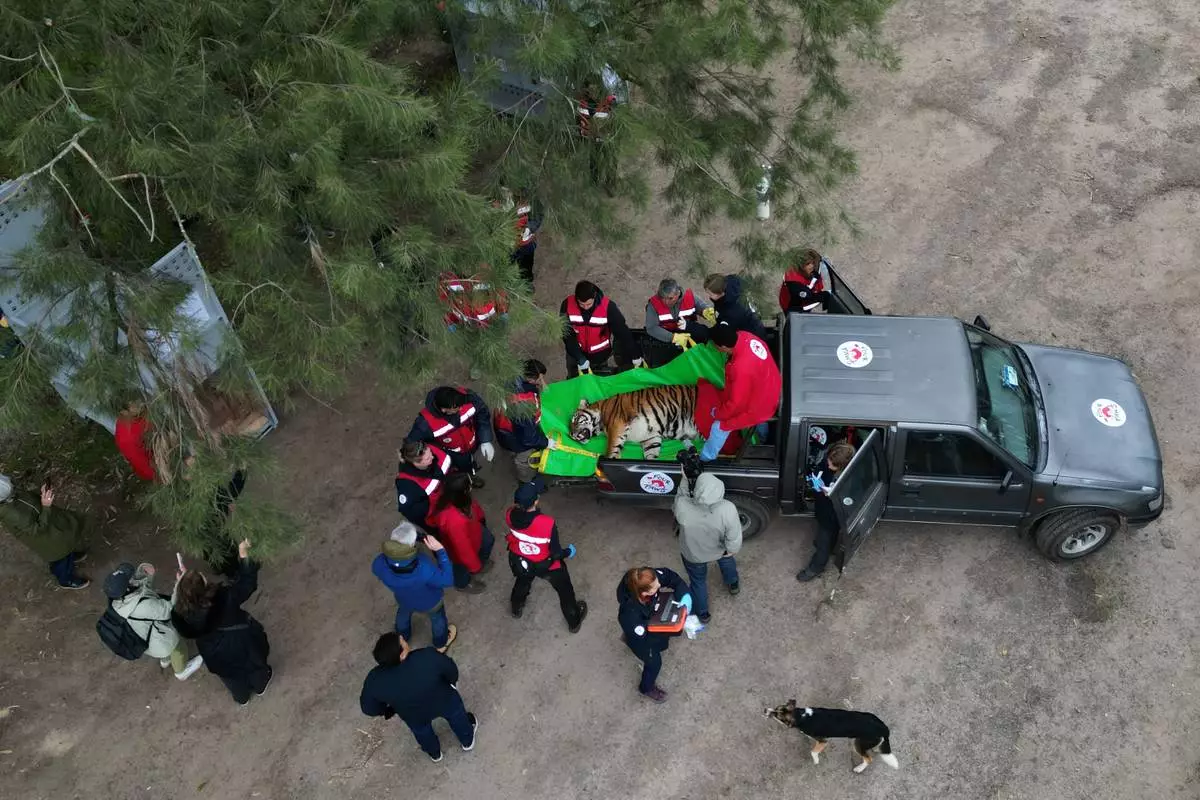
Members of the Four Paws animal welfare organization load a tiger onto a truck for its transfer from a shuttered zoo to a sanctuary in South Africa, in Lujan, Argentina, Friday, Aug. 14, 2026. CORRECTION: Corrects sanctuary from United States to South Africa. (AP Photo/Natacha Pisarenko)
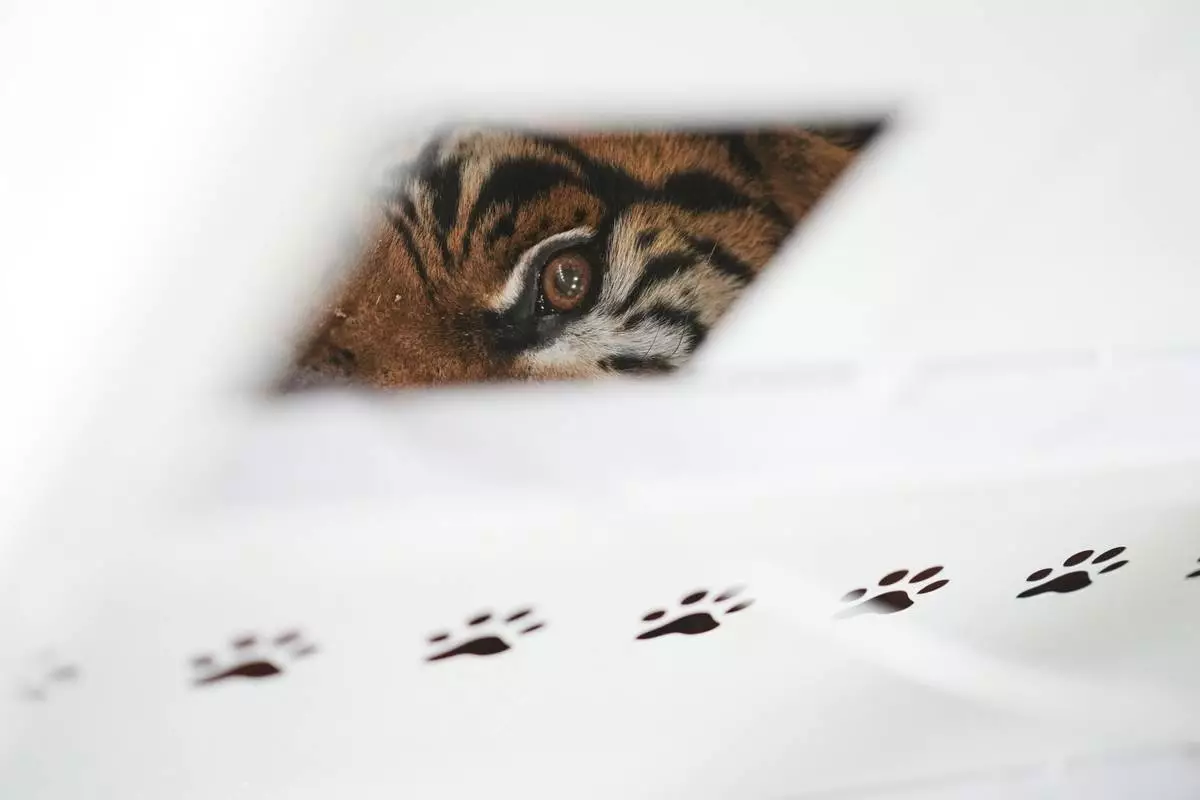
A tiger lies in a crate as Four Paws animal welfare organization members prepare for its transfer from a shuttered zoo to a sanctuary in South Africa, in Lujan, Argentina, Friday, Aug. 14, 2026. CORRECTION: Corrects sanctuary from United States to South Africa. (AP Photo/Natacha Pisarenko)
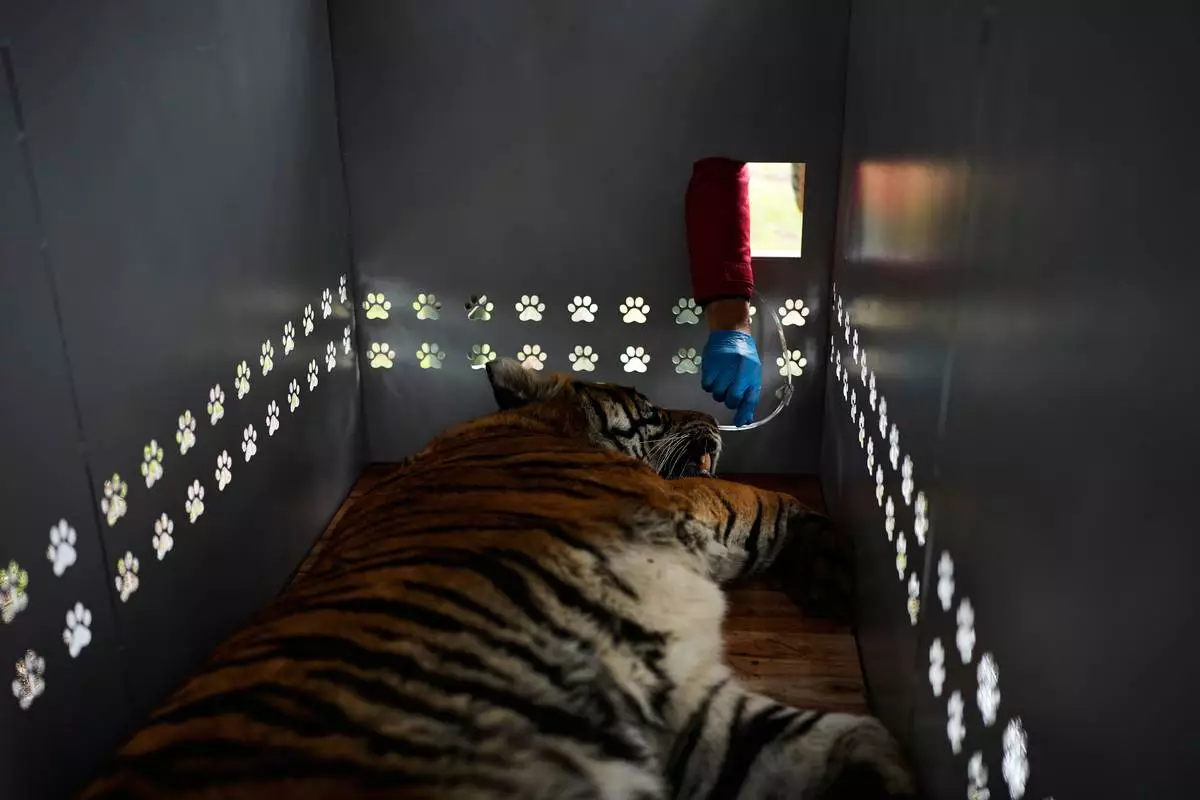
A tiger lies in a crate as Four Paws animal welfare organization members prepare for its transfer from a shuttered zoo to a sanctuary in South Africa, in Lujan, Argentina, Friday, Aug. 14, 2026. CORRECTION: Corrects sanctuary from United States to South Africa. (AP Photo/Natacha Pisarenko)
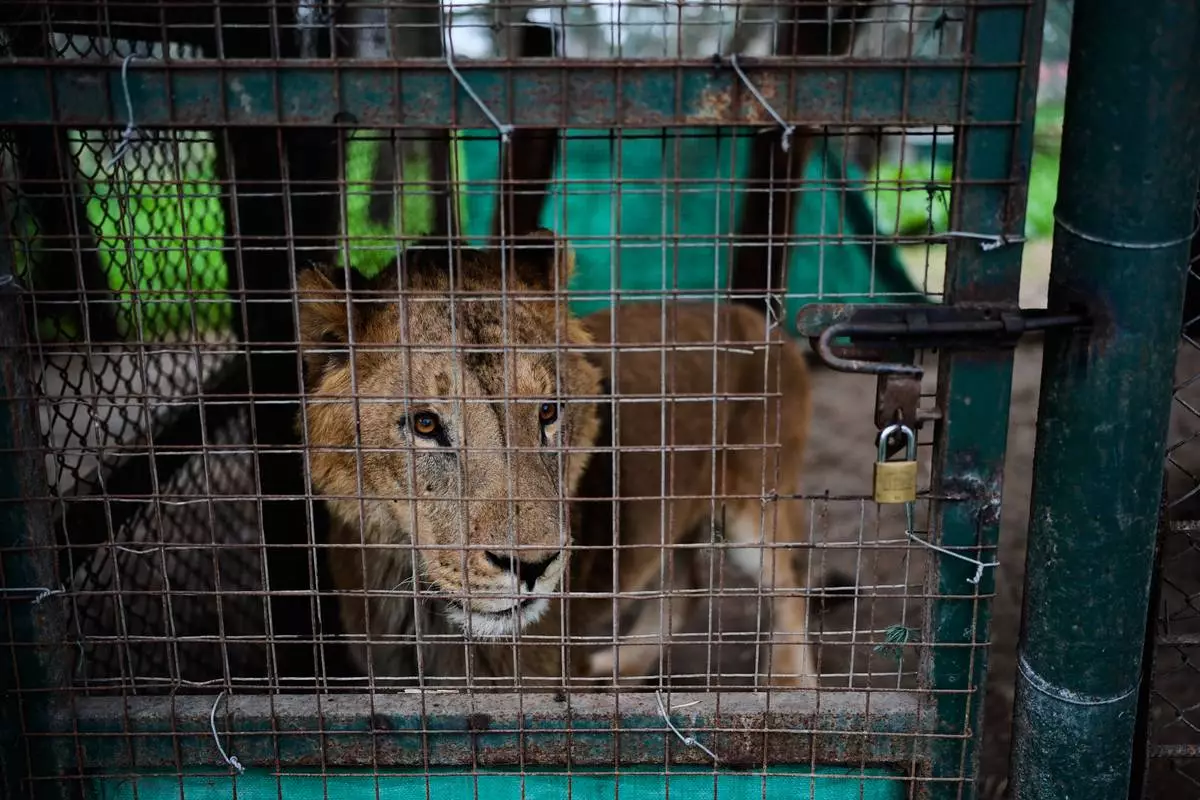
A lion looks out from a cage as members of the Four Paws animal welfare organization prepare to transfer it from the shuttered zoo to a sanctuary in the United States, in Lujan, Argentina, Friday, Aug. 14, 2026. (AP Photo/Natacha Pisarenko)
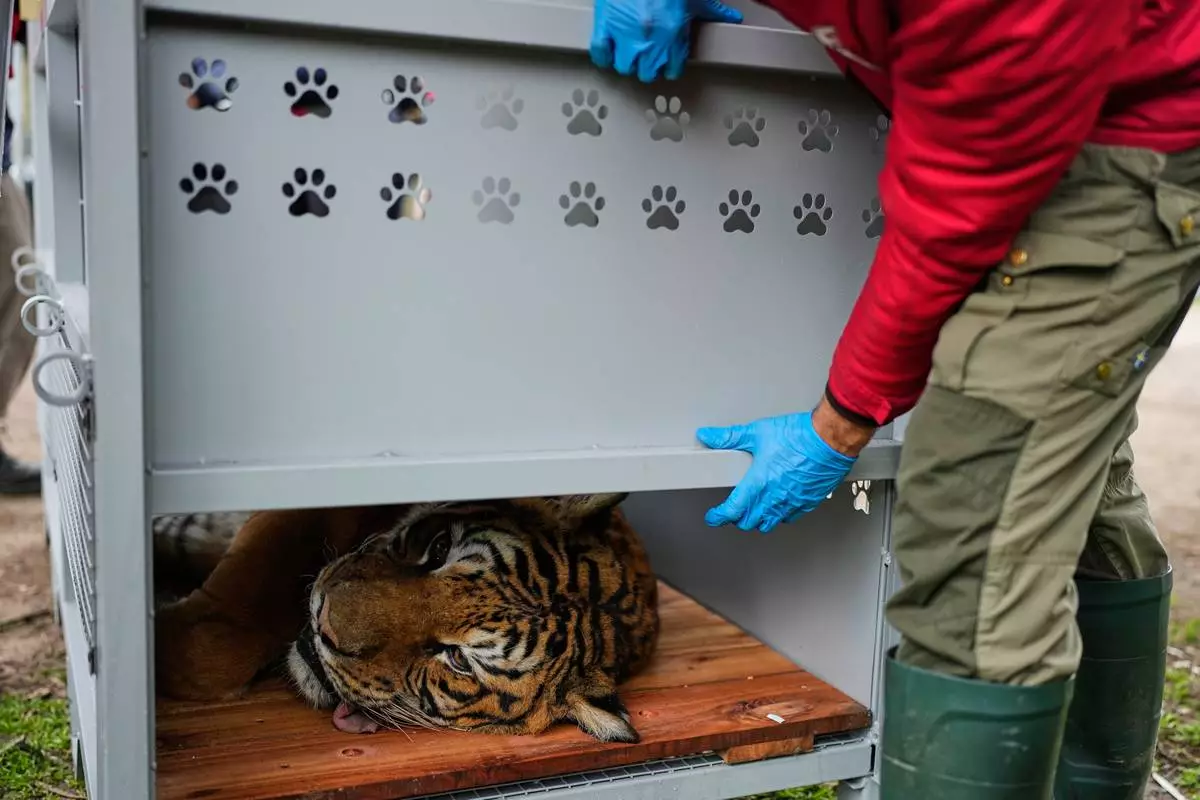
A tiger lies in a crate as a Four Paws animal welfare organization member prepares for its transfer from a shuttered zoo to a sanctuary in South Africa, in Lujan, Argentina, Friday, Aug. 14, 2026. (AP Photo/Natacha Pisarenko)
PHOENIX (AP) — All eyes were on Navajo Code Talker Thomas H. Begay. The 101-year-old veteran saluted while the national anthem played on Friday, kicking off a day of recognition honoring him and the other Navajo recruits who famously used their native language to keep military secrets during World War II.
Begay, one of the last two living Code Talkers, made the long trip from his home on the Navajo Nation to the Arizona State Capitol for the event. He was joined by family members and dozens of descendants of other Code Talkers.
“I am so damn proud,” said Begay, in a wheelchair and wearing a cap dotted with pins and a golden shirt that featured military patches and his service ribbons. “We used our language in World War II and won the battles.”
The Marine Corps recruited over 400 Navajos during World War II to communicate confidential information using their then-unwritten language. It was the largest code-talking program in the military at the time. In 2021, Arizona became the first state adopting Navajo Code Talker Day as a state holiday.
Between 1942 and 1945, they sent thousands of secret messages on battle tactics and enemy troop movements — using the same language Begay spoke while growing up and herding sheep on the Navajo Nation. Ultimately, the Code Talkers helped save the lives of thousands of Allied soldiers.
The program remained secret for decades and in 1982, President Ronald Reagan signed a proclamation designating Aug. 14 as the official day to honor the Navajo Code Talkers and all Native Americans who served in the war.
“The U.S. was being defeated. Without that code, that war could have been different," said Dawn Manuelito, a granddaughter of one of the first 29 Navajo Code Talkers who developed the code. “Our language saved this country."
When the Code Talkers were discharged after the war, they couldn't tell anyone about their mission. The program remained classified until 1968 and then efforts began to formally recognize the soldiers for their contributions.
In 1971, President Richard Nixon sent a letter of appreciation to the Navajo Tribal Council. Code Talker veterans participated in the bicentennial parade in Washington in 1976, and a joint congressional resolution resulted in Reagan's proclamation.
In the proclamation, Reagan also acknowledged that members of the Choctaw, Chippewa, Creek, Sioux, and other tribes used their tribal languages as effective battlefield codes in the two world wars.
At least 20 tribes have had members participate in the code talking programs, according to the National Museum of the American Indian.
During World War II, over 40,000 Native American men and women enlisted in the U.S. armed forces. Of the hundreds of Code Talkers deployed, the Comanches participated in operations in Europe, including the D-Day invasion of Nazi-occupied France.
Following President Donald Trump’s executive order to end federal diversity and equity programs, the Defense Department deleted thousands of pages honoring contributions by women and minority groups, including the Navajo Code Talkers and other Native American veterans.
Tribes condemned the action. The Pentagon restored some webpages, saying the Navajo Code Talker material was erroneously removed.
“They left their home, their sheep, their loved ones, to serve a country. They came back home and most of them have PTSD, like my dad. But they continued to do the best they can — and the Trump administration wiped them out of the map,” said Ronald Begay, 70, the oldest son of Thomas H. Begay. “It just makes your blood boil."
Laura Tohe, the Arizona poet laureate and daughter of a Navajo Code Talker, said her father went to a boarding school where students were punished for using their native languages. But when he joined the Marines, Tohe said, he and other men were told that the military would use their language to devise a code.
“It's a huge contradiction,” Tohe said. “Despite the complicated and dark history and relationship that we have with the U.S., these men were willing to step up because many of them felt like it was their responsibility to serve."
There's no dedicated museum to honor the group. Attempts to build one on the Navajo Nation haven't come to fruition.
New Mexico officials announced on Friday that the state would invest $20 million in a museum in Farmington.
Thomas H. Begay grew up speaking only the Navajo language with his parents. At 13, like many Native American Code Talkers, he first learned English when he was sent to boarding school.
Begay left the Marines in 1946 and joined the U.S. Army a year later. He worked as a communication specialist and was a paratrooper during the Korean War. That experience convinced him to leave the military in 1953.
The other surviving Navajo Code Talker is Peter MacDonald. He joined the Marine Corps at 15. He was two years too young, so he lied about his age.
After the war, MacDonald worked as an engineer for a defense contractor and eventually became a powerful and controversial politician on the Navajo Nation. In November 2017, MacDonald, along with other World War II veterans, met Trump in the Oval Office and shared the history of the Navajo Code Talkers.
——
Associated Press writer Savannah Peters contributed from Albuquerque, New Mexico.
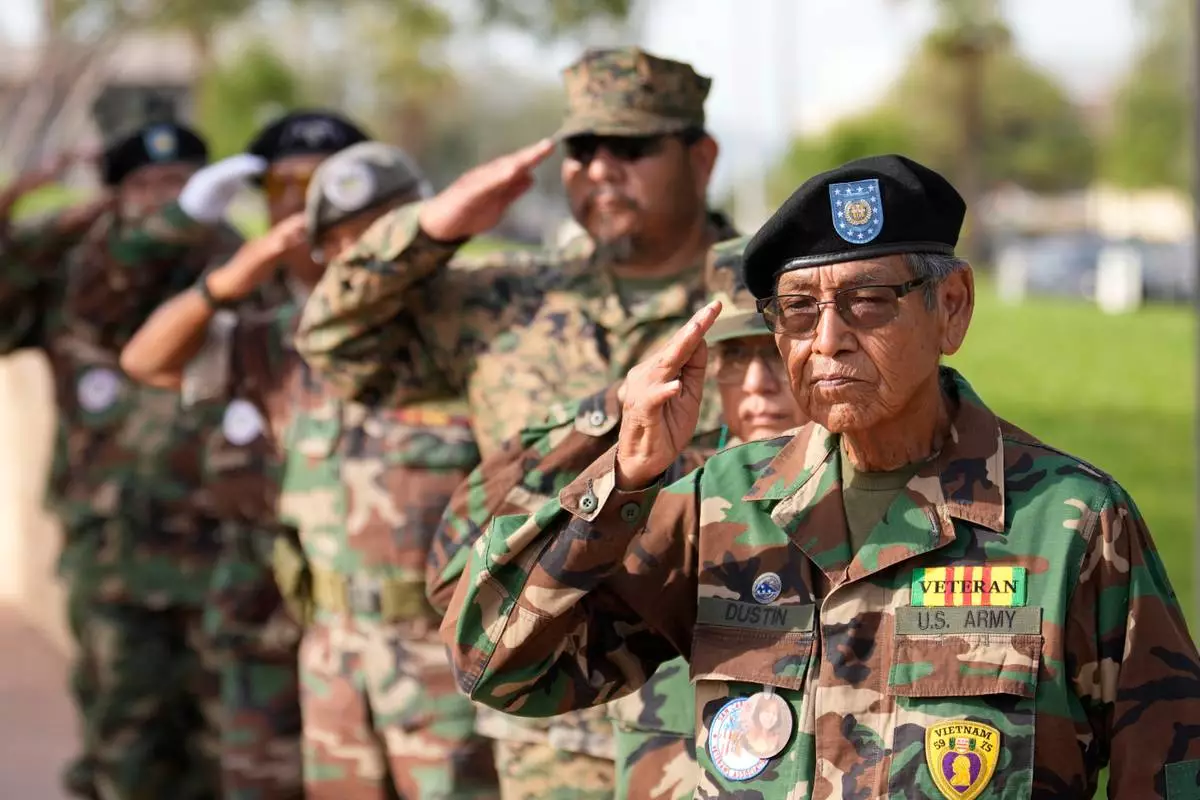
Members of the San Carlos Apache Veterans Association take part in a ceremony on Navajo Code Talkers Day, Friday, Aug. 14, 2026, in Phoenix. (AP Photo/Ross D. Franklin)
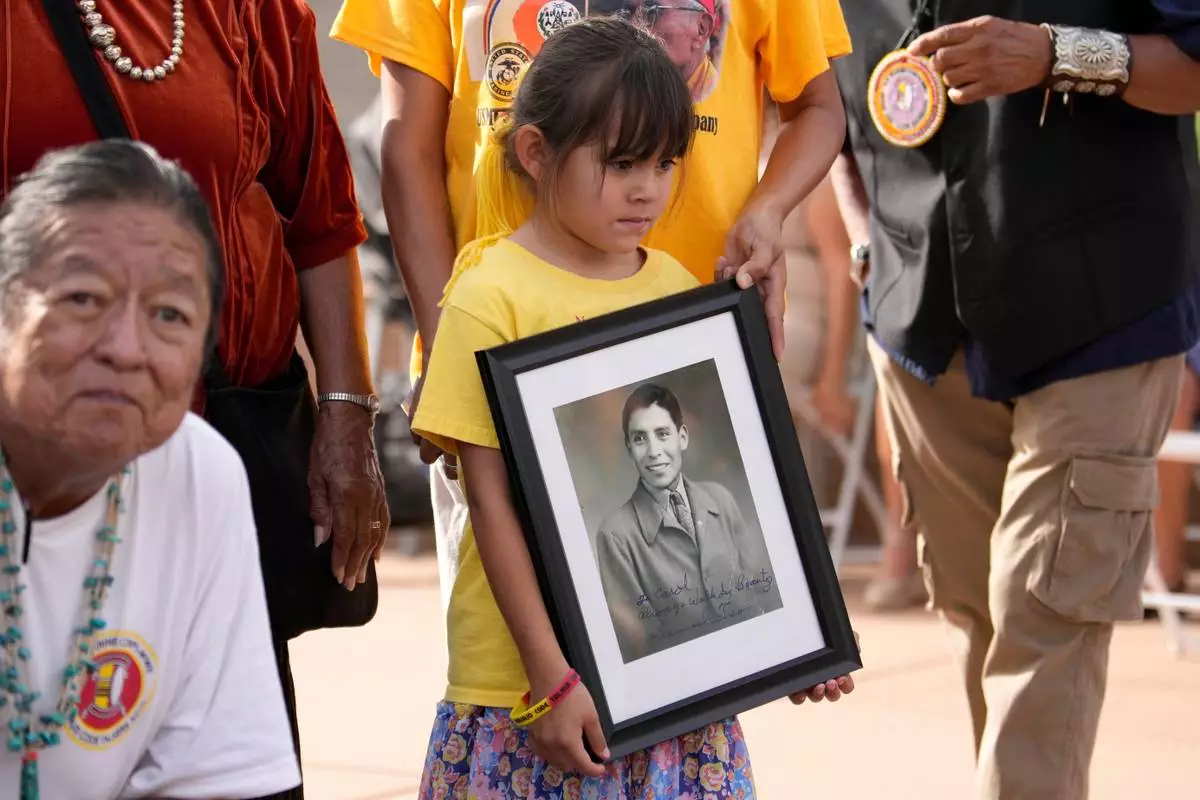
Descendants of Navajo Code Talkers, including family members of Samuel Nakai Tso, display his picture during a ceremony on Navajo Code Talkers Day, Friday, Aug. 14, 2026, in Phoenix. (AP Photo/Ross D. Franklin)
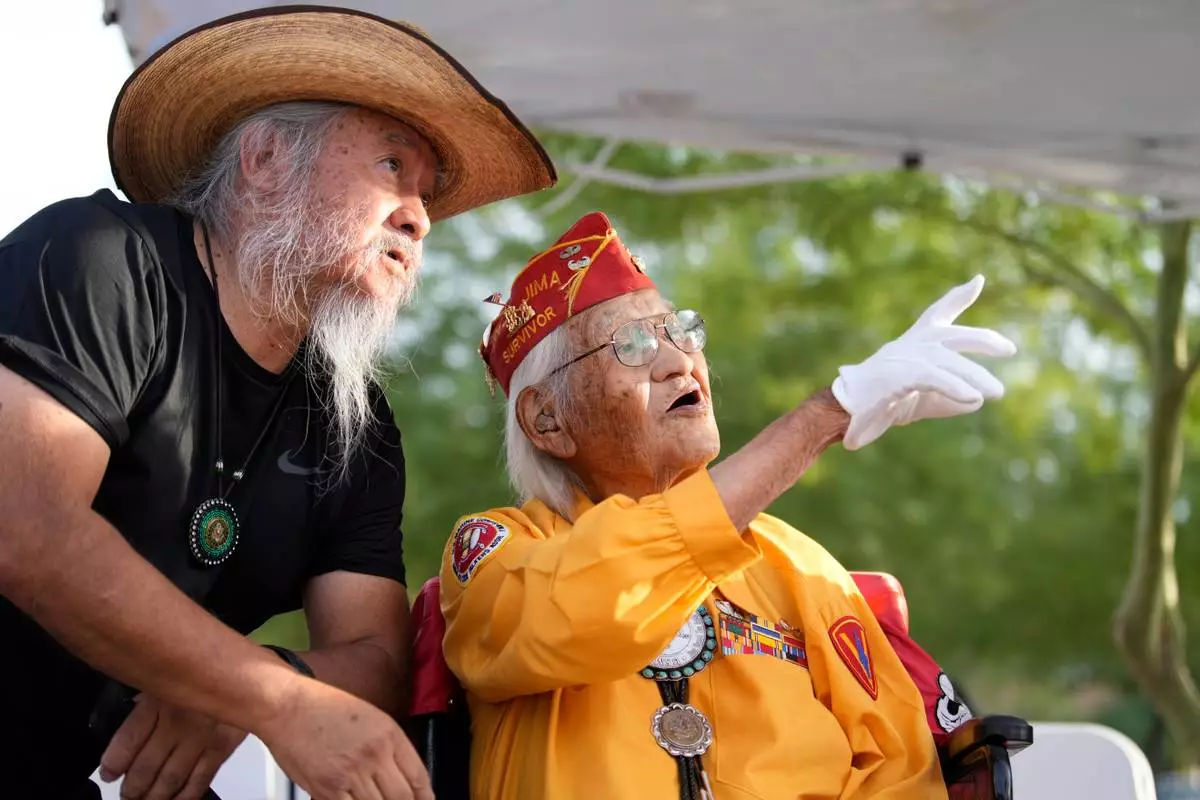
Navajo Code Talker Thomas Begay, right, talks with his son, Ron Begay, prior to a ceremony on Navajo Code Talkers Day, Friday, Aug. 14, 2026, in Phoenix. (AP Photo/Ross D. Franklin)
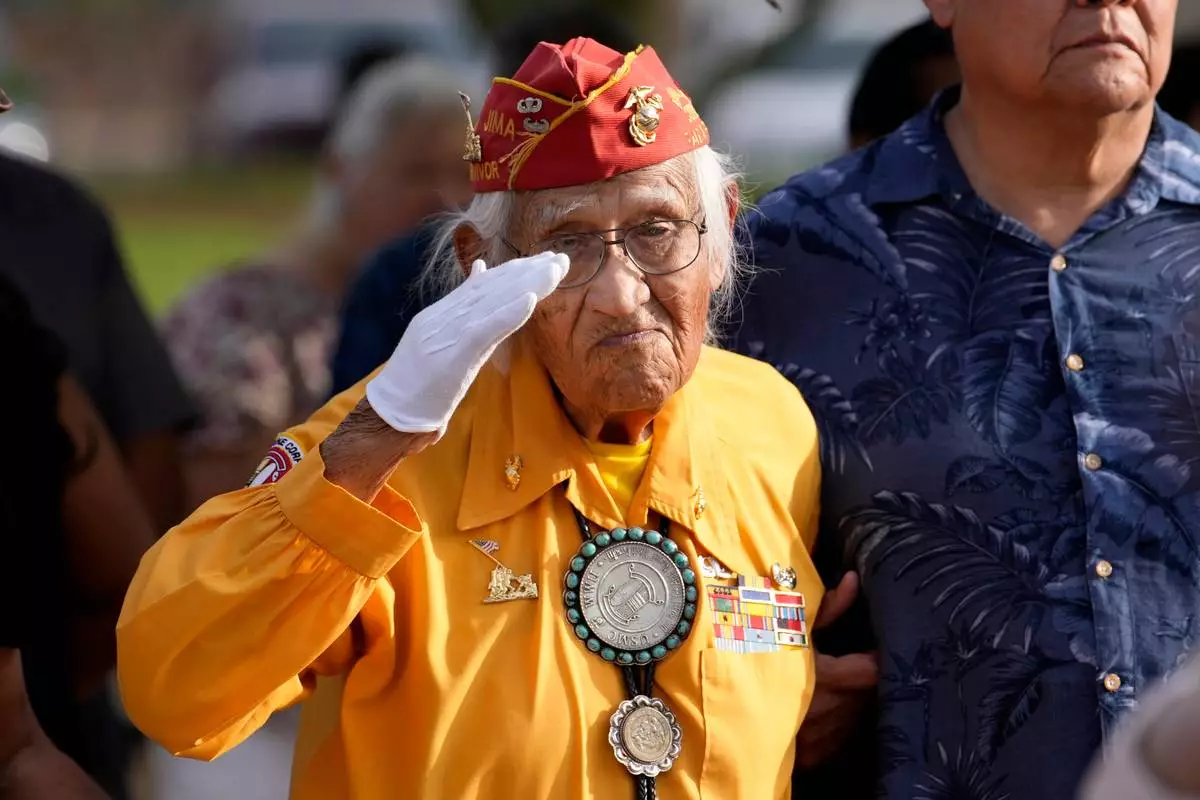
Navajo Code Talker Thomas Begay salutes during the national anthem during a ceremony on Navajo Code Talkers Day, Friday, Aug. 14, 2026, in Phoenix. (AP Photo/Ross D. Franklin)
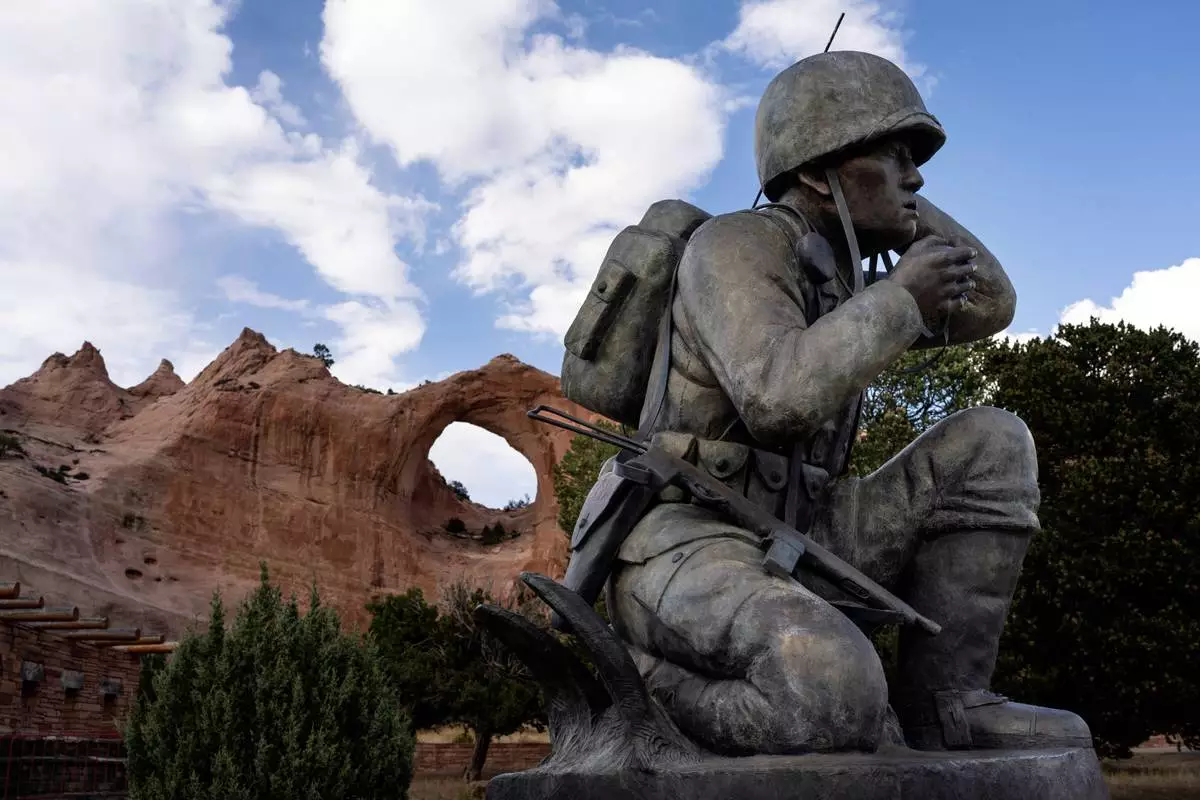
FILE - A monument to the Navajo Code Talkers stands in front of the red sandstone arch of Window Rock, Ariz., outside the Navajo Nation government headquarters, Oct. 10, 2024. (AP Photo/Rodrigo Abd, File)
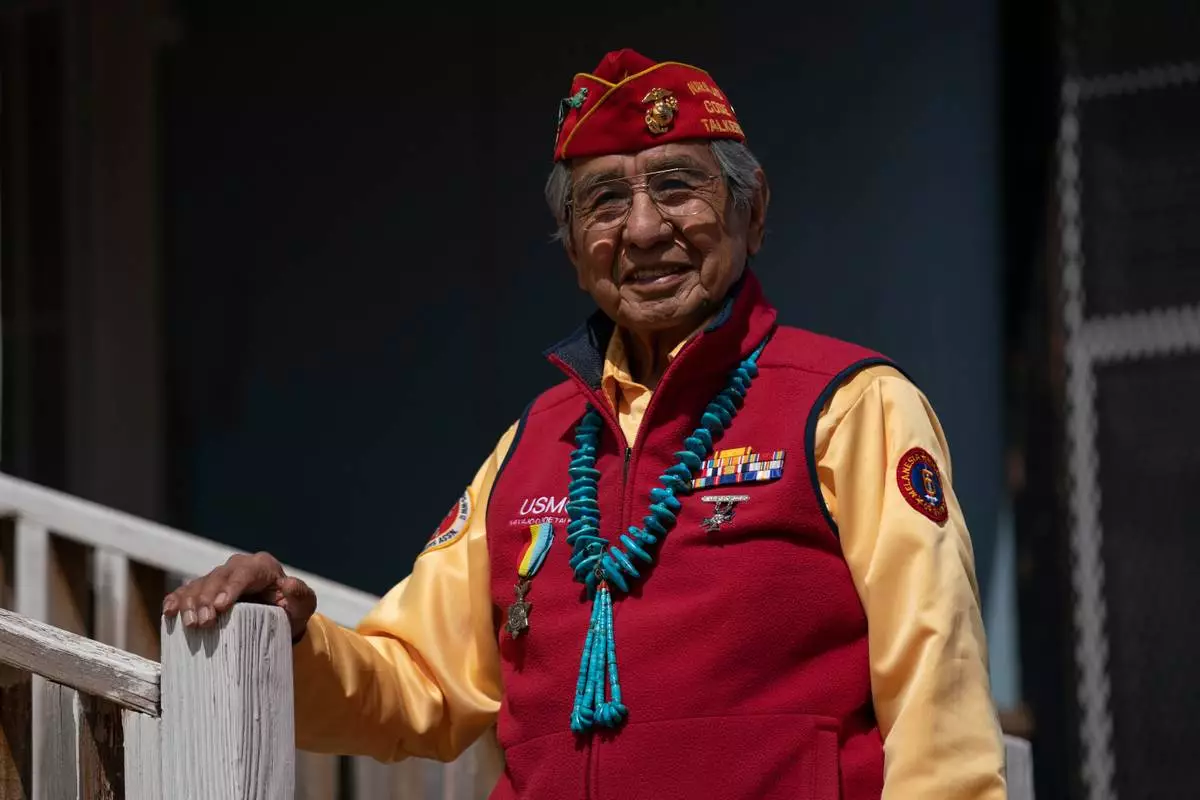
FILE - WWII veteran and Navajo Code Talker Peter MacDonald Sr. is photographed at his home on the Navajo reservation in Tuba City, Ariz., April 28, 2020. (AP Photo/Carolyn Kaster, File)
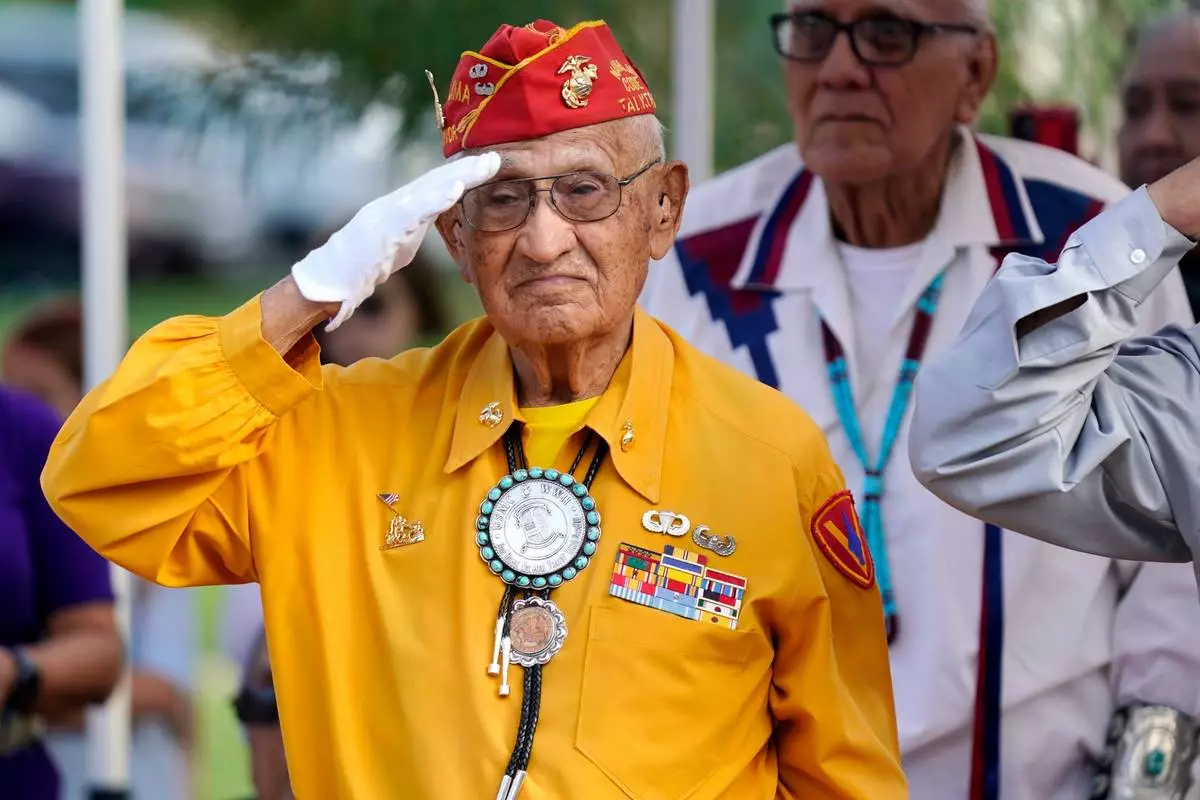
FILE - Navajo Code Talker Thomas Begay salutes during the national anthem at the Arizona State Navajo Code Talkers Day celebration, Aug. 14, 2022, in Phoenix. (AP Photo/Ross D. Franklin, File)