TOKYO (AP) — The Japanese defense minister on Saturday prayed at Tokyo’s Yasukuni Shrine, seen by Japan’s Asian neighbors as a symbol of the country’s past militarism. Prime Minister Sanae Takaichi, despite her repeated past pledges for a visit on the day marking Japan's surrender, is expected to stay away to avoid diplomatic tensions.
Visits by Japanese politicians to the shrine, which also commemorates World War II criminals, have been criticized by China and South Korea. They see it as a move that shows their lack of remorse over Japan’s wartime atrocities.
Defense Minister Shinjiro Koizumi has regularly been at the controversial shrine to mark Japan's anniversary of the end of the war on Aug. 15 and other occasions. But as a defense minister pushing to increase Japan’s military capability and weapons sales under Takaichi’s hawkish government, his visit Saturday is seen as more contentious.
Koizumi did not comment on the visit and walked past journalists at the shrine.
He is the son of popular former Prime Minister Junichiro Koizumi, who outraged China when he visited Yasukuni as a serving leader in 2006.
Attention this week was on whether Takaichi, who has repeatedly said she would pray at the shrine on Aug. 15 despite the controversy, would keep her pledge and show up at Yasukuni on Saturday, when Japan marks its surrender that ended the war 81 years ago.
Earlier this week, Chief Cabinet Secretary Minoru Kihara said Takaichi would make an appropriate decision, followed by Japanese media saying she would stay away from the shrine to keep Japan’s already difficult ties with Beijing from further worsening and maintain good ties with Seoul.
The focus will shift later Saturday to how Takaichi describes the wartime history in her first address as prime minister at a national ceremony marking the surrender.
Takaichi has repeatedly resisted acknowledging Japan's wartime aggression and atrocities, and denied that coercion was used against Korean laborers and women held as sex slaves for Japanese troops. She was previously part of a campaign to remove references to wartime sexual slavery, euphemistically known as “comfort women,” from school textbooks.
She has said she is from the postwar generation who has no responsibility for Japan's past actions and that she has no intention to apologize.
The country has faced revisionist pushbacks since the 2010s under nationalistic former Prime Minister Shinzo Abe, who pushed to correct a “self-deprecating view” of Japan’s wartime history and regain national pride. Takaichi considers Abe a mentor.
Since 2013, Japanese prime ministers have stopped apologizing to Asian victims for wartime atrocities, under a precedent set by Abe. Last year, however, former Prime Minister Shigeru Ishiba expressed “remorse” over the war and called it a mistake, though he fell short of mentioning Japan's aggression across Asia or apologizing.
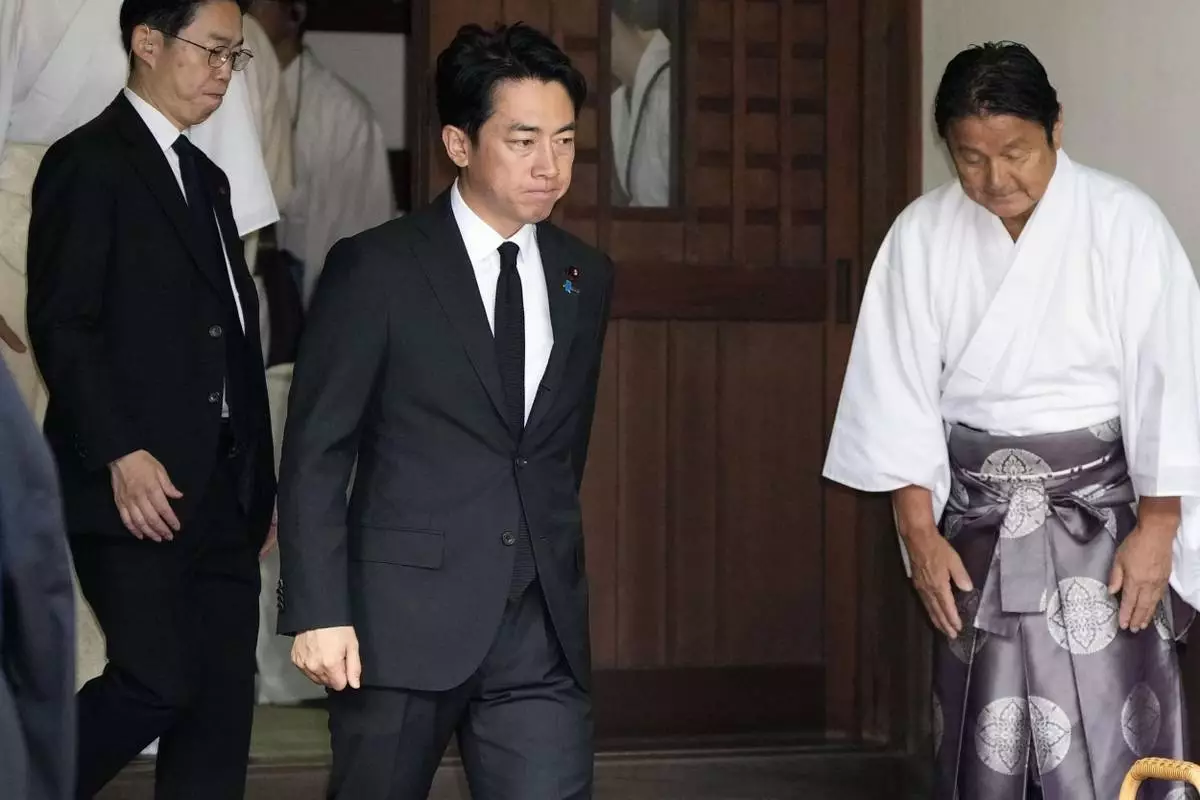
Japan's Defense Minister Shinjiro Koizumi, center, visits Yasukuni Shrine in Tokyo, Saturday, Aug. 15, 2026. (Kyodo News via AP)
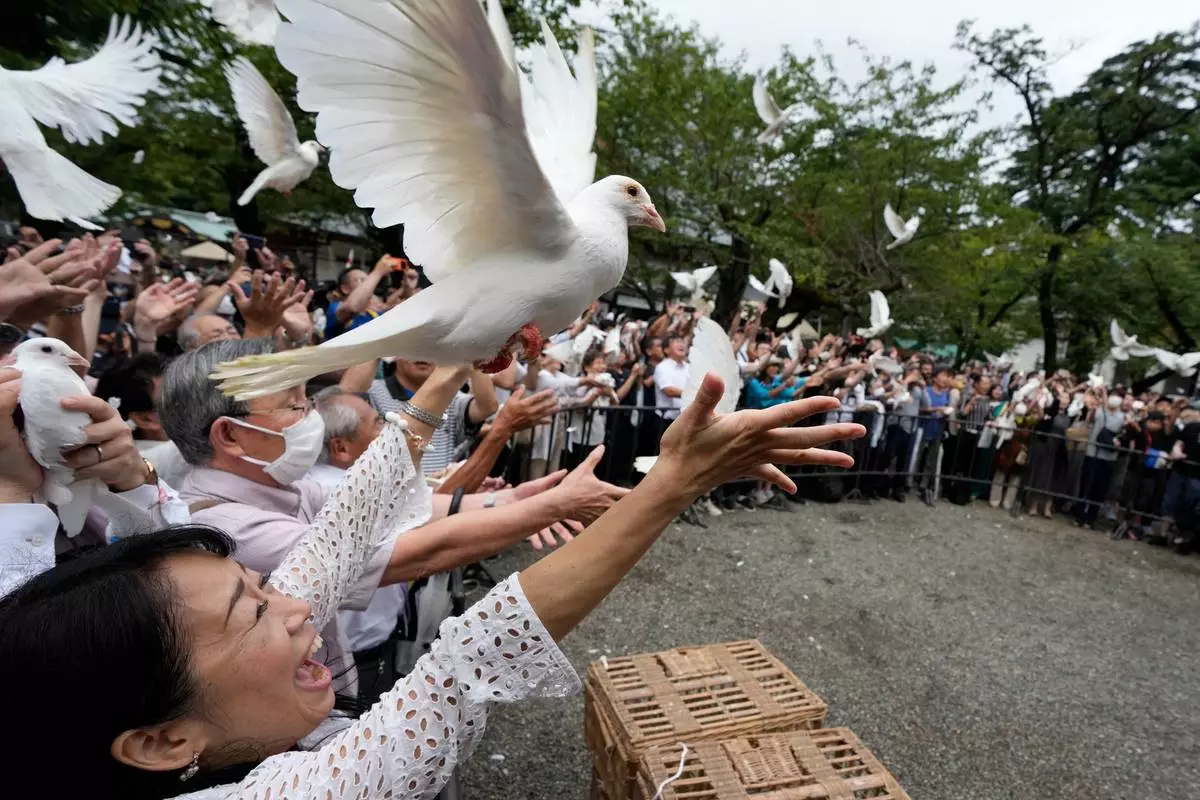
FILE - Doves are released in prayer of peace by worshippers at the Yasukuni Shrine in Tokyo, Japan, Tuesday, Aug. 15, 2023. (AP Photo/Eugene Hoshiko, File)
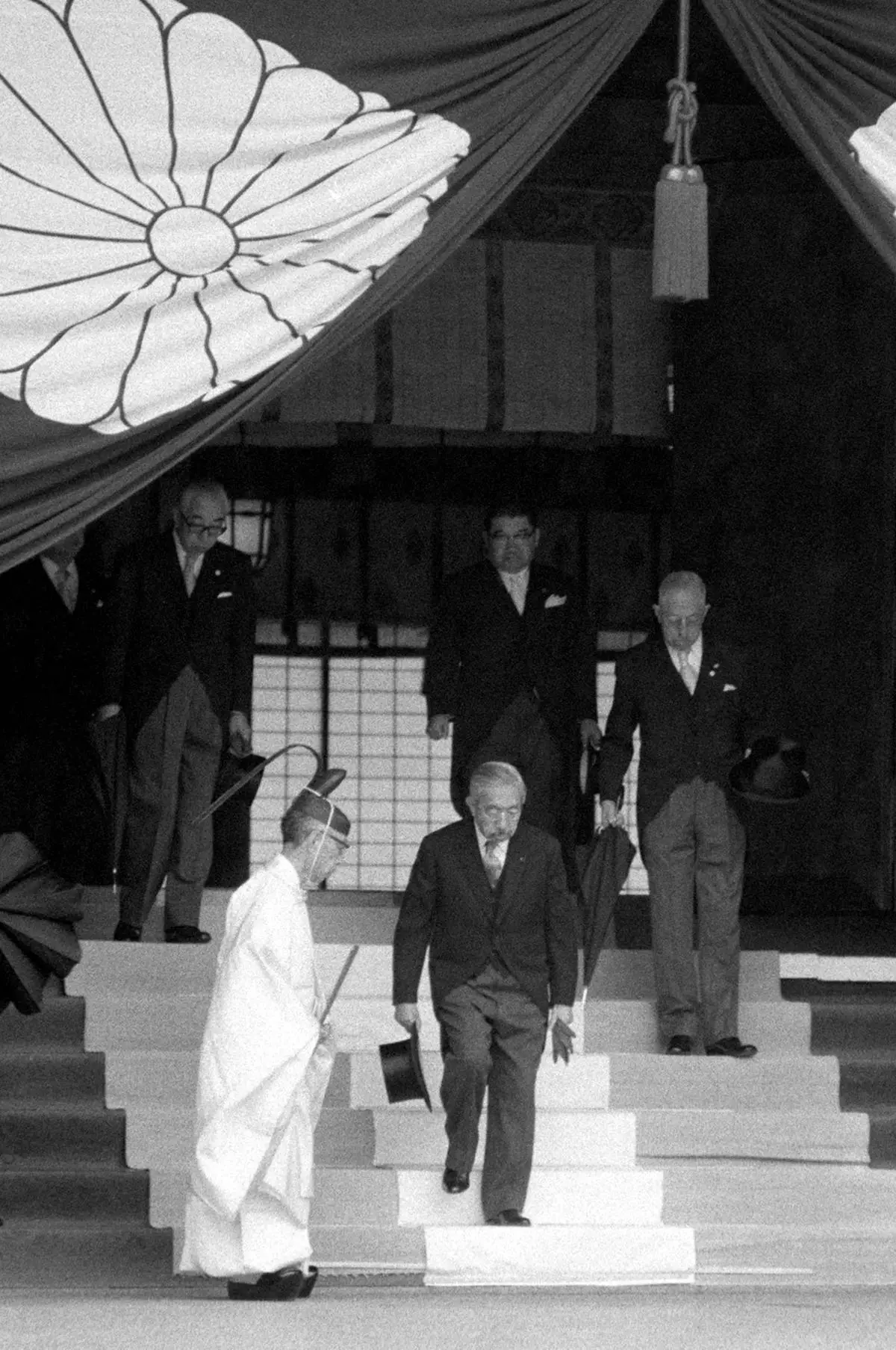
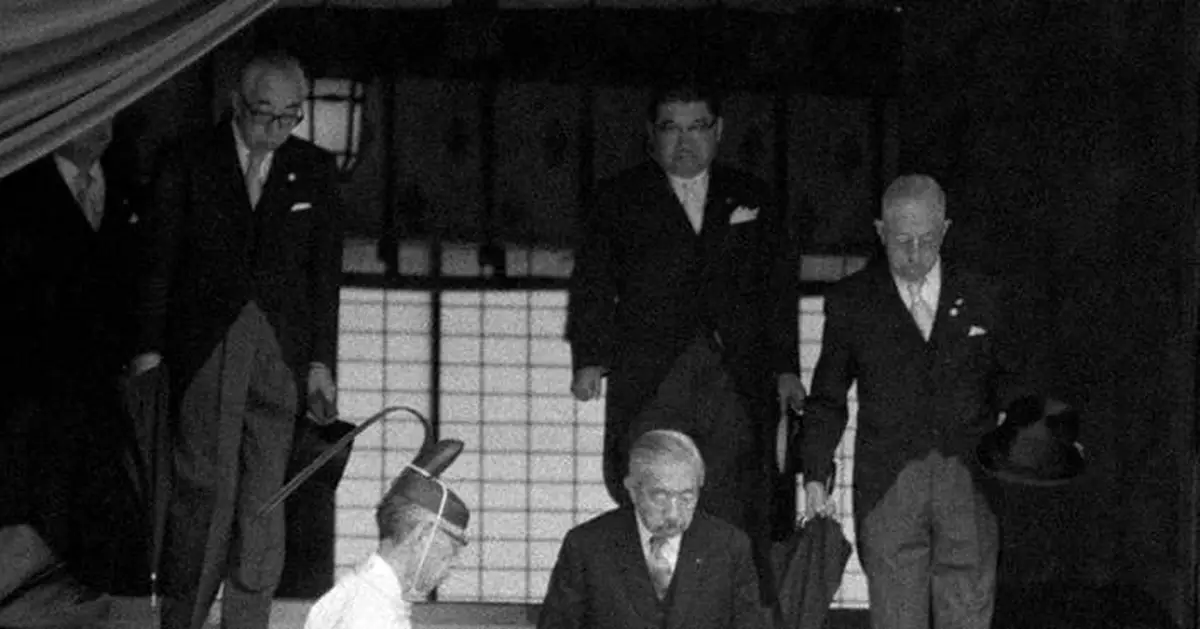
Japanese Emperor Hirohito visits Yasukuni Shrine in Tokyo, on Nov. 21, 1975. (Kyodo News via AP)
President Donald Trump's goal of ending gender-affirming care is not improper and cannot be the basis for quashing a subpoena issued by the Justice Department against a provider of medical treatment for transgender youth, a divided federal appeals court ruled Friday.
The Justice Department announced last year that it had issued more than 20 subpoenas to doctors and clinics that provide gender-affirming care as part of an effort to investigate healthcare fraud. Federal judges have quashed many of the subpoenas as illegitimate efforts to intimidate providers into ending care.
In a 2-1 decision, a panel of the 9th U.S. Circuit Court of Appeals said the efficacy and long-term risks of the treatments are "uncertain," and the president has the power to align the Justice Department's enforcement priorities with his broader policy goals.
“Every President has law enforcement priorities, just as every President has signature policies (often, the former are components of the latter)," Judge Carlos Bea wrote.
Bea, a nominee of Republican President George W. Bush, was joined in the opinion by Daniel Bress, a Trump nominee. They reversed a ruling that quashed the subpoena against telemedicine provider QueerDoc, sending the case back to the district court to consider other arguments.
The subpoena seeks QueerDoc's personnel files, billing documents, communications with drug manufacturers and records of patients who were prescribed puberty blockers or hormone therapy, among other information, according to the 9th Circuit decision.
American Civil Liberties Union attorney Adrien Leavitt, who represented Washington state-based QueerDoc, said the ACLU would continue fighting the subpoena in district court. QueerDoc has also argued the subpoena is overbroad and burdensome. The Justice Department has said it has reason to believe the company may be misleading people about puberty blockers and hormones.
"We’re ready to continue defending one of the most fundamental principles of healthcare: every patient’s right to confidential medical care,” Leavitt said in a statement.
He said the San Francisco-based 9th Circuit was the first appeals court to weigh in on the subpoenas.
Trump has signed one executive order defining sex as only male or female — and as unchangeable — and another that seeks to end federal funding of gender-affirming care for patients under 19. The latter order also directs the Justice Department to “prioritize investigations” into violations of a drug safety law by “any entity that may be misleading the public about long-term side effects of chemical and surgical mutilation.”
Gender-affirming care includes a range of medical and mental health services to support a person’s gender identity, including when it’s different from the sex they were assigned at birth. It encompasses counseling, medications that block puberty and hormone therapy to produce physical changes as well as surgeries to transform chests and genitals, though those are rare for minors.
Most major medical groups say access to the treatment is important for those with gender dysphoria and see gender as existing along a spectrum.
The 9th Circuit majority called discussion around gender-affirming care "an unsettled scientific debate," and said the Trump administration could also justify its opposition to the treatment on ethical or philosophical grounds.
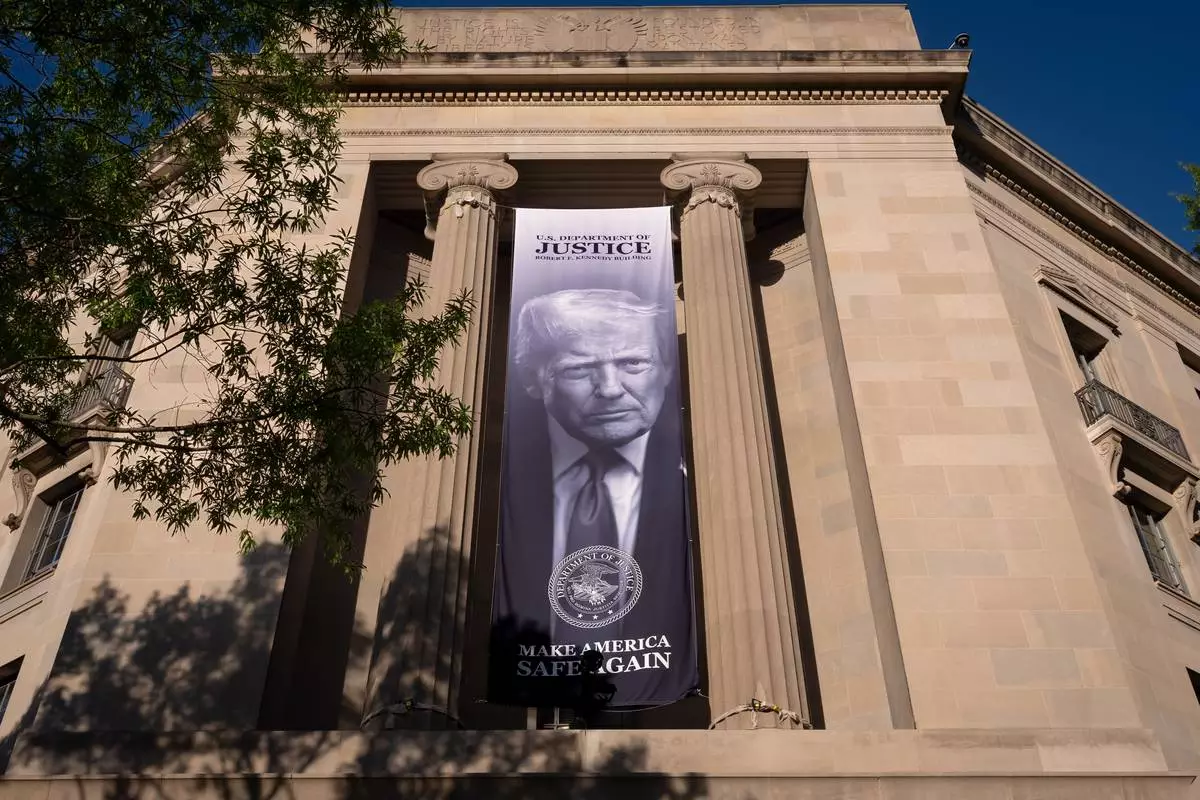
FILE - A portrait of President Donald Trump is displayed at the Justice Department building in Washington, June 2, 2026. (AP Photo/J. Scott Applewhite, File)