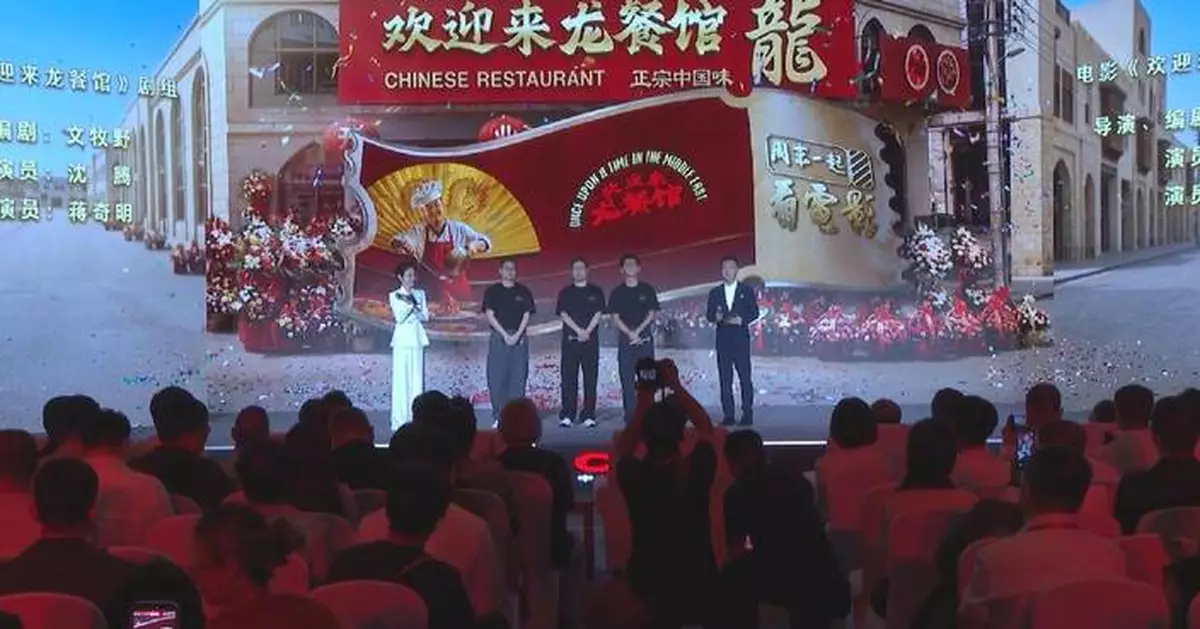
Chinese anti-war film "Once Upon a Time in the Middle East" explores war, peace and human kindness through the stark contrast between chaos on the streets and comfort at the dinner table, said the film's director and lead actor at the launch event of a film culture carnival hosted by the China Media Group (CMG) in north China's Tianjin Municipality on Friday.
Rather than relying on grand battle scenes, the film is set almost entirely in a small Chinese restaurant in war-torn Iraq in 2003.
Helmed by Wen Muye, the director who garnered widespread acclaim for his landmark social drama Dying to Survive, the film centers on Xu Fu, a down-on-his-luck Chinese chef portrayed by celebrated comedian Shen Teng, who travels to the Middle East to settle his debts. There, he joins forces with a local restaurant manager to operate a bustling restaurant, bringing authentic Chinese culinary traditions to a war-torn foreign land.
Unlike timeworn Western heroic storytelling, the film adopts the humble viewpoint of Xu Fu, an ordinary cook. Through the eye of Xu, a neutral bystander, it portrays the struggles and sufferings of ordinary people trapped in conflict, using food and everyday life to explore survival, compassion and the value of peace.
"The core essence of the film is a powerful contrast. Outside the restaurant, the world is in turmoil. Inside, life is still simmering," said Wen.
"The most striking contrast in the film lies in the fact that outside the restaurant, war rages and people are displaced. Inside, life goes on. A warm shelter, a hot meal, that's where a rare sense of peace can be found," said Shen.
The summer blockbuster was released on Tuesday nationwide and had earned box office revenue of more than 536 million yuan (around 79.5 million U.S. dollars) as of 22:00 Friday.
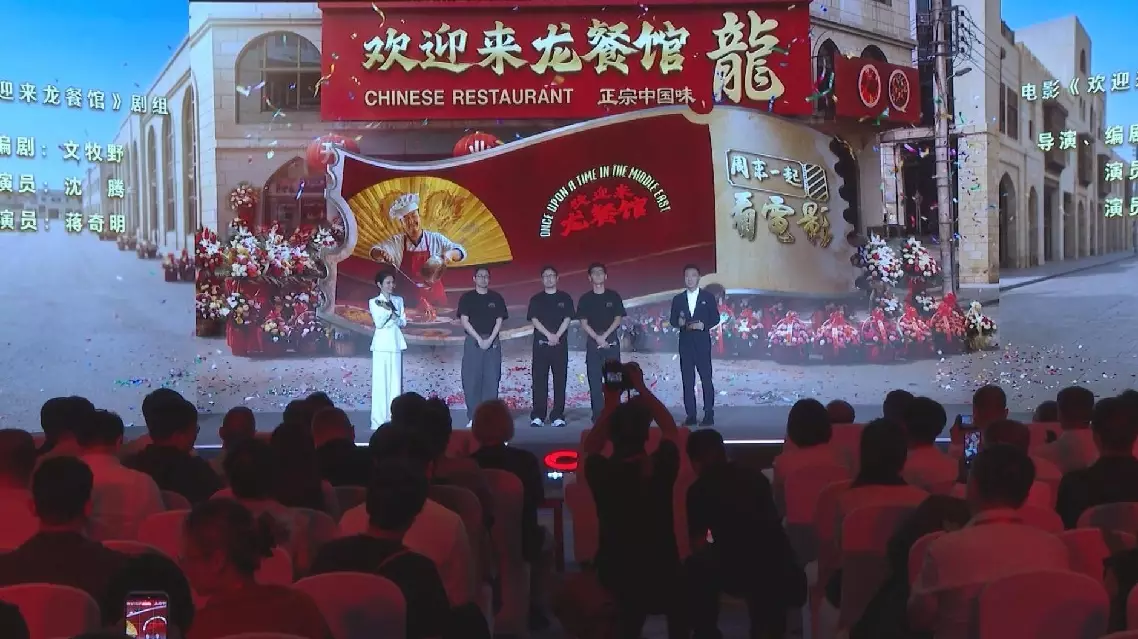
Chinese anti-war film explores war, peace through contrast between chaos, comfort: director