A severe shortage of clean water and sanitation facilities is undermining efforts to contain the Ebola outbreak in Mongbwalu, a gold-mining town in the Democratic Republic of the Congo's Ituri province, where residents struggle to maintain basic hygiene while facing the deadly virus.
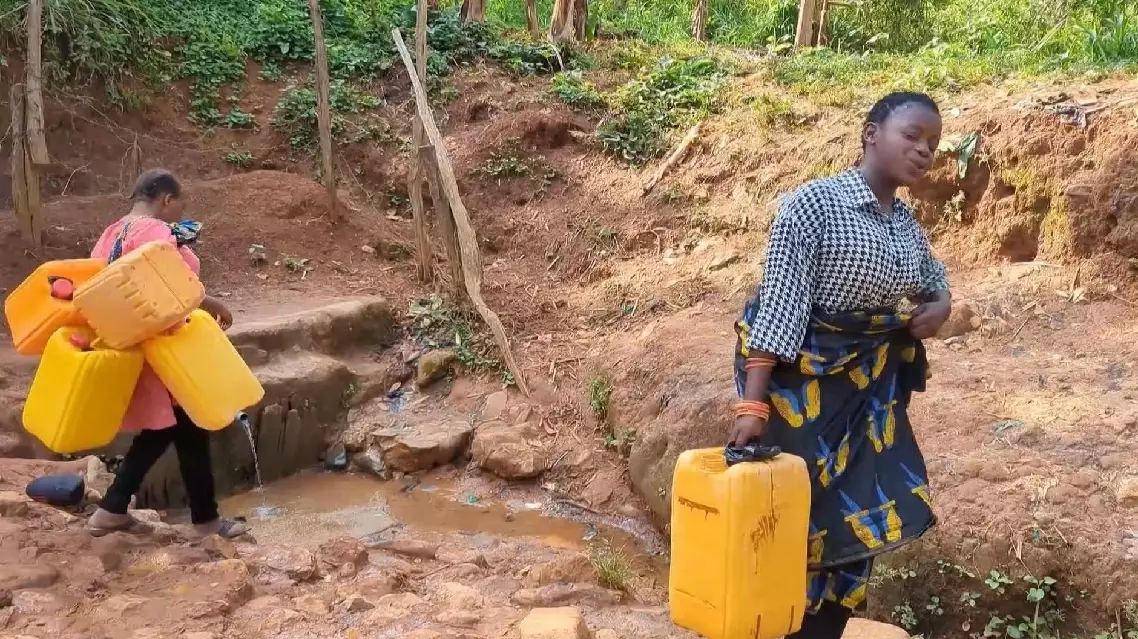
Every morning, residents walk several kilometers with plastic containers to collect water from a nearby natural spring. Most families cannot afford public water taps, while local groundwater is often contaminated by runoff from nearby mines.
"Three water jugs cost 1,000 francs. If you have 10 jugs at home and only 1,000 francs left, plus children to feed, what do you do? That financial pressure is what forces us to walk miles every day to collect free spring water," said Francoise Ididi, a local resident.
According to Oxfam, an international aid organization focused on poverty and emergency relief, only one in five of Mongbwalu's 140,000 residents has reliable access to safe water. Every drop must be carefully rationed between cooking, drinking and cleaning, leaving little for handwashing, which is a key measure in preventing Ebola transmission.
"During this Ebola outbreak, it's important to wash your hands regularly. But if water is hard to find, or if there isn't enough water in the household, it's difficult to protect yourself against this disease," said Isaac Lure, another resident.
The crisis extends to public spaces. At the central market, where hundreds gather daily, sanitation facilities are scarce.
"There are no handwashing stations and no sanitizers here. We go the entire day without washing our hands unless we did so at home. The authorities need to take action, because the rule right now is to wash your hands," said Neema Mave, a vendor at the market. Some NGOs have set up water tanks, but the crisis is compounded by small-scale gold mining, which leaves thousands of vulnerable workers exposed to contaminated water daily. Public health experts warn that water scarcity is accelerating the health emergency, as residents make do with whatever little water they can source.
Water scarcity hinders Ebola containment efforts in DR Congo outbreak zone