Skip to Content Facebook Feature Image

Receding Danube water levels reveal sunken WWII warships

China

China

China

Receding Danube water levels reveal sunken WWII warships

2026-08-15 16:36 Last Updated At:17:37

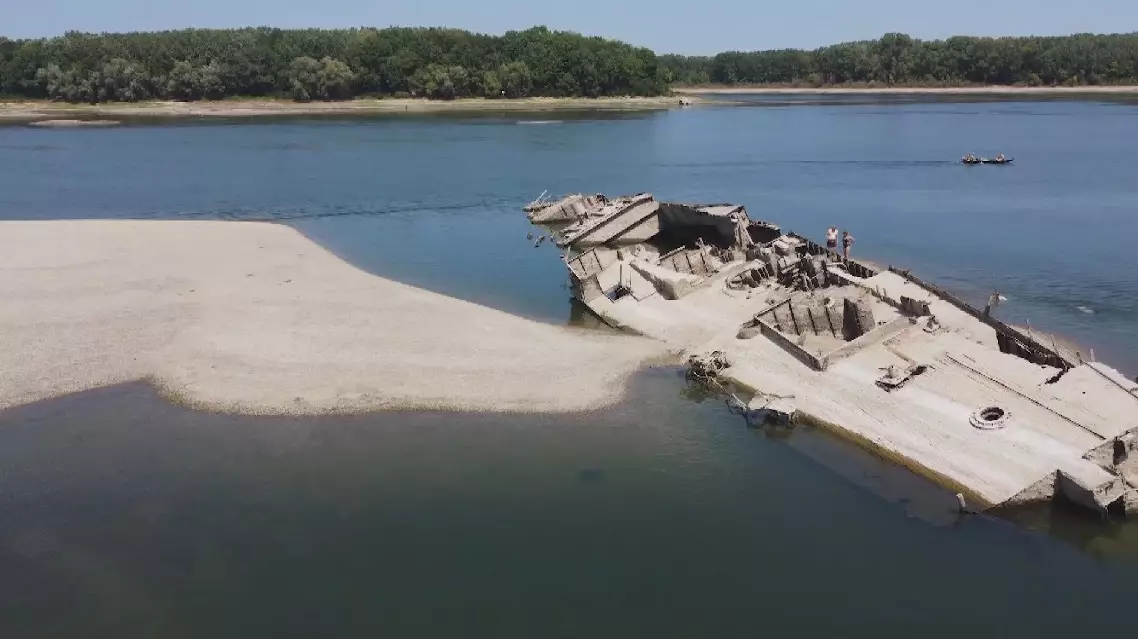
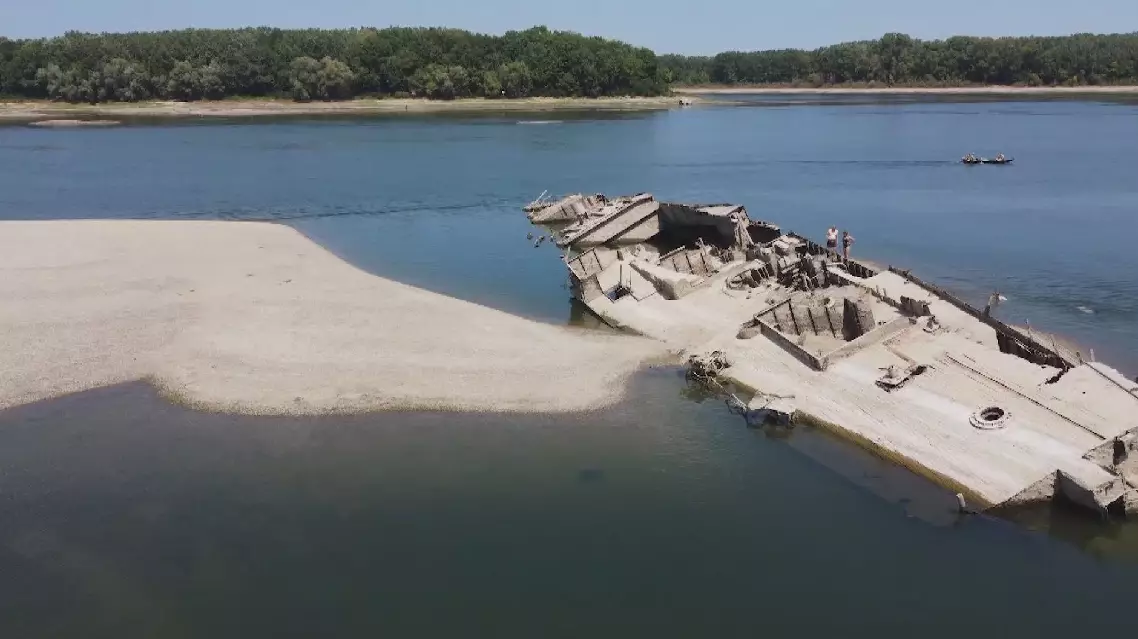
Severe drought and high temperatures have sent the Danube River's water level in eastern Serbia plunging, resurfacing the wreckage of Nazi German warships that sank during World War II.

In normal years, the Danube River section in eastern Serbia would be flowing with abundant waters. However, persistent high temperatures and drought have reduced the river to bare sandbars, exposing several German warships from World War II that had remained submerged for decades.

In September 1944, as the Soviet Red Army advanced into the Balkans, retreating German forces scuttled the vessels to block the Soviet advance. An estimated 200 German warships sank near Prahovo. Some wrecks were removed after the war, but others remained at the riverbed as they were laden with explosives. With water levels now plummeting, more of those sunken ships have resurfaced.

"The current water level is 130 centimeters below zero. In some situations, it was even over 700 centimeters in plus. This is the lowest water level on the Danube that I can remember. So, all of those [ships] came to the surface," said Srdjan, a local resident.
Receding Danube water levels reveal sunken WWII warships
Receding Danube water levels reveal sunken WWII warships


Rescuers in the city of Pereira, western Colombia continued their desperate efforts on Thursday to comb through the rubble left by Monday's devastating earthquake, seeking signs of possible life.

The 7.5-magnitude quake struck the region at 07:34 local time on Monday, completely collapsing the eight-story Dibeni Hotel, a landmark in Pereira. At the time of the disaster, 13 people were inside the hotel, and as of Wednesday, eight bodies had been recovered from the debris.

To enhance their search efforts, search and rescue teams requested silence beginning at 14:00 on Thursday, listening intently for faint sounds that might indicate survivors. They repeatedly called into the wreckage, holding their breath in hopes of detecting a response. Sniffer dogs were deployed to help locate any possible remaining trapped individuals.

In a second effort for absolute silence, rescuers instructed everyone on site to refrain from talking or moving, turning off all machinery. Despite these extensive measures, the search did not yield the hoped-for results.

The National Unit for Disaster Risk Management (UNGRD) reported on Friday that the death toll from the earthquake has risen to 287, with 3,975 injuries. The UNGRD’s latest update said that the quake affected 15 departments and 437 municipalities, impacting 56,448 families and 135,179 people.

Additionally, 378 people remain unaccounted for, while 354 have been rescued. The earthquake caused damage to 238 health centers, 2,486 schools, 2,093 community centers, 254 roads, 87 aqueducts, 50 vehicular bridges, seven pedestrian bridges, and five airports.

Desperate search for survivors continues after devastating earthquake in Pereira, Colombia

Desperate search for survivors continues after devastating earthquake in Pereira, Colombia

Desperate search for survivors continues after devastating earthquake in Pereira, Colombia

Desperate search for survivors continues after devastating earthquake in Pereira, Colombia

Recommended Articles