A new collection of historical records about Unit 731, the notorious Japanese germ warfare division operating during World War II (WWII), has further exposed the structure of the unit and how the Japanese military concealed its biological warfare crimes by recruiting personnel under the names of regular infantry units.
Released Wednesday by the Exhibition Hall of Evidences of Crime Committed by Unit 731 of the Japanese Imperial Army in Harbin, northeast China's Heilongjiang Province, the records consist of a 70-minute oral testimony from Hitoshi Tanizaki, a former medic at the Hailar Detachment of Unit 731, and a 185-page archive of personal information registration files from the Hailar Detachment.
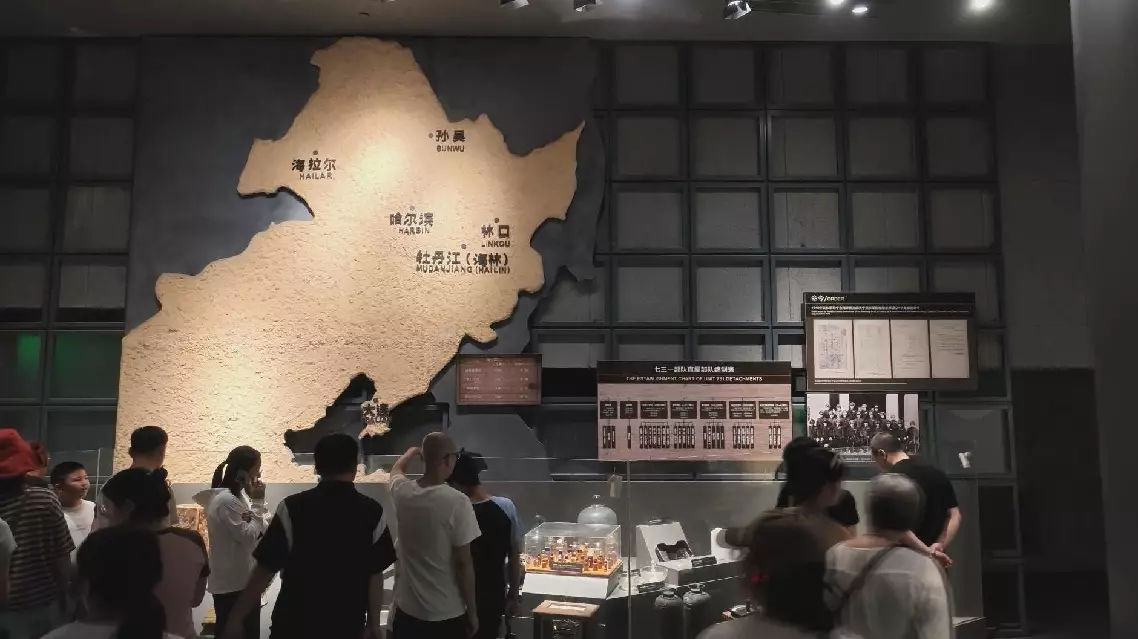
The Hailar Detachment, codenamed "Manchuria Unit 543," was one of five branches established by the Japanese Kwantung Army in northeast China, alongside Sunwu, Mudanjiang, Linkou and Dalian. It was under the direct command of Unit 731's headquarters in Harbin.
Located in the northeastern part of today's Inner Mongolia Autonomous Region near China's borders with Mongolia and the former Soviet Union, the detachment served as a frontline base for germ warfare. Its First Section was responsible for cultivating bacteria, while its Second Section conducted toxicity tests on water sources, among other duties.
The personal information registration files are military service records that Japanese military personnel were required to complete as individuals when they were demobilized after the war at the request of Japan's then Ministry of Health and Welfare.
The records released this time contain key information on 156 members of the Hailar Detachment, including their names, ranks, dates of enlistment, duties, transfers and whereabouts after the war.
"We can see the personnel composition of the Hailar Detachment from these files. They are mainly medical sergeants, medics, ordinary soldiers, and a small number of military dependents, employees and technicians. This differs from the personnel composition of the headquarters of Unit 731," said Jin Shicheng, head of the publicity, education and exhibition department of the Exhibition Hall.
Jin said the files help understand how the Hailar Detachment secretly recruited medics.
Personnel were recruited under the names of members with standard infantry units, such as Manchuria Unit 97, Unit 177 and Unit 201, before receiving three months of training at the Unit 731 headquarters and being assigned to the Hailar Detachment.
Such recruitment was clearly deceptive and was intended to conceal Unit 731's secret criminal activities, including live human experimentation, Jin said.
"This man, Shikanosuke Aoki, was a member of the Manchuria Unit 543, the Hailar detachment of the Kwantung Army Epidemic Prevention and Water Purification Department (cover name for Unit 731). His records say he was recruited by Manchuria Unit 201 on March 6, 1945, and then transferred to Unit 543 in Hailar on June 1. In fact, during the three months between March 6 and June 1, he was mainly receiving training at Unit 731's headquarters in Pingfang, Harbin. This reassignment track demonstrates Unit 731's secret and deceptive recruitment of medics, which mainly aimed to cover up its germ warfare crimes," Jin said.
Unit 731 was a top-secret biological and chemical warfare research base established as the nerve center for Japanese biological warfare in China and Southeast Asia during WWII. At least 3,000 people were used in human experiments conducted by Unit 731, and more than 300,000 people in China were killed by Japan's biological weapons.
This year marks the 81st anniversary of the victory in the Chinese People's War of Resistance against Japanese Aggression (1931-1945) and the World Anti-Fascist War.
Researchers at the exhibition hall have noted that the world outside of China and Japan has remained relatively unaware of the medical atrocities committed by Unit 731 during the past eight decades, calling on scholars worldwide to further enhance the academic rigor and objectivity of studies on the crimes committed by Unit 731, and help foster a correct historical understanding in the international community.
New evidence reveals secret medic recruitment of Japan's notorious wartime Unit 731