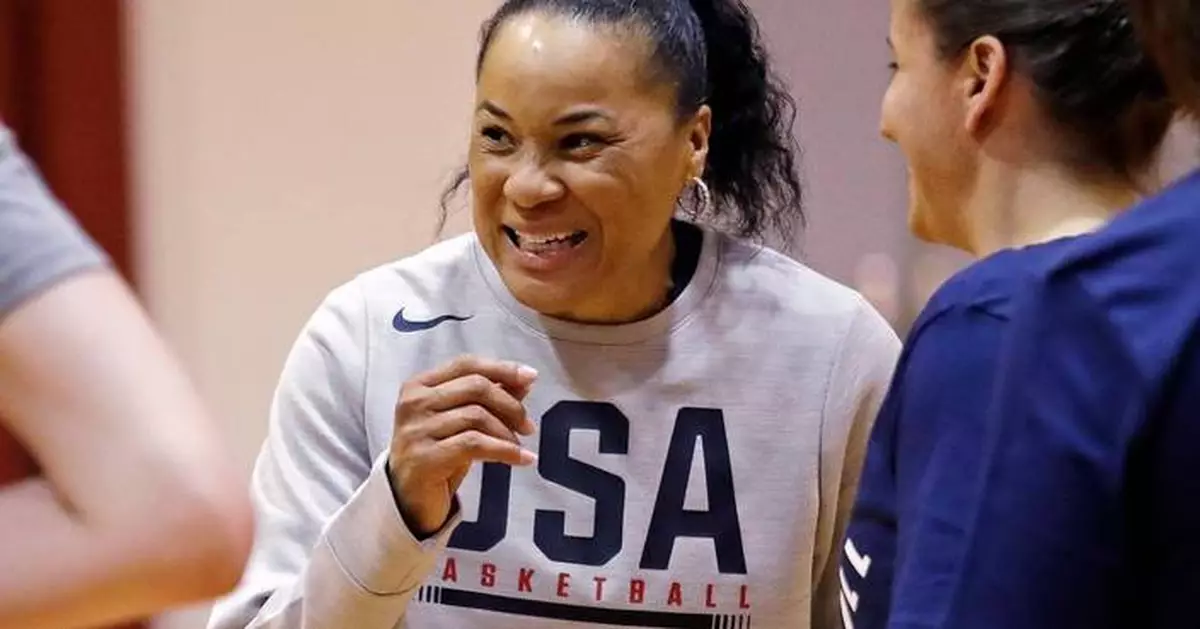
UNCASVILLE, Conn. (AP) — During this Hall of Fame weekend, nearly everyone would like the attention to be on basketball, but it's difficult to ignore the conversations that are swirling around the WNBA — especially with some of the league's greatest icons being enshrined.
The ongoing vitriol centered around race, gender and sexuality makes for daily headlines. They are part of an undertone to fouls and physicality that have come with the evolution of women's skills, all of which overshadow the impressive play that can be seen during the WNBA’s 30th year.
Hall of Famer Dawn Staley, who is getting inducted again Saturday with the 1996 Olympic women’s basketball team, sees a positive side to the negativity. Staley said there are similar parallels between what the WNBA is going through and what the NBA went through in the early stages of its growth.
“All the big pieces and all the things that are happening from a racial standpoint, from an officiating standpoint are great. They’re great because the NBA went through it — the NBA went through all of it,” she said. “So this is just badges of honor. Will we get through it? We will get through it.”
What the NBA had to deal with was who could play in the league. It was an all-white league when it was launched and there was resistance to integration. The WNBA has been hit lately with a narrative on whether transgender women — people assigned male at birth who transition to align with their gender identity — should be allowed to play in the league. There has never been one.
There have been players in the league who were assigned female at birth and later came out as transgender or nonbinary.
Polarizing views have become a major topic of conversation.
WNBA players’ union president Nneka Ogwumike said she feels awful for the transgender fans who have supported the league for so many years.
“It really breaks my heart to think about how these conversations may be affecting people who have supported us for so long,” she said.
WNBA players have used their platform to engage in social and political discussions, but Ogwumike believes there is an underlying agenda to the off-court questions players are constantly being asked about.
“It’s super unfortunate because we’re now in a time where I think there’s a lot of different agendas that are being used for something perhaps bigger and broader that people can’t see now that they’re using women’s sports for,” Ogwumike said. “It’s very concerning, but what I really do hate is that we are using a very nuanced conversation — and evolving conversation — to continue to marginalize these groups that we advocate for.”
Ogwumike understands the tough balance that’s going on with the news media and on social media.
"Even something as simple as you guys asking actual basketball questions. I think it’s very helpful,” she said. “I think it’s a very delicate line for me because it’s like, OK, you know, we want to act like your job is to cover this game, you know, and our job as athletes is to play it and to also give you what we can. But then it’s also like do I want to seem insensitive by not talking about the things that are going on?”
Staley agrees that it's unfortunate that all the great things happening on the court are put on the backburner in discussions.
“It’s an incredible product that we’re missing out on because we got distractions every time,” she said. “There’s something great happening, there are always distractions placed in your life, but you got to be able to handle them.”
There are so many more eyeballs on the WNBA now, with viewership 17% higher than last season’s record-setting year. Attendance is also strong again this season. Not all attention is good, though.
As the league continues to grow in popularity, social media attacks directed at players have skyrocketed and betting on the sport also has increased.
“I think it was more swept under the rug in the past, but now it’s not because you can’t,” Hall of Fame inductee Candace Parker said of the personal and threatening comments directed at players. “We can’t tell every player to just deal with it. That’s not how it works. I know I’m proud that some people think that they’re anonymous when they make comments online and they’re finding out that they’re not. There are going to be repercussions.
“Unfortunately, that’s the climate in our country right now, to be honest with you. And I think women always feel it more and it’s always been that way, from top to bottom.”
Chamique Holdsclaw said she had disagreements with teammates during her WNBA days from 1999-2010, but those were kept in the locker room and not brought out on social media, which was in its infancy.
“I’ve had teammates that I may not agree with their politics or beliefs," Holdsclaw said, "but we all know that as long as the locker room is good, we’re good.”
There isn't much kept in the locker room in today's WNBA, or any sports league, and leagues are coping with the repercussions of those public discussions.
See AP’s full WNBA coverage here
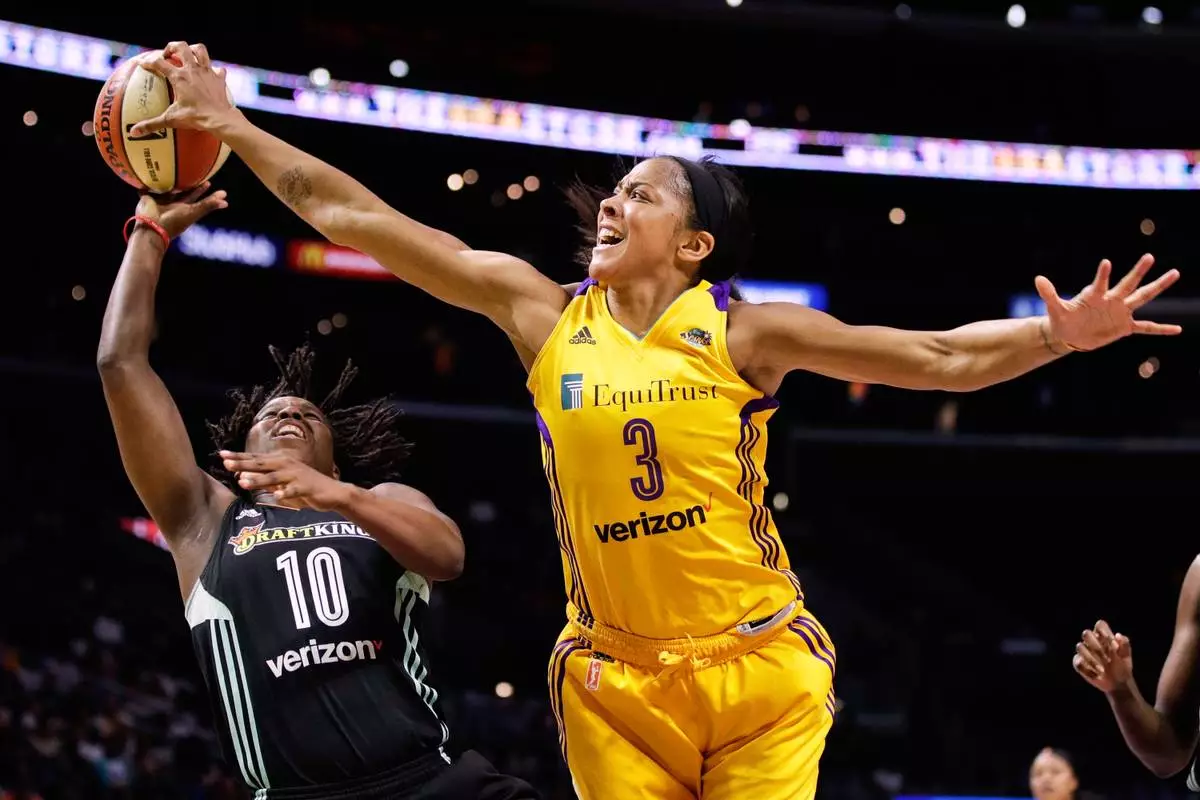
FILE - Los Angeles Sparks' Candace Parker, right, blocks a shot by New York Liberty's Epiphanny Prince during the second half of a WNBA basketball game, Aug. 4, 2017, in Los Angeles. (AP Photo/Jae C. Hong, File)
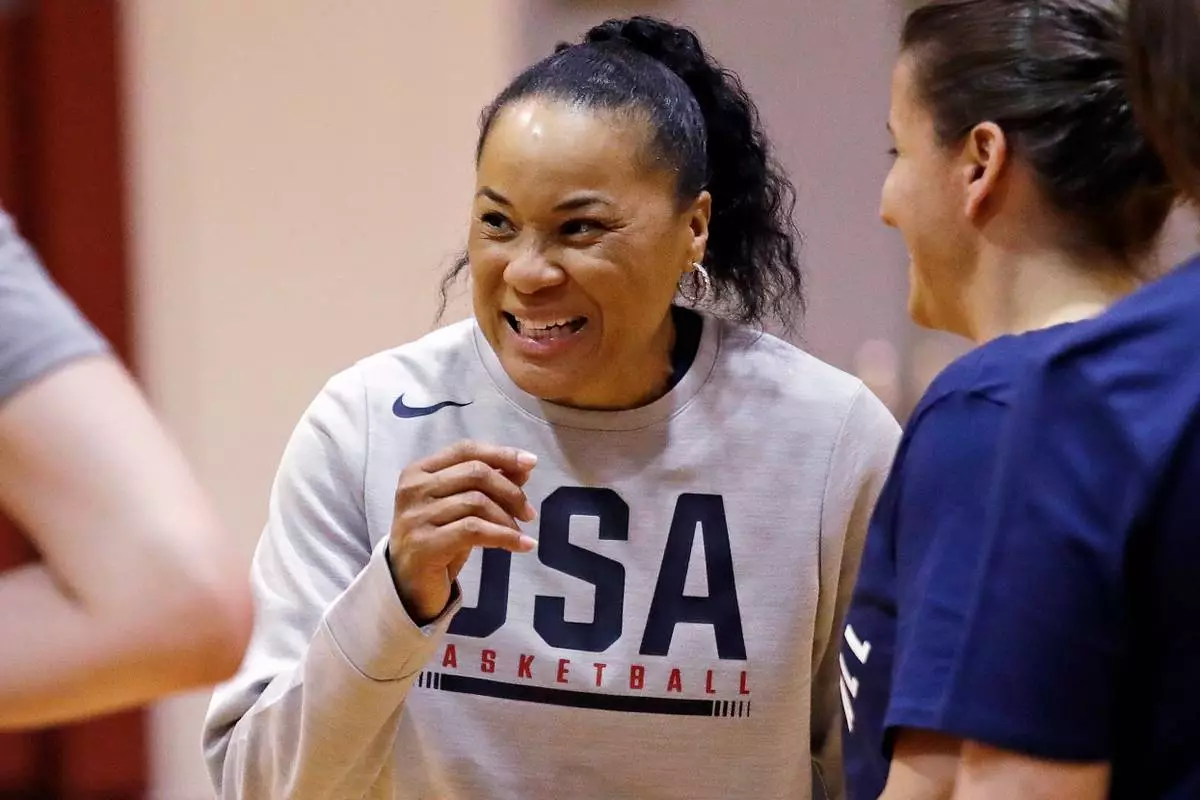
FILE - Coach Dawn Staley talks with players and assistant coaches during a practice for the U.S. women's basketball team in Seattle on April 24, 2018. (AP Photo/Elaine Thompson, File)