Skip to Content Facebook Feature Image

Ben Franklin chose America. Son William chose the crown. This civil war is a microcosm of revolution

News

Ben Franklin chose America. Son William chose the crown. This civil war is a microcosm of revolution
News

News

Ben Franklin chose America. Son William chose the crown. This civil war is a microcosm of revolution

2026-08-16 19:38 Last Updated At:19:40

LONDON (AP) — In central London, near where tourists and business travelers board Eurostar trains to Paris, lies the burial place of Benjamin Franklin’s eldest son — a man whose life and family relationships were upended by his stance on the American Revolution.

William Franklin was buried at the graveyard of St. Pancras Old Church following his death in 1813, more than three decades after he was forced to leave America because of his service to the country his father fought so hard to win independence from.

More Images
Henry Wilkinson, head of education at the Benjamin Franklin House, shows a replica of Franklin's armonica at the Benjamin Franklin House in London, Monday, May 11, 2026. (AP Photo/Kin Cheung)

Henry Wilkinson, head of education at the Benjamin Franklin House, shows a replica of Franklin's armonica at the Benjamin Franklin House in London, Monday, May 11, 2026. (AP Photo/Kin Cheung)

Henry Wilkinson, head of education at the Benjamin Franklin House, walks downstairs at the Benjamin Franklin House in London, Monday, May 11, 2026. (AP Photo/Kin Cheung)
Henry Wilkinson, head of education at the Benjamin Franklin House, walks downstairs at the Benjamin Franklin House in London, Monday, May 11, 2026. (AP Photo/Kin Cheung)

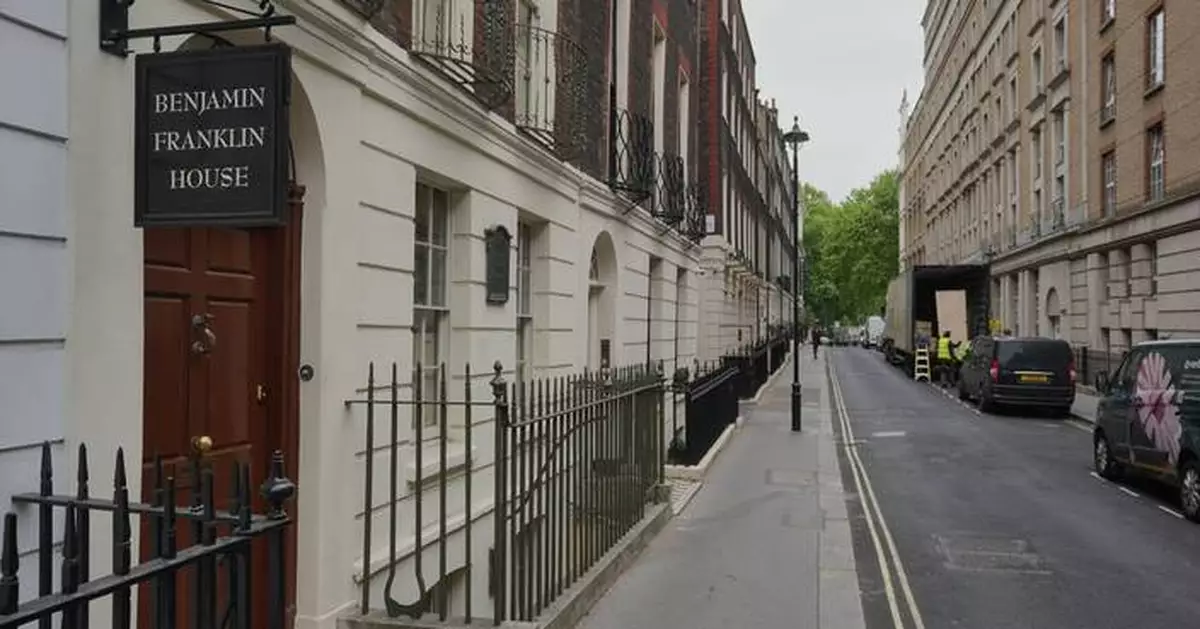
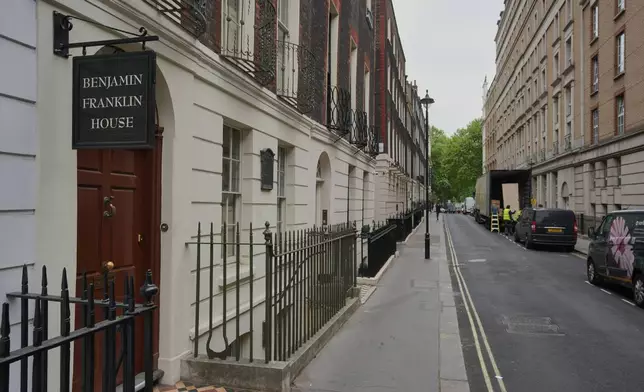
The Benjamin Franklin House is pictured in central London, Monday, May 11, 2026. (AP Photo/Kin Cheung)
The Benjamin Franklin House is pictured in central London, Monday, May 11, 2026. (AP Photo/Kin Cheung)

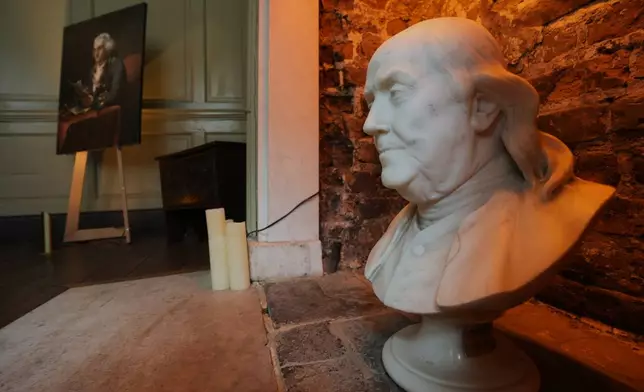
A marble bust and a portrait of Benjamin Franklin is displayed at the Benjamin Franklin House in London, Monday, May 11, 2026. (AP Photo/Kin Cheung)
A marble bust and a portrait of Benjamin Franklin is displayed at the Benjamin Franklin House in London, Monday, May 11, 2026. (AP Photo/Kin Cheung)

The Benjamin Franklin House is pictured in central London, Monday, May 11, 2026. (AP Photo/Kin Cheung)

The Benjamin Franklin House is pictured in central London, Monday, May 11, 2026. (AP Photo/Kin Cheung)

His burial in the capital of what was then the British Empire is a reminder that the Revolution was as much a civil war as it was the founding act of the United States of America. It is also, historians say, a reminder that the conflict that destroyed friendships and ripped apart families 250 years ago continues today.

“Now especially, I think it is important for people to understand that American history is 250 years of everybody disagreeing with each other,” said James Taub, associate curator at the Museum of the American Revolution in Philadelphia.

“The American Revolution is an ongoing event. We are living it, right still to this day,” he said. “And we’re all taking part in it in one way or another.”

After President Donald Trump’s Great American State Fair in Washington, after the band concerts and barbecues and fireworks that marked Independence Day celebrations across the U.S., the country is still faced with the task of forming a more perfect union out of the anger and confrontation that have filled the period since the Republican returned to the White House in January 2025.

It is a messy process that started amid the wreckage of the Revolution.

Often simplified as the tale of the plucky patriots who banded together to defeat the mighty British Empire, the revolution was more accurately an eight-year war fought by people who once saw themselves as British against the armies of their former sovereign.

As much as one-third of the population remained loyal to King George III and at times during the war loyalist Americans were the biggest contingent of troops in the British forces. Enslaved Black people fought on both sides of the conflict, as did Indigenous people.

People based their allegiances on who they thought was more likely to deliver freedom and justice.

That complicated reality played out in the Franklin family.

When Ben Franklin flew a kite into a thunderstorm in 1752 to demonstrate that lightning was essentially a massive electrical spark, young William Franklin was by his side.

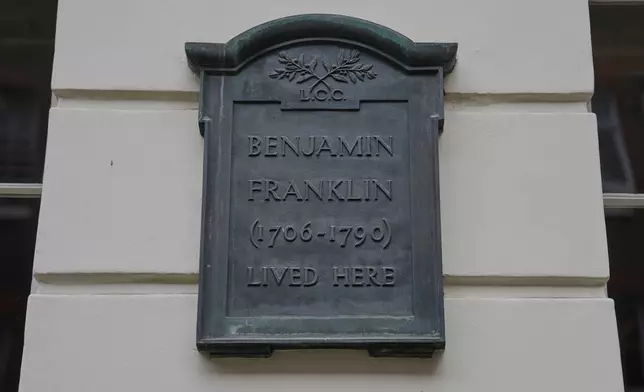
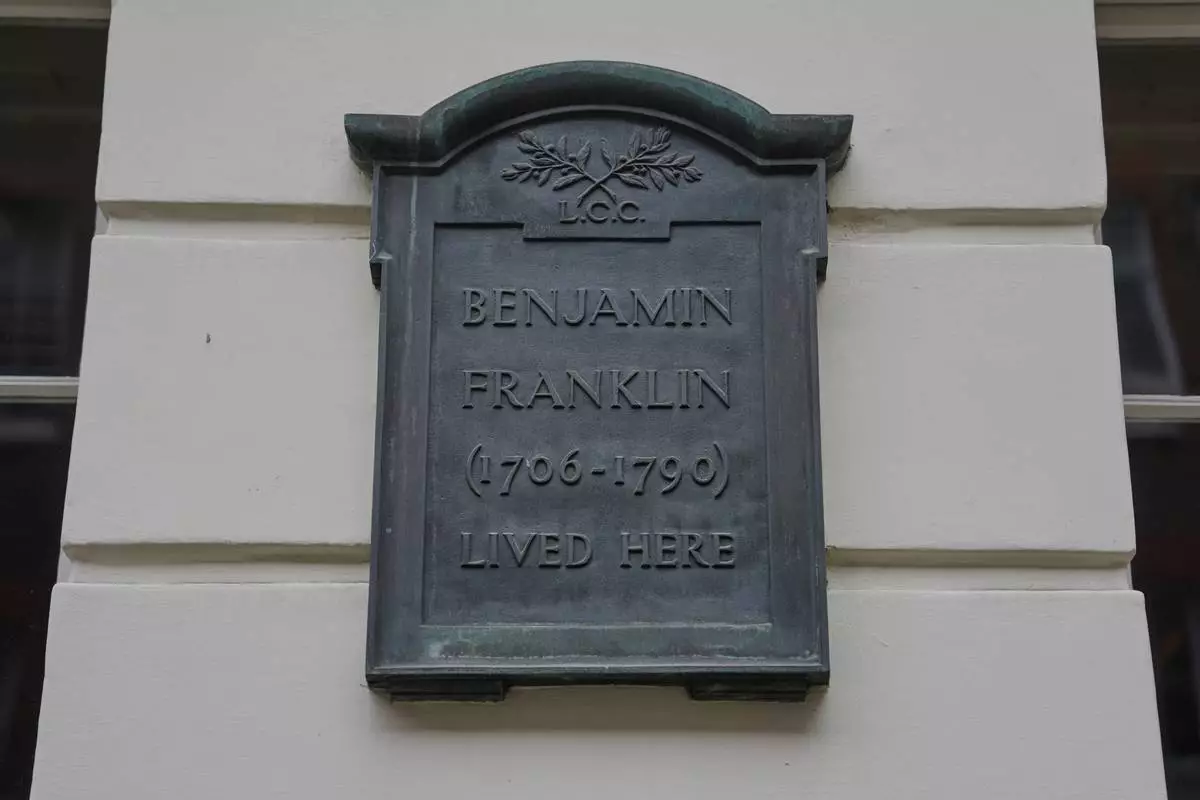
Five years later, father and son traveled to London together after Ben Franklin was sent to the capital of the British Empire to represent Pennsylvania’s colonial government. As Ben Franklin settled into his home at 36 Craven St., which today serves as a museum of the Founding Father’s life in London, William studied law and married. Both enjoyed London's culture and nightlife.

William Franklin returned to America and became governor of New Jersey in 1763, a post he would hold for the next 13 years.

But father and son came into increasing conflict when Ben Franklin returned to Philadelphia in 1775. While the elder Franklin backed growing calls for independence as a member of the Continental Congress, William rejected the authority of Congress and continued to represent the king.

William Franklin was arrested by the emerging American government's forces as “an enemy of the country’s liberty” in January 1776 and imprisoned until October 1778, much of the time in solitary confinement. After his release in a prisoner exchange, he became a leader of the loyalist community in the British stronghold of New York City.

Following the defeat of British forces, William Franklin sailed for London in 1782. He is believed to have had only one brief meeting with his father between his arrest and Ben Franklin’s death in 1790.

The bitter split came about even though Ben Franklin repeatedly warned his son that if he did not step down as royal governor, the new government would arrest him, said Daniel Mark Epstein, who chronicled the relationship in his book “The Loyal Son: The War in Ben Franklin’s House.” But William Franklin would not relent.

“He was absolutely not gonna budge,” Epstein said. “He was the last governor to leave his office, and he had to be dragged away literally in irons.”

Epstein sees the Franklin story as cautionary tale for the angry citizens of 21st-century America, a country marked by easy access to guns and falling educational standards. By contrast, colonial America was a highly literate society where 90% of the population could read and people were more likely to argue out their problems than resort to violence.

Yet still the colonies’ differences with Britain descended into war.

“Our educational system has failed us here,” Epstein said. “We’re really in a terrible crisis in terms of education. People find it very, very difficult to have rational arguments because they don’t have the language and yet there’s this crazy availability of weapons.”

Taub takes a broader view, seeing echoes of the conflicts that ignited the Revolution in the tensions of today.

He said Americans need to understand the complexities of the Revolutionary era so they can see how unique the Declaration of Independence was in 1776 and why so many other countries have since modeled their founding documents on it.

“It makes me feel better about us today,” he said. “And I think it will show that we’re just part of 250 years of an ongoing story and 250 years of an ongoing mission that was laid down, a cause that was laid down by people in 1776.”

Part of a series of stories exploring life in the United States as the country marks its 250th anniversary. Click here for more. Take a look at some of the objects that have come to define America here.

Henry Wilkinson, head of education at the Benjamin Franklin House, shows a replica of Franklin's armonica at the Benjamin Franklin House in London, Monday, May 11, 2026. (AP Photo/Kin Cheung)

Henry Wilkinson, head of education at the Benjamin Franklin House, shows a replica of Franklin's armonica at the Benjamin Franklin House in London, Monday, May 11, 2026. (AP Photo/Kin Cheung)

Henry Wilkinson, head of education at the Benjamin Franklin House, walks downstairs at the Benjamin Franklin House in London, Monday, May 11, 2026. (AP Photo/Kin Cheung)
Henry Wilkinson, head of education at the Benjamin Franklin House, walks downstairs at the Benjamin Franklin House in London, Monday, May 11, 2026. (AP Photo/Kin Cheung)

The Benjamin Franklin House is pictured in central London, Monday, May 11, 2026. (AP Photo/Kin Cheung)
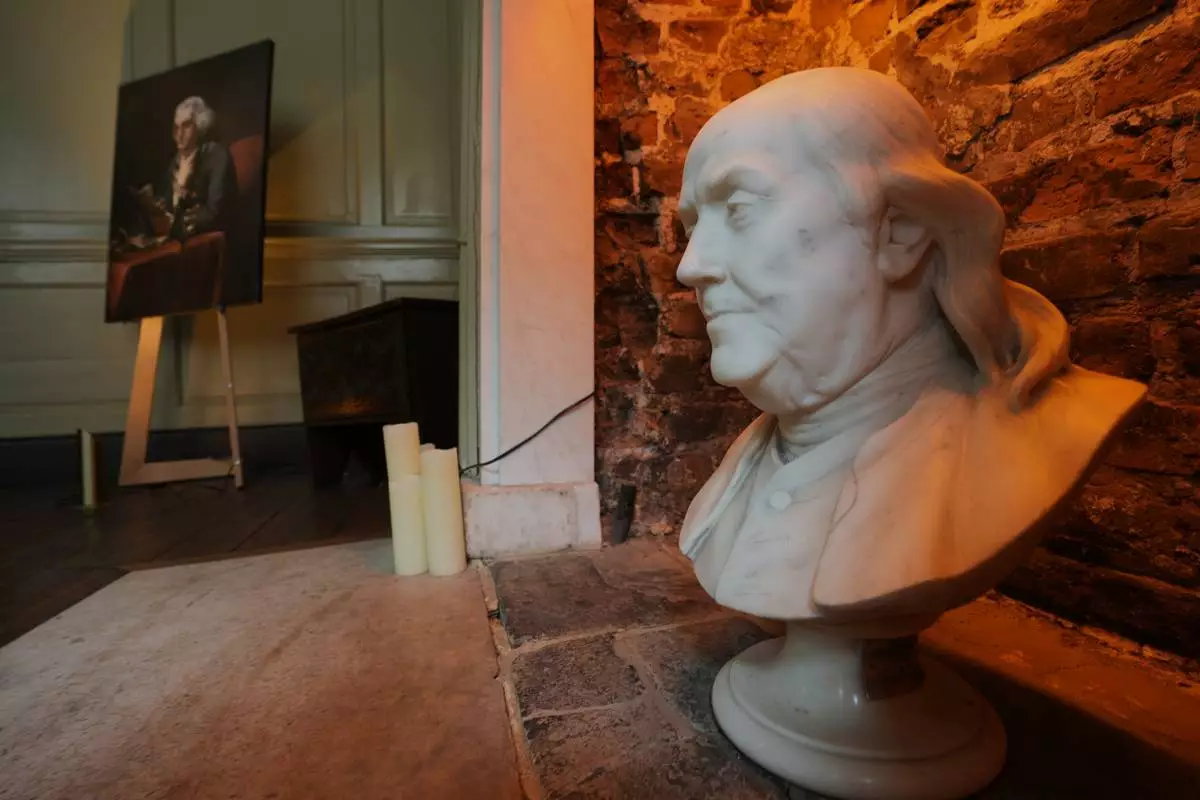
The Benjamin Franklin House is pictured in central London, Monday, May 11, 2026. (AP Photo/Kin Cheung)

A marble bust and a portrait of Benjamin Franklin is displayed at the Benjamin Franklin House in London, Monday, May 11, 2026. (AP Photo/Kin Cheung)
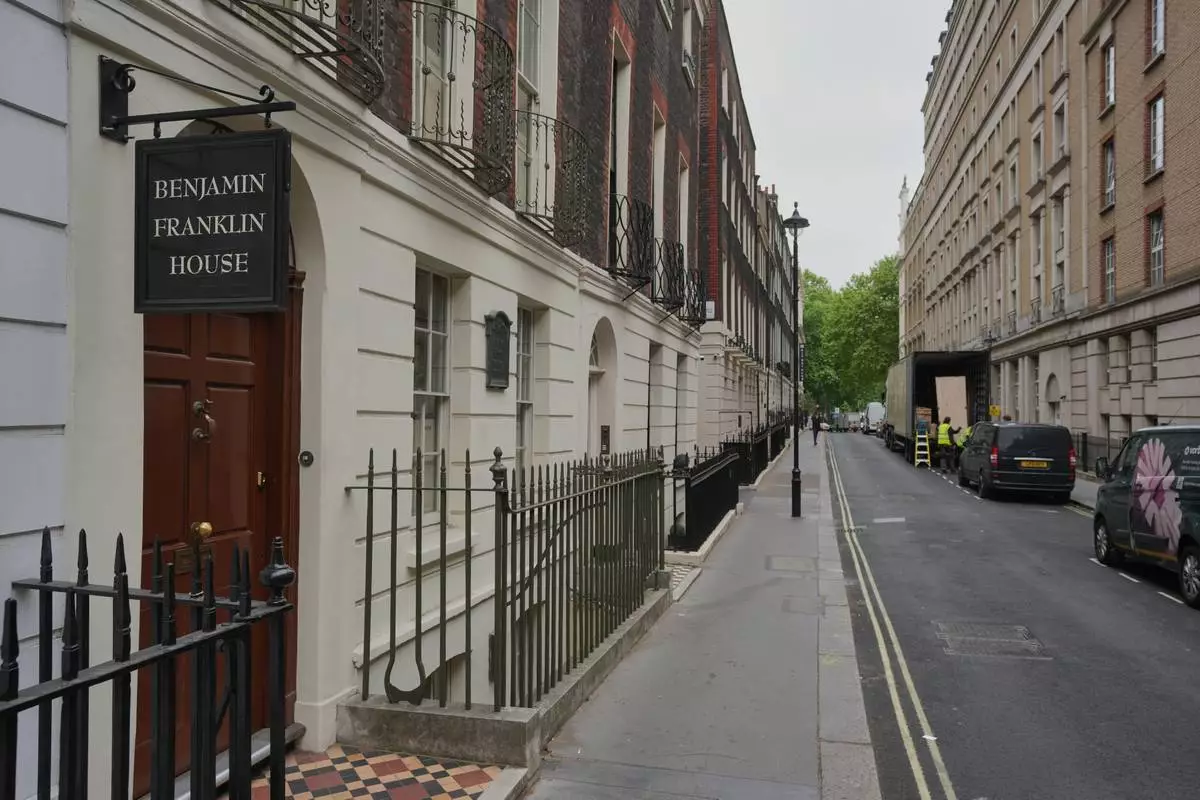
A marble bust and a portrait of Benjamin Franklin is displayed at the Benjamin Franklin House in London, Monday, May 11, 2026. (AP Photo/Kin Cheung)

The Benjamin Franklin House is pictured in central London, Monday, May 11, 2026. (AP Photo/Kin Cheung)


The Benjamin Franklin House is pictured in central London, Monday, May 11, 2026. (AP Photo/Kin Cheung)

The top U.S. military commander in the Middle East visited the long-deployed USS Lincoln in the Arabian Sea during a regional tour that ended on Saturday, the U.S. Central Command said.

A Hamas delegation and, separately, U.S. negotiator Jared Kushner were in Egypt for Gaza ceasefire-related talks with Egyptian officials. And the 60-day negotiating period that began with the June 17 signing of an interim agreement between the U.S. and Iran is set to end with no word of an extension.

Here’s a look at the latest developments on Sunday in the Iran war and the wider Middle East. Full coverage can be found here.

Adm. Brad Cooper visited the USS Lincoln as reports have emerged of mental health and supply issues. The Lincoln arrived in the Middle East in January and has been supporting the U.S. war against Iran, including the blockade on Iranian ports. It has spent a record-setting uninterrupted time at sea of more than 240 days.

“History will record this deployment as one of the most operationally intense and consequential of the modern era,” Cooper said of the Lincoln strike group in a statement released Saturday. Extended deployments of carriers — which can have more than 5,000 sailors and Marines on board — have raised concerns.

Cooper also went to Bahrain, Iraq, Israel, Jordan, Saudi Arabia and the United Arab Emirates to meet with civilian and military leaders, according to the Central Command statement.

The U.S. Navy's blockade is in response to Iran asserting control over the Strait of Hormuz after the war started on Feb. 28 with U.S. and Israeli strikes. Before then, about one-fifth of the world’s traded oil and natural gas passed through what had been considered an international waterway.

Talks between the U.S. and Iran have stalled while Iran talks with Oman about how to manage the strait that runs between them.

A Hamas delegation, chaired by leader Khalil al-Hayya, was in Cairo for Gaza ceasefire-related talks, the group said. Al-Hayya met with Maj. Gen. Hassan Rashad, head of Egypt’s intelligence service, Egyptian state-run media reported.

Al-Hayya reiterated Hamas’ commitment to implement U.S. President Donald Trump’s peace plan in Gaza to “end the suffering of the residents of the Gaza Strip and to begin the reconstruction process," al-Qahera News television reported.

Mediators are pushing for the implementation of a road map that calls for the disarmament of Hamas and other Palestinian militant groups in Gaza, the withdrawal of Israeli forces and the handing over of power to Palestinian technocrats.

Israeli Prime Minister Benjamin Netanyahu has rejected Trump’s latest plan to advance the stalled ceasefire, saying Israel will not withdraw from any of the roughly 60% of the territory it controls until Hamas has been completely disarmed — something the militant group controlling the rest has resisted.

It wasn’t immediately clear whether al-Hayya would meet with Kushner, the Board of Peace’s high representative Nickolay Mladenov or executive board member and former British Prime Minister Tony Blair, who are scheduled to travel to Israel and Egypt this week.

Separately, Kushner met with Egyptian President Abdel-Fattah el-Sissi. The president’s office said the meeting called for Israel and Hamas to “fulfill their obligations under the ceasefire agreement in the Gaza Strip,” without elaborating.

Israel’s military said it targeted two Hezbollah commanders in Saturday's strikes in southern Lebanon, the deadliest attacks since a truce between Israel and Iran-backed Hezbollah went into effect in June.

Lebanon’s Health Ministry and state news agency said at least 11 people were killed.

Israel’s military said early Sunday one strike killed Abu Hassan Alaa, whom it described as a senior Hezbollah commander who had taken part in attacks against Israel’s soldiers in southern Lebanon. Earlier, the military said a strike killed Ali Samir Al-Haj Hassan, also described as a Hezbollah commander, adding that his family was with him.

Israel and the Lebanese government announced a “framework agreement” in June, laying out a plan for Israeli forces to withdraw from southern Lebanon in exchange for Hezbollah’s disarmament. Hezbollah has refused direct talks and wasn’t party to the U.S.-mediated deal.

Iran again on Sunday alleged that Qatar was holding three Iranian pilots who went missing in March when their jets were downed, which Qatar has denied.

Iran’s state TV reported Sunday that the commander of the Missing Persons Committee of Iran’s Armed Forces General Staff has urged Qatar to allow Iranian Air Force experts to conduct a field investigation.

This is the first known case in the war where Iran has said a regional country is holding its fighters. Tehran has repeatedly targeted regional countries that are hosting U.S. military bases.

An Israeli strike hit Khan Younis in southern Gaza and wounded five people, including a child who was seriously injured, according to the Kuwaiti and Nasser hospitals, where the casualties were taken.

Israel's military said it struck a member of the Palestinian Islamic Jihad.

While the heaviest fighting has subsided since a ceasefire took hold in October between Israel and Hamas, Israeli forces have carried out repeated airstrikes, killing at least 1,262 Palestinians, according to Gaza's Health Ministry.

The ministry, part of the Hamas-led government, maintains detailed casualty records that are seen as generally reliable by U.N. agencies and independent experts. It does not give a breakdown of civilians and militants.

People walk beneath an art installation of colorful spheres along a pedestrian street in Jaffa, a mixed Jewish-Arab neighborhood of Tel Aviv, Israel, Sunday, Aug. 16, 2026. (AP Photo/Oded Balilty)

People walk beneath an art installation of colorful spheres along a pedestrian street in Jaffa, a mixed Jewish-Arab neighborhood of Tel Aviv, Israel, Sunday, Aug. 16, 2026. (AP Photo/Oded Balilty)

Recommended Articles