Two very different dinosaur movies devoured a modest chunk of the North American box office this weekend, although neither came close to unseating “Spider-Man” from its perch atop the charts, nor managed to steal second place from “The Odyssey.”
“Paw Patrol: The Dino Movie” and “The End of Oak Street,” one targeted to very young children and the other an original PG-13 rated action movie, battled for third place in their first weekend in theaters. According to studio estimates on Sunday, the Anne Hathaway and Ewan McGregor movie had the slight edge, with a projected $21 million to the animated pups’ $20.5 million.
Neither stood a chance for first, however, while “Spider-Man: Brand New Day” continues to cast its sticky web around audiences three weekends into its historic run. The Sony Pictures release added another $70 million from theaters in the U.S. and Canada, bringing its domestic total to a staggering $785.8 million, making it the fourth-biggest domestic release ever. With $118.7 million from overseas markets, it surpassed $2 billion globally, only the eighth movie ever to achieve that landmark (not accounting for inflation) and the second-fastest to do so. “Avengers: Endgame” did it in 11 days in 2019. “Brand New Day” took about 18.
“The Odyssey,” now in its fifth weekend, also managed to stay in second with a $23.2 million weekend that pushed its domestic total to $504.7 million. With $98 million from international showings, propelled by $36.6 million from its first few days playing in China, Christopher Nolan’s epic has now made over $1.2 billion globally.
“The End of Oak Street” came in ahead of expectations with around $21 million from 3,446 locations. It also made $26 million from international screenings, adding up to a $47 million global opening against a reported $80 million production budget.
The film, written and directed by David Robert Mitchell, stars McGregor and Hathaway as suburban parents in 1982 whose neighborhood is mysteriously transported to prehistoric times. It was well-received by critics and currently carries an 86% on Rotten Tomatoes, but audiences gave it a less enthusiastic B CinemaScore. According to PostTrak exit polls, just over half the opening weekend audience said they would “definitely recommend” to friends.
Family audiences showed up for “Paw Patrol: The Dino Movie,” which Paramount Pictures released in 3,545 theaters in the U.S. and Canada this weekend. Carrying a PG rating, it’s the third theatrically released Paw Patrol movie since 2021. The opening weekend audience gave it an A CinemaScore. Globally, it has a running total of $69 million.
The Katseye documentary “Katseye: Wild Hearts” rounded out the top five with $4 million from only 724 screens. Several other newcomers also managed to get places in the top 10: “Six: The Musical Live” opened in sixth place with $3 million, followed by “The Brink of War” with $2.7 million. The Tamil-language romance “Vishwanath & Sons” made $1.6 million to take 10th place.
The Matthew McConaughey crime thriller “The Rivals of Amziah King” opened outside of the top 10 with just over $1 million from 632 theaters. The young Anthony Bourdain biopic “Tony,” meanwhile, made $706,676 from 37 theaters in its second weekend. The A24 release is expanding in the coming weeks.
The box office is strong with the summer season, now over, accounting for over $4.2 billion in ticket sales — about 5.7% ahead of the pre-pandemic summer of 2019. Paul Dergarabedian, the head of marketplace trends for Rentrak, noted that the number is only about $130 million shy of the record 2013 summer, which was led by “Iron Man 3” and “Despicable Me 2.”
While this summer might not surpass 2013, Dergarabedian said, “This is going to be a top five summer of all time.”
The year overall is just under $6.9 billion.
With final domestic figures being released Monday, this list factors in the estimated ticket sales for Friday through Sunday at U.S. and Canadian theaters, according to Rentrak:
1. “Spider-Man: Brand New Day,” $70 million.
2. “The Odyssey,” $23.2 million.
3. “The End of Oak Street,” $21 million.
4. “Paw Patrol: The Dino Movie,” $20.5 million.
5. “Katseye: Wild Hearts,” $4 million.
6. “Six: The Musical Live,” $3 million.
7. “The Brink of War,” $2.7 million.
8. “Toy Story 5,” $2.3 million.
9. “One Night Only,” $2 million.
10. “Vishwanath & Sons,” $1.6 million.

Terry Crews arrives at the premiere of "Paw Patrol: The Dino Movie" on Sunday, Aug. 2, 2026, in Los Angeles. (Photo by Richard Shotwell/Invision/AP)
SANTA ANA ZIROSTO, Mexico (AP) — It didn't take long for Mexican avocado picker Francisco Isidro to get back to work after authorities announced the lifting of a U.S. security alert that temporarily halted avocado exports.
Back on the job the morning after the alert was lifted, Isidro threw a rope over an avocado tree about 20 feet (6 meters) high and climbed up. Fifteen minutes later, he had filled a box with avocados bound for the United States.
“Thank God ... and now we’re getting paid!” he shouted happily after several days without work.
Eight days after the alert affecting Michoacán state and the deployment of more Mexican troops in the region, U.S. authorities fully lifted the restrictions that spurred producers to shut down operations, and exports resumed. Michoacán is Mexico’s main avocado-producing state and a region where four cartels designated by the Trump administration as terrorist organizations operate.
By the weekend, orchards were operating again, packing plants were running at full speed and U.S. Department of Agriculture inspectors had returned to certify the fruit and ensure it was free of pests before entering the United States.
The workers were happy to get their daily wages back. Some producers hoped the increased security would reduce violence and extortion. Others feared the calm would not last long.
“We’ll be safe for a while, we’ll see what happens next,” said Valentín Rodríguez, a longtime avocado industry businessperson.
The U.S. alert caught Isidro high in a tree in an orchard in Santa Ana Zirosto, an area of green, low hills in western Michoacán where criminal groups are very active. There were no explanations, just the foreman’s shout to stop cutting.
Isidro, 39 years old and with two decades of experience as a harvester, knew that this meant either starting to look for another job until the situation returned to normal — since they’re paid by the day — or supporting his family solely on what his wife earned from a small store.
More than 90 miles (145 kilometers) away, in the town of Tacámbaro, an engineer at an avocado packing plant received the alert in the early hours of the morning: The facility should be kept sealed and under quarantine.
Some 200,000 people employed by Michoacán’s avocado industry were left in limbo.
Authorities did not say what threat triggered the alert. But in a state where numerous local cartels make money not only from drugs but also from extortion, there are plenty of possibilities.
Some growers have come to consider extortion an unavoidable production cost. A producer from Michoacán told The Associated Press recently that he pays 1 peso per kilo exported in extortion fees and exports about 90 metric tons a day, which amounts to more than $5,000 in daily payments.
In March alone, Mexico shipped nearly 4,800 tons of avocados a day to the United States.
Trucks loaded with avocados are also sometimes robbed on roads in western Michoacán. And some farmworkers have been stopped and beaten by armed men near the border with Jalisco without being told why, according to one worker who spoke on condition of anonymity for fear of retaliation.
U.S. inspectors have been assaulted and temporarily detained in the past, triggering similar export suspensions. On some occasions, threats arose after inspectors detected pests and were pressured not to report them, said an official familiar with their work who spoke on condition of anonymity for security reasons. The U.S. Embassy does not usually provide details about the incidents.
Inspectors now have less of a presence in the orchards, which are located in isolated hills where armed groups operate with little interference, and concentrate on packing plants.
“If the United States says that it is suspending technical services for security reasons, it’s impossible to export. If it's for a plant health, it’s the same,” said Rodríguez, who grows, packs and sells avocados. “We are at the mercy of whatever the U.S. market and government decide to do with the industry.”
There is also a political dimension, he said, adding that Mexico didn't export avocados to the United States for eight decades after a worm was found in an avocado pit in 1914. The U.S. ban was lifted in 1997 as domestic production could no longer meet growing demand.
More than 80% of Mexican avocados are sold to the U.S. Thousands of tons of avocados travel daily to the United States, especially at the beginning of the year, when demand for guacamole surges ahead of the Super Bowl. To keep that volume moving, certification is key.
Isidro is a “certified” picker. He knows how to disinfect cutting tools before using them, handle the fruit quickly and carefully, and report any spots or damage. The orchards where he works are also certified, providing dining and bathroom facilities for workers.
Jesús Méndez, his supervisor, inspected the boxes before they were loaded onto a truck with the tracking details. The trucks wait until all those in the area are ready before traveling in convoys to packing plants, accompanied by police patrols to prevent robberies.
At the packing plants, inspections continue, checking quality, the fruit’s flesh and possible pests. The avocados then move along mechanical lines that sort them by size before workers place them into boxes.
Once labeled and sealed, the trailers head for the U.S. border. At the slightest security alert, every point along the route can be brought to a standstill.
The deployment of more than 1,500 soldiers to protect Michoacán’s avocado-growing region and recent arrests of people allegedly involved in extortion have eased concerns, but only partially.
Luis Manuel Soto, a 36-year-old grower and packer from western Michoacán, hopes the increased security will bring improvements. So far, he says, he has not felt them.
In 2024, he said, armed men pulled him from his vehicle and threatened to kill him unless he paid them and withdrew a complaint over extortion and an attempt to seize his orchards. The threats returned last July, even though one person involved in the earlier case has been convicted.
“They left me a funeral cross and ... a written message saying I had only days left,” Soto said from a town near Morelia, Michoacán’s capital.
The threats have continued by phone. Now he divides his time between occasional visits to his orchards, managing his businesses and social projects remotely, and going to prosecutors’ offices to request protection.
In Santa Ana Zirosto and surrounding communities, residents welcome the military presence.
“It gives us some peace, but it also scares us a little because it could lead to confrontations with some of the groups,” said Méndez.
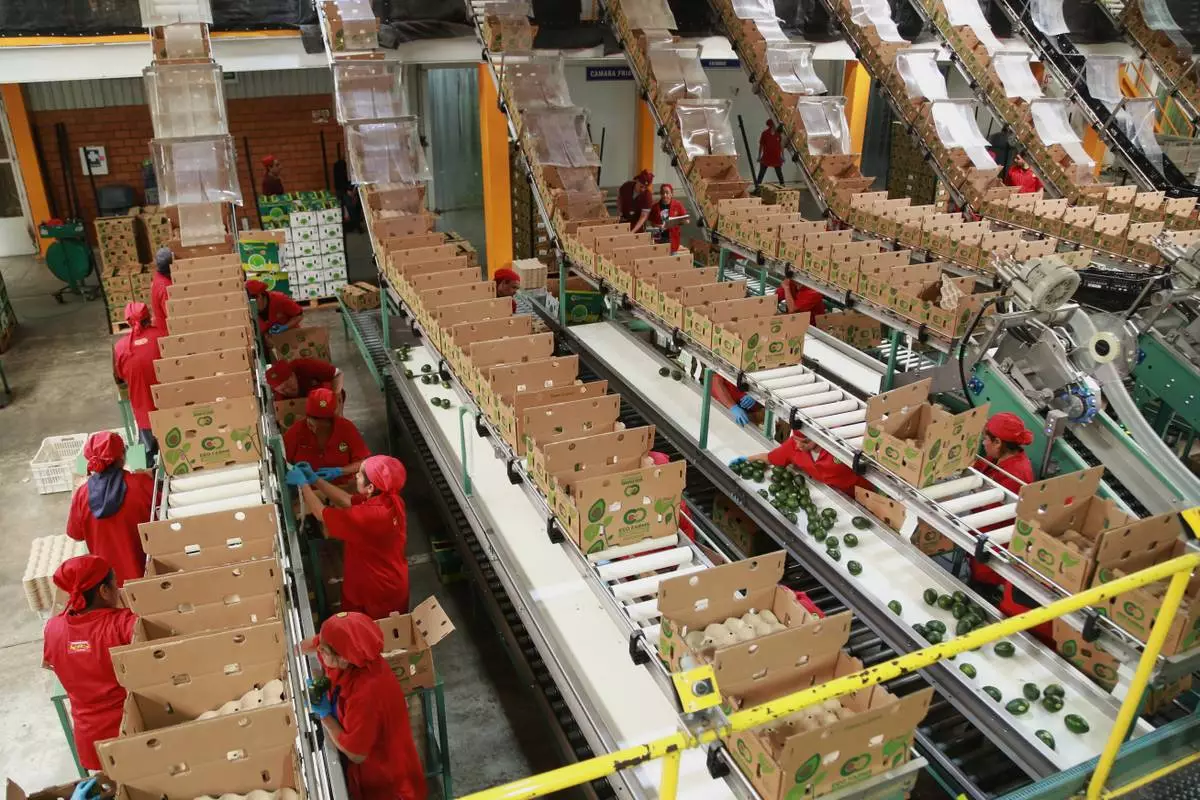
Workers sort avocados at a packing plant in Tacambaro, Mexico Thursday, Aug. 13, 2026. (AP Photo/Armando Solis)
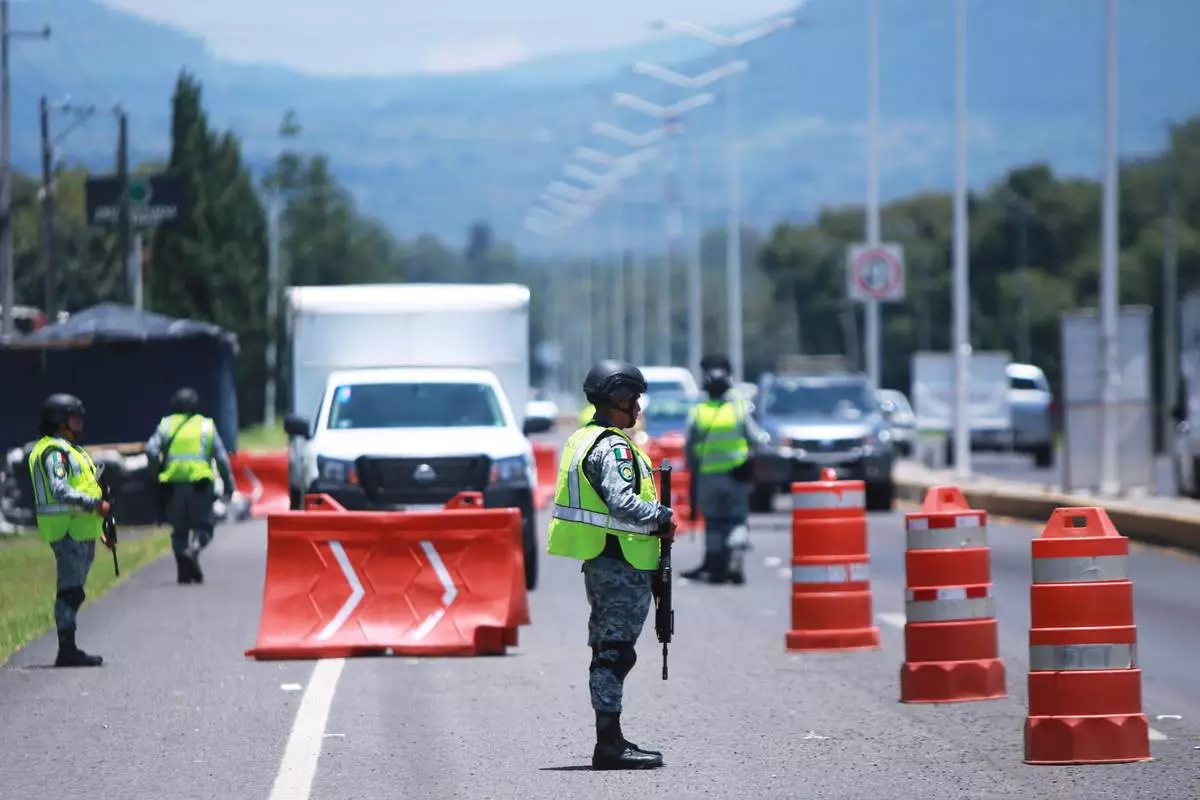
National Guard work at a checkpoint in Cherangueran, Michoacan sate, Mexico, Friday, Aug. 14, 2026. (AP Photo/Armando Solis)
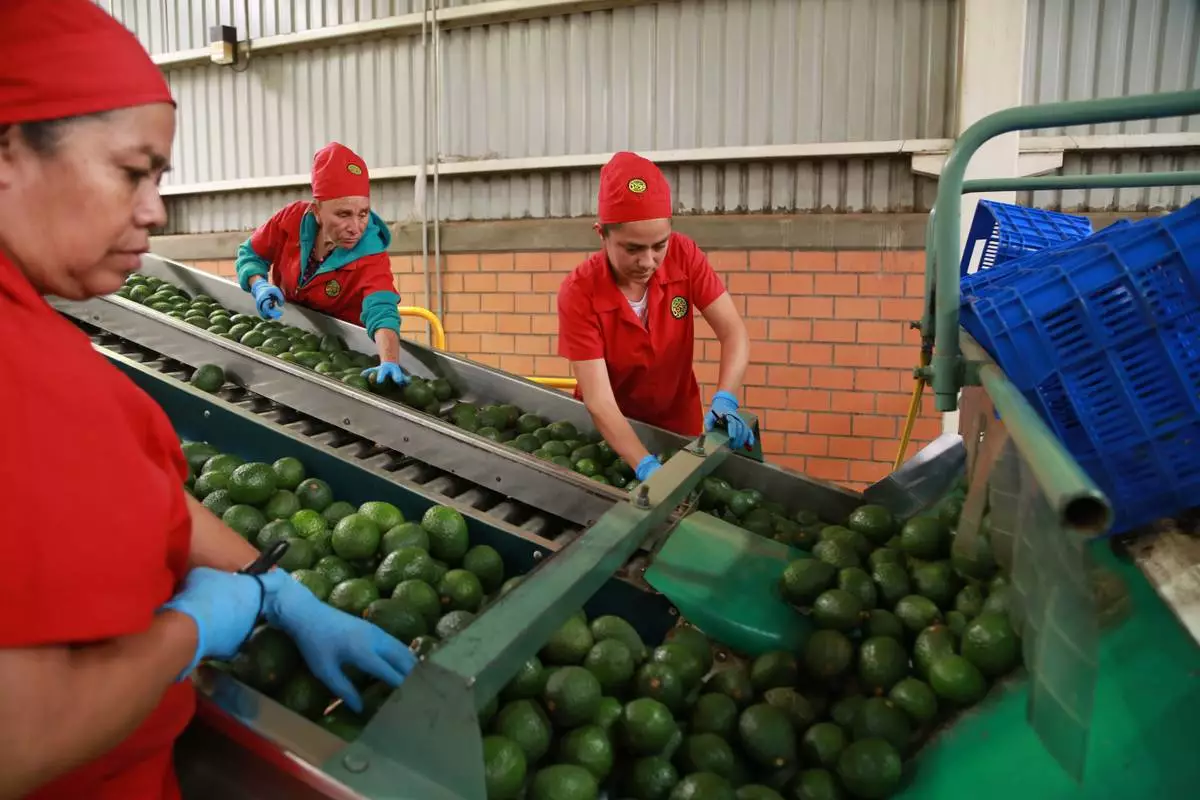
Workers sort avocados at a packing plant in Tacambaro, Mexico Thursday, Aug. 13, 2026. (AP Photo/Armando Solis)
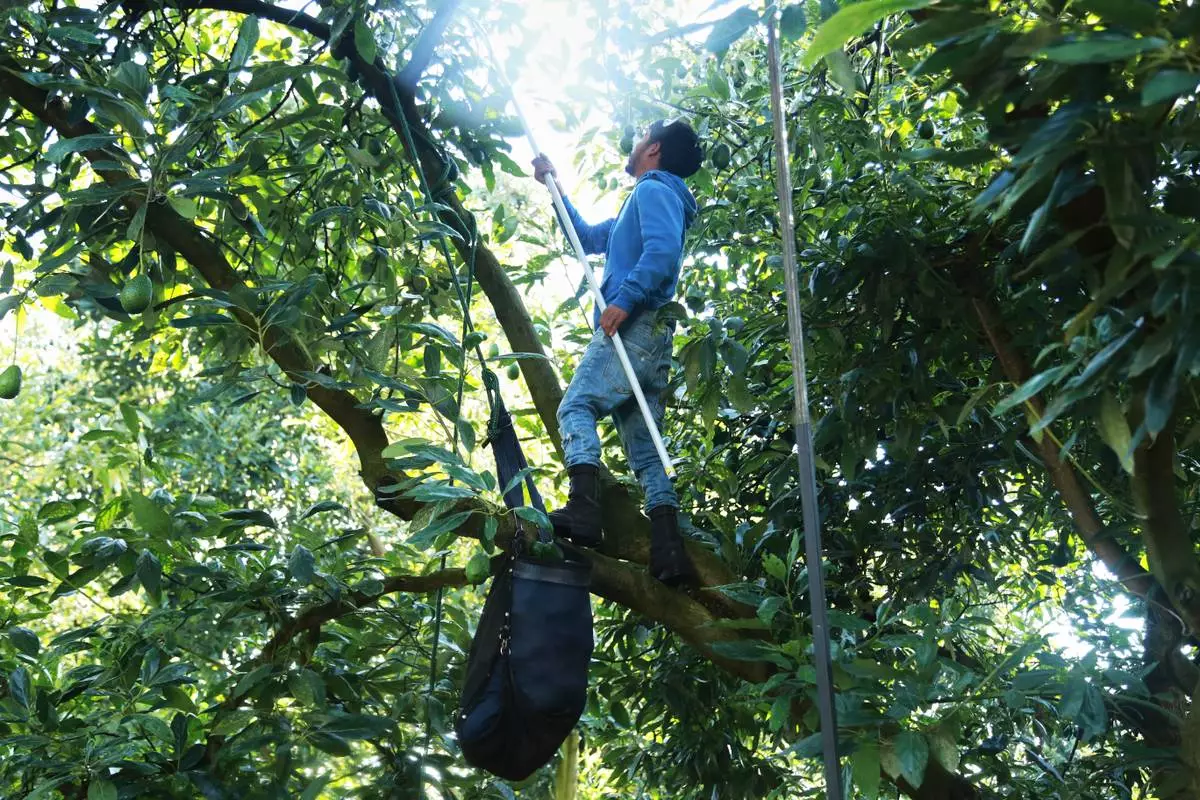
A farmhand harvests avocados at an orchard in Santa Ana Zirosto, Michoacan sate, Mexico, Friday, Aug. 14, 2026. (AP Photo/Armando Solis)
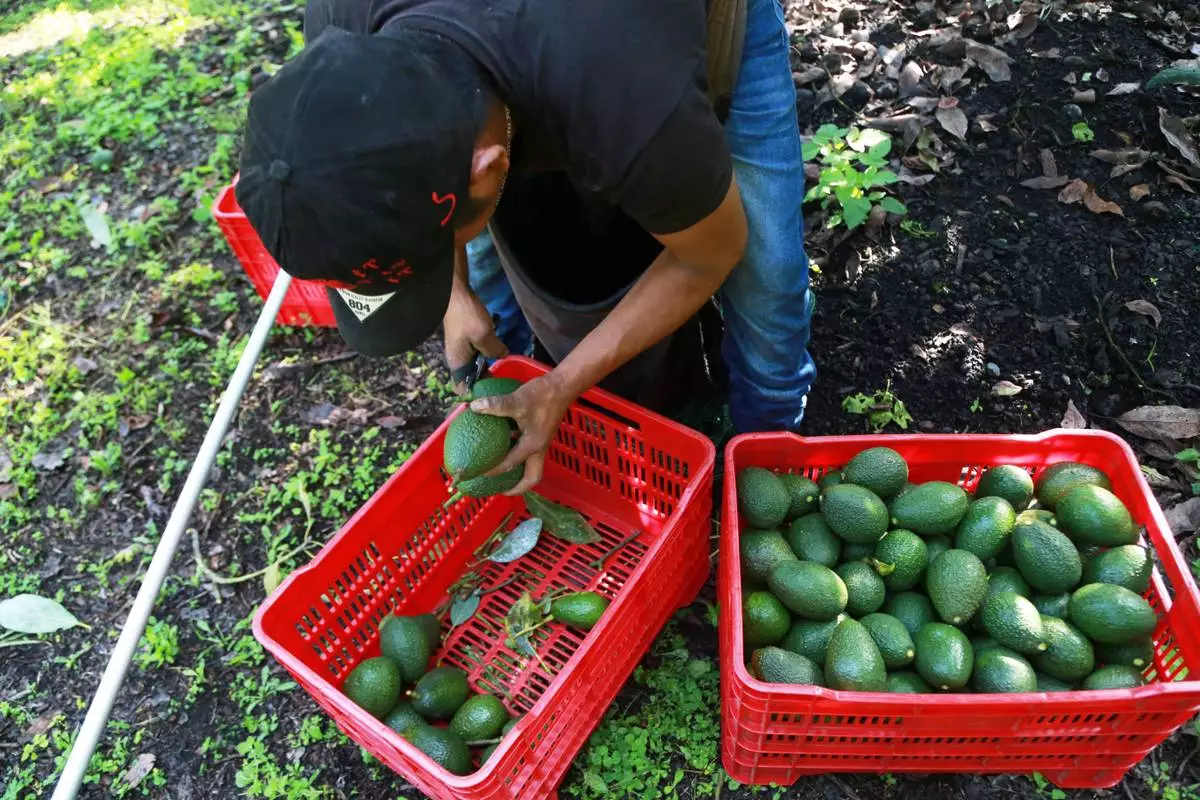
A farmhand harvests avocados at an orchard in Santa Ana Zirosto, Michoacan sate, Mexico, Friday, Aug. 14, 2026. (AP Photo/Armando Solis)
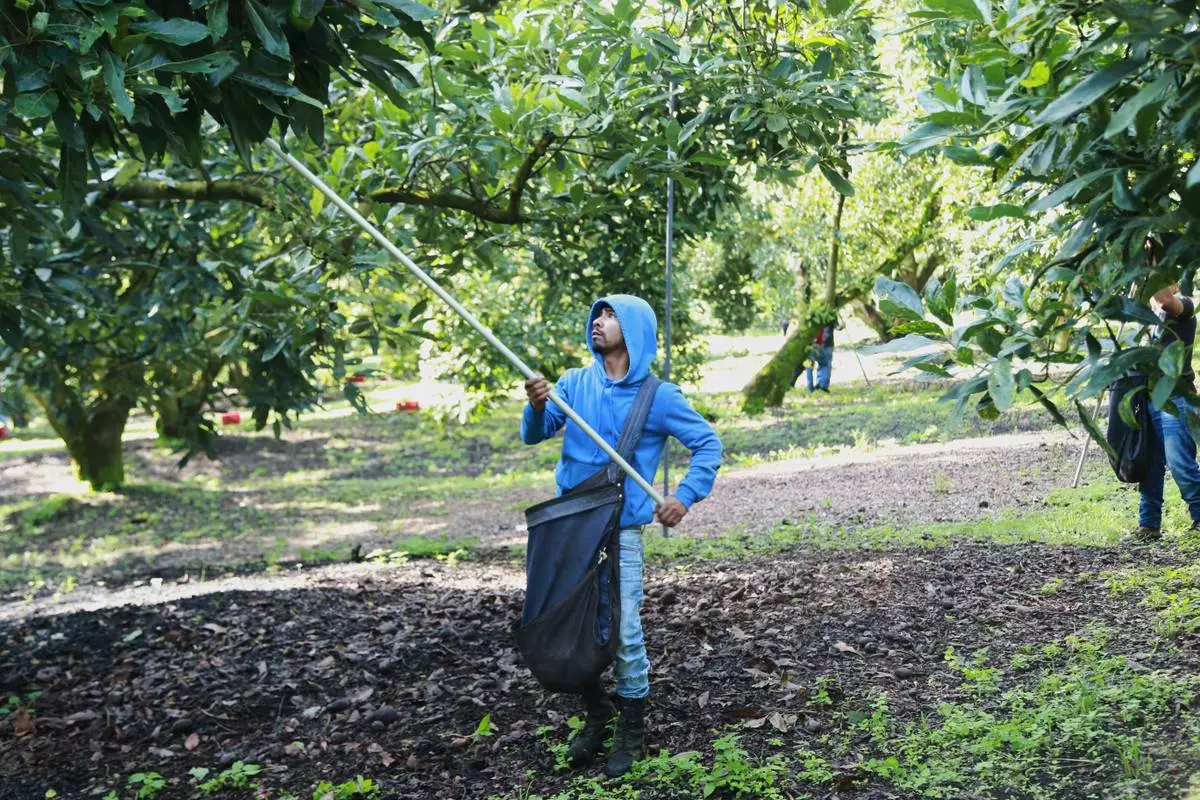
A farmhand harvests avocados at an orchard in Santa Ana Zirosto, Michoacan sate, Mexico, Friday, Aug. 14, 2026. (AP Photo/Armando Solis)