The first group of female pilot cadets for China's carrier-based aircraft has passed daytime deck-landing solo flight assessments and entered nighttime training, the Navy said, marking steady progress toward full-spectrum combat capability around the clock and from land to sea.
In waters off the Yellow Sea, female pilot cadets piloted helicopters to approach vessels and establish landing routes. After successful landings, they took off again. The assessment required each cadet to complete solo landings on moving decks, with two naval support vessels coordinating alongside and ground crews directing the helicopters in tight sequence.
Carrier landing solo flight is regarded as the "ticket" for pilots to enter real combat at sea. Compared with land-based operations, the maritime environment presents more complex and changing weather conditions, demanding greater precision in piloting skills and mental resilience.
"We face a considerable psychological challenge because the landing platform is small and affected by waves and sea winds, causing the ship to heave and sway, which demands more precise control," said Wang Mengdi, a cadet from the People's Liberation Army (PLA) Naval Aviation University.
After the daytime assessment, nighttime landing training began immediately. As darkness fell and visibility dropped, cadets closely monitored cockpit instruments, adjusted their course and, under tower guidance, carefully descended to complete the landing.
"I flew over the sea for the first time today. I didn't expect it to be so dark. From a distance, the ship was just a tiny white dot. The psychological pressure was quite intense," said another cadet, Han Meng.
Zhang Yingjie, an instructor with the PLA Naval Aviation University, said "the cadets still need to complete all training subjects outlined in the syllabus and pass their final assessments before being assigned to frontline units."
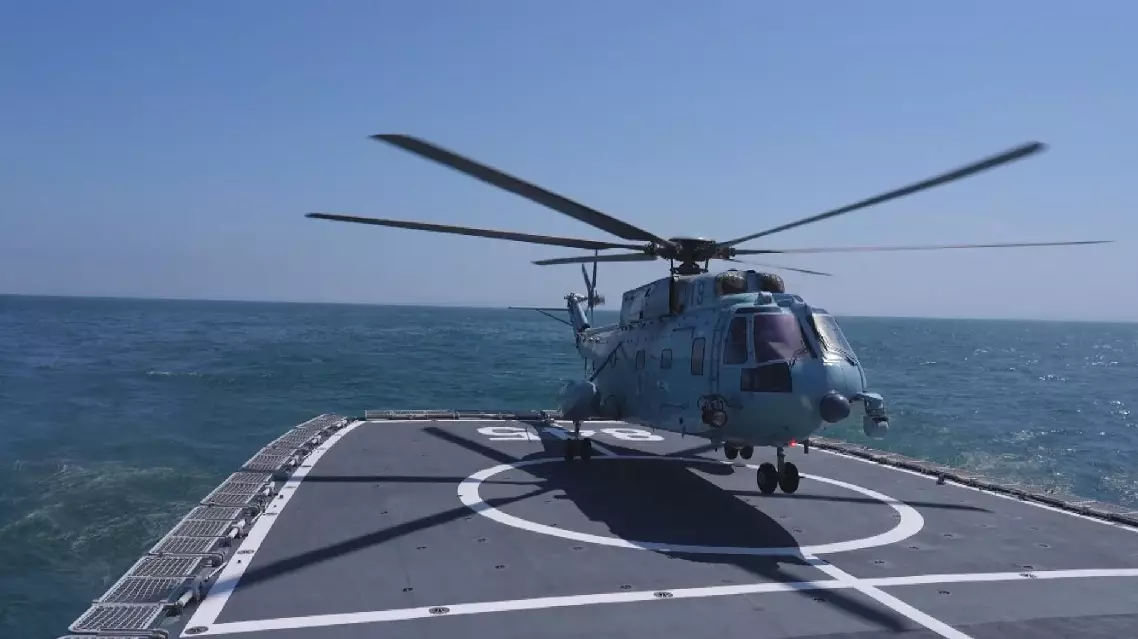
China's first female carrier-based aircraft pilots pass key landing test