China commemorated late leader Jiang Zemin's centenary of birth on Monday with a grand gathering in the Great Hall of the People in Beijing.
Jiang Zemin served as general secretary of the Central Committee of the Communist Party of China (CPC), and the president of the People's Republic of China. He was born on Aug 17, 1926. He died aged 96 in Shanghai on Nov 30, 2022.
The following is a transcript of a commemorative video reviewing the life of Jiang aired by China Media Group:
Jiang Zemin enjoyed high prestige and was acknowledged by the whole Party, the entire military, and the Chinese people of all ethnic groups.
He was a great believer in Marxism, a proletarian revolutionary, statesman, military strategist, and diplomat.
Jiang Zemin was also a long-tested communist fighter, and an outstanding leader of the great cause of socialism with Chinese characteristics.
He was the core of the CPC's third generation of central collective leadership and the principal founder of the theory of "Three Represents".
Jiang was born and raised in the historic city of Yangzhou in Jiangsu Province. From his youth, he pursued truth and actively participated in the people's revolutionary movements.
In April 1946, he joined the Communist Party of China. From that moment on, he devoted his entire life to the Party and the people.
Over 13 years spanning the fourth plenary session of the 13th CPC Central Committee to the 16th National Congress of the CPC, Jiang Zemin demonstrated vision, wisdom and courage.
He worked tirelessly, made crucial judgments, and kept pace with the times.
He advanced reform and opening‑up, mapped out development strategies, promoted national reunification, and opposed hegemonism.
He effectively handled a series of international emergencies bearing on China's sovereignty and security, overcame hardships, political and economic risks, and natural disasters, steering socialism with Chinese characteristics into the 21st century.
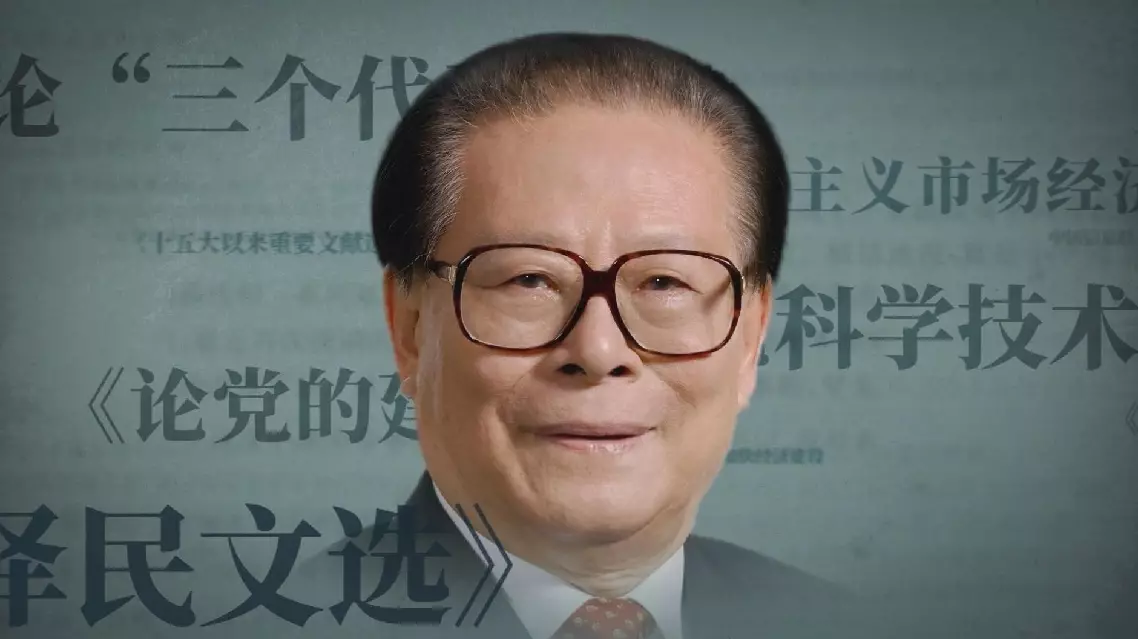
China commemorates birth centenary of late leader Jiang Zemin
China on Tuesday unveiled a set of measures to unlock the consumption potential of counties and smaller cities, tapping the vast lower-tier markets as a new source of domestic demand and economic growth.
The government calls for upgrading consumption channels in counties, including renovating township commercial centers, rural markets and local fairs, encourages domestic and international brands to open regional debut stores, and promotes the redevelopment of existing land resources to improve services, according to a guideline jointly issued by the Ministry of Commerce and other authorities.
The guideline also urges better services that cater to the elderly and children, more efficient urban-rural distribution networks, and stronger county-level employment, as well as more channels for residents to increase their incomes.
The measures come as China seeks to give consumption a bigger role in driving economic growth.
The lower-tier markets, generally referring to third-tier and smaller cities, counties, townships and rural areas, account for about 70 percent of China's population and 60 percent of total retail sales of consumer goods. These markets have emerged as a key link between urban and rural economies and an important part of the domestic economic cycle.
The lower-tier markets have diverse needs across different levels, said Shen Bing, a researcher at an institute under the National Development and Reform Commission (NDRC), noting that this diversity can provide broad room for businesses to develop new service models while creating new momentum for consumption.
Official data showed that retail sales of consumer goods in rural areas rose 2.4 percent year on year in the first seven months of 2026, 1.3 percentage points faster than in urban areas. County-and township-level retail sales were estimated to account for nearly 40 percent of the country's total.
China's 2,800-plus county-level administrative divisions form a vast and diverse domestic market, said Chen Xi, a researcher with the NDRC, noting that consumption upgrade is gradually extending from major cities to county-level markets, providing an endogenous source of consumption growth.

China moves to unlock county-level consumption, energize domestic demand