Skip to Content Facebook Feature Image

Seeing Machines launches Physical AI Platform to power the next generation of humanoid robots

Business

Seeing Machines launches Physical AI Platform to power the next generation of humanoid robots
Business

Business

Seeing Machines launches Physical AI Platform to power the next generation of humanoid robots

2026-08-17 14:09 Last Updated At:14:25

New platform builds on proven automotive leadership to enable safe, intuitive human-machine interaction

CANBERRA, Australia, Aug. 17, 2026 /PRNewswire/ -- Seeing Machines Limited (AIM: SEE), the advanced computer vision company that has helped redefine transport safety through AI-powered human sensing, today announced the launch of its Physical AI Platform. The platform applies the Company's Human-Centred AI design philosophy to robotics and industrial automation.

The announcement marks an important milestone in the company's evolution, building on more than 25 years of human factors research and AI innovation that has helped make roads safer around the world.

Seeing Machines' Driver and Occupant Monitoring System (DMS/OMS) technology is deployed in more than eight million vehicles globally, helping vehicles understand drivers, anticipate risk and prevent accidents. The Company is now applying the same Human-Centred AI philosophy to give robots the contextual awareness needed to interact safely and intuitively with people in complex real-world environments.

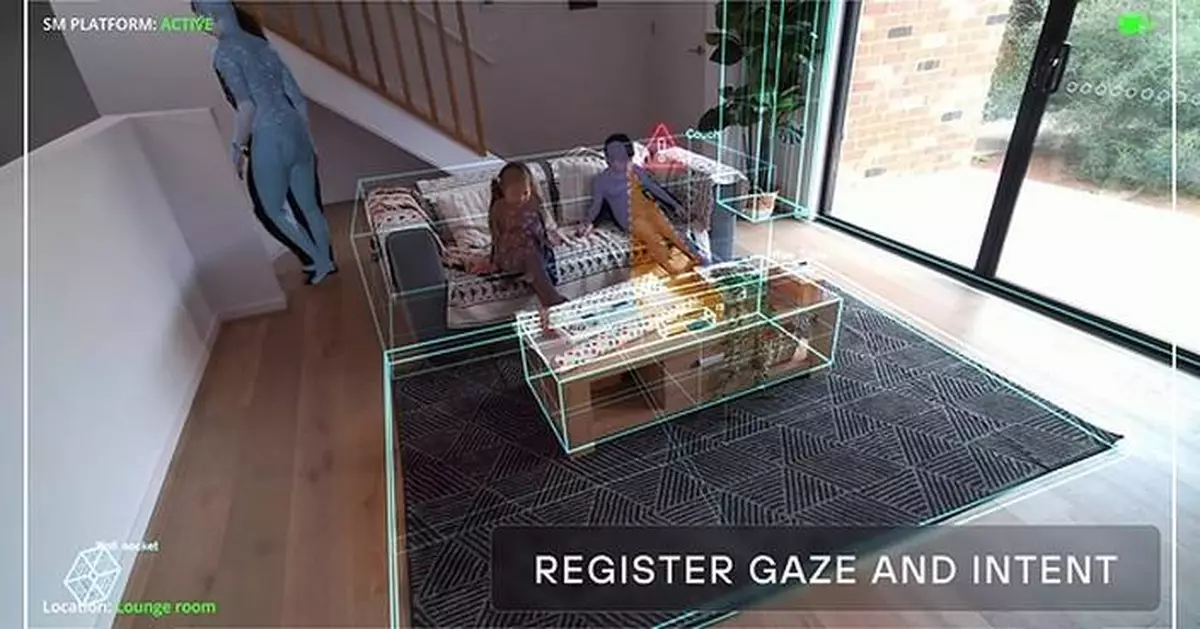
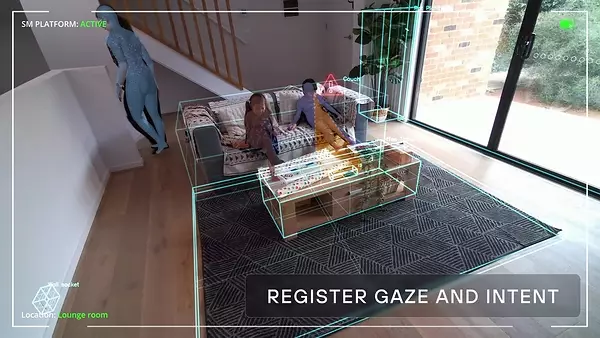
The Seeing Machines Physical AI platform gives robots a deeper understanding of the situation around them by creating a dynamic three-dimensional perception map of people, objects and their environment. Rather than simply recognising individual features, it continuously builds contextual awareness that enables robots to understand spatial relationships, interpret human behaviour, anticipate risk and make safe and intuitive decisions in real time.

Paul McGlone, Chief Executive Officer of Seeing Machines, said the launch is a natural evolution of the company's long-standing mission to solve for complex human-machine interaction.

"For more than two decades, we've been teaching machines to understand people," said McGlone.

"Our technology is already protecting millions of drivers around the world by enabling vehicles to better understand human behaviour and respond to risk in real time. With the launch of our Physical AI Platform we are extending that capability into robotics, enabling machines to interact with people safely, naturally and intuitively.

"As robots begin moving beyond research labs and into factories, workplaces, hospitals, homes and public spaces, understanding people and the environment they're in becomes just as important as understanding the task they're performing. We believe our Human-Centred AI design philosophy will extend into a foundational capability for the next generation of robotics," he said.

Unlike conventional AI systems focused on recognising individual objects or executing predefined tasks, Seeing Machines' technology interprets people, objects and the surrounding environment as a unified scene. This contextual understanding gives robots the situational awareness required to operate safely alongside people in dynamic and unpredictable environments.

The platform has potential applications across a broad range of industries, including manufacturing, logistics, healthcare, aged care, warehousing, mining and industrial automation, where robots are increasingly expected to work collaboratively with people.

Additional Resources:

About Seeing Machines (AIM: SEE): Seeing Machines is a global technology company founded in 2000 and headquartered in Australia, pioneering Human-Centred AI that enables machines to understand people and the environments in which they operate. Combining more than 25 years of Human Factors research with advanced AI, the company develops Safety AI technology that helps machines anticipate risk, make safer decisions in real time, and enable more natural, intuitive human-machine interactions. Its technology combines AI algorithms, embedded processing and optics to deliver reliable, real-time understanding of human behaviour, attention, and cognitive state. Building on its global leadership in vision-based monitoring and Driver Monitoring Systems (DMS), Seeing Machines is extending its expertise across automotive, commercial transport, aviation, robotics and industrial automation through its Cabin AI, Cockpit AI and Physical AI platforms. Seeing Machines has offices in Australia, the USA, Europe and Asia and supplies technology solutions and services to industry leaders globally.

www.seeingmachines.com

Contact:
Sophie.Nicoll@seeingmachines.com

** This press release is distributed by PR Newswire through automated distribution system, for which the client assumes full responsibility. **
Seeing Machines launches Physical AI Platform to power the next generation of humanoid robots


Seeing Machines launches Physical AI Platform to power the next generation of humanoid robots
SEOUL, South Korea, Aug. 14, 2026 /PRNewswire/ -- Enteric capsules are widely used to protect acid-sensitive compounds and to delay drug release until intestinal entry. However, evidence supporting their gastric integrity under physiologically relevant fed-state conditions remains limited, as most data rely on conventional static in vitro dissolution tests.

In this study, the authors from Bioneer A/S, the University of Copenhagen, and Lonza Capsugel evaluated the gastric integrity of their enteric capsules - Capsugel® Enprotect® capsules, using the Dynamic Gastrointestinal Model (DGM), which simulates the physical, hydrodynamic, and biochemical conditions of the human gastrointestinal tract under fasted and fed states. The DGM simulated key physiological factors such as gastric motility, pH changes, digestive secretions, and gastric emptying patterns.

Capsugel® Enprotect® capsules, offer a next-generation enteric delivery solution designed to protect acid-sensitive APIs and enable targeted release in the small intestine. These capsules have been developed using a first-of-its-kind manufacturing process. The bi-layered capsule manufacturing technology allows target delivery of APIs to the distal small intestine without the need for post-filling coating excipients, which accelerates the drug manufacturing and development processes. They avoid exposure to heat and solvents to protect against degradation for some APIs. 

To evaluate this performance, researchers filled the capsules with caffeine, a well-characterized model compound, and tested them under three conditions:

  • Fasted state
  • Light meal (~500 kcal)
  • High-fat FDA meal (~900 kcal)

Results showed caffeine‑filled Capsugel® Enprotect® capsules remained intact throughout gastric transit across all tested conditions, with release occurring only after intestinal entry. No caffeine was detected in stomach samples, indicating that the capsules did not prematurely release their contents. The capsules only disintegrated after entering the intestinal compartment, confirming their gastro-resistant properties. The capsules remained in the stomach for approximately 29 minutes in the fasted state, 147 minutes after the light meal, and 243 minutes following the high-fat meal. Despite this prolonged exposure, the capsules maintained their structural integrity.

Importantly, DGM‑based predictions of gastric residence time, capsule disintegration, and pharmacokinetic profiles closely aligned with previously published human MRI and salivary tracer data in the fasted state and after a light meal. One of the study's most significant findings was that even under the challenging conditions of a high-fat meal, where gastric pH remained elevated for an extended period and stomach emptying was substantially delayed, the capsules still remained intact. The study also indicates that capsule floating behavior and the presence of an acidic "acid pocket" in the stomach may have helped preserve capsule integrity despite the less acidic environment.

Overall, these findings confirm the robust gastroresistant performance of Capsugel® Enprotect® capsules and highlight the value of biorelevant in vitro tools to predict oral dosage form behavior beyond standard dissolution testing.

Join Us at CPHI Korea 2026 and Discover the Future of Targeted Ingredient Delivery

As one of Asia's premier pharmaceutical and nutraceutical industry events, CPHI Korea 2026 connects pharma and nutraceutical leaders across Asia to discover emerging technologies, exchange industry insights, and build partnerships driving innovation in health and nutrition. A key highlight at this year's event will be Capsugel® Enprotect® capsules, our innovative enteric capsule technology designed to provide reliable gastric protection and targeted ingredient delivery without the need for additional enteric coating processes.

Visit us at Booth K15, COEX, Seoul, South Korea, 25-27 August 2026, and discover how Capsugel® Enprotect® capsules and our advanced delivery technologies can help bring your next innovation to market faster and more effectively.

For more information on Capsugel® Enprotect® capsules, please visit us at CPHI Korea.

** This press release is distributed by PR Newswire through automated distribution system, for which the client assumes full responsibility. **

New Study Confirms Capsugel® Enprotect® Capsules Deliver Robust Gastric Integrity Under Both Fasted and Fed Conditions

New Study Confirms Capsugel® Enprotect® Capsules Deliver Robust Gastric Integrity Under Both Fasted and Fed Conditions

Recommended Articles