AI Efficacy Enhancement Team announces implementation of 30 Efficacy Enhancement Projects
The Government announced today (August 17) that the AI Efficacy Enhancement Team has so far facilitated and implemented the first batch of 30 Efficacy Enhancement Projects, which are being rolled out in phases starting from mid-2026.
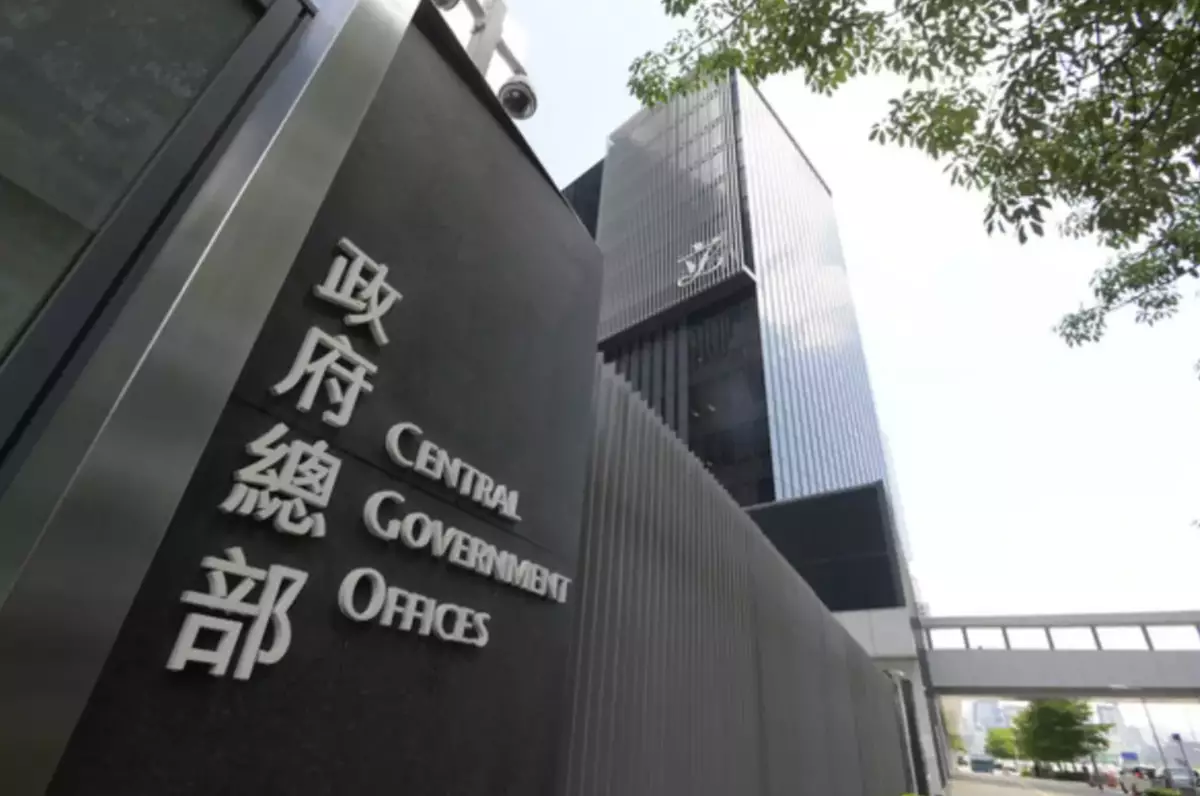
The Central Government Offices, Photo source: reference image
The first batch of 30 Efficacy Enhancement Projects involves 13 departments and includes 10 high-impact flagship projects covering areas closely related to the public and business, such as transport licences, leisure and sports facilities, food business licences, environmental hygiene, complaint handling and environmental protection.
These 30 Efficacy Enhancement Projects mainly optimise the workflow of various application processing matters or public service queuing, to make them easier and faster, thereby enhancing users’ experience. For example, the adoption of AI has drastically reduced the processing or waiting time for certain cases by 90 per cent. Meanwhile, some projects have streamlinedinternal government procedures to improve work efficiency. For instance, through AI technology application and/or process re-engineering, the processing time for certain workflow has been compressed from several days to several hours, while the time required for case triage or analysis has also been shortened by half or more.
"The implementation of these projects resulted from the support and efforts by relevant departments. The Team has also established an AI dedicated task force comprising experts in AI and data science from the Digital Policy Office and the Census and Statistics Department. The task force collaborates with leading AI enterprises to assist government departments in taking forward projects in partnership by using AI technology. This arrangement ensures AI applications match with the actual operational needs of departments and new developments and trends of AI," said the Deputy Chief Secretary for Administration, Mr Cheuk Wing-hing.

The Deputy Chief Secretary for Administration, Mr Cheuk Wing-hing, Photo source: HKSAR Government Press Releases
"With the objectives of achieving pragmatic implementation and a swift rollout, we are striving to launch Efficacy Enhancement Projects progressively in 2026 and 2027. Launching these projects within a short period of time reflects the Government’s determination and execution capability in smart transformation.
"The first batch of the projects has also demonstrated the potential in promoting AI across departments. Despite the diverse functions and responsibilities of different departments, there are similarities in daily workplace scenarios, such as online reservations, license applications, audits and assessments, responding to enquiries and environmental monitoring. If a solution could be successfully applied in a pilot department, the relevant experience, technologies and operation models can be extended to other departments and similar work scenarios with suitable adjustments," he said.
The Government will continue to promote further AI adoption, explore more AI application scenarios, replicate and scale up the successful experience from the first batch of the projects to further improve government operational efficiency and service quality, and continuously optimise public services, so that citizens and enterprises can have a real sense of the convenience and benefits brought by digital intelligence transformation.
In the 2025 Policy Address, the Chief Executive announced the setting up of the AI Efficacy Enhancement Team to co-ordinate and steer government departments to effectively apply AI technology to their work, explore process re-engineering, and promote technological reform in departments to improve efficacy. The Team is led by the Deputy Chief Secretary for Administration, with the Secretary for Innovation, Technology and Industry as well as Legislative Council Member Mr Duncan Chiu as Deputy Leaders.

Photo source: Design image
Inter-departmental collaboration to ensure seamless transition between original and new Huanggang Ports (with photo/video)
The redeveloped Huanggang Port (new Huanggang Port) will open at 6.30am on October 12 (Monday). The Immigration Department (ImmD), the Hong Kong Customs and Excise Department (C&ED), the Transport Department (TD) and the Hong Kong Police Force (HKPF) yesterday (October 9) released the following latest information regarding the arrangements for the opening of the new Huanggang Port:
Immigration clearance arrangements
The ImmD will commence immigration clearance services at the new Huanggang Port starting from 6.30am on October 12. Before 6.30am on the same day, all passengers are still required to use the Lok Ma Chau Control Point to travel between Hong Kong and Shenzhen. The ImmD will ensure that all passengers arriving at the Lok Ma Chau Control Point or the temporary port building of the Huanggang Port in Shenzhen before 6.30am can complete their immigration clearance procedures.
During the initial opening of the new Huanggang Port, it is expected that traffic in the vicinity may be relatively busy. The ImmD reminds passengers planning to use the new Huanggang Port to plan their journeys ahead and allow sufficient time to adapt to the new arrangements. The ImmD will set up a joint command centre with relevant departments, including the HKPF, the C&ED and the TD, and maintain close liaison with Mainland authorities such as the Shenzhen General Station of Exit and Entry Frontier Inspection, to closely monitor the operation of the new port and take timely response measures. The ImmD will also flexibly deploy manpower to cope with the possible surge in passenger and vehicular traffic during the initial stage, ensuring smooth and orderly clearance for both passengers and vehicles.
Furthermore, the ImmD appeals to eligible Hong Kong residents to enrol for the new "collaborative inspection" automated channels in advance through the "HK e-Channel" mobile application. The ImmD also reminds passengers that, when using the "collaborative inspection" automated channels to travel between Hong Kong and the Mainland, they are still required to carry valid travel documents that meet the immigration requirements of both sides, and to check the validity of their documents carefully before departure.
Customs clearance arrangements
To ensure a smooth transition of passenger and vehicular clearance services between the original and new ports, the C&ED has planned ahead and deployed sufficient manpower at both the new Huanggang Port and the Lok Ma Chau Control Point. The C&ED will maintain close liaison with relevant government departments and Shenzhen counterparts, and closely monitor the arrival time of the last inbound and outbound cross-boundary buses and private cars at the Lok Ma Chau Control Point to ensure that all passengers and cross-boundary vehicles of the final departures have completed clearance procedures and departed the Lok Ma Chau Control Point.
The new Huanggang Port will implement new clearance arrangements for cross-boundary vehicles featuring "joint one-stop" vehicle lanes, where drivers can complete clearance procedures of both places in one go simply by completing the collection of body temperature, travel document, facial features and fingerprints through the "integrated information collection device" in the lane. Drivers using the "joint one-stop" vehicle lanes for the first time are required to complete the relevant authorisation at the "integrated information collection device". Outbound vehicles will first pass through the "customs front kiosk" for customs risk assessment, and vehicles requiring customs inspection must turn right as directed to proceed to the inspection area for examination. In addition, the new Huanggang Port will adopt a "passenger-vehicle separation" arrangement, under which general passengers of cross-boundary private cars are required to disembark at the drop-off area and carry their personal luggage and belongings to proceed to the immigration clearance hall for on-board passengers to undergo passenger clearance procedures.
Traffic and transport arrangements for switchover between original and new Huanggang Ports
To tie in with the suspension of passenger clearance services between the Lok Ma Chau Control Point and the original Huanggang Port, as well as the opening of the new Huanggang Port at 6.30am on October 12, the TD has steered local and cross-boundary public transport operators (PTOs) in formulating vehicle deployments, service schedules, and passenger notices for the routes concerned.
A Government spokesman said, "Before and after the switchover between the original and new Huanggang Ports, traffic in the vicinity may be relatively busy. Members of the public are urged to follow the instructions of the Police and PTO staff, and refrain from lingering at the original and new ports or the San Tin Public Transport Interchange (PTI), heed service schedules, and maintain order while queuing. The public should plan their journeys in advance, choose suitable boundary control points according to their needs, and do not need to rush to use the new Huanggang Port."
1) Public transport arrangements for Lok Ma Chau Control Point/original Huanggang Port
The last northbound Lok Ma Chau-Huanggang cross-boundary shuttle bus (Yellow Bus) to the original Huanggang Port will depart from San Tin PTI between 6.15am and 6.20am on October 12, and the operator will stop latecomers from joining the queue as appropriate. Passengers who miss the last Yellow Bus may take three franchised bus daytime routes (KMB B11, NLB B12 and Citybus B13) and three green minibus (GMB) daytime routes (44B, 44B1 and 78) serving San Tin PTI to travel to the new Huanggang Port for boundary crossing. The last southbound Yellow Bus from the original Huanggang Port to San Tin PTI will depart only after all cross-boundary travellers entering the original Huanggang Port before 6.30am have completed clearance procedures and boarded the bus.
In addition, five 24-hour short-haul cross-boundary coach (CBC) routes will tie in with the switchover at 6.30am on October 12. The last northbound departures from urban areas to the original Huanggang Port, and the last southbound departures from the original Huanggang Port to urban areas on that morning are as follows:
| Route | Last departure to original Huanggang Port (northbound) | Last departure to urban areas (southbound) |
| Mong Kok | 5.30am | 6.30am |
| Yau Tsim | 5.45am | 6.15am |
| Kwun Tong | 5.30am | 6.30am |
| Wan Chai | 5.15am | 6.15am |
| Tsuen Wan | 5.30am | 6.30am |
Regarding GMBs and taxis, the TD has alerted relevant operators and trades to render full facilitation to the switchover arrangements. If any northbound vehicles heading to the original Huanggang Port fail to arrive before the Lok Ma Chau Control Point suspends service, they will be arranged to wait at the public transport buffer area near the new Huanggang Port and be redirected to the new port when it opens.
2) Public transport arrangements for new Huanggang Port
On that day, the first departure times of the five franchised bus and three GMB daytime routes to the new Huanggang Port are as follows:
| Route | First departure time to new Huanggang Port* |
| KMB B10 (Kwai Tsui Estate PTI – New Huanggang Port) | 5.30am |
| KMB B11 (Tin Fu Bus Terminus – New Huanggang Port) | 5.30am |
| NLB B12 (Wu Kai Sha Station PTI – New Huanggang Port) | 5.30am |
| Citybus B13 (Siu Sai Wan (Island Resort) – New Huanggang Port) | 4.45am |
| Citybus B14 (Kai Tak (Olympic Avenue) – New Huanggang Port) | 5.40am |
| GMB 44B (Tuen Mun Station – New Huanggang Port) | 5.45am |
| GMB 44B1 (Tuen Mun Ferry Pier – New Huanggang Port) | 5.45am |
| GMB 78 (Pat Heung Road (near Tai Lam Tunnel Bus-Bus Interchange) – New Huanggang Port) | 6am |
*The first departures are advanced to tie in with the opening time of new Huanggang Port, and services will resume according to the Schedule of Service starting from the following day.
On that morning, the southbound first departures of the above franchised bus and GMB routes departing from the new Huanggang Port will also tie in with the commencement of clearance services at 6.30am, taking into account the estimated time required for passengers to complete clearance procedures and arrive at the PTI.
As for the short-haul CBC routes, they will be redirected to serve the new Huanggang Port after the last departures to and from the original Huanggang Port, operating according to their original service schedules:
| Route | First departure to new Huanggang Port (northbound) | First departure to urban areas (southbound)* |
| Mong Kok | 6am | 6.40am |
| Yau Tsim | 6.45am | 6.45am |
| Kwun Tong | 6am | 6.45am |
| Wan Chai | 6.15am | 6.40am |
| Tsuen Wan | 6am | 6.45am |
*Following the opening time of new Huanggang Port, subject to the time required for passengers to complete clearance procedures, the first departures may be slightly delayed.
Various PTOs will arrange sufficient vacant vehicles on standby at the new Huanggang Port PTI and the nearby public transport buffer area to pick up passengers arriving in Hong Kong via the new Huanggang Port.
3) Traffic arrangements near new Huanggang Port
Appropriate traffic signs and road markings have been installed on major roads connecting to the new Huanggang Port, such as San Sham Road and the Lok Ma Chau Bridge, to guide motorists to the new port. The Police will also be on-site to direct vehicles to the new Huanggang Port. Motorists should pay attention to on-site traffic signs and road markings, and follow the instructions of Police officers.
The spokesman said, "We will closely monitor passenger demand in collaboration with PTOs and strengthen or adjust services when necessary. Passengers should refer to operator notices, websites, mobile apps, or pay attention to onboard broadcasts to understand route details, stop locations and service hours. Cross-boundary travellers who need to use the new Huanggang Port should plan their journeys early and reserve time to adapt to the new arrangements. The TD's Emergency Transport Co-ordination Centre will closely monitor the traffic and public transport conditions at the new port."
Members of the public and visitors may visit the TD's designated webpage "Access to Huanggang Port" for details, or heed the latest traffic news via the TD's website (www.td.gov.hk), the HKeMobility mobile app as well as radio and television broadcasts.
Crowd management and traffic control measures
The HKPF has formulated detailed operational plans for the opening of the new Huanggang Port and its switchover period, and will implement crowd management measures, regulate traffic flow, and facilitate media activities on-site to ensure the smooth operation of the port and public safety.
The switchover plan will be executed in the small hours of October 12. The operational plans are as follows:
1) Activation of Joint Operation Centre and implementation of crowd management plans
On the night of the switchover, the HKPF will set up a Joint Operation Centre at the new Huanggang Port to monitor the crowd and traffic flow in real time. Noting that members of the public and bus enthusiasts may visit the Lok Ma Chau Control Point or the San Tin PTI to catch the first and last departures of buses, or to take photos of facilities prior to their cessation of operations, the Police will deploy officers to the above locations. Designated public activity areas, media areas, and waiting zones will be demarcated on ground. Crowd management measures will be implemented to ensure that these activities will not obstruct the normal operation of the port and the switchover arrangements.
Meanwhile, Police officers will also be stationed at the PTI on the second floor, as well as the passenger clearance halls on the fourth and fifth floors of the Huanggang Port. They will conduct joint crowd control operations alongside members of the Civil Aid Service and staff from the Government Property Agency to ensure good order upon the opening of the port.
The Security Bureau will activate the Emergency Monitoring and Support Centre, and the New Huanggang Port Joint Command Post to closely monitor and co-ordinate the opening of the port, oversee and co-ordinate inter-departmental operations, and ensure a seamless switchover from the Lok Ma Chau Control Point to the new Huanggang Port.
2) Traffic contingency plans and vehicle diversion measures
To ensure smooth traffic ahead of the switchover, Police officers have inspected surrounding roads prior to the implementation of the switchover plan with relevant departments to ensure road safety as well as clear and precise signage. During the switchover period, Police officers will step up patrols in the vicinity of San Tin Interchange, San Sham Road, and San Tin Highway to maintain smooth traffic in the surrounding areas.
When the switchover plan is underway, the HKPF will place water-filled barriers at the entrance to the Lok Ma Chau Control Point and divert all Shenzhen-bound vehicles to the new Huanggang Port. Once it is confirmed that all northbound and southbound passengers and vehicles have departed the Lok Ma Chau Control Point, passenger clearance services at the Control Point will suspend operations.
In view of the potential traffic volume during the switchover period, the HKPF will, depending on the actual traffic conditions on-site, activate the Lok Ma Chau Control Point Northbound Vehicle Holding Area to prevent traffic queues from tail backing onto San Sham Road and San Tin Highway, which could otherwise cause widespread congestion. Meanwhile, police officers will also stand by at various locations around the port. In the event of traffic accidents or road blockages, they will immediately intervene to ensure the smooth overall operation of the new port.
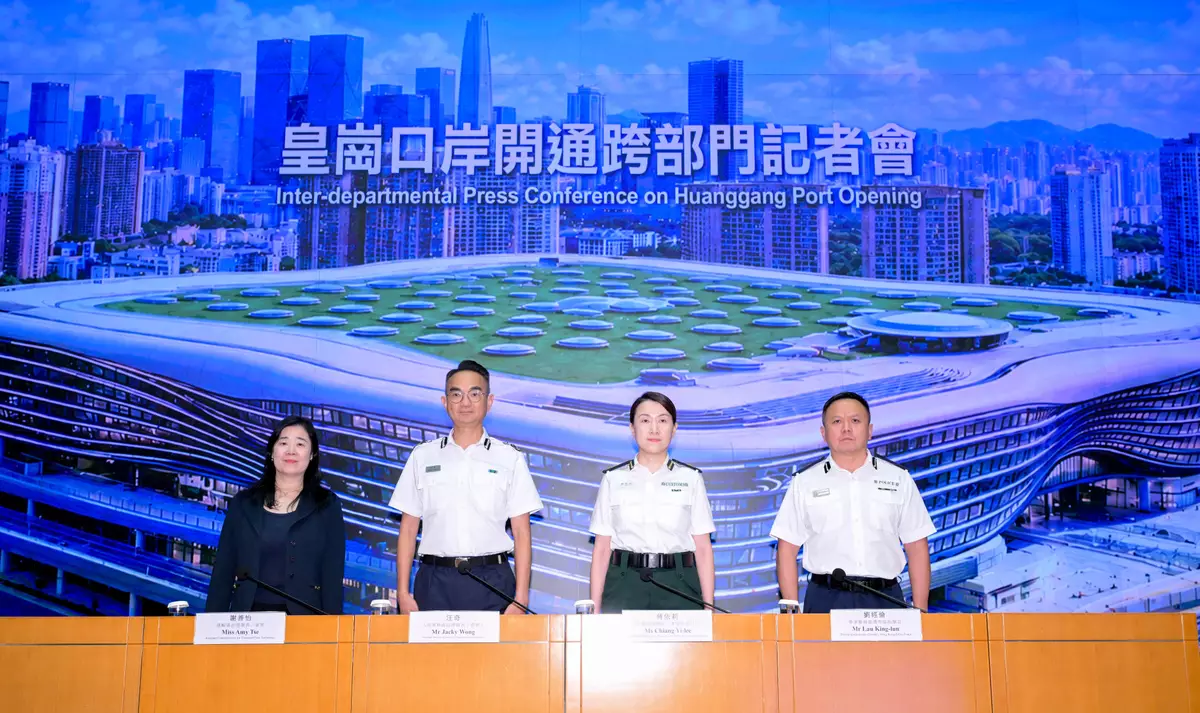
Inter-departmental collaboration to ensure seamless transition between original and new Huanggang Ports (with photo/video) Source: HKSAR Government Press Releases