Commuters and workers in Ethiopia have hailed the transportation transformation brought by the Chinese-built Addis Ababa Light Rail Transit, which has delivered travel convenience and helped to advance the modernization of the Ethiopian capital.
As a landmark infrastructure project within the framework of the Belt and Road Initiative, the light railway became the first modern urban light rail system in East Africa when it went into operation back in 2015.
Stretching more than 30 kilometers across Addis Ababa, a bustling city of more than 5 million people, the railway has reduced the commuting time to no more than an hour across the city, where lengthy traffic jams can be common.
Residents say the railway has offered a valuable and affordable travel option to beat the daily rush hour. "I used to take taxi before, but it is very much costly to [do] too often, it is very much costly. But this railway we are using with the minimum [fare], less price. And how I wish that the Chinese peoples can jointly work and empower our youth to transfer technology and advance the technology to Ethiopia's youngsters," said a passenger.
With trains and signaling systems from China, the advanced, fully-fledged Chinese equipment and technologies are ensuring the stable operation of the railway.
In the cabin, the train drivers are also grateful for the efficiency of the advanced Chinese tech and for the training opportunities they have received, with a number of learner drivers traveling to Changsha City in central China's Hunan Province to undergo comprehensive courses.
The railway transports around 60,000 people daily, while the Ethiopian government said the project had created 13,000 jobs.
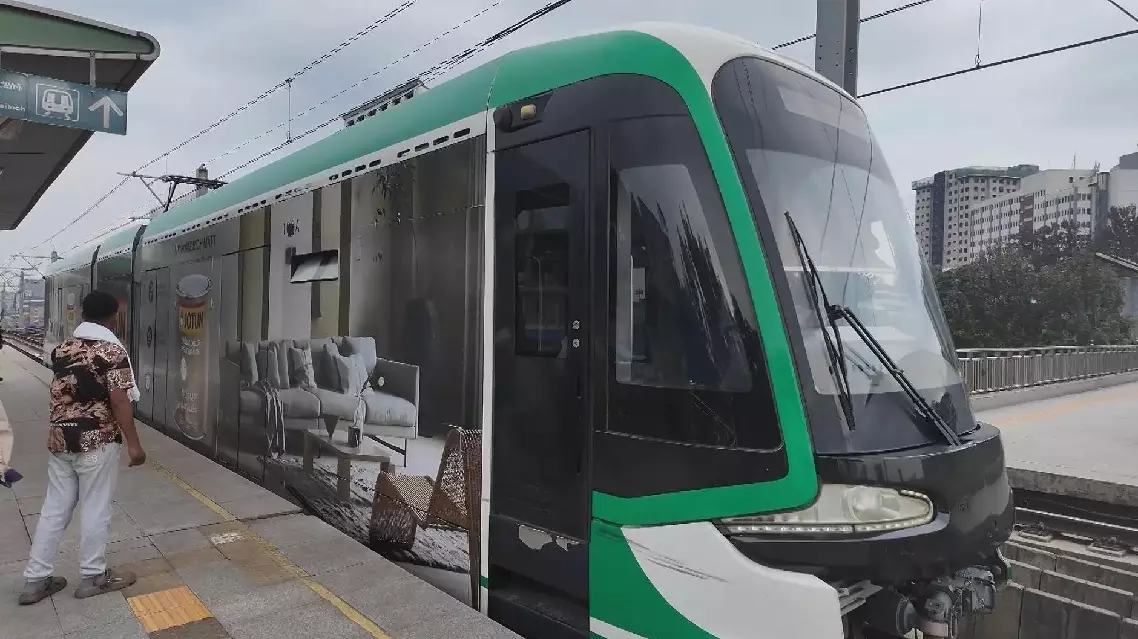
Chinese-built light rail delivers transport transformation in Ethiopian capital

The first batch of fishing vessels from south China's tropical island province of Hainan began returning to port in the early hours of Monday, bringing the first fresh catch of the new fishing season, after the conclusion of the annual three-and-a-half-month summer fishing moratorium in the South China Sea.
The annual seasonal ban, which ran from May 1 to August 16, is intended to protect fishery stocks by restricting commercial fishing across designated waters.
At 7:00 on Monday, the first group of fishing boats returned to Yazhou Central Fishing Port in Sanya City of Hainan. Workers unloaded the freshest seafood from the first catch of the season in a relay.
"We have over a hundred trays of fish, about four to five thousand jin (about 2,000 to 2,500 kilograms), with more than 10 species of fish," said Yang Hongde, a Sanya fisherman.
"We returned with a full catch as soon as we went out to sea. Our business is getting better and better," said Xu Linhao, another Sanya fisherwoman.
At the seafood trading market, buyers had already been waiting early. Before the catch could even be unloaded from the trucks, it was snapped up and pre-ordered.
"We can sell the fish we purchase here anywhere in Hainan, like Sanya, Basuo and Qinglan," said Wang Xiaofei, a Hainan purchaser.
The first batch of catches mainly came from local small fishing vessels operating within 10 nautical miles of the coast.
The catch consisted mostly of high-quality wild marine fish such as mackerel, pomfret, grouper, hairtail and squid. As more fresh catches come ashore in large quantities, the local seafood market supply will continue to rise.
"The first batch of 600 local small fishing vessels has returned to Yazhou Central Fishing Port, bringing in about 600 to 700 metric tons of catch. Compared with the period before the fishing moratorium, wholesale prices have dropped by an average of five to ten yuan (about 0.74-1.48 U.S. dollars) on Monday. As medium and large fishing vessels continue to return, seafood prices will drop further," said An Chuanjun, a fourth-level chief staff member of the Yazhou Agriculture and Rural Affairs Bureau.
First fresh catch arrives in Hainan as fishing moratorium ends