Incoming passenger convicted and jailed for possession of duty-not-paid cigarettes
An incoming passenger was sentenced to four weeks' imprisonment and fined $1,500 by the Tuen Mun Magistrates' Courts today (August 17) for possessing duty-not-paid cigarettes and failing to declare them to Customs officers, in contravention of the Dutiable Commodities Ordinance (DCO).
Customs officers intercepted an incoming private car at the Shenzhen Bay Control Point yesterday (August 16) and seized 11 600 sticks of duty-not-paid cigarettes, with an estimated market value of about $52,200 and a duty potential of about $38,300, from a 30-year-old Mainland male passenger's personal luggage. The male passenger was subsequently arrested.
Customs welcomes the sentence. The custodial sentence has imposed a considerable deterrent effect and reflects the seriousness of the offences.
Customs reminds members of the public that under the DCO, cigarettes are dutiable goods to which the DCO applies. Any person who imports, deals with, possesses, sells or buys illicit cigarettes commits an offence. The maximum penalty upon conviction is a fine of $2 million and imprisonment for seven years.
Members of the public may report any suspected illicit cigarette activities to Customs' 24-hour hotline 182 8080 or its dedicated crime-reporting email account (crimereport@customs.gov.hk) or online form (eform.cefs.gov.hk/form/ced002).

An incoming male passenger was sentenced to four weeks' imprisonment and fined $1,500 by the Tuen Mun Magistrates' Courts today (August 17) for possessing duty-not-paid cigarettes and failing to declare them to Customs officers, in contravention of the Dutiable Commodities Ordinance. Photo shows the duty-not-paid cigarettes concealed in the personal luggage of the 30-year-old Mainland male passenger. Source: HKSAR Government Press Releases

An incoming male passenger was sentenced to four weeks' imprisonment and fined $1,500 by the Tuen Mun Magistrates' Courts today (August 17) for possessing duty-not-paid cigarettes and failing to declare them to Customs officers, in contravention of the Dutiable Commodities Ordinance. Photo shows the duty-not-paid cigarettes seized. Source: HKSAR Government Press Releases
In support of World Diabetes Day, public is advised to have regular screening and maintain balanced diet to reduce risks promptly
The International Diabetes Federation and the World Health Organization have designated November 14 each year as World Diabetes Day. Under this year's theme "Early Action on Diabetes", members of the public are urged to take collective action to control diabetes early.
The Centre for Health Protection (CHP) of the Department of Health (DH) today (November 14) reminded the public that diabetes is one of the leading causes of morbidity and mortality in Hong Kong. According to the Population Health Survey 2020-22, 8.5 per cent of non-institutionalised persons aged 15 to 84 had diabetes or raised blood glucose. Among them, the vast majority had Type 2 diabetes (95 per cent). Risk factors for developing Type 2 diabetes include being overweight and obesity, hypertension, dyslipidaemia, a family history of diabetes, or a history of gestational diabetes. Therefore, the best ways to reduce the risk of developing diabetes and associated complications are adopting a healthy lifestyle and undergoing regular screening, which is in line with the Government's "early prevention, early detection and early treatment" initiative.
"Diabetes is a common chronic condition characterised by high levels of glucose in the blood. Patients usually do not have obvious symptoms in the early stages. As the disease progresses, diabetes may present with symptoms or complications, including excessive thirst, frequent urination, increased appetite, weight loss, lethargy, poor wound healing and infections. Poor control may result in serious complications, such as heart disease, stroke, kidney failure and blindness. People with diabetes are two to four times more likely to develop cardiovascular and cerebrovascular diseases than those without diabetes. Globally, the number of people with diabetes continues to rise, making it one of the fastest-growing health challenges. The CHP's survey found that many people are unaware they have diabetes, thereby missing the optimal time for controlling the disease and receiving treatment," said the Controller of the CHP, Dr Edwin Tsui.
District Health Centres and District Health Centre Expresses (collectively referred to as DHCs), as the hubs for co-ordinating and supporting primary healthcare services, provide screening and management services for chronic diseases (including diabetes mellitus), family doctor pairing, health promotion, health risk assessment and community rehabilitation. The Commissioner for Primary Healthcare, Dr Pang Fei-chau, said, "Hong Kong residents aged 45 or above with no known medical history of diabetes mellitus or hypertension can enrol in the DHC's Primary Healthcare Co-care Network and receive comprehensive cardiovascular disease risk factor screening and management (including high blood pressure, high blood sugar and high cholesterol) in the private healthcare sector on a co-payment basis, through pairing with a family doctor, to delay or prevent diabetes and its complications. A preliminary analysis by a local university research team indicated an overall improvement in Chronic Disease Co-care Pilot Scheme participants' health conditions. After 12 months in the programme, the average glycated haemoglobin level of patients with diabetes mellitus decreased from 7.8 per cent to 6.7 per cent."
Diabetes is mainly classified into Type 1 and Type 2. Type 1 diabetes is caused by the dysfunction of insulin-producing cells, which may be related to hereditary factors, autoimmune disorders or some environmental factors. Type 2 diabetes is caused by the body's resistance to insulin. Apart from hereditary factors, the main factors are related to an unhealthy lifestyle (including poor lifestyle habits, unhealthy diet, lack of physical activity or obesity). To prevent Type 2 diabetes and its complications, the key is to maintain a healthy body weight and a balanced diet; control sugar and saturated fat intake; refrain from alcohol consumption and smoking; and stay physically active. Adults should engage in at least 150 to 300 minutes of moderate-intensity aerobic physical activity, or 75 to 150 minutes of vigorous-intensity aerobic physical activity (or an equivalent combination), per week. A study also found that for every 1 unit (kilogram per square metre) increase in body mass index among adults, the risk of developing Type 2 diabetes rises by 23 per cent.
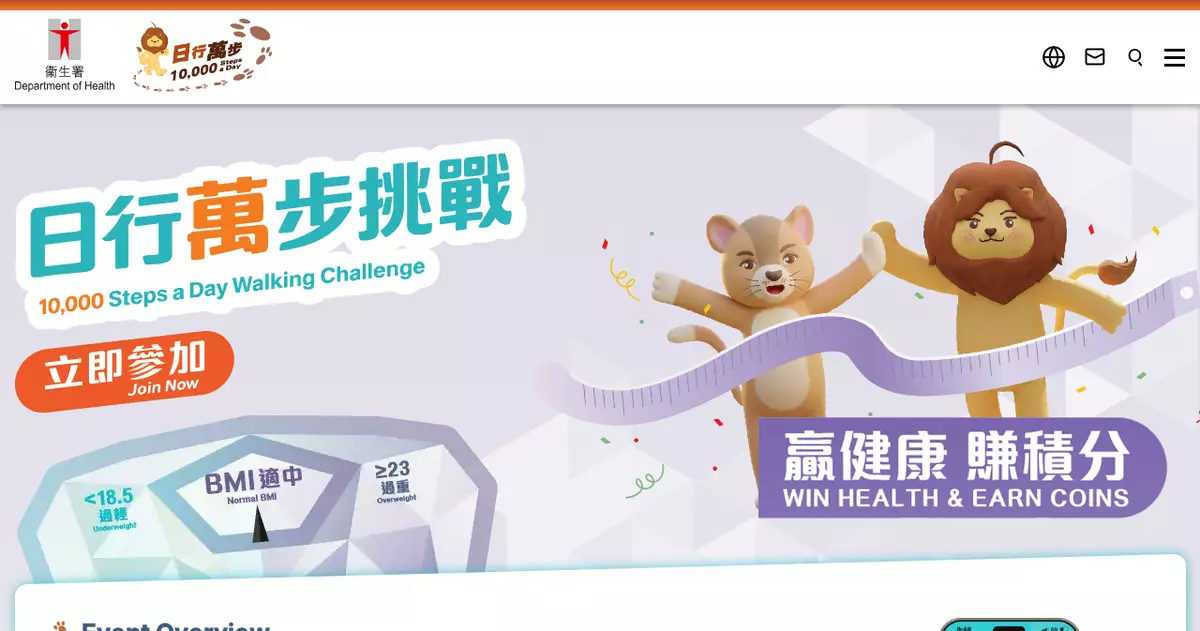
In March 2026, the Government launched the Action Plan on Weight Management (Action Plan) to raise public awareness regarding personal weight management through multipronged collaboration and participation across the community. Furthermore, the 10 000 Steps a Day Walking Challenge has been regularised. Gamifying physical activity, the scheme encourages citizens to make walking an enjoyable habit. Combined with a balanced diet, this approach aims to reduce the risk of diabetes and other chronic diseases and maintain good health. The Action Plan is steered by an interdepartmental Weight Management Working Group. Co-ordinating policies in healthcare, education, recreation and culture, urban planning, and other areas, the Action Plan will implement five key directions and 15 objectives systematically over three years. With a strategy that spans the entire life cycle, the Action Plan aims to strengthen the role of primary healthcare as the "gatekeeper", promoting collaboration between Chinese and Western medicine and integrating health data through the eHealth platform to comprehensively support citizens in managing and safeguarding their health.
To promote healthy diet, the DH has launched a number of measures, including the StartSmart@school.hk Campaign for kindergartens and child care centres, the EatSmart@school.hk Campaign for schools, and the EatSmart Restaurant Star+ Campaign, which encourages restaurants to offer healthier dishes.
For details, please visit the Action Plan on Weight Management, 10 000 Steps a Day Walking Challenge and Change4Health web pages of the DH, as well as the Primary Healthcare Commission's website.
Source: AI-found images