Skip to Content Facebook Feature Image

A detainee’s death revives Syria’s memories of torture and abuse in prisons

News

A detainee’s death revives Syria’s memories of torture and abuse in prisons
News

News

A detainee’s death revives Syria’s memories of torture and abuse in prisons

2026-08-18 02:46 Last Updated At:02:51

DAMASCUS, Syria (AP) — The death of a young man with a serious medical condition who was arrested and allegedly beaten by Syrian security forces has stirred up dark memories of torture and other abuse in detention centers under the Assad dynasty’s decades-long rule.

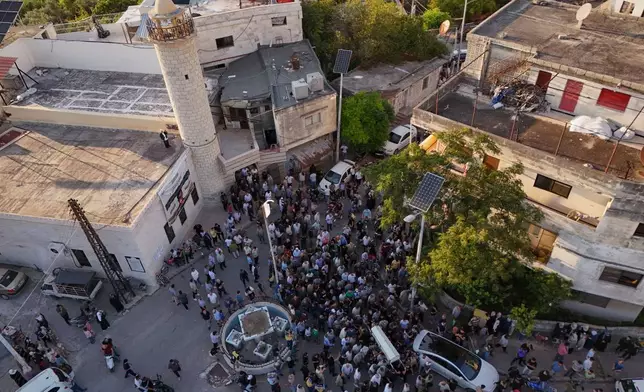
Syrians have taken to social media and the streets in recent days to demand answers about the death of Mohammad Ghamira, who was buried Monday in his hometown of al-Haffah in coastal Latakia province.

More Images
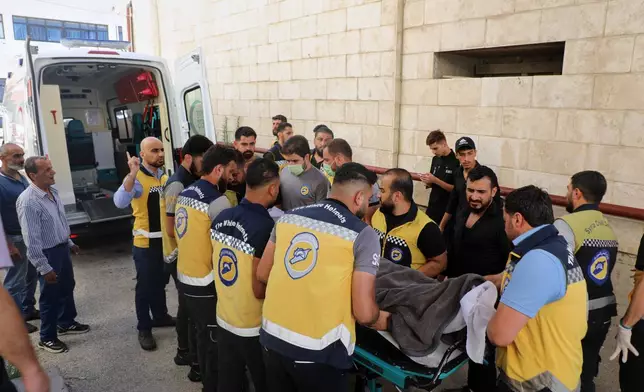
Members of the White Helmets carry the body of Mohammad Ghamira, a former White Helmets volunteer who died shortly after his release from jail, before his burial in the village of al-Haffa, Latakia province, Syria, Monday, Aug. 17, 2026. (AP Photo)
Members of the White Helmets carry the body of Mohammad Ghamira, a former White Helmets volunteer who died shortly after his release from jail, before his burial in the village of al-Haffa, Latakia province, Syria, Monday, Aug. 17, 2026. (AP Photo)

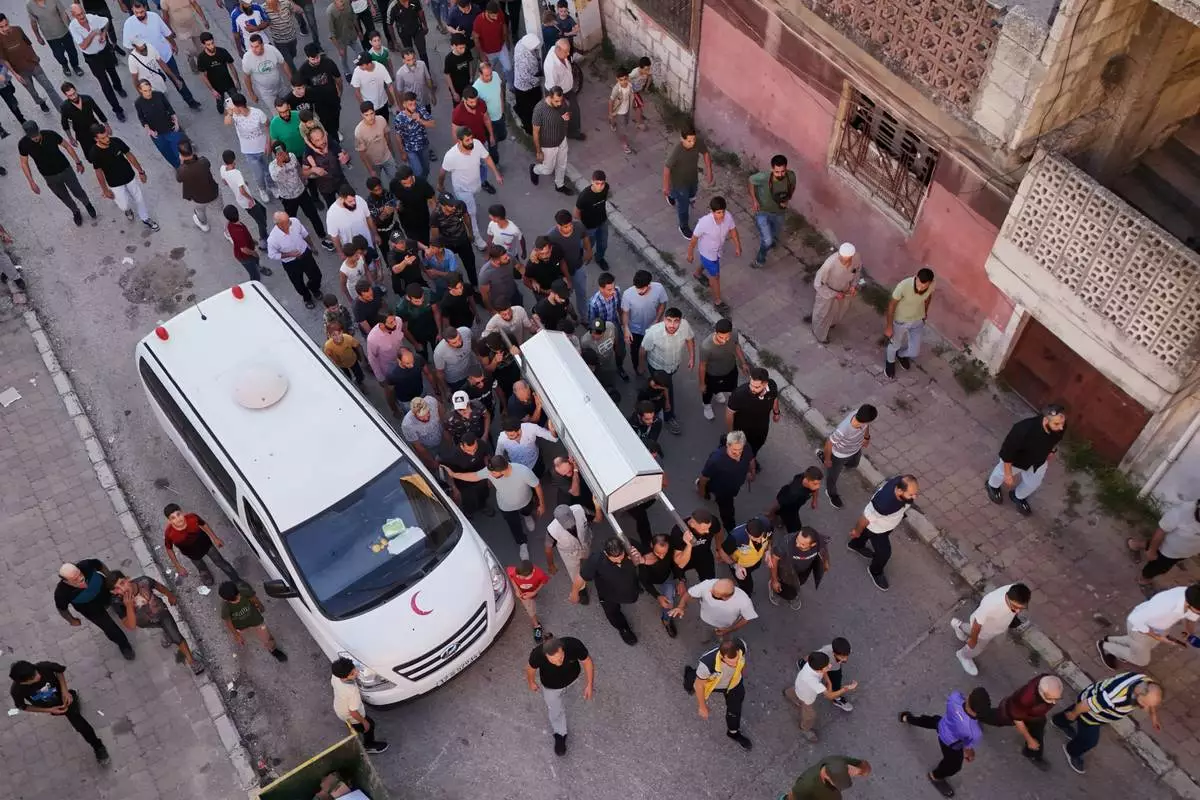
Mourners carry the coffin of Mohammad Ghamira, a former White Helmets volunteer who died shortly after his release from jail, for burial in the village of al-Haffa, in Latakia province, Syria, Monday, Aug. 17, 2026. (AP Photo)
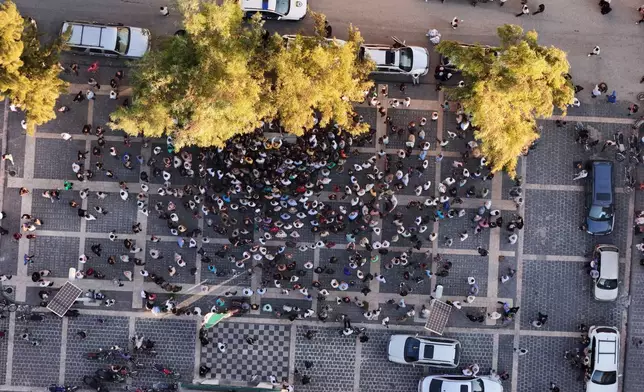
Mourners carry the coffin of Mohammad Ghamira, a former White Helmets volunteer who died shortly after his release from jail, for burial in the village of al-Haffa, in Latakia province, Syria, Monday, Aug. 17, 2026. (AP Photo)

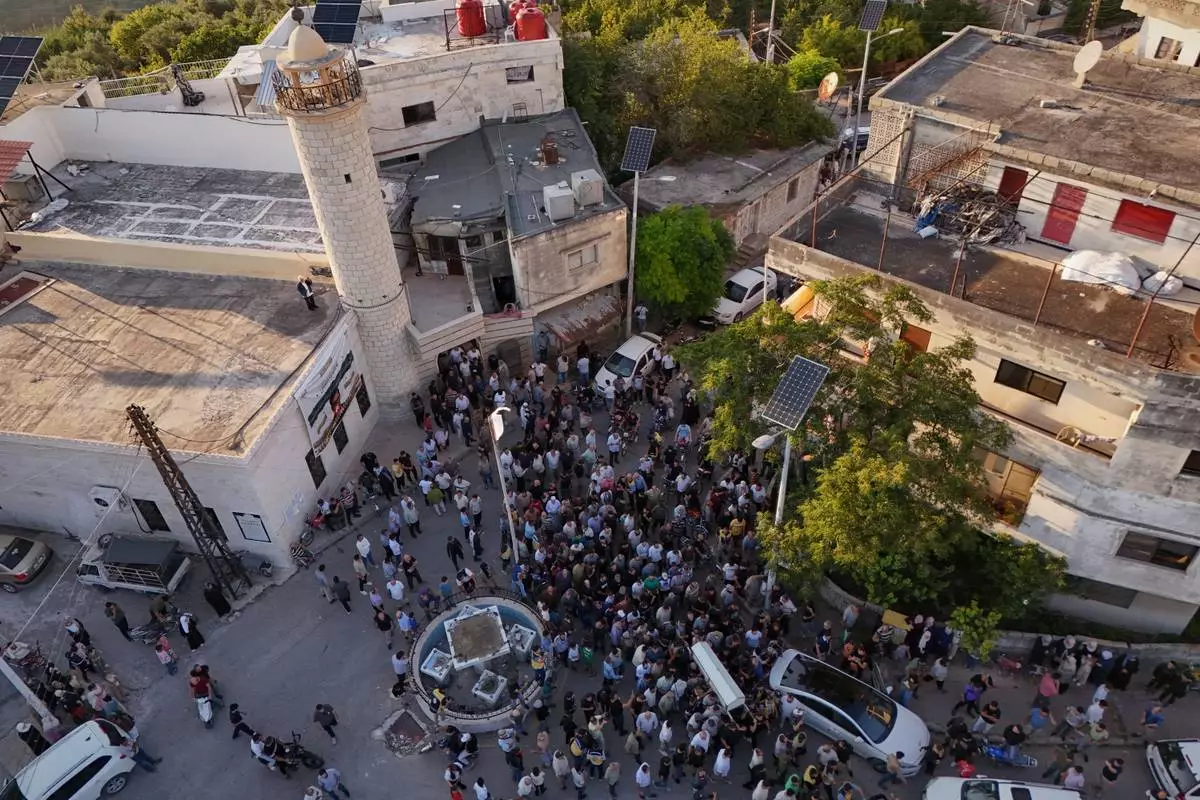
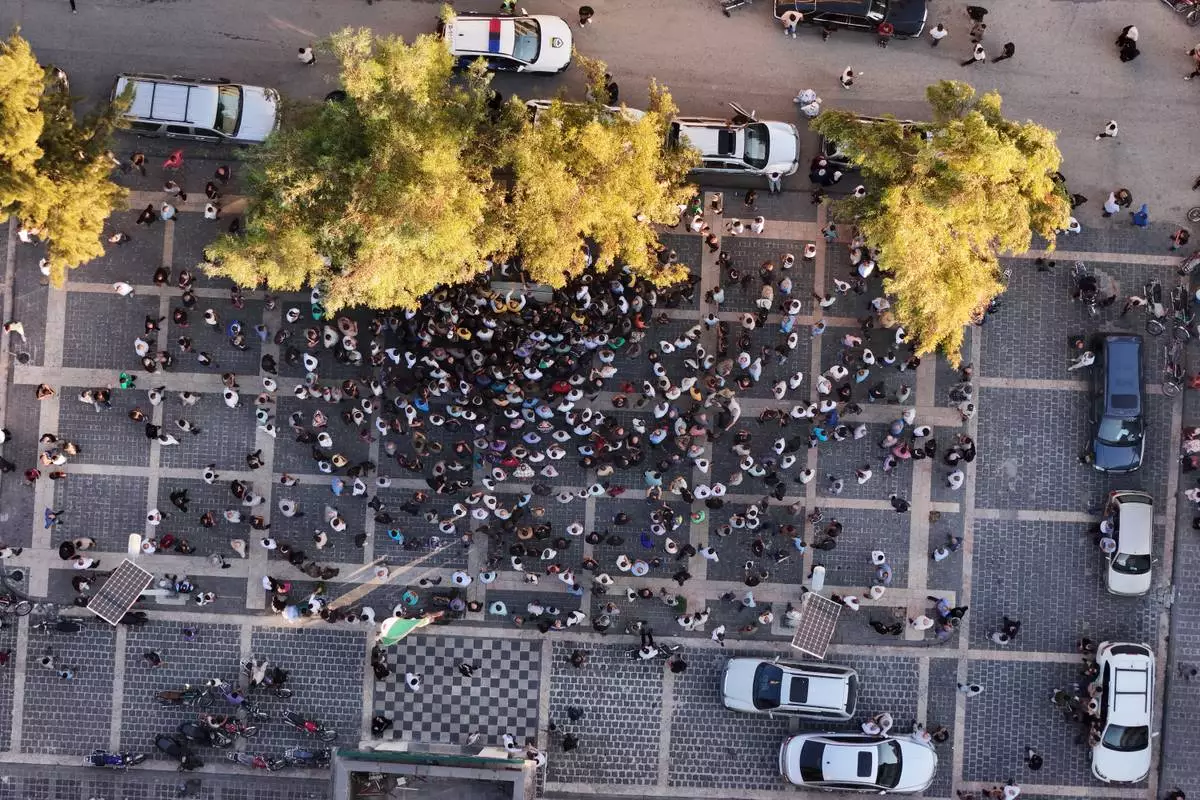
Mourners gather for the funeral of Mohammad Ghamira, a former White Helmets volunteer who died shortly after his release from jail, in the village of al-Haffa, in Latakia province, Syria, Monday, Aug. 17, 2026. (AP Photo)
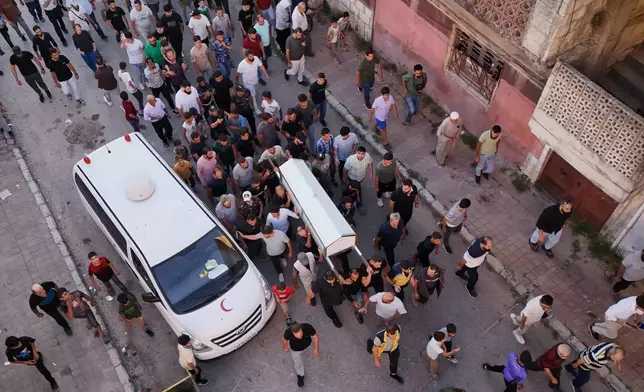
Mourners gather for the funeral of Mohammad Ghamira, a former White Helmets volunteer who died shortly after his release from jail, in the village of al-Haffa, in Latakia province, Syria, Monday, Aug. 17, 2026. (AP Photo)

Mourners carry the coffin of Mohammad Ghamira, a former White Helmets volunteer who died shortly after his release from jail, for burial in the village of al-Haffa, in Latakia province, Syria, Monday, Aug. 17, 2026. (AP Photo)
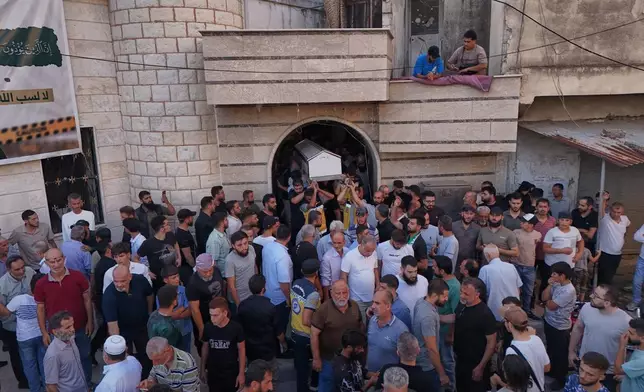
Mourners carry the coffin of Mohammad Ghamira, a former White Helmets volunteer who died shortly after his release from jail, for burial in the village of al-Haffa, in Latakia province, Syria, Monday, Aug. 17, 2026. (AP Photo)
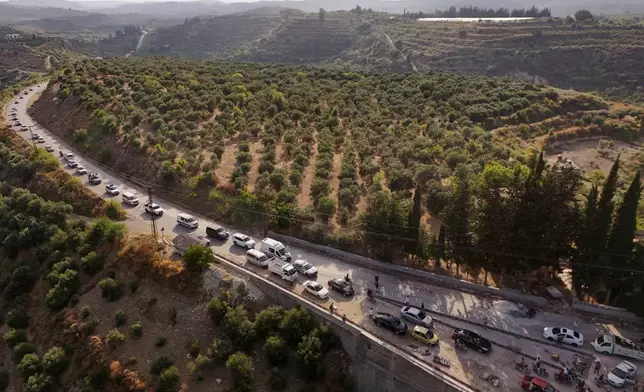
Mourners carry the coffin of Mohammad Ghamira, a former White Helmets volunteer who died shortly after his release from jail, for burial in the village of al-Haffa, in Latakia province, Syria, Monday, Aug. 17, 2026. (AP Photo)

Mourners carry the coffin of Mohammad Ghamira, a former White Helmets volunteer who died shortly after his release from jail, for burial in the village of al-Haffa, in Latakia province, Syria, Monday, Aug. 17, 2026. (AP Photo)

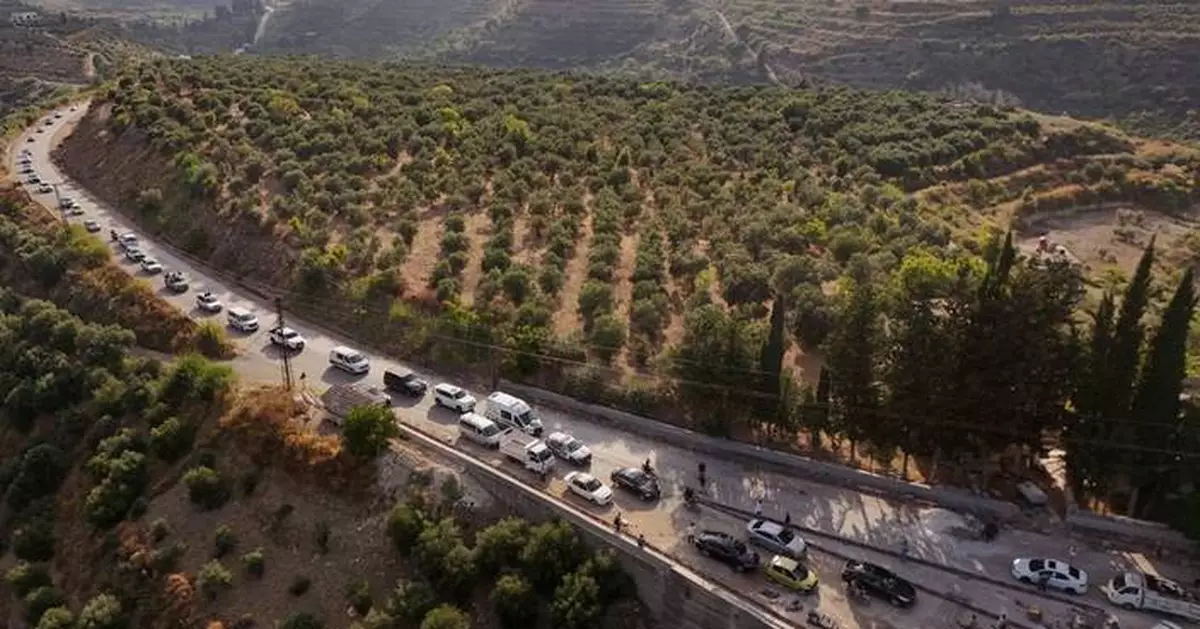
A funeral procession for Mohammad Ghamira, a former White Helmets volunteer who died shortly after his release from jail, travels through the countryside near the village of al-Haffa, in Latakia province, Syria, Monday, Aug. 17, 2026. (AP Photo)

A funeral procession for Mohammad Ghamira, a former White Helmets volunteer who died shortly after his release from jail, travels through the countryside near the village of al-Haffa, in Latakia province, Syria, Monday, Aug. 17, 2026. (AP Photo)

When insurgents unseated former President Bashar Assad in December 2024 after a nearly 14-year civil war, they opened the country's notorious prisons. During Assad's rule, rights groups say, thousands of prisoners were killed in mass executions or died from injuries and disease. Detainees were subjected to torture, beatings and rape.

Officials with the government of interim President Ahmad al-Sharaa have promised accountability in Ghamira’s case, but rights groups say it is not an isolated incident and that abuses persist in detention centers.

Ghamira, a 29-year-old father of two, was a former volunteer with the White Helmets civil defense organization, which operated in opposition-held areas before Assad's fall.

He died in a hospital in Latakia on Sunday after being released from jail. He had been detained days earlier following an "allegation of theft involving a sum of money,” Latakia’s internal security command said in a statement, without giving more details.

Syria’s Minister of Emergency and Disaster Management Raed al-Saleh, who was previously head of the White Helmets, said on X that Ghamira had died of “complications from cerebral and gastrointestinal hemorrhaging” that “resulted from a beating he sustained after being detained at the al-Haffah police station.”

Al-Saleh and Ghamira’s relatives said he had hemophilia, a condition affecting the blood’s ability to clot.

Ghamira’s uncle, Issam Ghamira, said in a video interview with state news agency SANA that the family had told the police chief in al-Haffah that his nephew had hemophilia and warned against hitting him. Despite that, he said, his nephew was hit while in custody.

Syria’s interior ministry announced an investigation into Ghamira’s death and said seven interior ministry personnel were detained for questioning.

Syria’s Interior Ministry spokesperson Noureddine al-Baba, speaking to journalists, acknowledged “shortcomings and deficiencies” in some of the country's police departments but said others were doing “exceptional” work.

“God willing, this painful incident will serve as a catalyst for positive change in the operations of the ministry of interior," he said.

In a report released in March, the U.N. Independent International Commission of Inquiry on the Syrian Arab Republic said it had documented “torture and ill-treatment” in 18 official detention facilities and 12 “makeshift facilities” in different areas of Syria between January and October 2025, in the months following Assad's ouster as the new government asserted control.

The practices it documented included beating prisoners with rifle butts, sticks, pipes, bars and cables; the use of electric shocks and other forms of torture; mock executions; and sexual violence.

Syrians for Truth and Justice, a human rights organization that tracks abuses, in a report published earlier this month said that “severe beatings, electric shocks, humiliation, threats, deprivation of basic necessities, and deaths in custody continue to be common practices at the hands of multiple security and military actors.”

The group concluded that the incidents were too widespread to treat as isolated incidents but that there was not evidence of a “single centralized system equivalent in structure and direction to the torture apparatus entrenched by the Assad regime.”

“It is somehow widespread, but it’s not structured,” Bassam Alahmad, the group’s executive director, told The Associated Press. “For us, there is no evidence that these orders came from the commanders to torture people, but still (the authorities) have a responsibility to stop this behavior."

Syrians whose loved ones disappeared or died in detention centers during Assad’s rule said they were disturbed to see the patterns being repeated under the new government.

Families for Freedom, a group representing relatives of detainees, said in a statement, “What happened to Mohammed reopens the wounds of torture and death in detention for thousands of Syrian families — practices Syrians have struggled for years to end, and the recurrence of which cannot be accepted today.”

Sewell reported from Beirut.
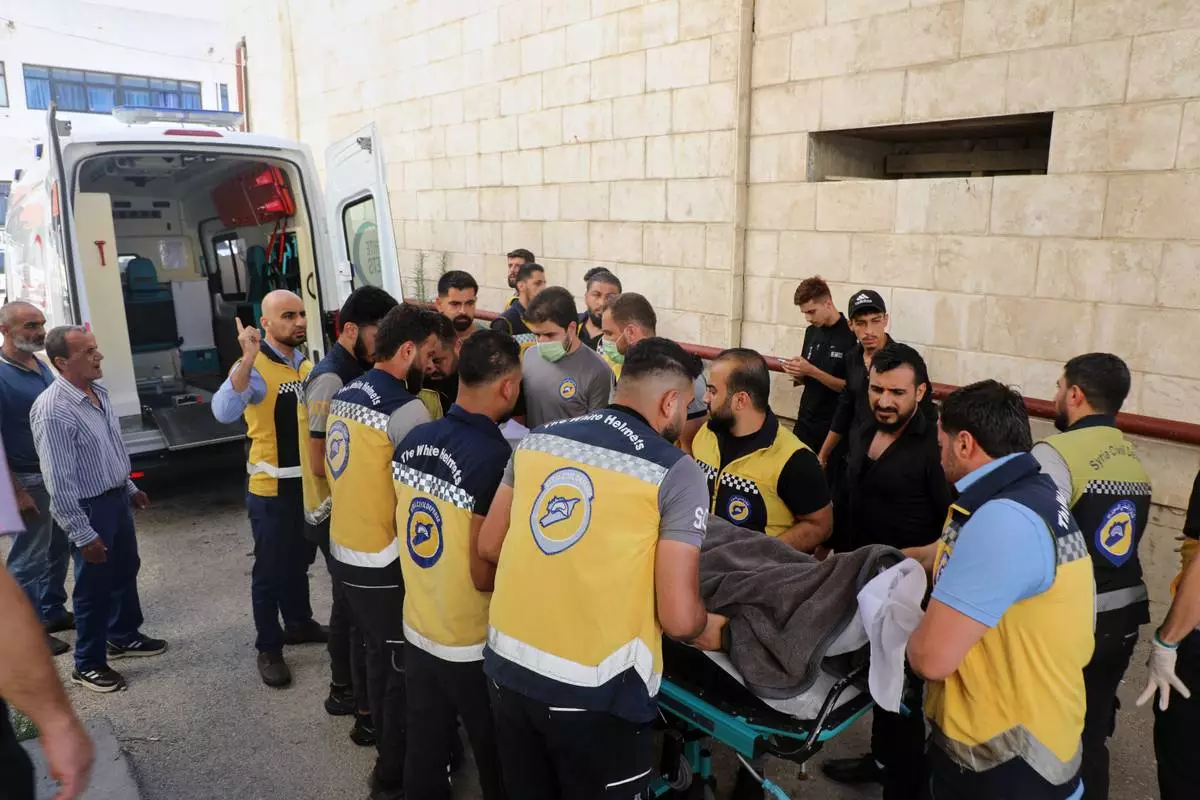
Members of the White Helmets carry the body of Mohammad Ghamira, a former White Helmets volunteer who died shortly after his release from jail, before his burial in the village of al-Haffa, Latakia province, Syria, Monday, Aug. 17, 2026. (AP Photo)
Members of the White Helmets carry the body of Mohammad Ghamira, a former White Helmets volunteer who died shortly after his release from jail, before his burial in the village of al-Haffa, Latakia province, Syria, Monday, Aug. 17, 2026. (AP Photo)

Mourners carry the coffin of Mohammad Ghamira, a former White Helmets volunteer who died shortly after his release from jail, for burial in the village of al-Haffa, in Latakia province, Syria, Monday, Aug. 17, 2026. (AP Photo)
Mourners carry the coffin of Mohammad Ghamira, a former White Helmets volunteer who died shortly after his release from jail, for burial in the village of al-Haffa, in Latakia province, Syria, Monday, Aug. 17, 2026. (AP Photo)

Mourners gather for the funeral of Mohammad Ghamira, a former White Helmets volunteer who died shortly after his release from jail, in the village of al-Haffa, in Latakia province, Syria, Monday, Aug. 17, 2026. (AP Photo)
Mourners gather for the funeral of Mohammad Ghamira, a former White Helmets volunteer who died shortly after his release from jail, in the village of al-Haffa, in Latakia province, Syria, Monday, Aug. 17, 2026. (AP Photo)

Mourners carry the coffin of Mohammad Ghamira, a former White Helmets volunteer who died shortly after his release from jail, for burial in the village of al-Haffa, in Latakia province, Syria, Monday, Aug. 17, 2026. (AP Photo)
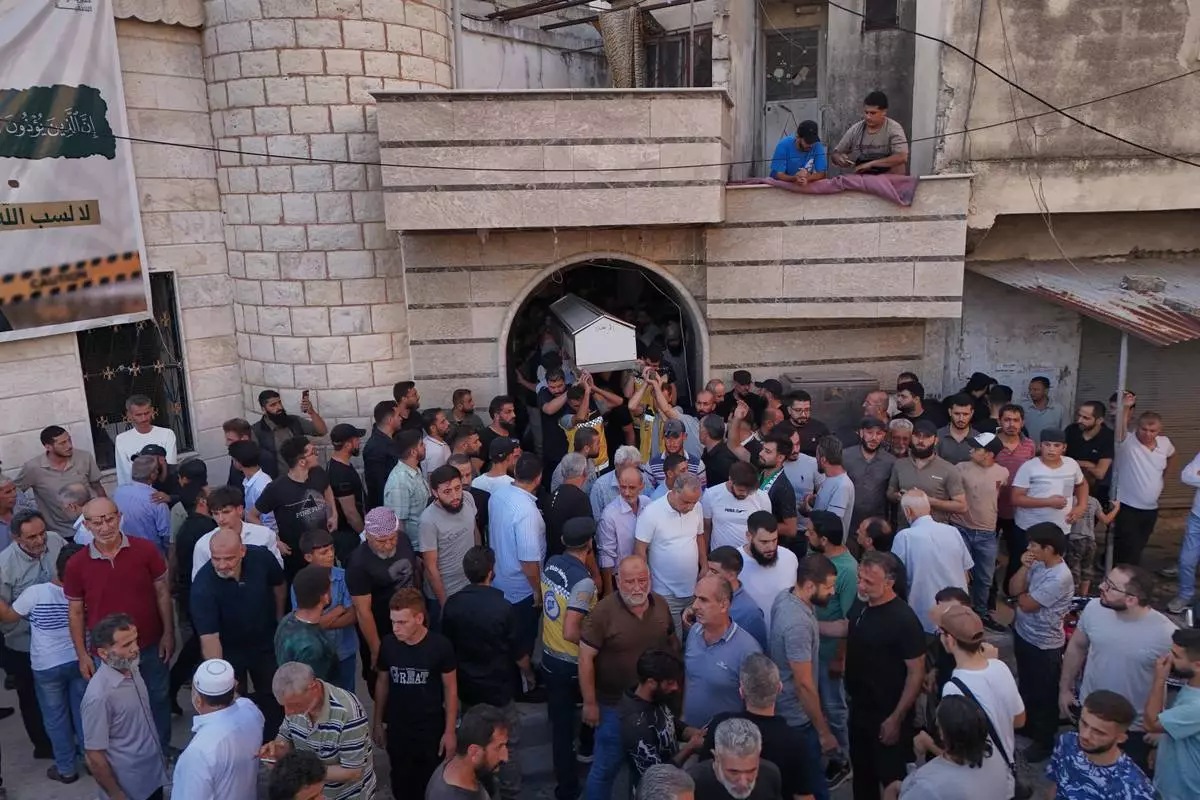
Mourners carry the coffin of Mohammad Ghamira, a former White Helmets volunteer who died shortly after his release from jail, for burial in the village of al-Haffa, in Latakia province, Syria, Monday, Aug. 17, 2026. (AP Photo)
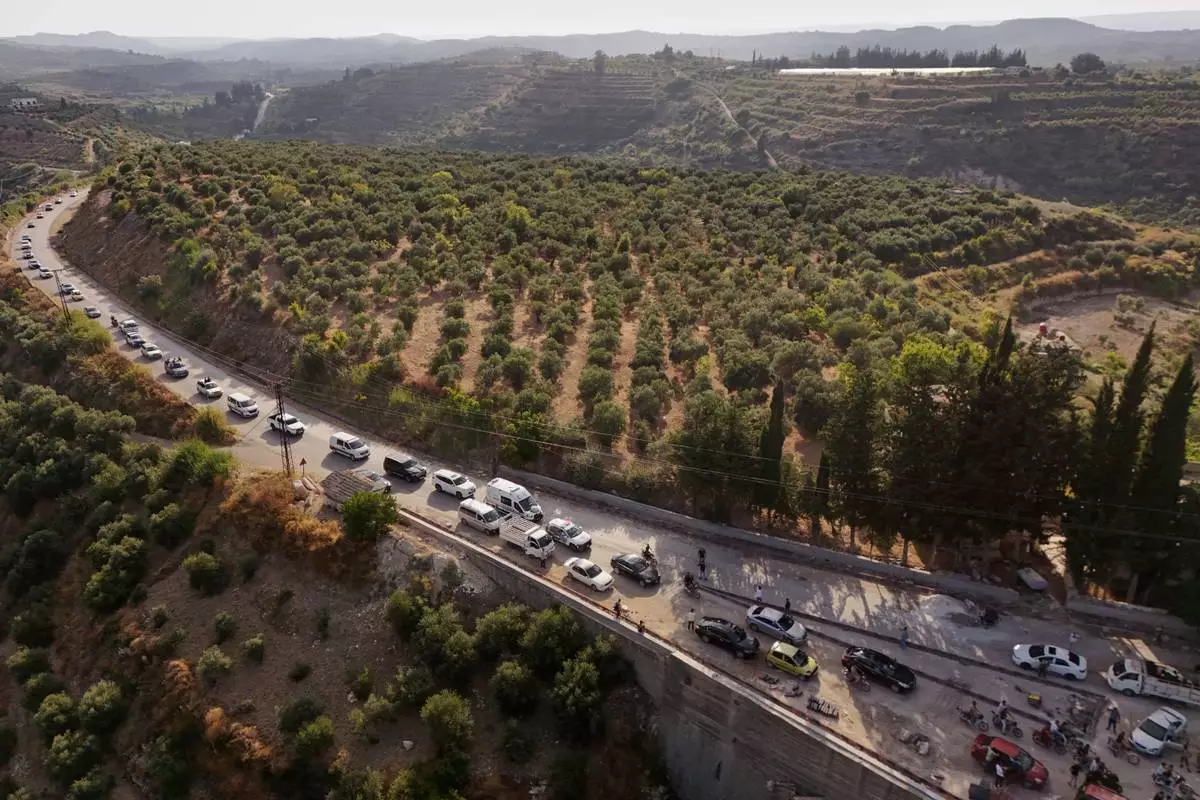
Mourners carry the coffin of Mohammad Ghamira, a former White Helmets volunteer who died shortly after his release from jail, for burial in the village of al-Haffa, in Latakia province, Syria, Monday, Aug. 17, 2026. (AP Photo)

Mourners carry the coffin of Mohammad Ghamira, a former White Helmets volunteer who died shortly after his release from jail, for burial in the village of al-Haffa, in Latakia province, Syria, Monday, Aug. 17, 2026. (AP Photo)

A funeral procession for Mohammad Ghamira, a former White Helmets volunteer who died shortly after his release from jail, travels through the countryside near the village of al-Haffa, in Latakia province, Syria, Monday, Aug. 17, 2026. (AP Photo)

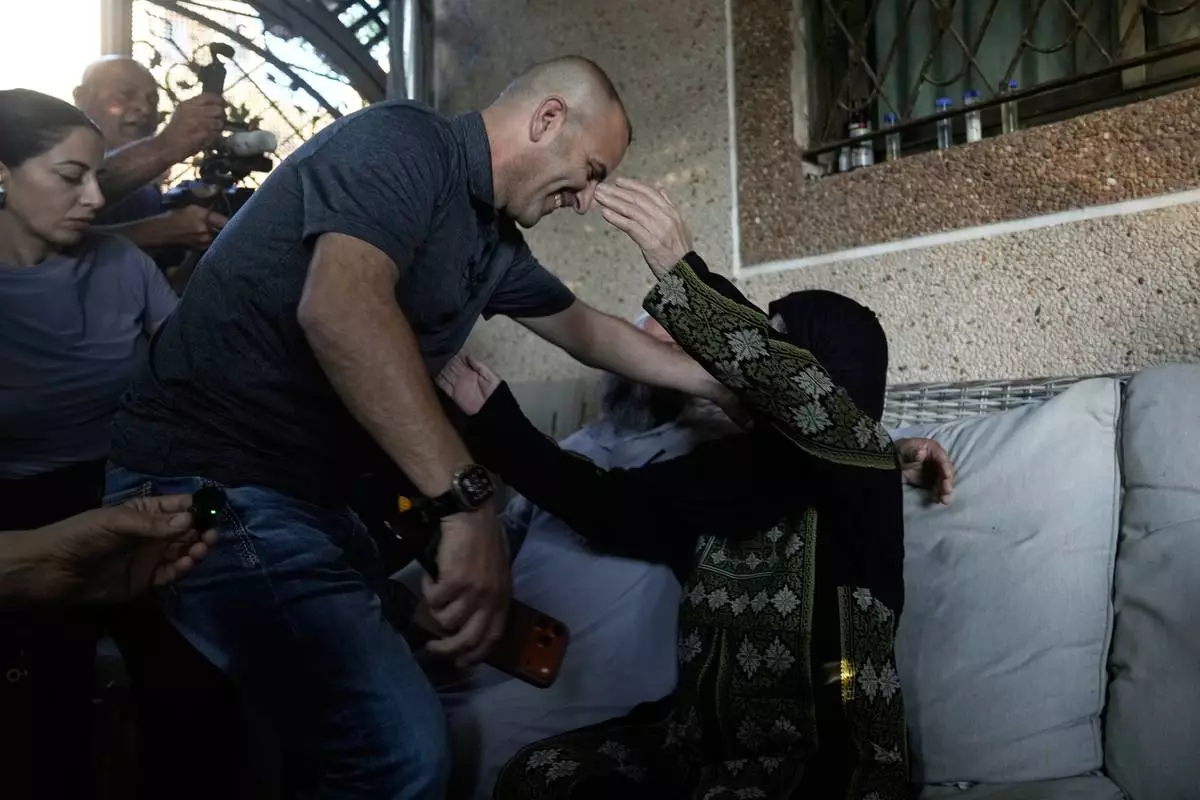
A funeral procession for Mohammad Ghamira, a former White Helmets volunteer who died shortly after his release from jail, travels through the countryside near the village of al-Haffa, in Latakia province, Syria, Monday, Aug. 17, 2026. (AP Photo)
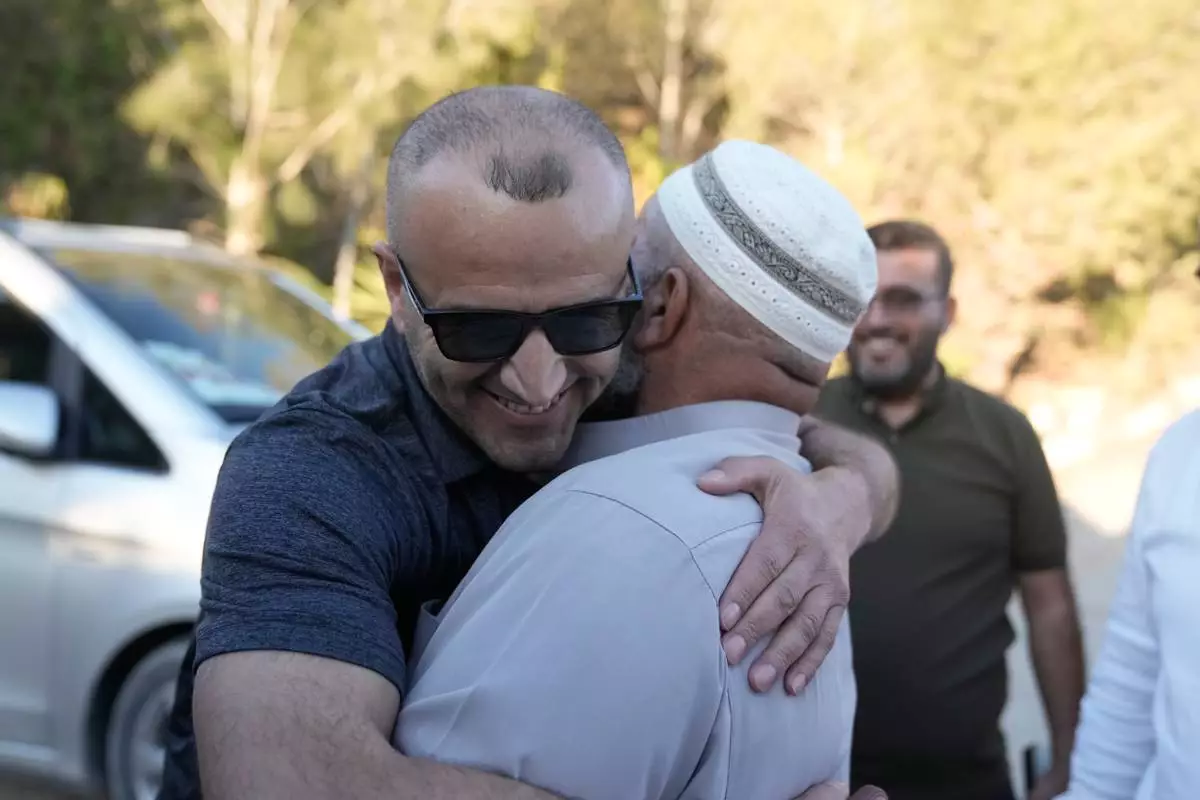
QUSRA, West Bank (AP) — The Palestinian American whose home in the occupied West Bank has been besieged by Israeli settlers for over a week traveled to his property on Monday to join other family members who have been defending it.

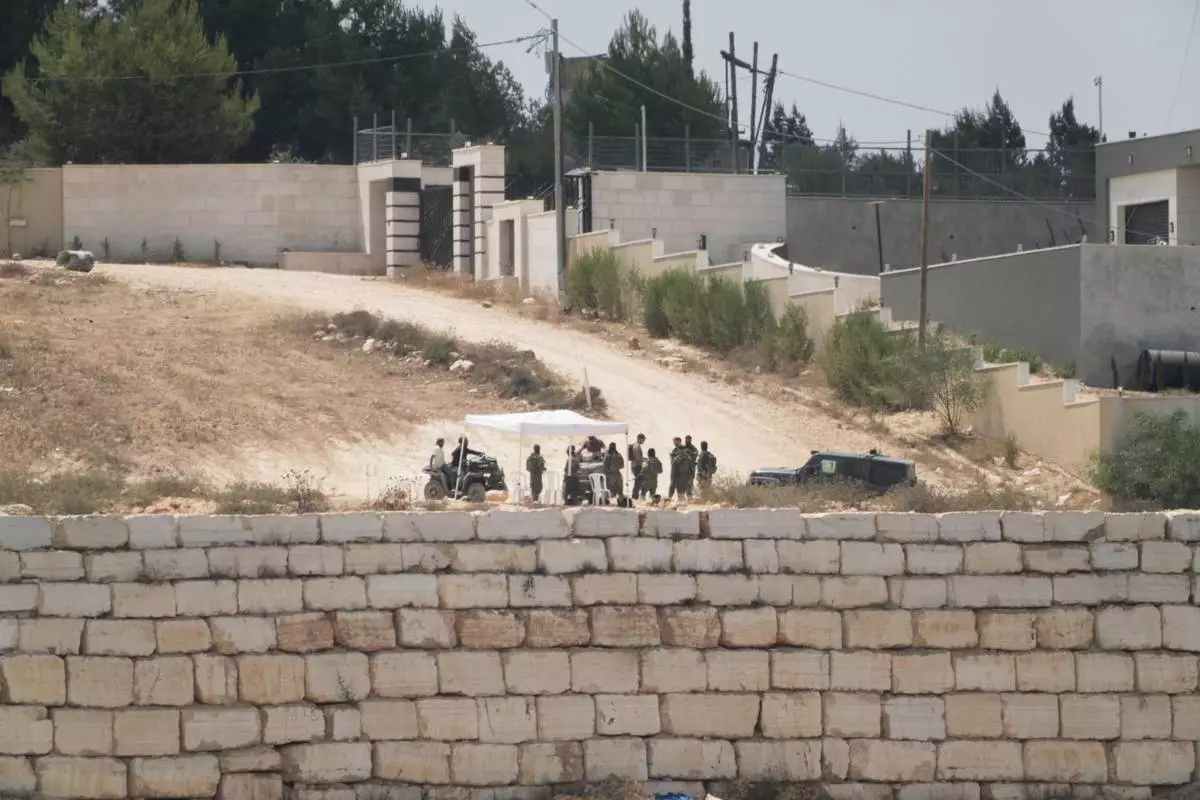
The standoff, in the village of Qusra, has seen groups of settlers surround several Palestinian houses and prevent residents from leaving. The United States has condemned the siege and the Israeli military has deployed troops it says are there to maintain order.

The siege of Palestinian homes by Israeli settlers comes as violence in the West Bank has soared in recent months. The settlers, emboldened by Prime Minister Benjamin Netanyahu’s right-wing government, have ramped up attacks on Palestinian towns and villages, harassing residents and setting homes, mosques and fields ablaze.

Israeli soldiers and settlers have killed 87 Palestinians so far this year, according to Palestinian health officials. Palestinians have killed three Israelis, including two who were killed during clashes in the West Bank village of Tell last month.

As Loui Ridi, an Ohio-based owner of one of the houses, landed in Israel, settlers were still roaming near Qusra, according to video footage taken by his brother. It showed settlers driving ATVs and speaking with soldiers.

Ridi had also watched the scenes unfold from afar through his home security cameras.

“I've been watching this live for many days and now this is the second week. I can't sleep,” he told reporters at Israel’s main international airport. “I can’t let the settlers steal my house while I was watching."

He finally arrived in Qusra on Monday evening, where he first reunited with his mother and sister before moving on to his house. Ridi's brother, Qusai Abu Rida, and his teenage son had stayed inside the home to protect the property.

As Ridi waited for Israel’s military to escort him to the house, he said he believed little had changed since early last week, when the siege began.

Israel has since declared the neighborhood where Ridi’s home is located a closed military zone. But on Monday, his brother’s footage still showed soldiers interacting amicably with settlers.

“I should be able to go to my house freely, anytime I want,” he said. “It is a frustration and a nightmare for the entire family.”

__ Metz reported from Tel Aviv, Israel.

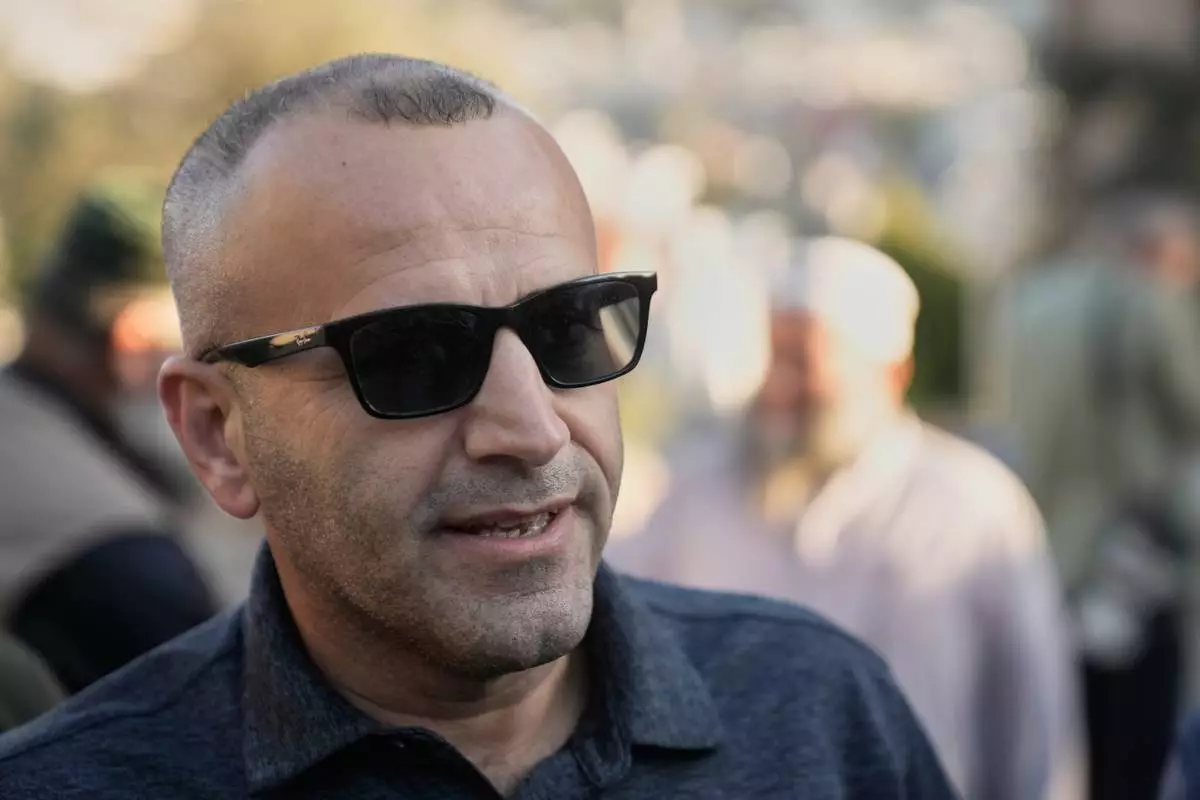
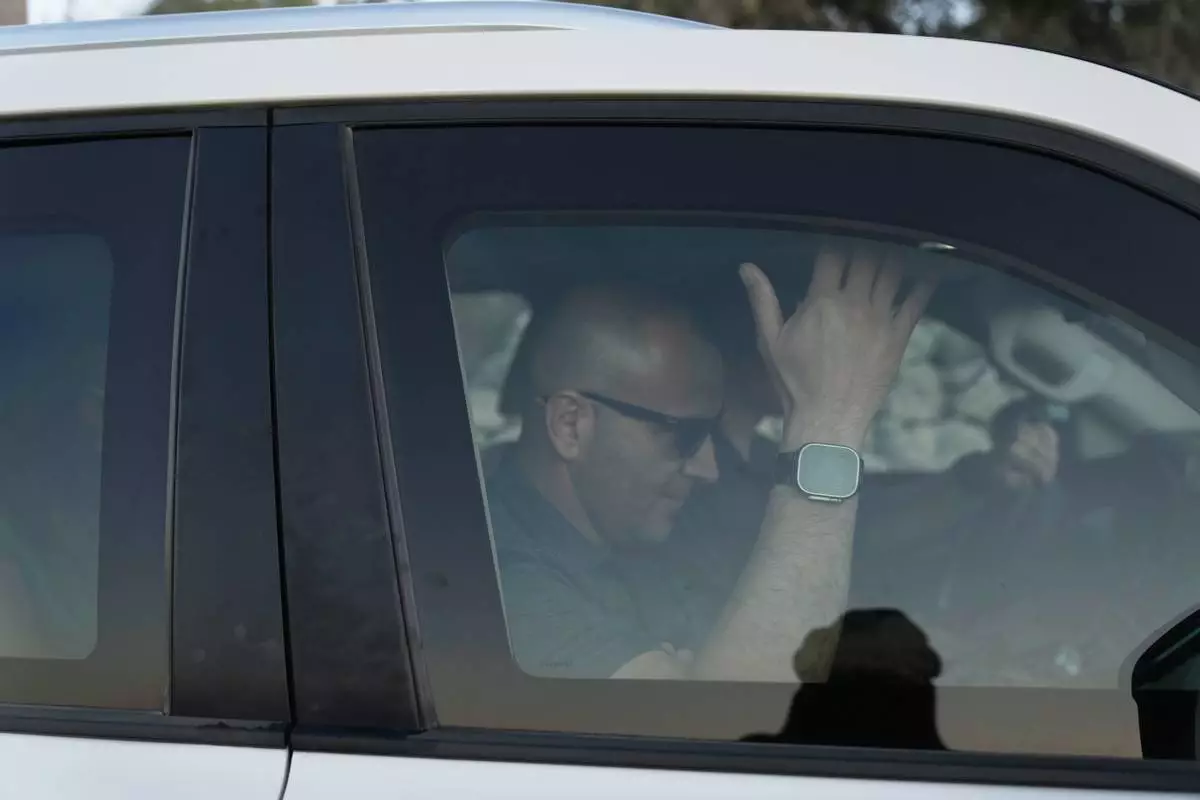
Loui Ridi, an Ohio-based Palestinian-American landlord of one of the homes besieged by Israeli settlers for over a week, greets his mother Aysha as he arrives to his parent's home upon return from the U.S., in the occupied West Bank village of Qusra, south of Nablus, Monday, Aug. 17, 2026. (AP Photo/Majdi Mohammed)

Loui Ridi, an Ohio-based Palestinian-American landlord of one of the homes besieged by Israeli settlers for over a week, greets his mother Aysha as he arrives to his parent's home upon return from the U.S., in the occupied West Bank village of Qusra, south of Nablus, Monday, Aug. 17, 2026. (AP Photo/Majdi Mohammed)

Loui Ridi, an Ohio-based Palestinian-American landlord of one of the homes besieged by Israeli settlers for over a week, arrives at his parent's home upon return from the U.S., in the occupied West Bank village of Qusra, south of Nablus, Monday, Aug. 17, 2026. (AP Photo/Majdi Mohammed)

Loui Ridi, an Ohio-based Palestinian-American landlord of one of the homes besieged by Israeli settlers for over a week, arrives at his parent's home upon return from the U.S., in the occupied West Bank village of Qusra, south of Nablus, Monday, Aug. 17, 2026. (AP Photo/Majdi Mohammed)

Loui Ridi, an Ohio-based Palestinian-American landlord of one of the homes besieged by Israeli settlers for over a week, arrives at his parent's home upon his return from the U.S., in the occupied West Bank village of Qusra, south of Nablus, Monday, Aug. 17, 2026. (AP Photo/Majdi Mohammed)

Loui Ridi, an Ohio-based Palestinian-American landlord of one of the homes besieged by Israeli settlers for over a week, arrives at his parent's home upon his return from the U.S., in the occupied West Bank village of Qusra, south of Nablus, Monday, Aug. 17, 2026. (AP Photo/Majdi Mohammed)

Loui Ridi, an Ohio-based Palestinian-American landlord of one of the homes besieged by Israeli settlers for over a week, arrives at his parent's home upon return from the U.S., in the occupied West Bank village of Qusra, south of Nablus, Monday, Aug. 17, 2026. (AP Photo/Majdi Mohammed)

Loui Ridi, an Ohio-based Palestinian-American landlord of one of the homes besieged by Israeli settlers for over a week, arrives at his parent's home upon return from the U.S., in the occupied West Bank village of Qusra, south of Nablus, Monday, Aug. 17, 2026. (AP Photo/Majdi Mohammed)

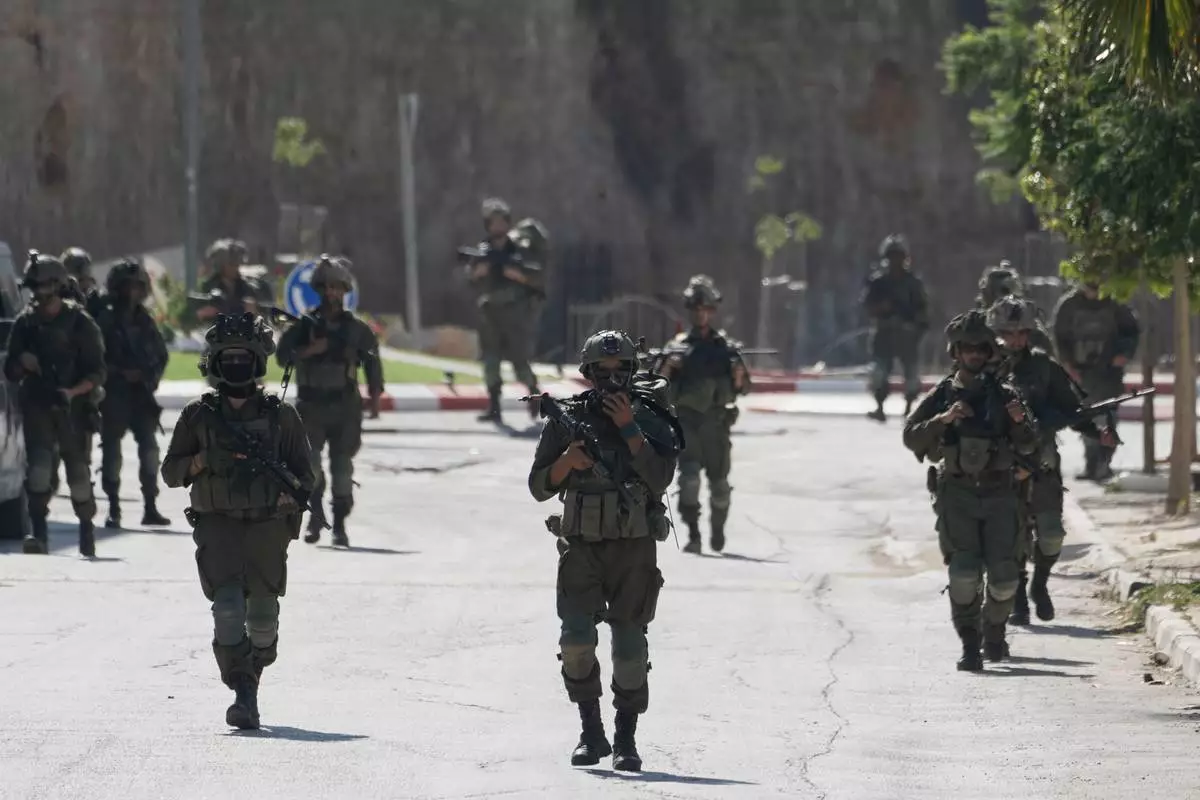
Israeli army soldiers patrol the streets of the occupied West Bank village of Qusra, south of Nablus, Thursday, Aug. 13, 2026. (AP Photo/Majdi Mohammed)

Israeli army soldiers patrol the streets of the occupied West Bank village of Qusra, south of Nablus, Thursday, Aug. 13, 2026. (AP Photo/Majdi Mohammed)

Israeli settlers patrol a road in front of besieged Palestinian houses, in the occupied West Bank village of Qusra, south of Nablus, Monday, Aug. 17, 2026. (AP Photo/Majdi Mohammed)

Israeli settlers patrol a road in front of besieged Palestinian houses, in the occupied West Bank village of Qusra, south of Nablus, Monday, Aug. 17, 2026. (AP Photo/Majdi Mohammed)

Recommended Articles